By Alfred Godwin Adjabeng | Project Manager
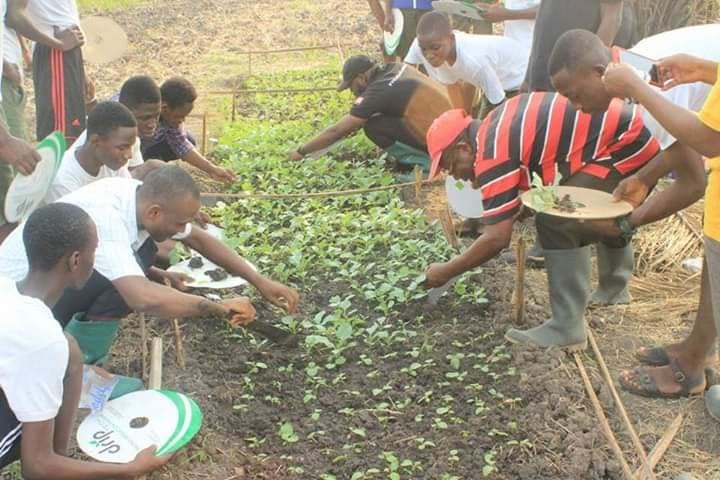
From June 2021, School Farms will innovate to incorporate a revenue generation model. School Farms support local schools to grow their own food. Disadvantage schools in rural Ghana are facing challenges with funding school meals because of the continuous rise in food prices coupled with the government’s inability to efficiently fund or subsidize school feeding programs. Some schools are facing the threat of closing down whilst others have increased school fees to make up for the debts. This obviously is affecting access to education with school dropout rate especially in the Northern Region as 80%.
The project employs a cost reasonable-community-driven and sustainable solution base model, harnessing local resources and expertise to support the school feeding budget, making them open all year round. The schools host the project, the local Ministry of Food and Agriculture provides free consultation and technical know-how as part of the ministry’s extension service and the community provides the land where schools don’t have lands. Students engaged to benefit from agriculture technical training. 70% of this product would be used to feed the students. 30% of the produce would be sold to an identified market of which proceeds go into an agreeable fund, 20% to be used to cultivate the next year and 10% comes to us to sustain the project.
Project reports on GlobalGiving are posted directly to globalgiving.org by Project Leaders as they are completed, generally every 3-4 months. To protect the integrity of these documents, GlobalGiving does not alter them; therefore you may find some language or formatting issues.
If you donate to this project or have donated to this project, you can receive an email when this project posts a report. You can also subscribe for reports without donating.