By Ben Aplin | Director, Foundation Relations
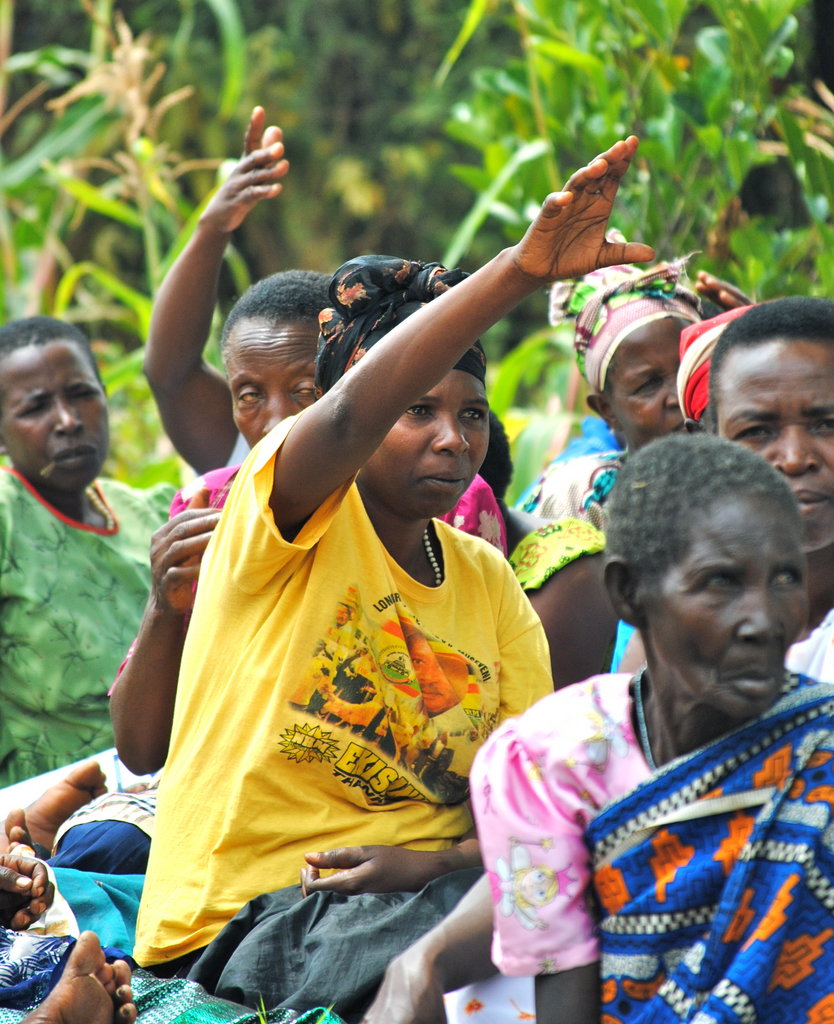
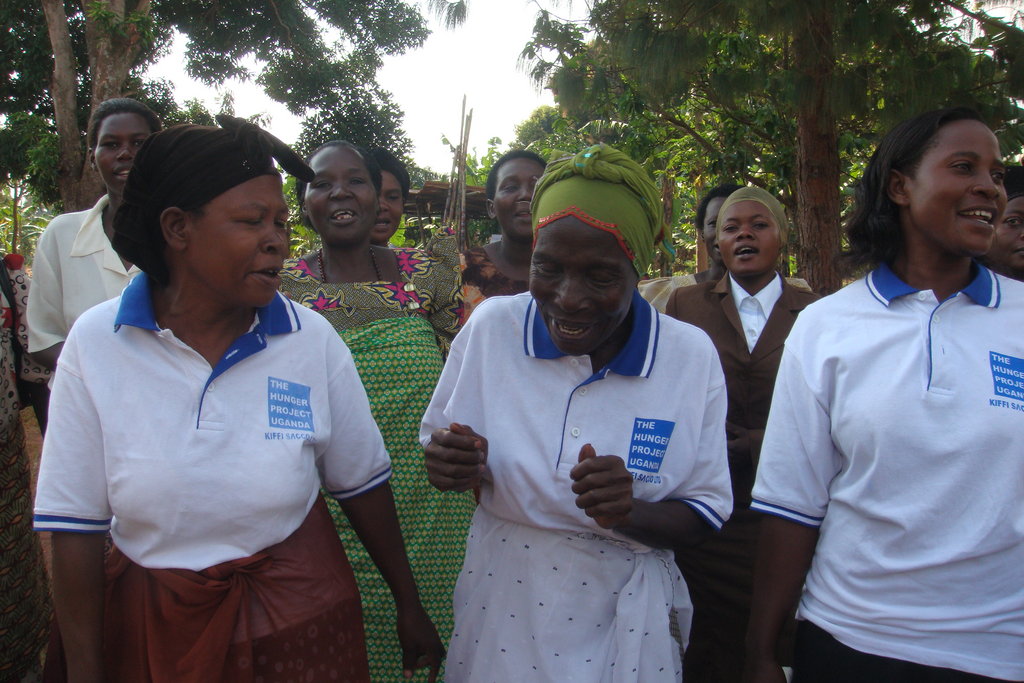
THP’s mission is to empower men and women to end their own hunger and build a better future for their families and their communities. We enable small farmers to access basic services such as sanitation, education, health care and expertise in better farming practices. We empower women not only because they are disproportionally poor, but also because they are a powerful leverage point for lifting communities out of poverty. Scattered throughout the countryside, we mobilize people – often in neighboring villages who have never met each other – through workshops and trainings designed to bring communities together in pursuit of common goals, shifting their mindset of “I can’t,” to “I can,” to “we can.”
In 2010, THP Uganda’s programs enabled over 650,000 people in 715 rural villages to increase their self-reliance and end their own hunger.
THP-Uganda was launched in 1999 and has established 11 Epicenter communities, 6 of which have established independent Rural Banks. The program employs 25 native Ugandans in the central office in Kampala and 2 regional offices.
The Epicenter Strategy is THP’s integrated approach for achieving the MDGs in Africa. This approach unites roughly 10,000 people in a cluster of rural villages to create what we call an epicenter: a place where communities unite to build a better future together. Through an approach that is uncommon among NGOs, THP forges partnerships with local governments and local communities, both of which contribute resources to create a vibrant and self-reliant community.
Epicenter communities steadily progress to self-reliance over a 5 to 8 year period. In the first several years, villagers experience improvements in their quality of life: mothers access loans and invest in small enterprises such as candle and soap-making, agriculture, petty-trade and animal rearing. A clinic staffed with government nurses improves maternal health and child nutrition. Villagers learn to operate, maintain and repair their wells and latrines. The community takes ownership of and derives dignity from their development – the foundation for sustainable social change.
Across Africa, THP has mobilized approximately 2,200 villages to establish 115 epicenter communities, reaching over two million people across Africa. Each epicenter addresses issues related to the MDGs, including water and sanitation, food security, women’s empowerment the environment, health services, education and family income. Twenty-one epicenters have established their own Rural Bank, a part of our strategy that enables communities to access savings and loan services.
Recent Highlights from Uganda
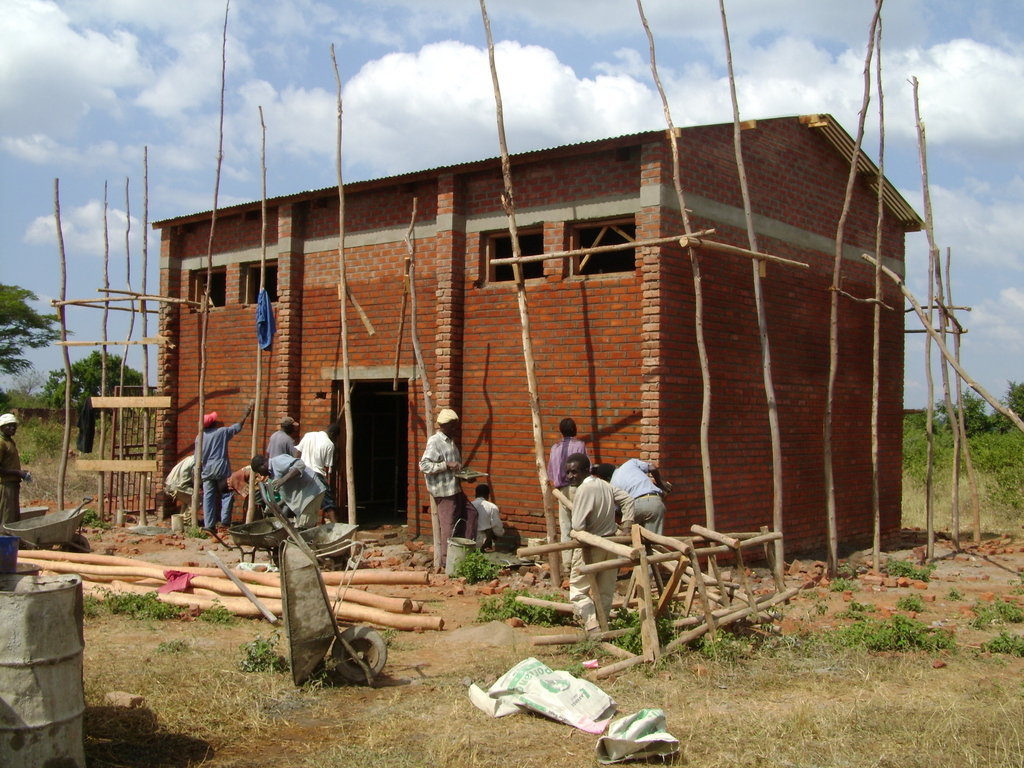
Mbale Epicenter Constructed: The epicenter community of Mbale completed its epicenter building in the fall of 2010, which will house its community-led programs. In keeping with THP’s strategy of partnering with local government, epicenter members successfully appealed to government agencies to supply resources such as hospital and delivery beds, water tanks and other medical supplies. Additionally, agencies will contribute to the completion of medical staff quarters at the epicenter, so that government nurses can be available twenty-four hours a day.
Mbarara Epicenter recognizes Rural Bank: The Microfinance Program at Mbarara Epicenter was officially recognized as a Rural Bank in 2010, becoming the sixth Rural Bank established by THP-Uganda.
THP staff and local government farming specialists continued to train local people in agribusiness, crop agronomy and post-harvest handling of maize, beans and ground nuts, at epicenter demonstration farms. Kiboga Epicenter showcased six new cassava varieties to partners, and over 1,000 partners, mainly women, and 31 farmer groups received improved cassava stems for multiplication. Additionally, In Partnership with Catholic Relief Services, THP conducted promotional campaigns through radio talk shows on food security, specifically on cassava multiplication and production, on six talk shows on Radio Kiboga.
As a result of the distribution of vaccines and mosquito nets, all epicenters have seen a decrease in disease, including malaria, polio, diphtheria, and HIV/AIDS.
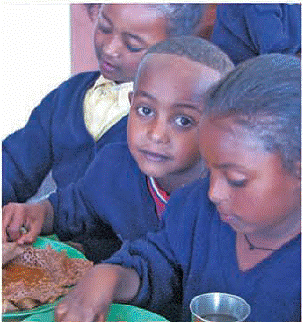
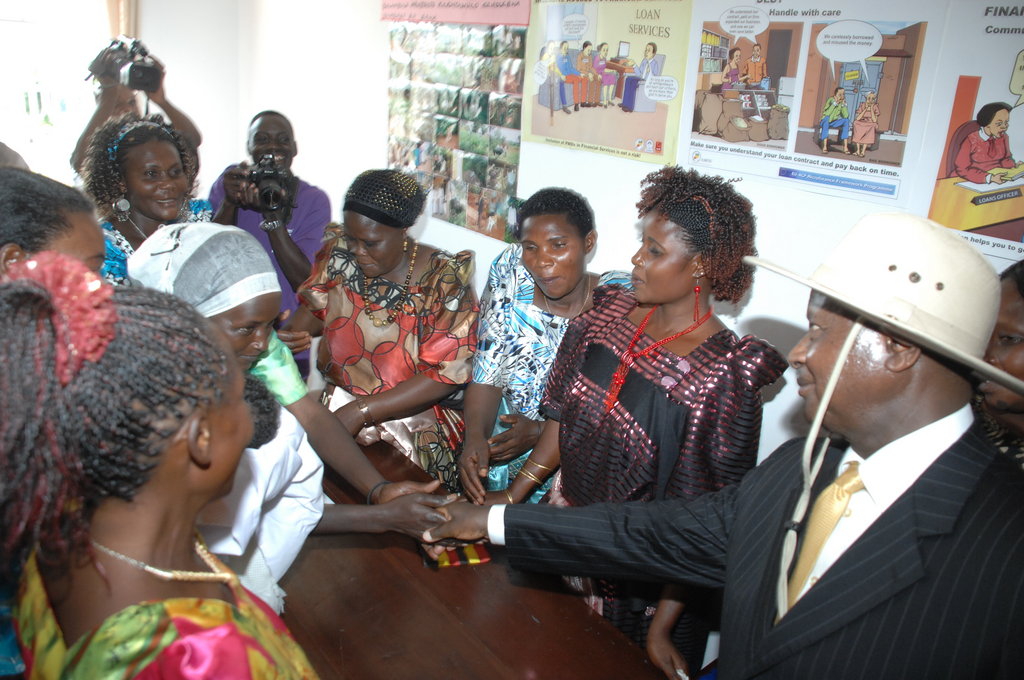
THP-Uganda’s Microfinance Program, launched in 2001, now manages over 4,000 loans and US $600,000 in revolving capital, in addition to a burgeoning savings program that includes 8,000 people who have saved close to US $200,000. Partners are trained in book keeping, income-generating skills and small business management. Additionally, in 2010, THP-Uganda’s Microfinance Program trained over 7,500 women in small business creation and over 6,000 women in income generation from April 2009 to April 2010. Our partners use their increased income to send their children to school, put shoes on their feet and keep them well-nourished.
All six epicenters that have established Rural Banks have begun covering all of their operating expenses within two years. Each Rural Bank has a healthy profit at the end of each year to divide between shareholders and use for other purposes, like Rural Bank growth.
Microfinance Partner, Uganda
A new innovation has proven successful in Uganda: Satellite Banks. These small kiosks are funded by the Ford Foundation and are currently staffed with volunteer Board Members with plans to have paid Loan Officers rotate through. The kiosks respond to the fact that some villages are located more than 20km from the epicenter. They offer deposit and withdrawal services, bringing financial opportunities closer to rural communities, as well as improving recruitment and repayment. Over fifteen Satellite Banks have been established throughout Uganda.
THP now partners with a Uganda insurance company to offer a product for partners with outstanding loans in the event of death or loss of an immediate family member. One percent of the interest paid on each loan is deposited in the insurance account and a standard claim amount of US$50 is awarded. This will help cushion the financial shock to the family as well as protect the portfolio.
Mathew Bamwanga, the Chairperson of the Kiruhura Epicenter committee, is 60 years old and initially moved to the Kiruhura district to acquire more land because the land he owned was not sufficient to expand his farm. He acquired more land in Kiruhura, but experienced challenges as the land was drier compared to his former farm, leading to crop failure.
When THP-Uganda started trainings in Kiruhura district in 2007, he attended a series of workshops and was eventually elected as a member of the epicenter committee through community elections.
As the epicenter matured and began offering a variety of programs, he was able to access improved, early maturing, high-yielding and drought-resistant beans. He received 10 kgs and managed to harvest 400 kgs, which was his highest harvest recorded compared to previous seasons.
He sold 300 kgs at roughly .62¢US per kg, earning him US $186, which he used to buy two acres of land currently planted with pineapples, further boosting his daily income.
The following planting season, Mathew harvested 1,000 kgs of beans, allowing him to contribute 90 kgs to the epicenter food bank. He has since used profits to purchase four additional acres of land, where he established a banana plantation.
He appreciates the trust relationship he has established with his community members and with THP-Uganda. And most of all, he is proud that he can easily feed his family and send his children to school.
Mathew is the chairperson-elect of Kiruhura Epicenter, and he has been elected in his parish as National Agriculture Advisory Services (NAADS) chairperson. As a community leader, he has encouraged partners to move towards investing in high-yield cattle breeds as a way of increasing their household income. He lobbied the NAADS program in his parish, and it has now started giving out more improved seeds – just like the ones that helped jump start his small enterprise – to other members of his community.
Wife and Husband Realize Full Potential of Vision, Commitment and Action Workshops
Mr. and Mrs. Mugerwa of Namayumba Epicenter have worked with THP-Uganda since 2004. Both have taken full advantage of numerous trainings and workshops, and continue to learn new and innovative ways of conducting business, generating income and empowering their family and community. As a result they have become inspiring role-models for others in their community.
Among several of their THP-inspired projects, the Mugerwas maintain dairy cows, pigs, a granary, an underground well for their home, a small banana plantation and a trading shop that serves several of the surrounding villages.
After taking Microenterprise trainings at the epicenter, Mrs. Mugerwa began her small enterprises with a trading shop in 2004 with an initial loan of around US$127. "I invested [the loan] in poultry. Later I took another loan and, together with the profits from the poultry, acquired a heifer which began to generate income with the milk sales." Her prompt loan repayment led to an improved status within the epicenter bank and a growing personal business.
Continued epicenter trainings in food production motivated the Mugerwas to construct a granary at their home, which in addition to providing storage for their own food, allows them enough space for bulk storage, leading Mr. Mugerwa to begin a business of bulk purchasing and sales. The granary is currently stocked with over 1,500 kgs of maize awaiting sale.
One of the Mugerwas' most recent additions is an underground well for their home. After attending a Water, Sanitation and Environment workshop, they constructed the well. "We never run out of clean water at home," Mrs. Mugerwa proudly states. "It's one of the best choices we made and I don't regret it. The initial cost may raise concern to some, but believe me, after five months, one realizes their money's worth and the structure will be there eternally."
The Mugerwas’ continued growth has enabled them to build a house, install solar panels, send their children to school full-time and begin to expand their shop and dairy farm. Mrs. Mugerwa plans to send all of the children to university with their ever-increasing savings.
"My husband and I are change agents empowering people to end their own hunger and poverty," she said.
Project reports on GlobalGiving are posted directly to globalgiving.org by Project Leaders as they are completed, generally every 3-4 months. To protect the integrity of these documents, GlobalGiving does not alter them; therefore you may find some language or formatting issues.
If you donate to this project or have donated to this project, you can receive an email when this project posts a report. You can also subscribe for reports without donating.