By Mohd. Faheem Khan | Assistant Director, Udayan Shalini Fellowships
Narrative Report Format
Name of the Organization: Udayan Care
Reporting Period: October 15 to December’15
Name of the project: Udayan Shalini Fellowship Programme
Udayan Shalini Fellowship (USF), one of the unique programmes of Udayan Care that aims to promote and support higher education for girls from disadvantaged background to develop them into dignified independent young women. The fellowship ensures that the lives of the girls do not succumb to monetary hardships and they do not give away their most cherished dream to think big and make a mark for themselves. Howe ever, USF is not just envisaged as a monetary assistance programme but rather as a holistic programme of sustained mentoring support and association. The growth is fostered with continued association of mentoring, motivational workshops, and development of socially responsible behavior through awareness drives. The fellowship stands different because of its pyramidal mentoring.
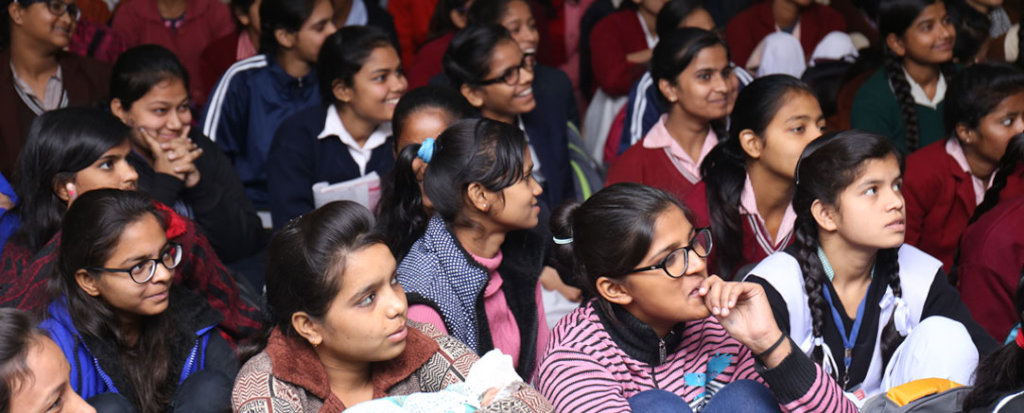
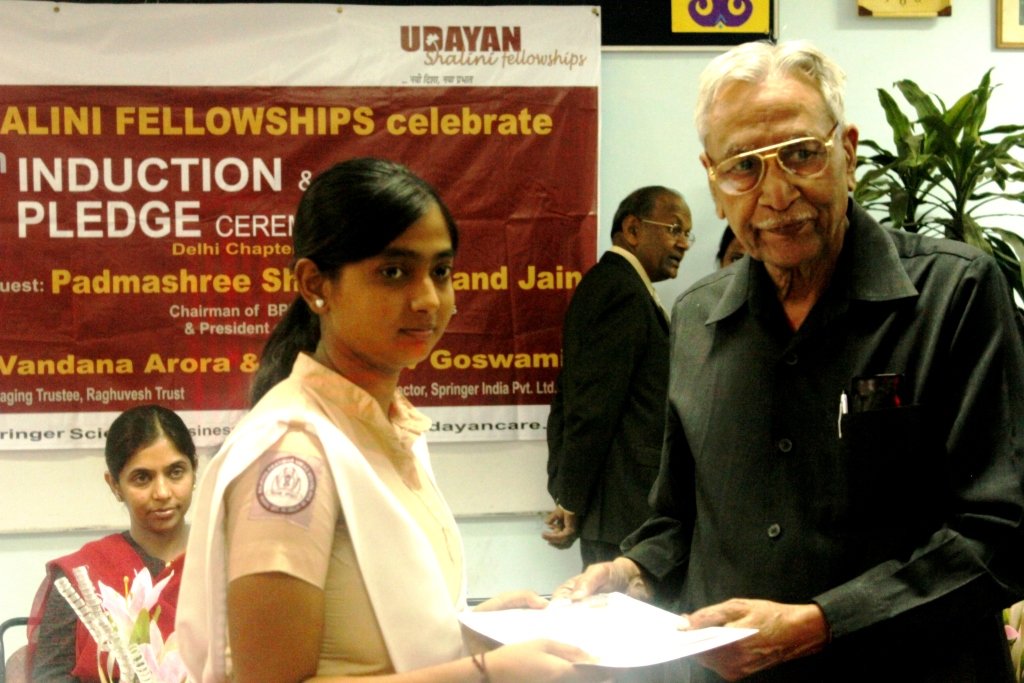
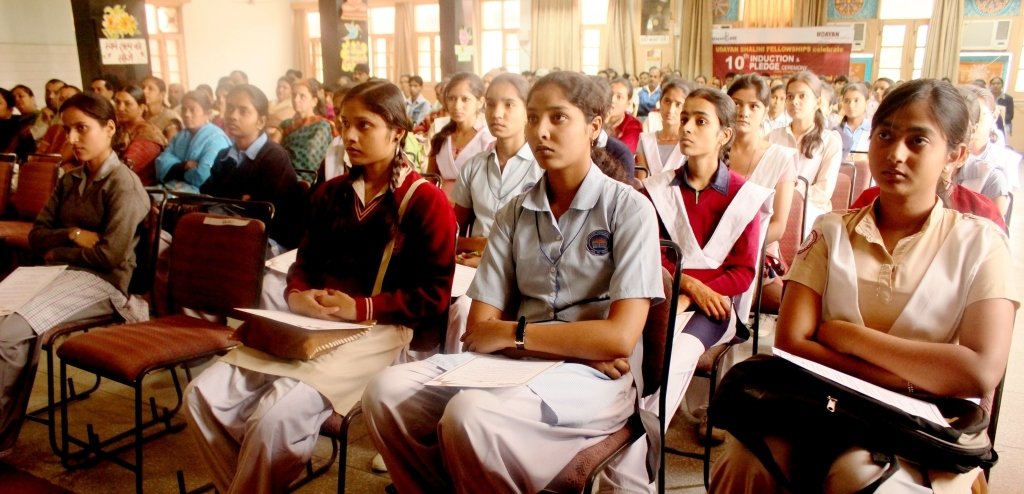
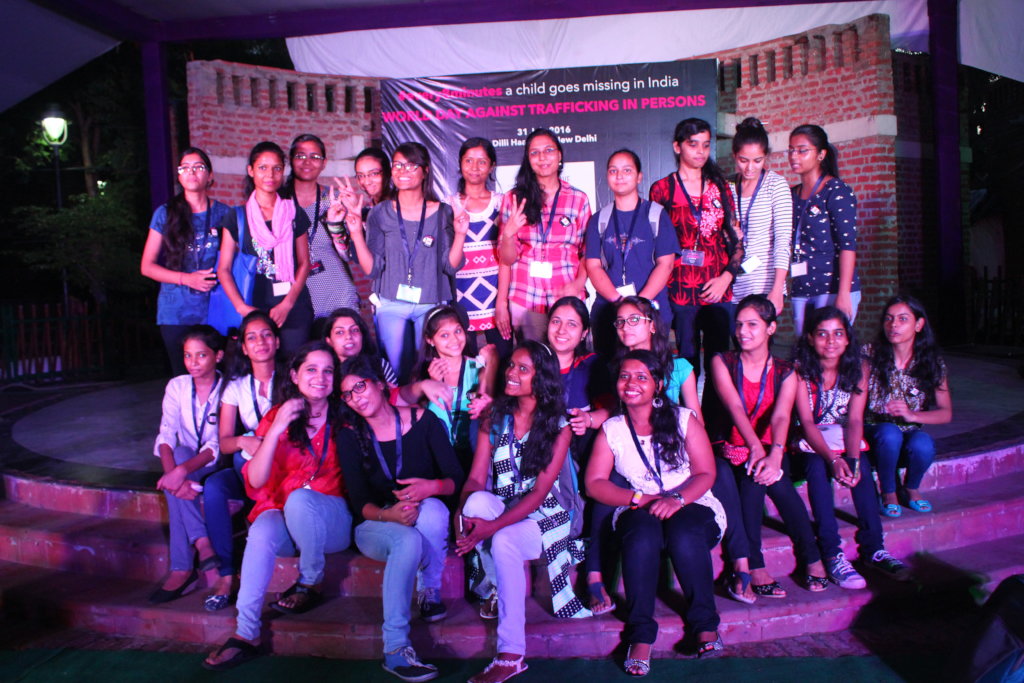
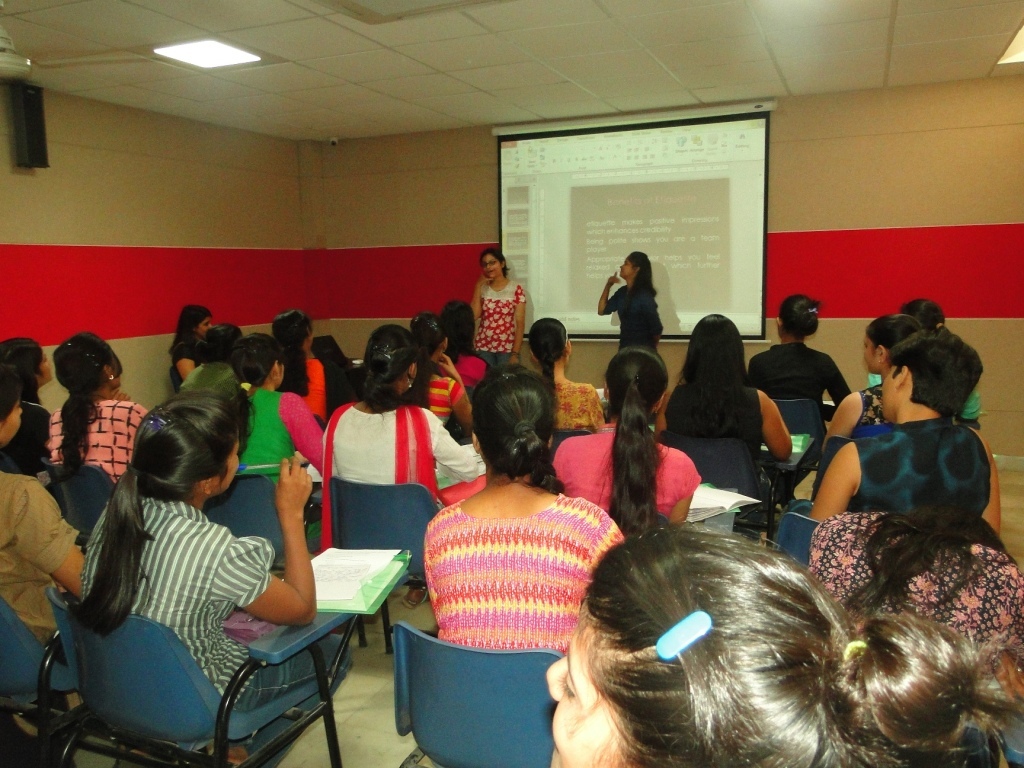
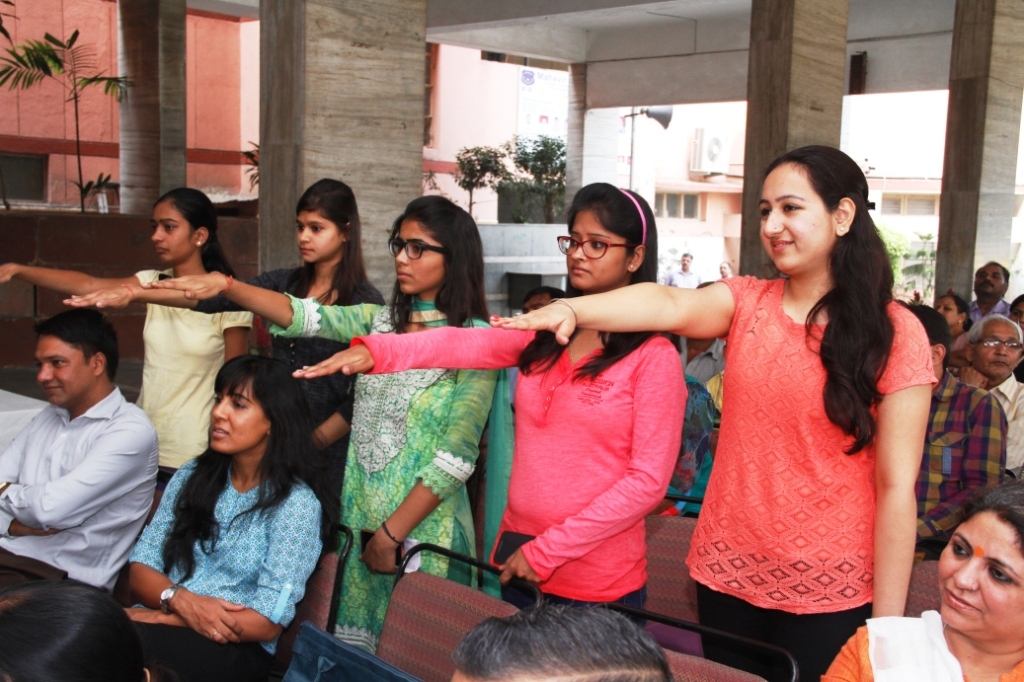
The quarterly workshop conducted covering diverse topics on diverse themes incorporating, “Programming for gratitude” to Disability: “A boon or a Bane” to “Right to education” for children from economically weaker section of society. Small group workshops conducted on imbibing an understanding on Business etiquettes and indispensible life skills including conflict resolution aims to bring awareness to resolve conflict situations in life. Induction ceremony marked another milestone with the new intake of fifty additions to the USF family. Campaign conducted on the grave issue of girl child trafficking in the slum area of Jahangir Puri has developed a sense of social responsibility which comes with social sensitivity.
S.no.
Activities Undertaken During the Reporting Period
Results
QUATERLY WORKSHOP
DATE
15 October’15
THEME
DISABILTIY
(A BOON OR A BANE)
PROGRAMMING FOR GRATTITUDE:
(TO LEAD A HAPPIER LIFE)
RIGHT TO EDUCATION
FACILITATOR
Ms Binni
Ms Vibha (Co-founder of Muskaan Trust)
Indus Action Team
FELLOWS
133 fellows (All batches)
VENUE
Mahavir Senior Model School
THEME ONE: DISABILTIY: A BOON OR A BANE
PROCESS OF THE WORKSHOP:
The facilitator who herself is considered in the category of Person with Disability in societies view, has decided to take up the issue of disability among people spearheading a talk on disability as a boon or a bane. She commenced while emphasizing on “Person with disability Act”, 1995 which claim to give equal Opportunities, Protection of Rights and complete involvement of people with disability but on practical grounds has many loopholes which needs to be taken care of via appropriate amendments. The facilitator addressing fellows puts across a question on what do they all feel when they all meet and see, a person with disability, most of the fellows responded in a sense of hesitation in communicating whenever dealing with person with disability. In addition to the question, the facilitator queried on what encourage them to help person with disability, why do we help them? What do we get in return? Fellows responded in terms of a Sense of satisfaction all of them experience whenever they get an opportunity to help someone in their capacities.
The facilitator puts forth the discussion on the major role of society, plays in shaping the person with disability. Often seen as a liability than an asset, Nevertheless our positive contribution in the society has already been proven by many like us. Giving instances of the famous personalities like Sudha Chandran, the facilitator talks about the contribution PWD’s (person with disabilities) are making in the society.
Talking on the denial of basic Human Rights including the denial of getting admission in the general school system, to get employment, to live independently in the community, to vote, to participate in sport and cultural activities, to enjoy social protection, to access justice, to choose medical treatment and so on.
The facilitator culminated her session with a Quote “Disability is god given but the handicap is man-made”. Where she emphasize on dialogue, we all have options, options to choose our vulnerability to weaken ourselves or to strengthen ourselves.
THEME 2: PROGRAMMING FOR GRATTITUDE: To lead a happier life
Prior to the commencement of the gratitude section, Ms Rachel Siyang, who is an alumnus from Harward business school shared few words of knowledge with the fellows, talking on facts, she informed on how 25% of employment depends on our Intelligence quotient and rest 75% depends upon the willingness, and eagerness to learn in life. Saying on three points as follow:
(Showering thankfulness to the people we are blessed with in our life)
(Memoir of daily experiences, everyday writing down three things we are grateful for).
(Exercise to keep mind and body in best of their health, exemplifying as concentrating on every intake of breath every morning)
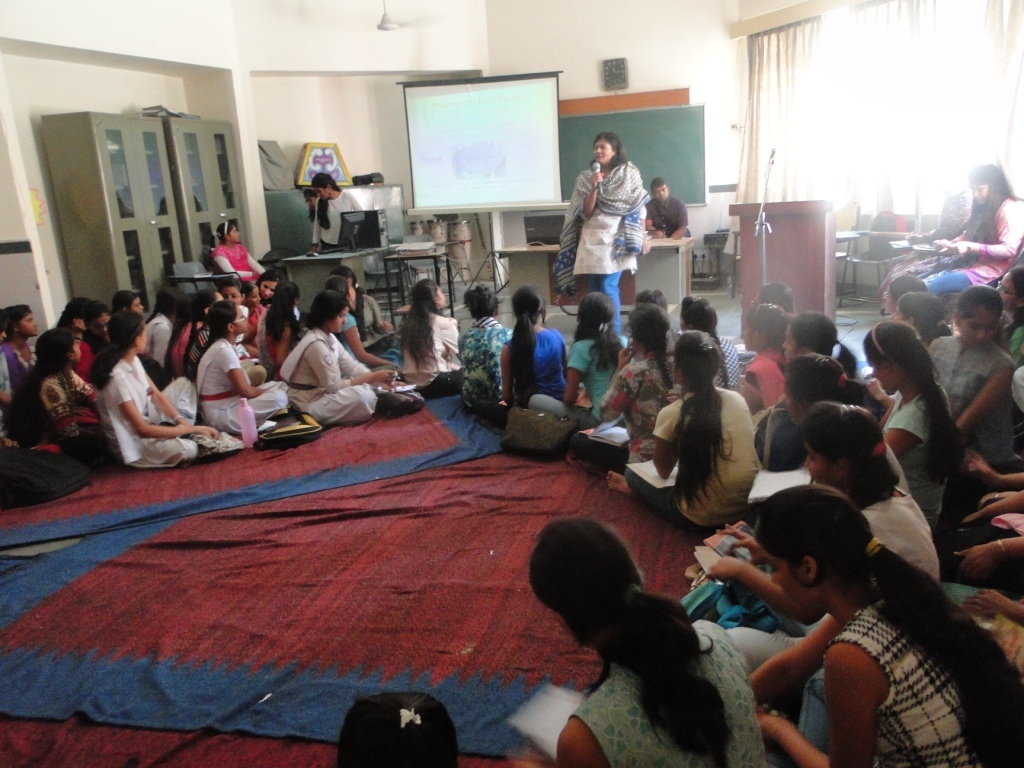
Mrs. Vibha, founder of Muskaan trust spearheaded the session with a quote, “Whatever happens in life, happens in the form of give and take”. She commenced her session asking the fellows to sit in one big circle. The first exercise she asked “what do our hand lines says about gratitude (looking at our hand for a minute). Then asked few volunteers to come up and share their experiences. Responses came up as follow:
The facilitator then further illustrated her points on exploring ways to show gratitude to people:
Showing Smiley’s: We all have choices on how we react to the world and worldly vibration. Many of us have this habit to criticize things in life whether its people, situations or places. Explaining how the nature of every single thought going on in our mind, further turns into words and action, produces molecular waves and vibration in the atmosphere which has an effect on every object and waves spread throughout the universe.
The facilitator explained how any good thought, word or action produces a good vibration and does well to many and so in the same way how every bad thought destroys the person capacity to think.
The facilitator whilst explaining the circle on how our every thought give rise to the words we speak which further turns into actions and then takes the shape of our habit became our character and then turn into our destiny. She explained the more we give into a negative thought the more will be the drain in our energy and the more you give in to your negative thoughts, the stronger harmful they become.
Interconnectedness: Putting in dialogue the interconnectedness we all share with the world. She explained we all are part of the universe and by de-facto all are the somewhere related to each other.
Negative Self Talk: Addressing fellows, the facilitator bring forth the concept of self talk. The nature of conversation we have with ourselves determines our happiness.
Amplifying it with the lenses of neuron-science, the facilitator explained every self talk we have with ourselves sends out vibration to the universe. Every action produces molecular wave and spread in the universe.
Quoting “It is not happy people who are thankful rather it is thankful people who are happy”. The one thing that is common in all human beings is that we all want to become a happy soul.
PRACTICING GRATITUDE: The facilitator briefed on the levels of practicing gratitude. We all have so many things in life for which are grateful. All the levels are covered in the form of individual exercises.
Gratitude to YOURSELF:
In the ambit of which the facilitator asked the fellows to do an individual exercise, “Notice any one thing positive about oneself and write a note saying ‘Thank You’
FELLOWS Responses
Gratitude to “NATURE”: During this individual exercise fellows were asked, to “Pick any one thing for which they are thankful to Nature”.
FELLOWS Responses
Gratitude to “CARING FIGURE”:Part of the exercise the facilitator asked the fellows, to name anyone in their life, be it their mentor, teacher, friends who they considered as caring figure in their lives.
FELLOWS Responses
Gratitude to USF: The facilitator asked the fellow to quote one thing for which they are thankful to the USF program. Realizing that though it is not an easy task to put feeling into words.
FELLOWS Responses
Gratitude WALK:the facilitator asked the fellows to walk out of the room and make a call to that one person to whom they are thankful to the bottom of their hearts.
FELLOWS Responses
EMPHASIS of the Session
The session culminated with a de-facto confession, addressing fellows that every individual is blessed 84000 second in a day and it is upon each individual how we utilize each and every minute.
THEME THIRD : RIGHT TO EDUCATION
Since the Right to Education has opened up many opportunities for children from economically weaker sections. The Indus team informing on Section 12(1) (c) of the RTE Act which mandates that private unaided schools reserve 25 per cent of their seats in for EWS students and those from disadvantaged groups.
The Indus team, praised fellows who made their best efforts to spread awareness and knowledge on the policy during their engagement as a volunteer for the cause. The team congratulated fellows for their previous contribution in making difference in the lives of many children via volunteering for the cause and guided on how to carry on worth the work.
SMALL GROUP WORKSHOP
DATE:
11th October, 15
THEME
Conflict Management
VENUE
Mahavir Senior Modern School
NO. OF PARTICIPANTS
13th Batch
FACILITATOR
Ms. Shalu Saharan
Mrs. Arti Upadhayay
OBJECTIVES
BRIEF OVERVIEW OF THE SESSION:
Facilitator conducted Small Group Workshop for batch 13. The whole workshop was divided in two sessions. These sessions were as follows:
SESSION FIRST:
The first session was conducted with the aim of understanding what is meant by the term “Conflict”. The facilitator asked the fellows what they understood by this word. The fellows related it with the word “Duvidha”, and happens when there are two equally important situations, to choose from and then to decide which one to do. The facilitator then asked if this kind of a situation happens very often, to which there was a mild “YES” and then they were asked to think of a conflict situation that they last faced. Conflicts, if not handled properly, can become huge problems, and make things difficult.
The fellows said that due to this being their important year being in the 12th grade, there were lots of conflicts that they were going through, and most important of which was to keep up with their time for study hours. The Facilitator then drew the attention of the Fellows to the question on what in their opinion is the source of conflict, how and when does a conflict arise. What is it that gives the chance for a conflict to happen? The sources of conflict, she explained, were because of power or strength, and there is also economic power. These are bases for conflict which can also be aggressive conflict situations. There was another source of conflict that is non-aggressive, and arises from conflict in values. She said, in our day to day life, values have an important part to play. We all have values, and when that is affected, or when someone hurts our self esteem that is when most conflicts arise.
When bringing in discussion our ways of reacting to situation. We end up feeling agitated, dustups, and often ignore the situation or the place but there is a way called “NON AGGRESSIVE CONFLICT RESOLUTION” which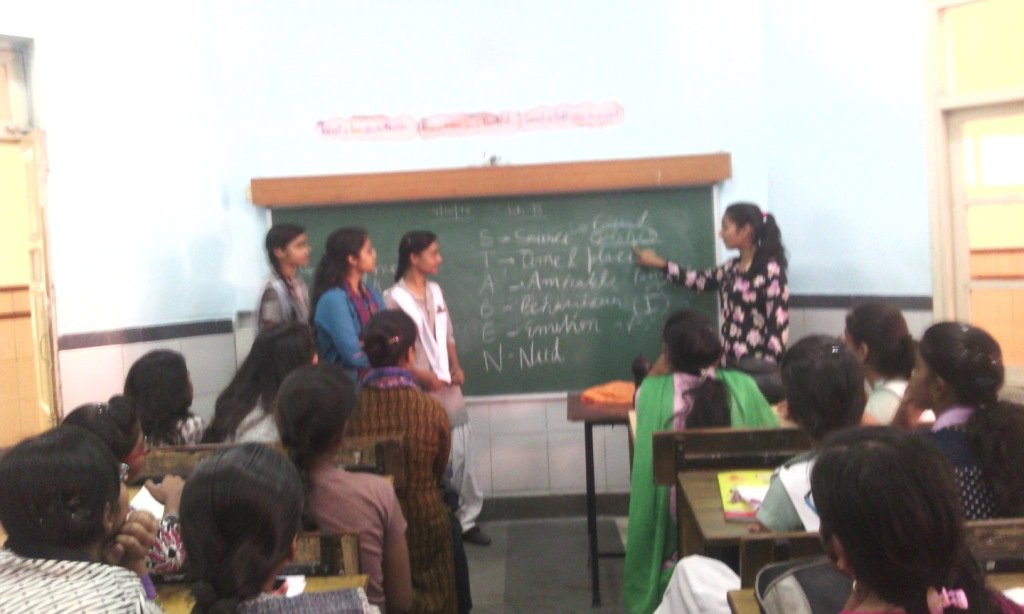
Project reports on GlobalGiving are posted directly to globalgiving.org by Project Leaders as they are completed, generally every 3-4 months. To protect the integrity of these documents, GlobalGiving does not alter them; therefore you may find some language or formatting issues.
If you donate to this project or have donated to this project, you can receive an email when this project posts a report. You can also subscribe for reports without donating.



Support this important cause by creating a personalized fundraising page.
Start a Fundraiser