By ALLMEP | ALLMEP
Between July 2025 and June 2026, ALLMEP will enter a critical new phase of its trauma-informed peacebuilding work—one that moves beyond awareness-raising toward sustainable integration, research, and community-led healing. Building on two years of learning and piloting supported by the Robert Bosch Foundation, Phase 3 responds to an urgent reality: trauma is no longer a peripheral concern for peacebuilders in Israel and Palestine, but a defining condition shaping participation, identity, and the prospects for peace itself.
Over the past two years, ALLMEP’s network has demonstrated both the need for and the impact of trauma-informed approaches. Phase 1 (2023–2024) established proof of concept through pilot trainings led by trauma experts, equipping grassroots peacebuilders with basic tools for emotional resilience and trauma awareness. What emerged most clearly was demand—an overwhelming call from practitioners who were themselves navigating acute stress, grief, and burnout. Phase 2 (2024–2025) expanded this work by embedding trauma-informed sessions into the Women’s Leadership Network and launching a training-of-trainers model for youth summer camp facilitators. These efforts confirmed that without addressing trauma, peacebuilding efforts struggle to endure.
Phase 3 translates these lessons into three targeted components that together strengthen communities, organizations, and the broader peacebuilding field.
Centering Mothers as the First Line of Healing
The first component focuses on supporting Palestinian mothers displaced from Gaza and currently living in Cairo. Implemented in partnership with Zimam, Tomorrow’s Women, and RISE, this initiative represents a strategic shift: rather than beginning with children, the program prioritizes the emotional wellbeing of mothers, who carry the heaviest burden of displacement, fear, and loss.
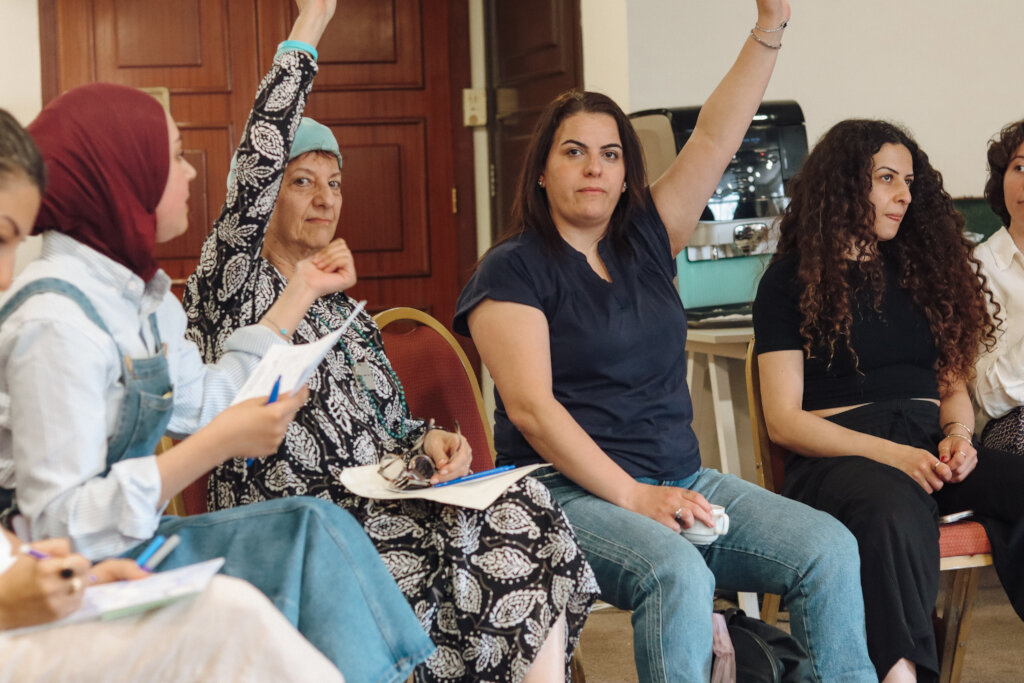
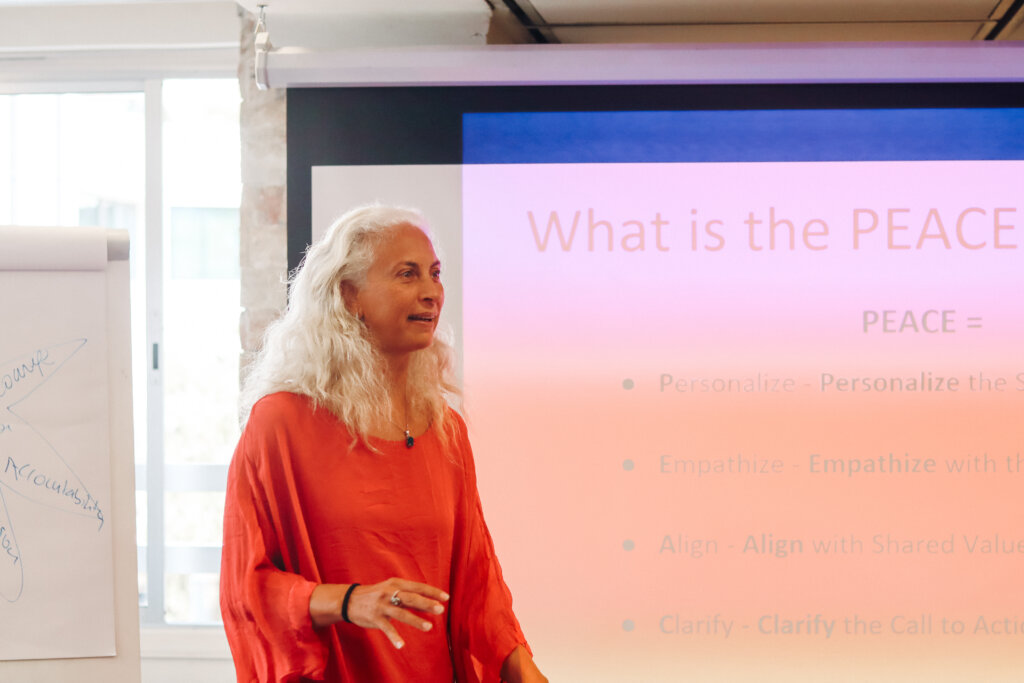
Through a three-month pilot hosted at RISE’s community education center, a small cohort of Palestinian women facilitators—many displaced themselves—will first receive trauma-informed resilience and wellness training. This foundation is essential: facilitators need tools for grounding, emotional regulation, peer support, and burnout prevention before they can support others. Once stabilized, they will participate in a Training-of-Trainers process that equips them with group facilitation skills, trauma-sensitive communication, and culturally grounded play-based and storytelling tools.
These facilitators will then lead weekly trauma-support circles for mothers whose children attend RISE programming. Sessions will focus on parenting under trauma, co-regulation, emotional safety, and practical coping strategies such as narrative processing and art-based reflection. The result will be a locally rooted, Arabic trauma-support model that strengthens family systems and creates a more stable psychosocial environment for children—while empowering women as leaders of community healing.
Building the Evidence Base for Trauma-Informed Peace
The second component addresses a persistent gap in the field: the lack of systematic research on how trauma shapes conflict dynamics in Israel and Palestine. ALLMEP will commission a comparative study with Palestinian, Israeli, and international academic partners to explore how trauma influences identity formation, polarization, and participation in peacebuilding.
By examining intergenerational trauma, barriers to engagement, and best practices from other conflict zones, this research will help shift the field from reactive coping toward informed strategy. Findings will be published in Arabic, Hebrew, and English, and disseminated through a policy brief and roundtables aimed at donors and policymakers. The goal is clear: to position trauma not as an optional add-on, but as a strategic peacebuilding priority.
Embedding Trauma Sensitivity Inside Organizations
Finally, Phase 3 pilots a practical capacity-building mechanism for ALLMEP member organizations. Instead of launching a new cohort program, ALLMEP will offer 3–4 organizations direct access to trauma experts through an “hours bank” model. Each selected organization will receive 15–20 hours of tailored consultation to integrate trauma-informed practices into their existing youth, women’s leadership, or community engagement work.
This flexible approach allows organizations to make incremental yet meaningful adjustments to program design and delivery, while generating shared learning for the wider network. If successful, it will provide a scalable model for long-term integration across ALLMEP.
Together, these three components reflect a maturation of trauma-informed peacebuilding—from pilots to practice, from individuals to systems. At a moment when communities are stretched to their emotional limits, Phase 3 affirms a simple but powerful principle: healing is not separate from peacebuilding. It is foundational to it.
Project reports on GlobalGiving are posted directly to globalgiving.org by Project Leaders as they are completed, generally every 3-4 months. To protect the integrity of these documents, GlobalGiving does not alter them; therefore you may find some language or formatting issues.
If you donate to this project or have donated to this project, you can receive an email when this project posts a report. You can also subscribe for reports without donating.



Support this important cause by creating a personalized fundraising page.
Start a Fundraiser