By Dr. Bunjongsek Supsopha | Project Leader
School Farming
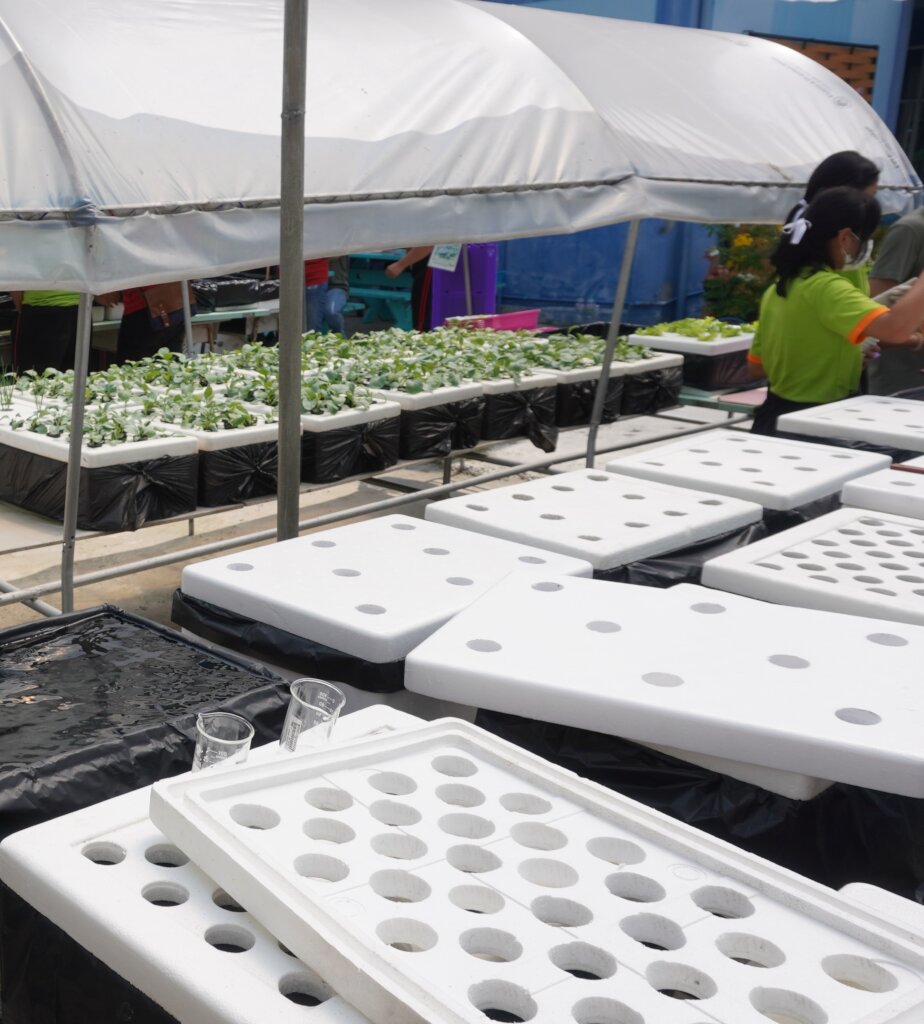
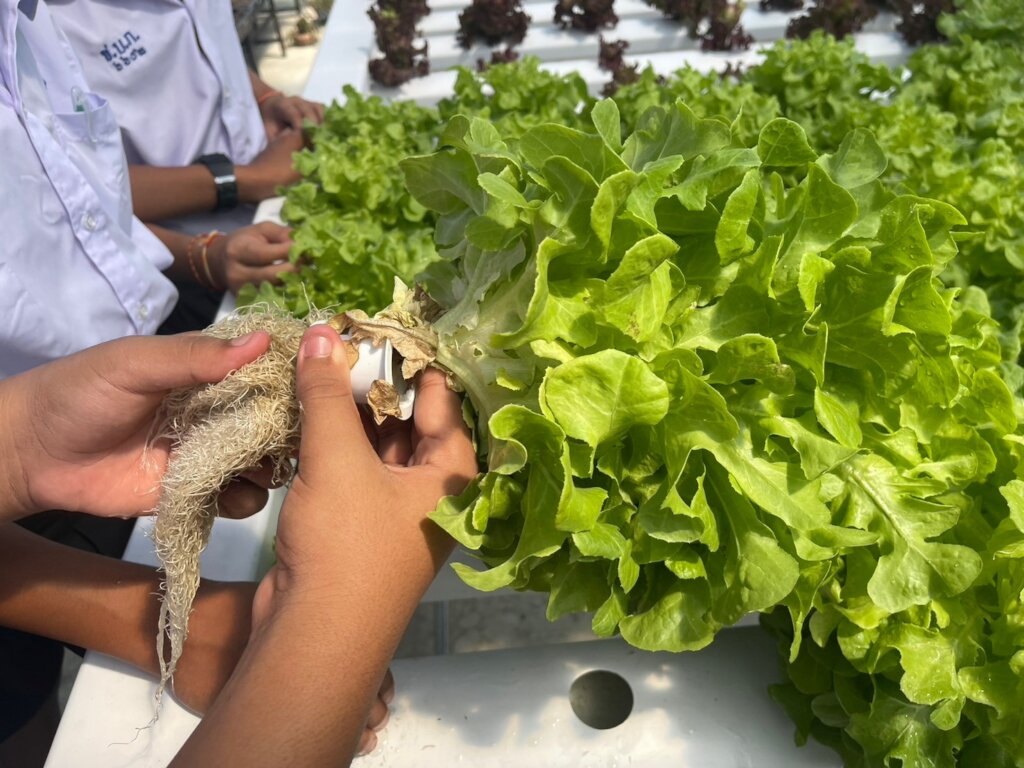
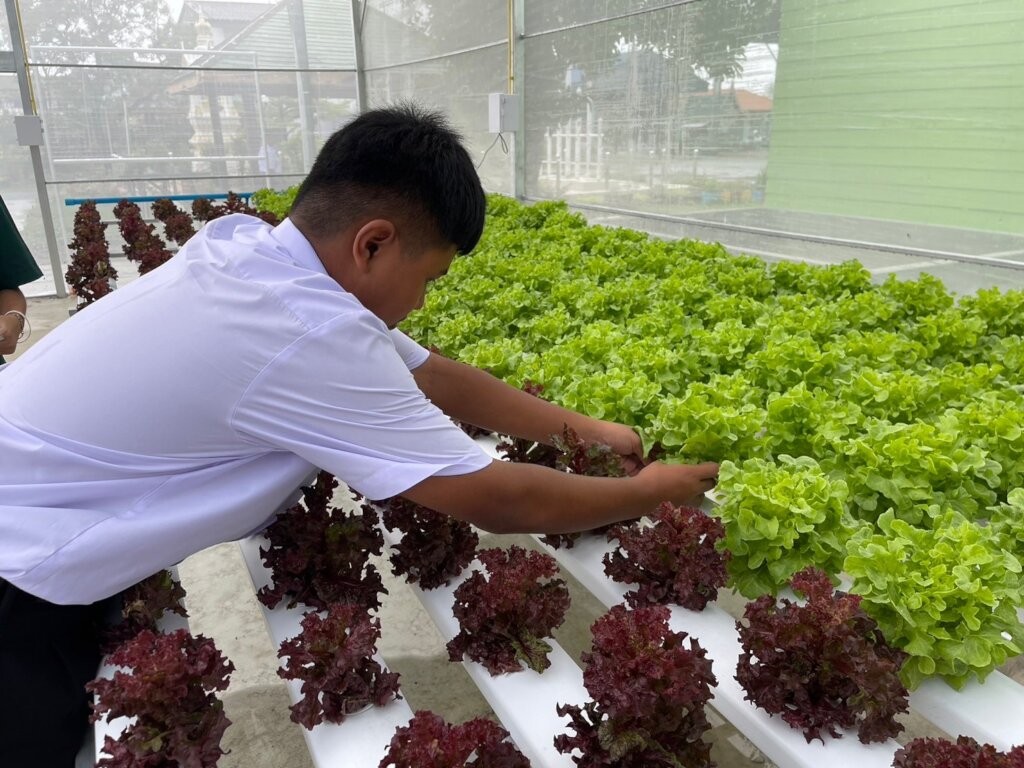
5 Schools (in Umphang Witthayakhom School and Thasongyang Wittayakhom School in Tak Province. The third is Ban Cho Phaka School in Buriram Province. The fourth is Ban Nong Tian School in Sa Kaeo Province. Wat Ban Rakat School in Samut Prakan Province) and 15 local partners were signed MOU to support the program. 750 students and 50 teachers from 5 schools were trained “Science-based smart school farming”. 87% of participants passed an evaluation. A total of 125 youth leaders and teachers from 17 schools are formed as Smart School Farming committee. The committee transferred their knowledge of Science-Based School Farming for Sustainability to 3,278 students and teachers.
Each school designed their Smart School Farming Project by using Handysense. HandySense is a tool for precision farming. The system employs sensor technology and internet of things (IoT) to measure and control the environmental conditions – temperature, moisture, and light intensity, for instance – and inputs – such as water, fertilizer and pest control – to promote plant growth. Users can monitor and control growing parameters from a computer and a mobile device in real time for actions and planning of agricultural activities developed by NECTEC-NSTDA (the National Science and Technology Development Agency (NSTDA)) who is the partner of our program. Besides Handysense knowledge support, NECTEC-NSTDA monitored the program closely on/offline.
Wat Ban Rakat School located in Bangbo district, Samutprakan province. At Bang Bo, they were raised in large quantities of Plasalit or gourami and became so well known. To prepare the fish for sale they were scaled and cleaned. Fish scales are inedible and hence thrown away as industrial waste, which is one of the major sources of pollution in the natural environment. Wat Ban Rakat School invent the project “Fish Scale Mode Innovation”. This projectcreated “Plant growth Chamber” which using bioplastic films made from Plasalit fish-scale wastes to derive carbon quantum dots. This project can help vegetable growth 20% faster. The project got the Lab result and guaranteed by Kasetsart University.
You yourself can be the very important donor to support this project with CCF by donating through the GlobalGiving Platform
THANK YOU.
Project reports on GlobalGiving are posted directly to globalgiving.org by Project Leaders as they are completed, generally every 3-4 months. To protect the integrity of these documents, GlobalGiving does not alter them; therefore you may find some language or formatting issues.
If you donate to this project or have donated to this project, you can receive an email when this project posts a report. You can also subscribe for reports without donating.