By tanya alag | coordinator - resource mobilisation
SBT Full-Care Residential Centres are Unique
Unlike orphanages, shelter homes and other child care institutions, full-care residential homes provide an enabling environment to children to realize their potential to the fullest. An attempt is made to educate and help children develop intellectually at these centres. However, children who are not inclined towards academics are not pushed towards a definite career path. Children are provided opportunities to develop their hidden talents and skills. They are encouraged to pursue dance, puppetry, acting, painting and photography as well.
Street children are deprived of protective environment of family. Article 20 of United Nations Convention on the Rights of the Child recognizes the right of such children who cannot be looked after by their own family to special care. The Government of India also accorded serious attention to provide protective environment of children in need of care including street children through enactment of the Juvenile Justice (Care and Protection of Children) Act, 2000 and subsequent amendments to the Act. The Act in its Section 37 provides for establishment of shelter homes for children in need of care and protection. Significance of shelter homes for street children is immense, given the exploitative, violent and hostile situations they face in cities. Shelter homes act as safety nets protecting street children from sexual abuse and exploitation, physical violence and child labour.
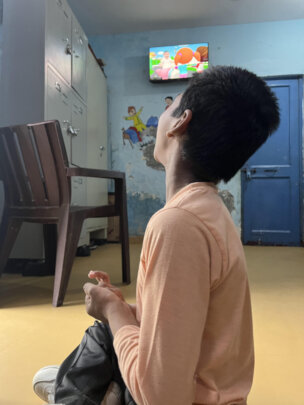
Understanding the importance of ensuring a safe environment for children, SBT runs full-care residential homes for girls and boys who live on streets. Aasra, Apna Ghar and DMRC Children Home are home for boys; Udaan and Arushi are shelter homes for girls. Besides serving the prime purpose of providing a ‘safe living space’ to children, residential homes offer a comprehensive package of services including food, education, medical care, mental health and psychological support.
Children’s admission in the centres is ascertained after they are duly presented in CWCs as per the provisions of the JJ Act, 2000. Identifying the unique background and needs of the child, individual care plans are drawn for each child in these centres. Regular academic, psychological and medical assessments of the children are doneto provide individualised educationand health facilities. Full-time mental health professional and medical coordinator are appointed in the centre to provide psychological support, counselling and facilitate medical check-ups and treatment of children, respectively. Following services are provided to children at the residential centres.
Health and Nutrition: Health is invariably a neglected issue amongst street and working children. Thus, SBT has a comprehensive health programme comprising specific services including full medical investigation, first aid, screening and medical check-ups, medical investigation, referral for treatment and hospitalisation, screening and treatment of STD/STIs, voluntary tests for HIV/AIDS, long-term treatment support to children through institutional linkages and referrals and organisation of health awareness camps.
Mental Health: Exposed to different forms of violence and exploitation, children on the streets often suffer from a lot of mental trauma and emotional disturbances. Therefore, mental health programme aims towards identification and management of mental health/ behavioural problems in children and adolescents; building awareness of mental health issues amongst all staff; developing protocols in key areas such as child abuse and protections, suicidal risks; dealing with learning difficulties and academic issues of children through special education programme; and supporting staff through individual and group work. The mental health team comprises qualified counsellors and psychiatrist. The team operates through mental health assessment and interventions. The interventions include individual counselling, pharmacology, rehabilitation, psycho-education, and supportive work all tied through comprehensive case management.
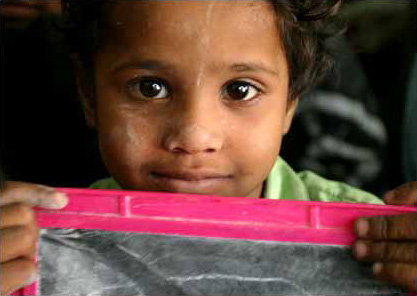
Education Programme: In order to set children on the path of comprehensive growth and development SBT lays great emphasis on formal schooling i.e. admitting children to regular private or public schools. Apart from this some children also go through non-formal schooling and National Open School systems of education. Children are assisted in their homework and are provided extra tuition/remedial classes. The teacher-pupil ratio is 1:25. Teachers facilitate each child's learning through small groups of interaction. The non-formal education is conducted through a systematic module and interesting pedagogies.
Life Skills Education Programme: The programme aims at enhancing the day-to-day decision making ability of children; and providing them with livelihood options through vocational training, and job placement. Life skills education aims to develop the ability of an individual to deal with the variety of situations that life throws up. Such education helps in the overall development of children, including physical, mental and social well-being, building greater self-confidence in life. It is majorly targeted towards children who are at the threshold of maturity i.e., going to turn 18 years.
Vocational Training and Job Placement: Vocational training becomes a critical link for children to enter the mainstream of society. In order to qualify for vocational training, SBT children have to complete 16 years, or clear their 10th standard board exam. Children choose a vocation according to their interests, but the assessment of a career counsellor and staff is available to help them match their ability with the training they want to undergo. The children opt for courses viz. choices were Master Desk Top Publishing, web and graphic designing, multi-media animation, film editing, C++ software, care-giving, house-keeping, puppetry, karate, theatre, macramé and photography. Some of the institutes which provided training were ITI, Pusa Road, NIIT, MAAC, Arena Multi-media, Crown Plaza, Taj Mahal Hotel-Mansingh Road, Vivek Sahni's Design House, The Ishara Puppet Theatre Trust, YMCA, Triveni Kala Sangam & Ramakrishna Institute of Computers. Placement in jobs is the final act in the process of bringing children into the mainstream. However, SBT maintains contact with these young adults to ensure that they find stability, and then growth, in their work.
A snapshot of progress achieved by various centres of SBT in 2014, has been captured below.
Aasra
Apna Ghar
Arman
DMRC
Udaan
Arushi
Boys home
Girls home
Aasra was the first shelter home started by SBT. With a capacity of 50 it caters to boys of five to 18 years. The home was set up under the JJ Act, 2000.
It is an open centre, where children have the freedom to visit the centre any point in time. The home was set under the JJ Act, 2000.
Arman is also an open centre catering to boys.
DMRC Children’s Home was established as part of Delhi Metro Rail Corporation’s corporate social responsibility. The home houses 100 boys from the age of five to below 18 years
Udaan was initiated with the support of Give 2 Asia in March 2010. It started with eight girls and currently shelters more than 50 girls at time.
Arushi was first girls’ shelter home under SBT. It is an initiative to offer 24 hour shelter to girls between the ages of five years to 18 years living on the streets.
Children Reached
Total children reached -487
Shelter provided to -487 children
Restore back to families-365
children
Placed to other NGO-65 children
Produced to CWC-487 children
Total children reached -460
Shelter provided to - 460 children
Restore back to families-40 children
Placed to other NGO-52 children
Produced to CWC-174 children
Total children reached -32
Shelter provided to -08 children
Total children reached -475
Shelter provided to -475 children
Restore back to families-281 children
Placed to other NGO-36 children
Produced to CWC-75 children
Total children reached -71 girls
Shelter provided to -71 girls
Restore back to families-25 girls
Placed to other NGO-03 girls
Produced to CWC-71 girls
Total children reached -94 girls
Shelter provided to -94 girls
Restore back to families-37 girls
Produced to CWC-94 girls
Educational Facilities
Received NFE-487
children
Children in NFE-317 children
Received education through NIOS-21 children
Total children linked to mainstream education-22
Children in formal school-83 children
Received education through NIOS-19 children
Children in NFE-369 children
Children in formal school-32 girls
Received non- formal education-7 girls
Received education through NIOS-12 girls
Children in formal school-35 girls
Received NFE-94 girls
Received education through NIOS-12 girls
Graduation from DU-01 girl
Vocational Training and Job Placement
Admitted to vocational training course-17 children
Placed in different jobs-9 children
Admitted to vocational training course-17 children
Job placement-03 children
Vocational training-17
Job placement-08
Admitted to vocational training course-13 girls
Placed in different jobs-03 girls
Medical Care
Medical checkups-1754 times (381 children)
Referred to hospital-56 children
Hospitalised-02 children
Medical investigation-83 children
Operated-02 children
Tetanus injection- 48 children
Eye checkup-45 children
Referred to detoxification centre -3 children
HIV test-02 children
Long term treatment- 02 children
Referred to mental health-30 children
Group sessions-15
Informal sessions-344 sessions
Medical checkups-443 times (185 children)
Ref. to hospital-75 children
Hospitalised-09 children
Operated-04 children
Medical investigation-76 children
Long term treatment-9 children
Eye checkup-26 children
Dental check up-08 children
Tetanus injection-15 children
HIV test-07 children
Group sessions- 10 sessions
Medical checkups conducted for all children reached
Medical checkups-1054 times (475 children)
Ref. to hospital-624 times
Hospitalised-12 children
Operated-02 children
Medical investigation-370 children
Long term treatment-20 children
Eye check up-183 children
Dental check up-08 children
Tetanus injection-315 children
Hepatitis-174 children
Referred to HIV test-10 children
Ref. to mental health-46 children
Referred to detoxification centre -01 child
LSE sessions held-40 sessions
Group sessions-225 sessions
Medical checkups-642 times (71 girls)
Ref. to hospital-48 times
Hospitalization-04 girls
Medical investigation-65 times
Long term treatment-02 girls
Tetanus injection-60 girls
Hepatitis B injection-34 girls
HIV test-04 girls
Eye check up-38 girls
Dental check up-40 girls
Life Skills Education (LSE) sessions held-49 sessions
Group sessions-36 sessions
Medical checkups-213 times (94 children)
Ref. to hospital-94 times
Hospitalised-06 girls
Operated-04 girls
Medical investigation-75 girls
Long term treatment-04 girls
Tetanus injection-02 girls
Hepatitis B injection-51 girls
Eye check up-47 girls
Dental check up-11 girls
Ref. to MHP-01 girl
In the current year, the SBT team is planning to reach and rescue increasing number of street children and bring them under the protective ambit of residential centres. To achieve this, efforts are being made to increase linkages with railway authorities, police and community watchdogs, establish networks with the government and non-government agencies, including Child Welfare Committees. Consistent attempts are being made to provide high quality vocational training to older children, to make them more job eligible and increase their access to gainful employment. Concurrently for younger children, the core focus is being la
Attachments:


Project reports on GlobalGiving are posted directly to globalgiving.org by Project Leaders as they are completed, generally every 3-4 months. To protect the integrity of these documents, GlobalGiving does not alter them; therefore you may find some language or formatting issues.
If you donate to this project or have donated to this project, you can receive an email when this project posts a report. You can also subscribe for reports without donating.