By Alina Orkusha | Fundraising and Partnerships Manager
Becoming a Teacher: Five Weeks at the Summer Institute
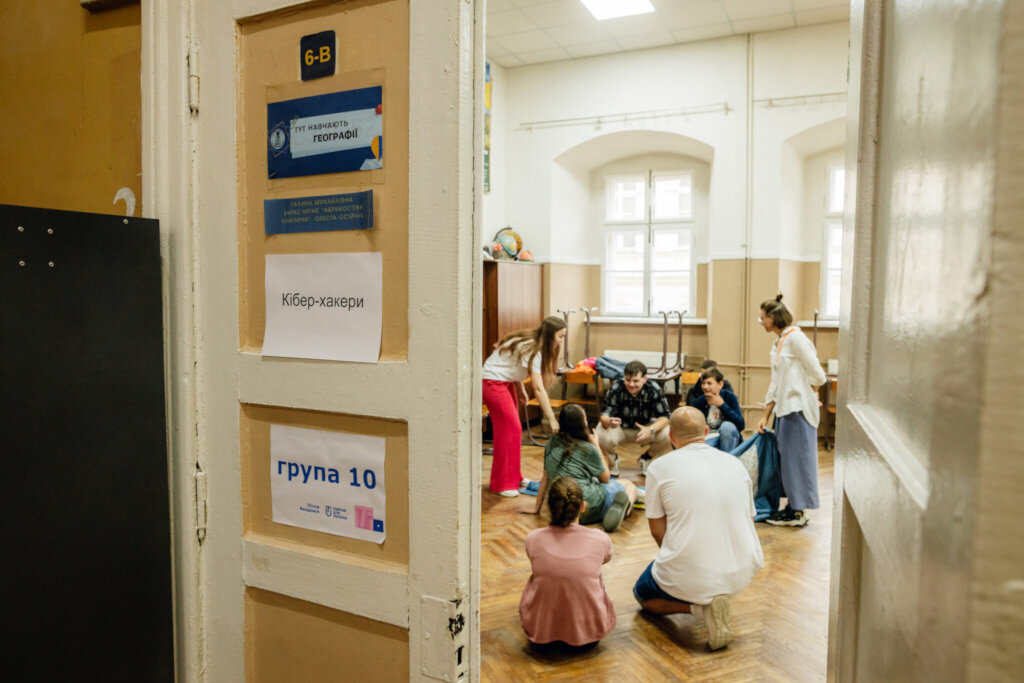
A flock of teenagers races up to the second floor of School No. 62 in Lviv. By the classroom door, clutching stacks of printouts to their chests, stand a few slightly nervous first-time teachers. For the teenagers, it's just a Monday morning — the day their parents sent them off to a summer day camp. For most of the candidates in the Teach For Ukraine Fellowship, it's the first time in their lives they'll face a noisy, utterly unpredictable classroom. These are people ready to move to small towns and villages for one or two years to teach in local schools and carry out their own project in the community. They come to strengthen the school team, to become role models and a source of support for children — and, in return, to gain experience in social impact and responsible work that builds real leadership skills.
Over the years of the Fellowship, 101 people have become teachers in 54 schools across the country, and more than 25,000 children have gained educators who inspire them. But the path to the classroom runs through a rigorous four-stage selection process. Its final and most intensive stage is the 5-weeks long Summer Institute, where future educators travel the road from theory to practice, immersing themselves in the life of a teacher and building the skills needed to work in a modern Ukrainian school.
Rethinking school: from student to teacher
For many candidates, this journey is a genuine challenge and a step outside their comfort zone, since most of them have never taught professionally.
"Very different people come to the Summer Institute. But many of them share one thing: they know school only from their own experience as students," explains Oksana Azhnyuk, Head of Training and Support Department of the Teach For Ukraine Fellowship. "They remember their own lessons, their own teachers, and how it felt for them — but they don't yet know what it truly means to be a teacher today."
That is exactly why, in Oksana's words, the Summer Institute becomes the most intensive possible immersion into the profession. Here, candidates are helped to see the learning process from the other side — through the eyes of a teacher who creates a safe environment, plans lessons, and searches for an individual approach to every student. The training program is a unique asset built by the Fellowship team, refined each year to fit the Ukrainian context and the current challenges of the war, so that it answers the needs of both the future leaders and the children they will teach.
The first week: theory online
The Summer Institute traditionally opens online. This year, the first week ran from June 29 to July 3. Candidates worked through the "Classroom Challenge" course, created by Teach For Ukraine together with Diia.Education; studied the scale of learning loss across the country; explored the theory of leadership; and examined the psychological and physiological characteristics of children. Step by step, they broke down the stages of project-based learning, along with the tools of classroom management — how to build trust, set clear boundaries, create an inclusive environment, and establish a culture of healthy feedback.
Meeting in Lviv
The week of online theory gave way to the offline part of the Summer Institute when, on July 4, the first-time teachers met in person in Lviv to continue their training.
Now the candidates' working day begins at 9:01 with a team check-in and ends with evening reflections at 18:00. The focus shifts to applied tools. Participants dig into the finer points of classroom management and group dynamics, and study the tutoring approach and the concept of a growth mindset.
A separate and crucially important block is devoted to safety — from the strict safeguarding policies that protect children, presented by Khrystyna Shabat, Head of the Child Dignity Center at the Ukrainian Catholic University, to the skills of psychological first aid.
"It was hard to realize once again just how imperfect the world is. Right there beside me was a person who had lived through a difficult experience at school. It's frightening — but at the same time you come to understand that the role of a teacher is to make a child feel safe," shares Snizhana Nikolaieva from Pochaiv, who previously worked as head of finance and communications at an NGO and is now preparing to become an English teacher.
Another important stage was a public-speaking training led by Oksana Zobro, communications director of Teach For Ukraine. Daria Herashchenko, a former merchandiser from Zvenyhorodka and a future English teacher, says it was the practical advice that helped her overcome her anxiety.
"I asked the expert what to do if someone asks you a provocative question. She answered: 'Ask a question back — what are you doing right now? Is this a provocation?' She gave us such simple answers to such difficult questions. It was a weight off my heart."
Alina Opriatova, acting Head of the Teach For Ukraine Fellowship, explains why this intensive in-person stage is a necessary part of selection: at this point, candidates are not yet full participants in the program.
"The value of the Summer Institute is that it models real teaching practice in a safe environment. Participants experiment with different teaching methods, observe one another's lessons, receive support and feedback from methodologists and mentors, analyze their own experience, and refine their approaches. It's a chance not only to learn something new, but to see themselves in real interaction with children — and to take the next step in the teaching profession consciously."
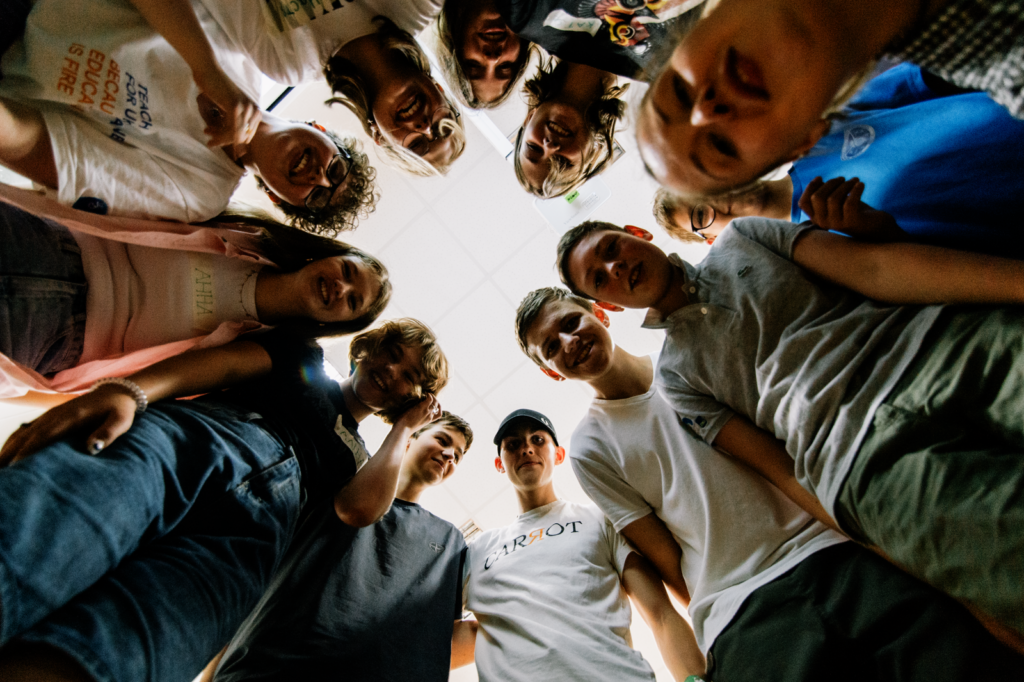
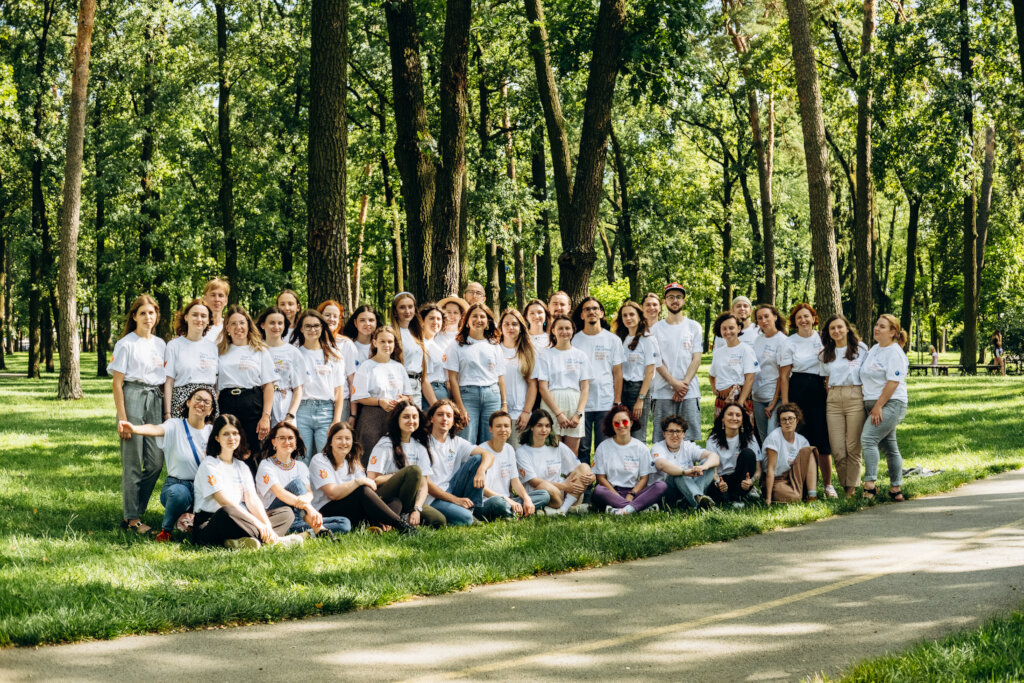
It's during the offline weeks that a community takes shape — one of the Fellowship's core values. Candidates, and later participants, become part of a circle of like-minded people, forming strong bonds, taking part in community events, and supporting one another's initiatives.
Snizhana shares that, for her, the greatest discovery of the Summer Institute turned out to be the people: "I look at them and I'm inspired by the fact that I have support. That so many people care about what's happening to education."
Kateryna Kolmykova from Kropyvnytskyi, who is preparing to teach math, feels the same. She names a sense of belonging as the intensive's greatest gift: "We all know why we're here. I have a whole crowd of new acquaintances who will probably become my colleagues. It's simply the feeling that I'm doing something important alongside people who share the same goal. It's about belonging to a 'tribe.'"
The Summer Academy: when the theory ends
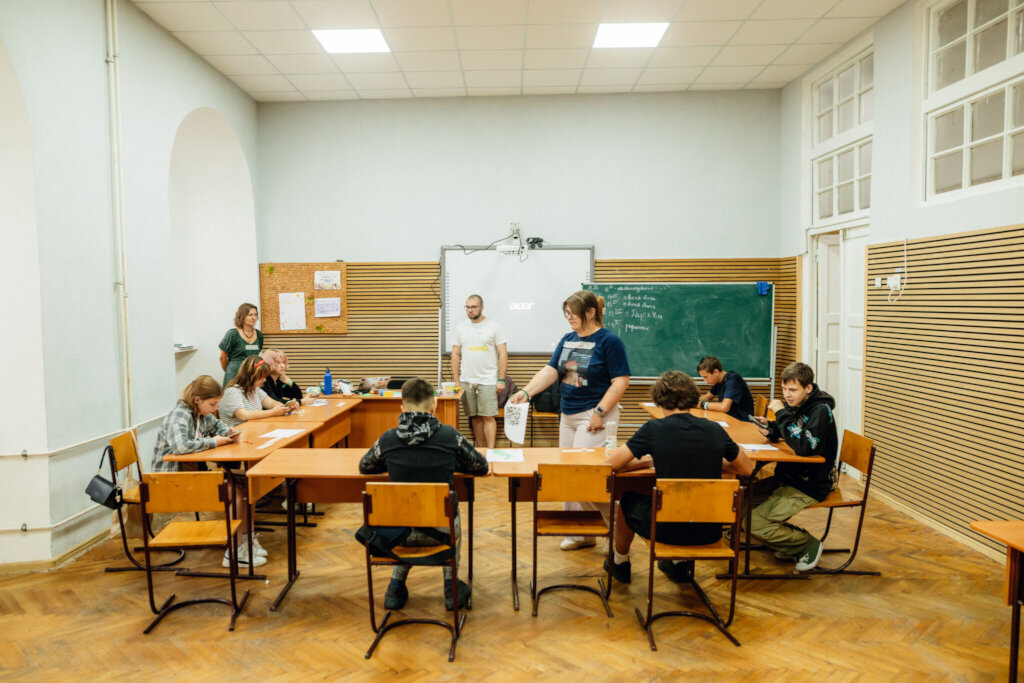
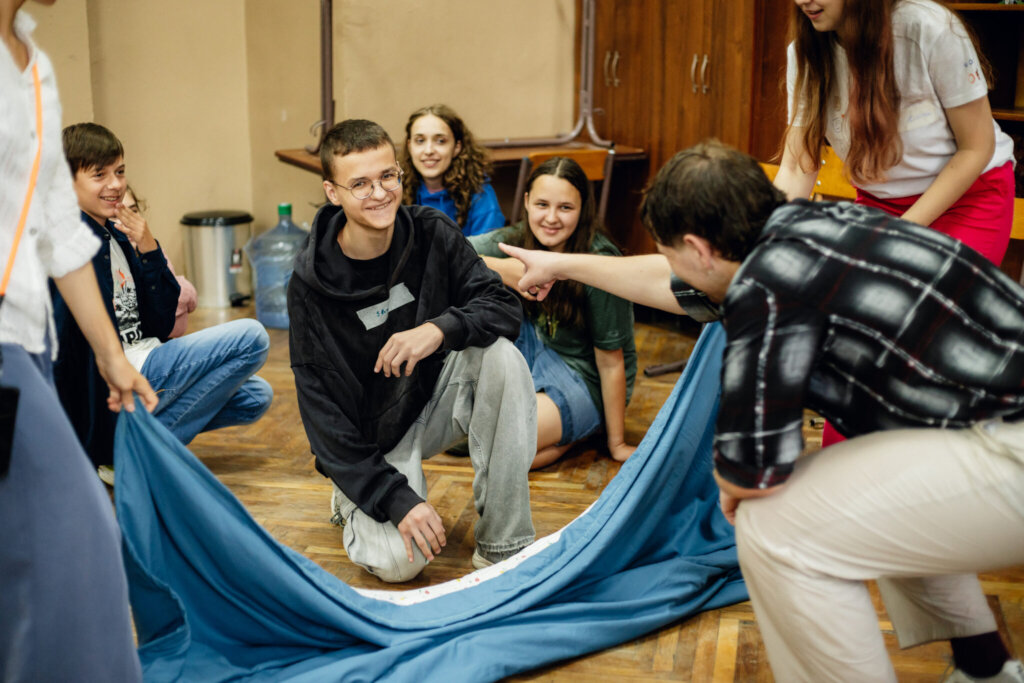
The culmination of the Summer Institute is its third and fourth weeks. During the Summer Academy — a free day camp for schoolchildren — the candidates lead lessons on their own for the first time.
Breakfast is at 8:00; at 9:01 there's a planning session, now right inside the school. From 9:30 to 13:45 the candidates work without pause, teaching three lessons in a row, along with settling-in activities and reflection with the children. The second half of the day is a deep analysis of their mistakes and their wins in debriefs and sessions with methodologists. And from 19:00 until 22:00, participants sit in the conference hall, preparing materials for the next school day.
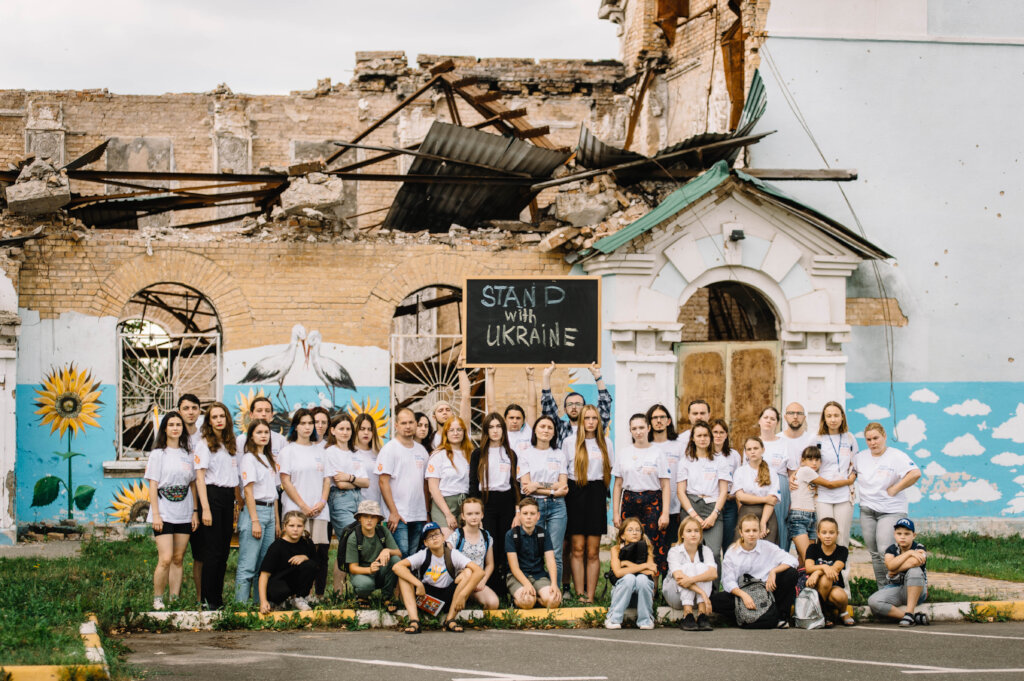
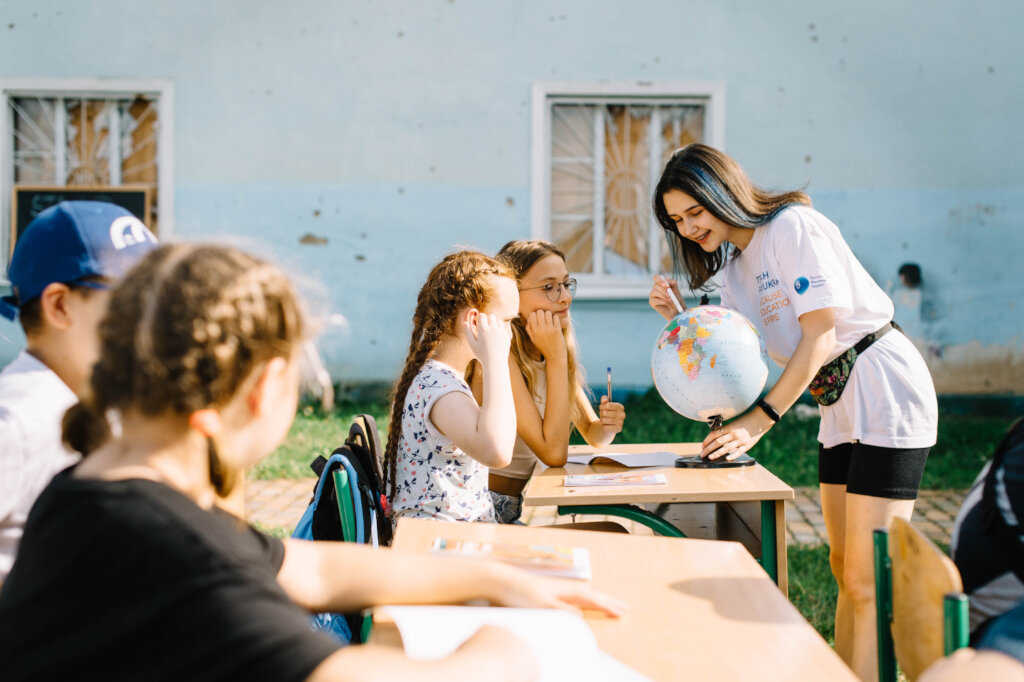
The practice with children lasts two weeks — this year, from July 13 to 24. But its main characters are the children. For them, the Summer Academy is a two-week day camp of psychosocial and educational support, designed to ease them gently back into learning during the holidays — to strengthen their knowledge of school subjects, make new friends, and restore their inner resources.
The camp is built for students in grades 5–11 who most need support and special attention. Among the participants are orphans and children deprived of parental care; those who lost parents or guardians because of the war, or whose loved ones died defending Ukraine. There are also children of servicemembers and veterans — including prisoners of war and those missing in action — internally displaced children, and children from large families.
The work with these students focuses on restoring their emotional wellbeing and improving their knowledge of school subjects — and, just as much, on spending good, engaging time together, learning to love learning, and discovering the interesting sides of familiar subjects. This is Teach For Ukraine's answer to a crisis that began long before the full-scale invasion and has only deepened since. Across Ukraine's rural areas, there are schools where children haven't seen a math teacher in years, where an English teacher must also cover geography because of teacher shortages. Research now confirms a 4.5-year gap in educational achievement between students in urban and rural areas. Yet Ukraine's future will be built mainly in village classrooms — fueled by young people empowered to believe they belong in that future.
"This is the first moment we can see participants in real work: how they interact with children, how they respond to challenges, how they work as a team, how they take feedback, and whether they can integrate it into their practice," explains Alina Opriatova. "That's why the Summer Institute is a stage of selection — everything before this assesses potential, motivation, and values. The Summer Academy is especially important for participants who have never worked with children before. It gives them the chance to try teaching for the first time, to understand whether they truly see themselves in this role — and it gives our team the chance to assess their readiness to grow."
The Summer Academy through the children's eyes
Today, seventh-grader Myron isn't just a student at a desk — he's a Scythian diplomat.
"We played diplomats. Some of us were Scythians, others were Persians," Myron shares excitedly. "The Persians wanted to conquer us, and we had to negotiate. I provoked the Persians! In the end, they were just reading off Google, and I was making it up on the spot."
Myron eagerly recalls the English lessons with Ms. Karyna, who "is here every day and teaches in an interesting way." And although from the outside it looks like nothing more than a fun game, it's in exactly these moments that children rediscover their interest in learning.
Ninth-grader Sofia calls the sessions at the Summer Academy "a different way of seeing the same familiar subjects." For her, the Academy became a chance to catch up on things that had once seemed impossible to understand.
"Of the lessons I'd want to repeat, probably history — because I don't know it very well. But here the material is presented in a way that let me work through it the way I really wanted to," Sofia says. "And chemistry! We learned how you can make lessons more varied with experiments and prove in practice what the teacher is saying. And the literature lessons are incredibly interesting, because literature is so valuable for us as Ukrainians. And we mustn't forget history — we need to know and remember what happened and what we are fighting for."
We so often try to talk about learning loss in terms of statistics: how many children have had their schooling interrupted, how much knowledge they have to catch up on, how many extra hours it will take. But here, in the corridors of a Lviv school, those numbers have specific faces. They are the stories of students whose lives were changed completely by forced displacement — like eighth-grader Karolina, who came from Mariupol with her younger brother Kyrylo.
"My grades at school are pretty bad, honestly — there are some things I just don't quite understand," Karolina admits openly. "I was often sick, stayed home for about a month, so it was hard to catch up with the school program. But here, things become clear to me."
She remembers oxidizing iron in chemistry during the camp, or building an ecology project in the English lesson. Her brother, sixth-grader Kyrylo, meanwhile talks about IT class: "They told us how to prevent your account from being hacked and how to avoid running into scammers. If I had to repeat one more lesson, it would be IT."
If you ask the children to describe the Summer Academy in a single word, their answers come together into a perfect picture of what school should be. For Kyrylo, it's "cool." For Karolina, "great." And for Sofia, "new sensations."
First impressions from the candidates
While the children live through these new sensations, the Fellowship candidates are sitting their most important exam of the summer — learning to become the kind of teachers you want to come back to.
Vitalii Kichin, a first-time teacher from the town of Novyi Buh in the Mykolaiv region, says the experience has been a real revelation. Although he already had two years of school practice, here he saw a completely different approach to interacting with children — more flexible and more empathetic. Despite the intense workload, Vitalii jokingly calls taking part "a vacation": by the end of the day he feels a wave of emotion and gains so much valuable knowledge that the exhaustion fades into the background. A physics teacher, he especially points to the culture of feedback. Instead of criticism, he receives constructive advice that helps him improve his next lesson.
"I had one lesson I considered a failure myself," Vitalii recounts. "But I got feedback and advice from my colleagues, and the next lesson turned out completely different. This approach works, and that's really great."
Roksolana Mykuliak, a future teacher of Ukrainian language and literature, is going through similar emotions. She says the Academy has been an extraordinarily rich emotional experience, where she constantly has to balance the roles of mentor, manager, and teacher — someone determined to make learning interesting even during the holidays. One of her main achievements, she believes, is learning to notice "small victories" and to claim them as her own. She describes how she managed to build trust with her students:
"I listened to the children when they felt uncomfortable sharing their creative work publicly in the context of a lesson. I said, 'Okay, you don't have to do this.' And after that, two girls came up to me after class and showed me the poetry they had written. That moment was a bridge that led them to feel that they were safe with me."
She also learned to improvise: when one boy in the group didn't want to take part in a shared activity, she offered him the role of "supervisor" — and he handled it successfully. This spontaneous ability to adapt, Roksolana says, will become an important professional tool for her.
The final week: time for decisions
The last, fifth week of the Institute is a time for conclusions and final decisions. Here, participants study how a peer-to-peer approach to mutual help and learning works, examine their own circles of control and responsibility, and devote an entire day to intensive first-aid training.
At this stage, candidates also meet school principals, receive job offers, and finally learn which communities they will go to work in. Because alongside the selection of participants, there is an equally exacting selection of schools. A partner school must be located outside a regional center, have vacancies in grades 5–11, have a shelter, and have at least 100 students in its middle and high school. But above all, what the Teach For Ukraine team looks for is a school staff that genuinely wants the institution to grow and is open to children and young people. Each school goes through its own selection path — an application, a Zoom interview, an in-person visit — and only when the match is right are the school's representatives invited to the Summer Institute, where they meet their future teachers.
The Summer Institute shows that the road to responsible teaching is never simple. Ahead lie real schools, noisy corridors, and children searching for support, guidance, and belief in their own strength. And although this road will certainly bring plenty of challenges, the future teachers now know the most important thing: behind each of them stands a strong community of like-minded people, a readiness to act, and a burning desire to change Ukrainian education starting today.
This is how Teach For Ukraine creates lasting change — by developing a network of leaders. Alumni go on to become teachers, school principals, policymakers, and civic leaders. Students gain a quality education and the confidence to shape their own futures. Schools benefit from trained educators and long-term capacity-building. And rural communities receive invested young citizens ready to make meaningful improvements. Over time, the program reduces educational inequality and contributes to Ukraine's recovery.
Thank you
None of this would be possible without you. Thanks to you, candidates like Vitalii, Roksolana, Snizhana, Daria, and Kateryna are learning to become teachers children want to come back to. And children like Myron, Sofia, Karolina, and Kyrylo are rediscovering that learning can be a place to explore. We still have $80,188 to go toward our $90,000 goal to fully fund a current Teach For Ukraine's Fellowship cycle, and every contribution helps us place more young leaders in the rural classrooms of Ukraine where they are needed most.
Links:
Project reports on GlobalGiving are posted directly to globalgiving.org by Project Leaders as they are completed, generally every 3-4 months. To protect the integrity of these documents, GlobalGiving does not alter them; therefore you may find some language or formatting issues.
If you donate to this project or have donated to this project, you can receive an email when this project posts a report. You can also subscribe for reports without donating.



Support this important cause by creating a personalized fundraising page.
Start a Fundraiser