By Tony Kaye | AVN Vice-President
Fifteen years on ...
The AVN program, launched in the year 2000, is creating an expanding market for Nubian Vault construction, with an average annual growth rate of around 30% for the numbers of NV masons trained through the program and the numbers of NV buildings and beneficiaries. By 2015, 380 NV masons had been trained, and a further 300 apprentices were in training.
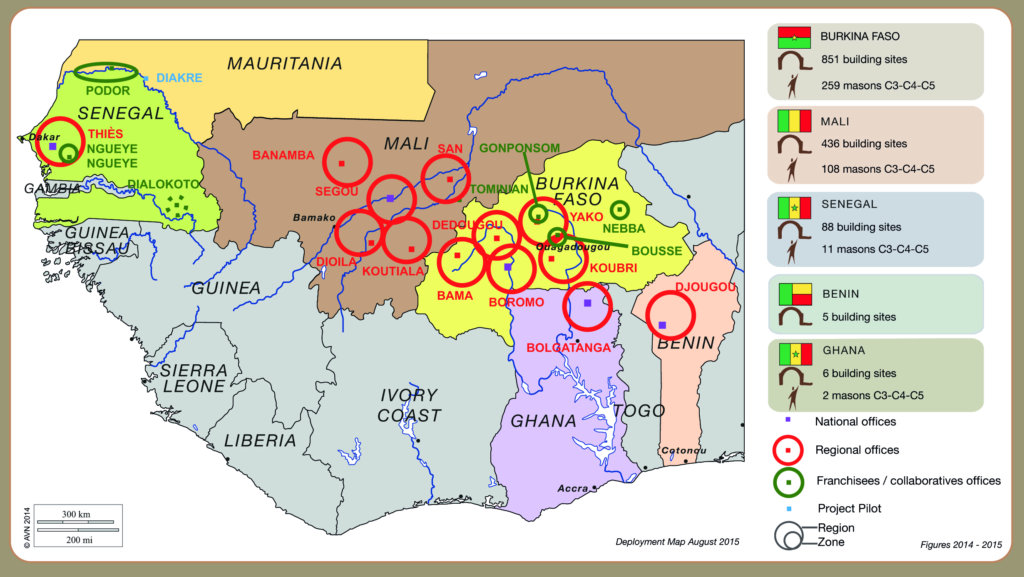
The program is now formally established in five countries (Burkina Faso, Mali, Senegal, Benin, and Ghana), with five national offices and 13 regional teams. In 2015, 55 salaried local staff were employed in these teams, supported by the actions of 120 volunteers (local village 'champions' promoting the NV concept). The main role of these teams is to establish and nurture local autonomous markets in NV construction through awareness raising and promotional activities (the 'kickstart' method), development of partnerships with local organizations, putting NV masons in touch with potential clients, identification of potential apprentices, support and training of NV masons to help them become independent entrepreneurs, monitoring of results, and technical R&D work. By 2015, around one-third of the NV construction market is autonomous, with NV masons finding their own clients without the need for intervention by AVN. 15 NV masons have set up their own NV construction enterprises.
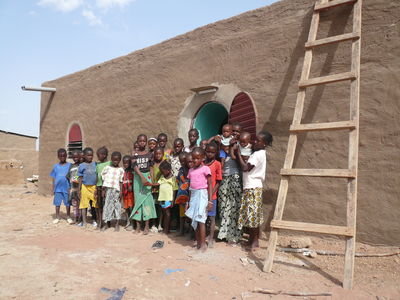
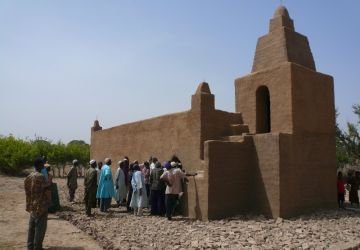
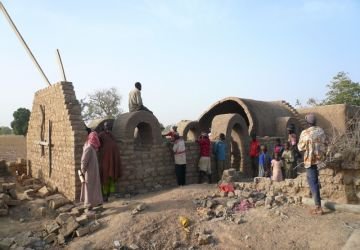
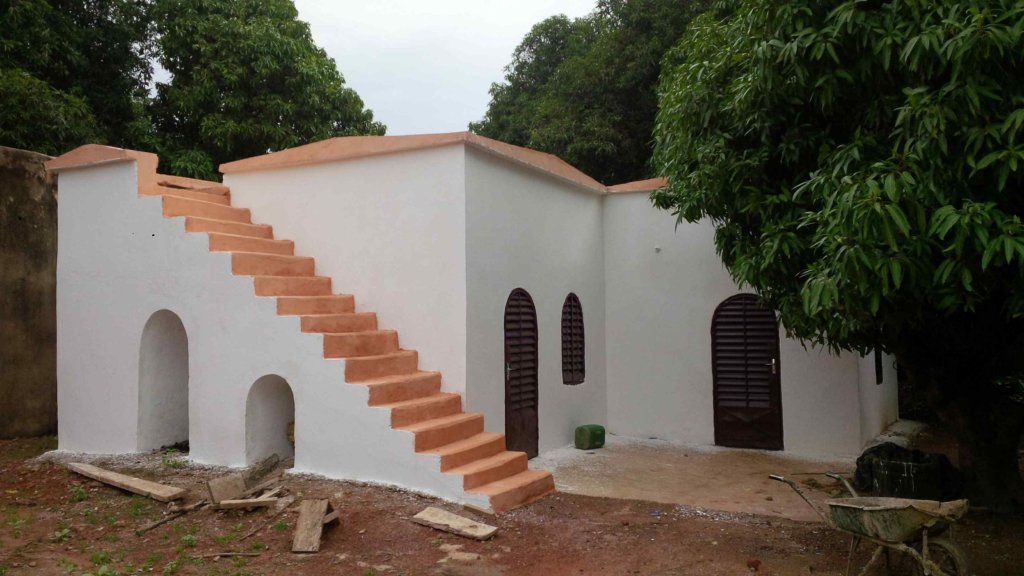
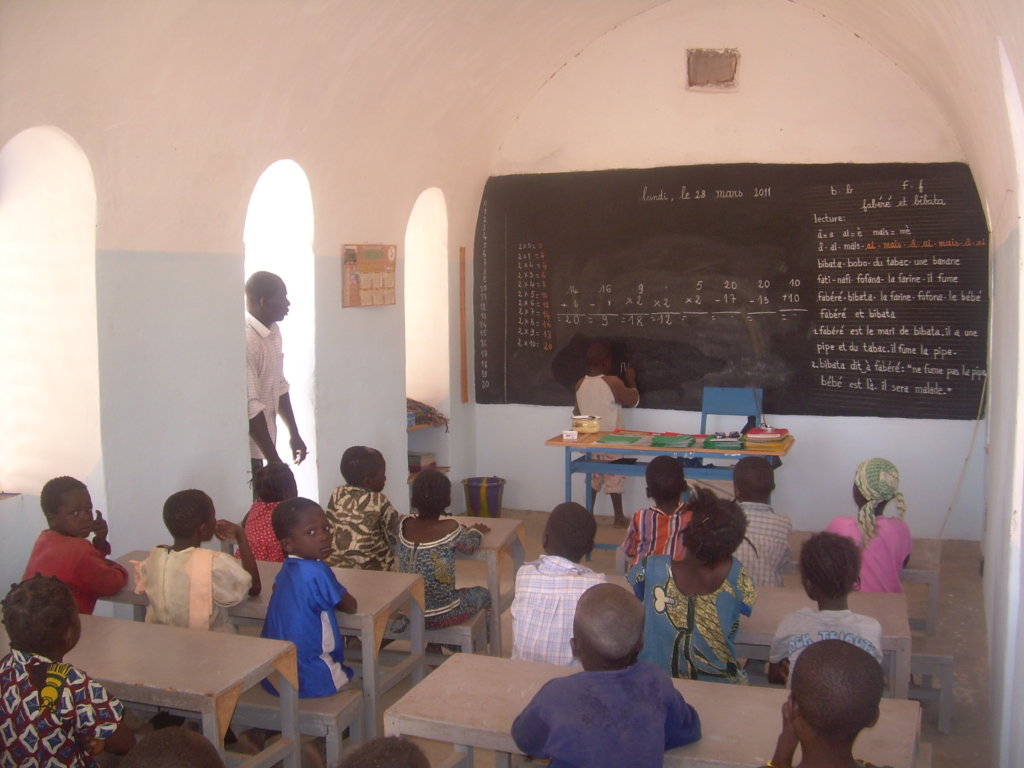
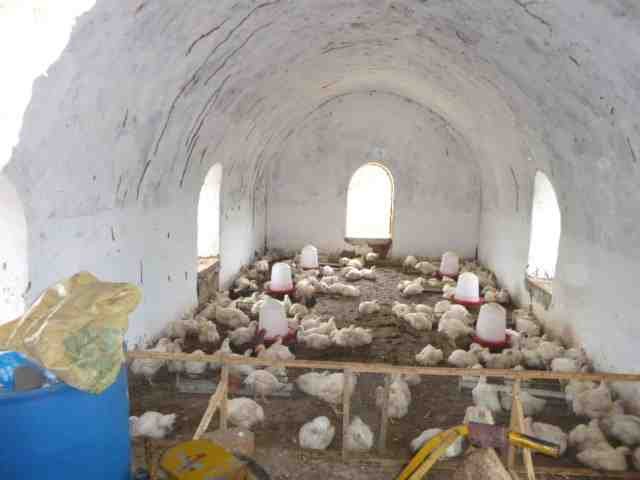
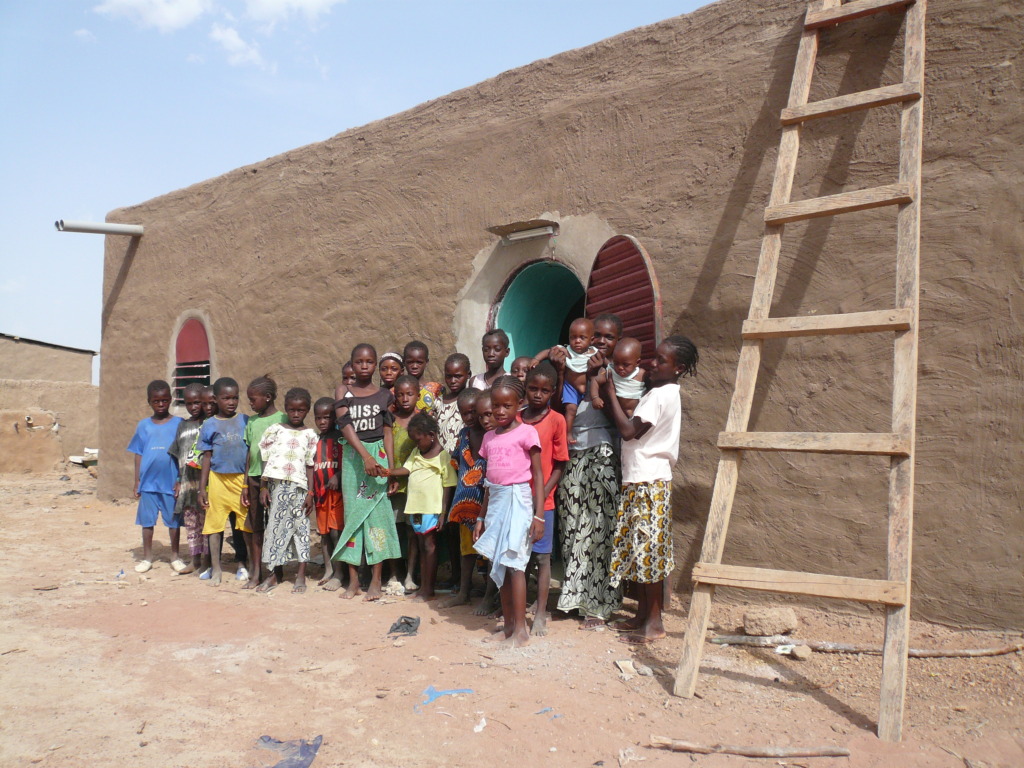
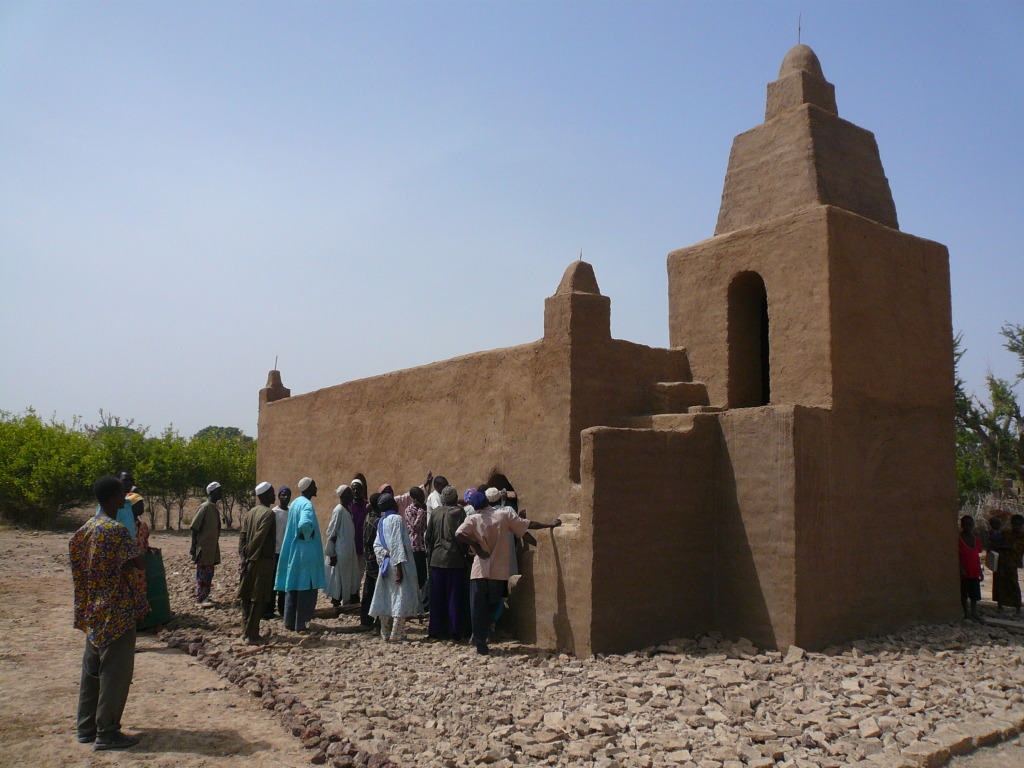
The 2014/15 season has been particularly successful in Mali, with 16 new C4 level mason / entrepreneurs, 17 new C3 artisans, and 58 apprentices reaching the C2 level (passing from simple labourers to learning the basics of vault construction). In total, 119 NV building sites were completed during the season, including many village houses, and several agricultural buildings, schools, and mosques. AVN now employs 15 local staff in its 4 regional offices in Mali, including the very smart new office in Koutiala, close to the frontier with Burkina Faso.
AVN one of six Finalists in the Buckminster Fuller Challenge 2015
AVN has just been announced as a 2015 Finalist in the Buckminster Fuller Challenge, a prestigious annual competition named “Socially-Responsible Design’s Highest Award”.
Each year, the Buckminster Fuller Institute invites scientists, designers, architects, activists, entrepreneurs, artists and planners from all over the world to submit their innovative solutions to some of humanity's most pressing problems. A $100,000 prize is awarded to support the development and implementation of one outstanding strategy.
Six Finalist proposals, including ours, have been selected out of an entry pool of over 400 applications from 135 countries, and have undergone a rigorous review for adherence to the seven-point Challenge criteria: Visionary, Comprehensive, Ecologically Responsible, Feasible, Verifiable, and Replicable. Our application has been through four rounds of vetting by the members of the Challenge Review Committee, including analysis and evaluation by an interdisciplinary team of experts and advisors.
"Each of these projects deserve the attention of the world for their commitment to 'solving for system' – an approach that takes an unusual degree of insight, patience, tenacity and courage", said Elizabeth Thompson, The Buckminster Fuller Institute's Executive Director. "The teams behind these initiatives have made extraordinary efforts to define the systemic context underlying the problem they are seeking to solve, and have designed strategies that provide enduring and sustainable solutions. Each is a remarkable example of the transformative power of individual initiative and provide much needed hope by demonstrating that solutions to our most entrenched problems are indeed at hand."
After being a semi-finalist in 2012 and 2014, we are delighted to have been chosen among the finalists of this 2015 competition and would like to thank the jury for the honour. We hope to be represented at the final Award ceremony in New York on November 18th.
Links:
Project reports on GlobalGiving are posted directly to globalgiving.org by Project Leaders as they are completed, generally every 3-4 months. To protect the integrity of these documents, GlobalGiving does not alter them; therefore you may find some language or formatting issues.
If you donate to this project or have donated to this project, you can receive an email when this project posts a report. You can also subscribe for reports without donating.