By Evelyn Chen | Director of Development
Following the conclusion of our third regional convening in February 2020, the worldwide COVID-19 outbreak resulted in a lockdown in nearly all MENA countries.
To maintain momentum and to support our partners in navigating the challenges they are facing, we helped to organize three virtual convenings, one for each of the sub-regional networks formed to advance shared campaigns over the coming year (Algeria, Morocco and Tunisia; Iraq, Kuwait and Palestine; Egypt, Jordan and Lebanon). These gatherings enabled Equality Now and our regional partners in each of the nine nations to gain a better view of how women and girls are experiencing the pandemic throughout the region, and to share experiences, insights, tactics and solution-focused ideas with one another.
Although the lockdown has led to an increase in cases of domestic violence, one participant in our Egypt, Lebanon and Jordan virtual convening noted that the increased reporting—in some cases by women who had suffered in silence for up to 20 years—was a sign of success in dismantling some of the stigma around the issue. Before the pandemic, populations in many Arab countries were not receptive to the idea of passing laws against domestic violence, not considering it a priority, but this view has definitely changed during the lockdown as more survivors have spoken out and drawn attention to its prevalence.
On the downside, many women victims of domestic violence were unable to go to shelters (which are very few and far between to start with) because they had to be quarantined for 14 days before joining the shelter, and there was no place to accommodate them during this quarantine period. In Jordan, the situation for abused mothers with kids is especially complicated, since children over 5 years old were not allowed into safe homes with their mothers and had to be sent away to orphanages.
Another issue affecting mothers during the lockdown is the issue of custody when parents are separated. If fathers do not return children to the custody of their mothers, the closure of the family courts has meant that mothers currently have no legal recourse to get their children back. Meanwhile, women who are not the custodial parent have stopped being able to see their children during the lockdown for fear of contagion.
The suffering of divorced wives and mothers who are no longer able to see their children due to the lockdown (emotional suffering), or have stopped receiving spousal and child support (increased economic hardship) without any legal recourse, shows us how the pandemic is further highlighting the overarching problem with family laws in the MENA.
Even where laws do exist, they are not always being applied correctly: in Morocco, the government is only providing financial assistance to male heads of family, to the exclusion of wives but also single mothers, despite the fact that Moroccan family law (the Mudawwanah) specifically mentions that both parents are responsible for the family.
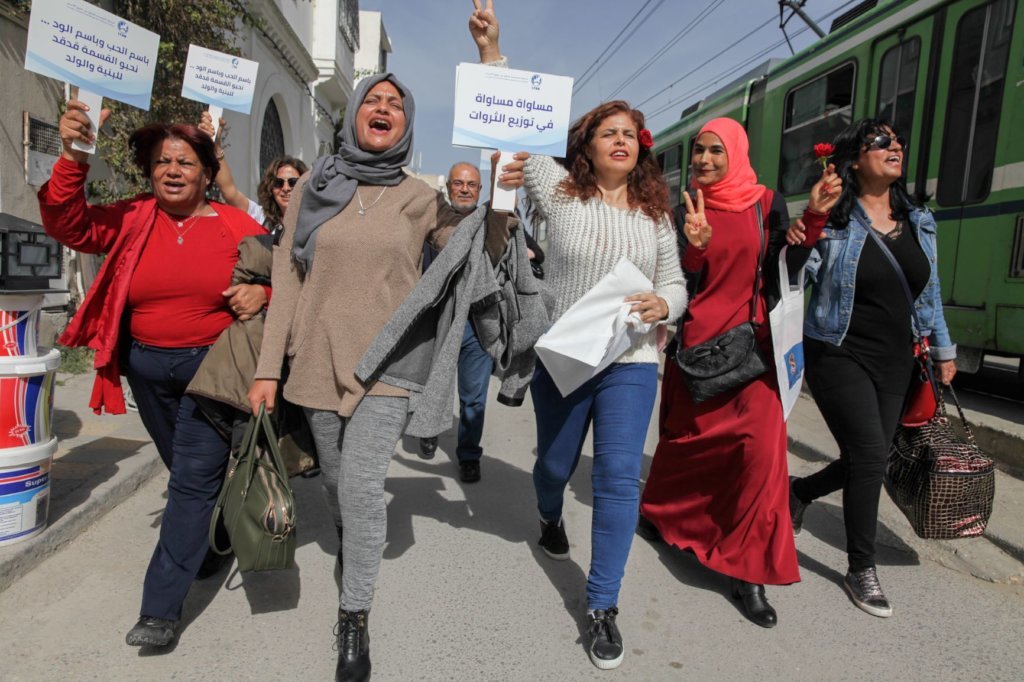
When our partners from Palestine and Iraq met online to discuss the progress of a campaign to tackle the issue of common wealth and property following divorce they focused on a case in the Palestian courts: “Sirine,” who was married, had a high paying job with USAID, and bought a house with her husband, sharing all of the expenses (including the home loan) equally. After they divorced, the husband took the entire property (which was registered in his name) and left Sirine with nothing. The higher Shari’a judge (Al-Habbash) has adopted the case and is using it to push for reform in this area of family law in the Palestinian Territories. The discussion highlighted the need to raise awareness among Palestinian women that they have rights as wives (even if they are housewives without their own income) to divide up wealth and property equally with their husbands, particularly given that wives also legally share any debt incurred by their husbands.
The geographical proximity and common legal jurisprudential background (Shari’a based family laws and Muslim cultures) enable partners in each sub-regional network to learn from each others’ experiences with legal reform to move the dial forward faster. To that end, the participant from Erbil, in Kurdistan Iraq highlighted a clause in the Kurdish bill on domestic violence that deals fairly with the division of wealth that the Palestinian activists can benefit from, and promised to share it with them to help them with Sirine’s case.
Project reports on GlobalGiving are posted directly to globalgiving.org by Project Leaders as they are completed, generally every 3-4 months. To protect the integrity of these documents, GlobalGiving does not alter them; therefore you may find some language or formatting issues.
If you donate to this project or have donated to this project, you can receive an email when this project posts a report. You can also subscribe for reports without donating.