By Konrad Suder Chatterjee | Communications Manager and Resource Developer
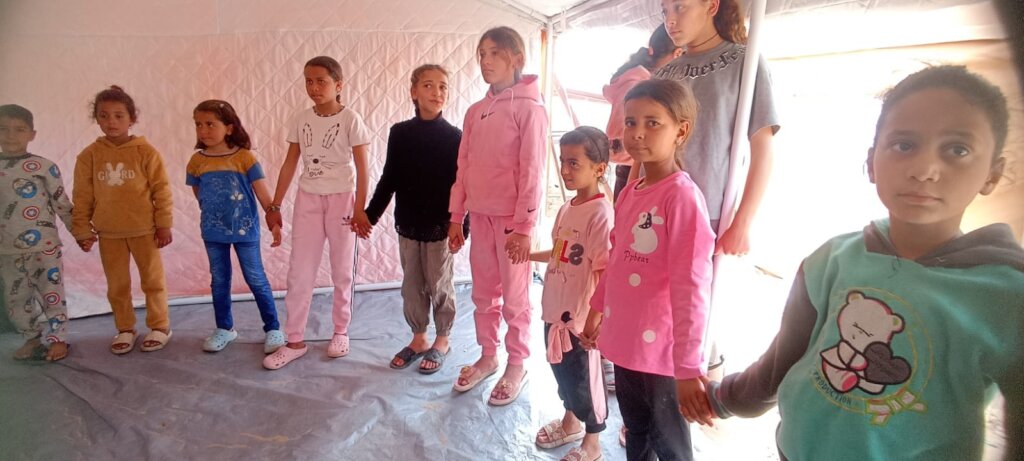
There is a boy in Gaza who spent eight sessions refusing to read his own writing to the group. On the ninth day he stood up and read it out loud. In another group there is a girl who did not speak at all until the sixth session, and then she did.
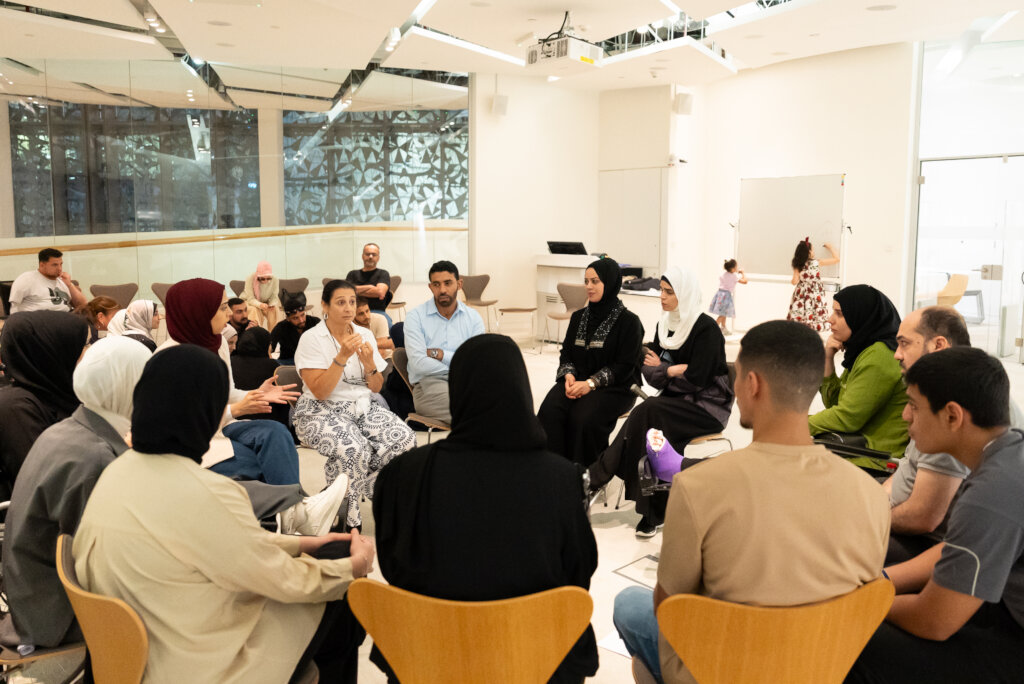
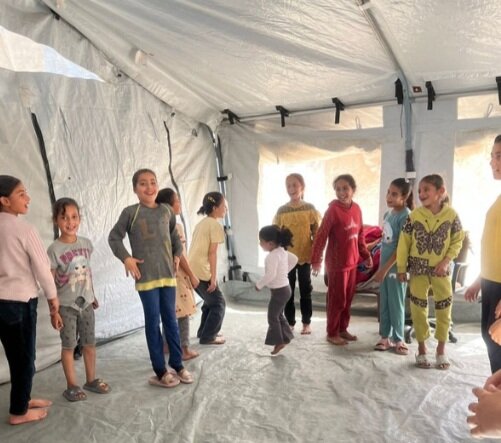
We keep these small facts because they are the only honest measure we have. One hundred children between the ages of 12 and 15 came to the Go On Center in Gaza in June, in ten groups, for ten sessions of two hours each. Their teachers told us afterwards that they could hardly believe these were the same children.
This year ASHTAR turns 35. We have been working since 1991, through closures, two intifadas, and now this, a couple of years of the genocide and even more brutal systematic violence. We are still here, and this report is about what that costs and what it produces.
What happened, April to July 2026
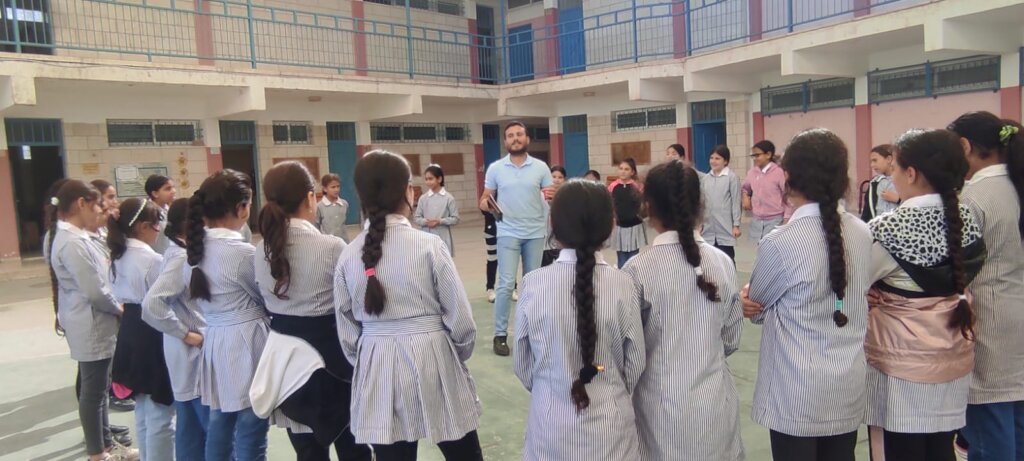
In Gaza, alongside the summer programme at the Go On Center, more than 45 children aged 10 to 16 took part in weekly theatre sessions through the spring, in educational centres, private schools and whatever community spaces were still standing. The trainers are our own Gaza-based team, the original writers of The Gaza Monologues. They have been with ASHTAR for years, which is why they were still there to work when it mattered. One of them wrote to us about a child who used to tremble with fear and who surprised everyone by standing up and telling a story to the group.
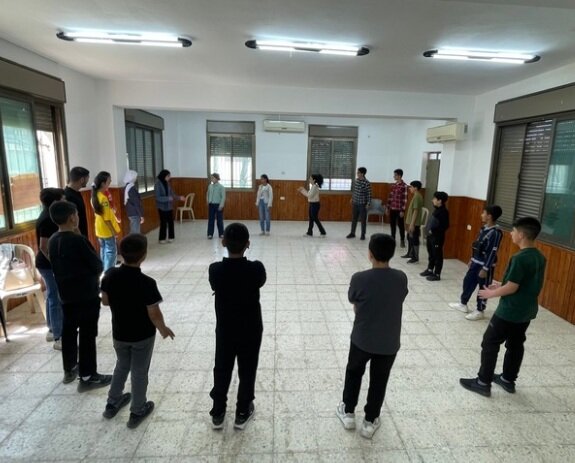
In the village of Ein Siniya, ten kilometres north of Ramallah, our trainers ran ten sessions of sport theatre with 20 young participants, finishing with a match between the two teams. Alma, who is twelve, wrote to thank them. The training taught her things she uses in daily life, she said, and she hopes they come back to her village.
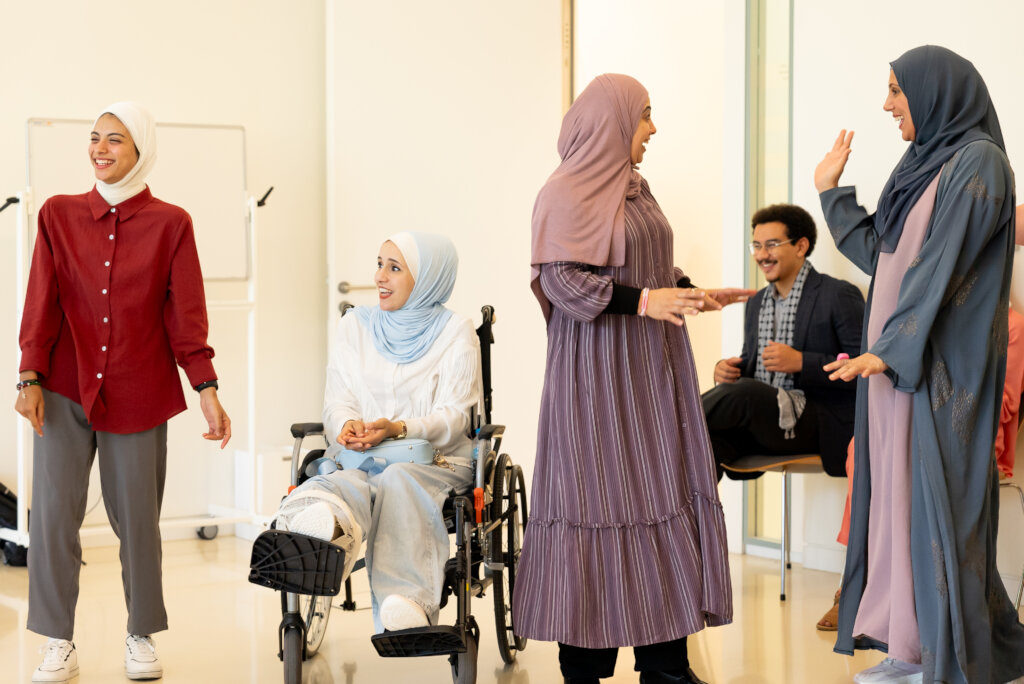
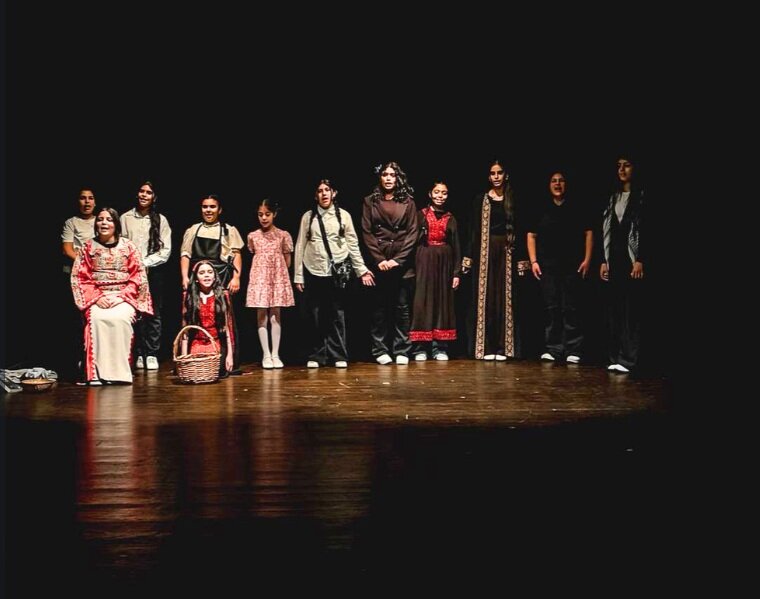
At Star Mountain and at the Popular Committee of Birzeit Refugee Camp, two groups of young people built two plays, The Heroes' Square and Laila and the Long Road. Both came out of the children's own stories, and both were performed at ASHTAR in front of their families and teachers. During the Nuwar Nissan Festival in Ramallah, our trainers ran two psychosocial workshops for children using Theatre of the Oppressed, the methodology ASHTAR first brought to Palestine and the Arab world.
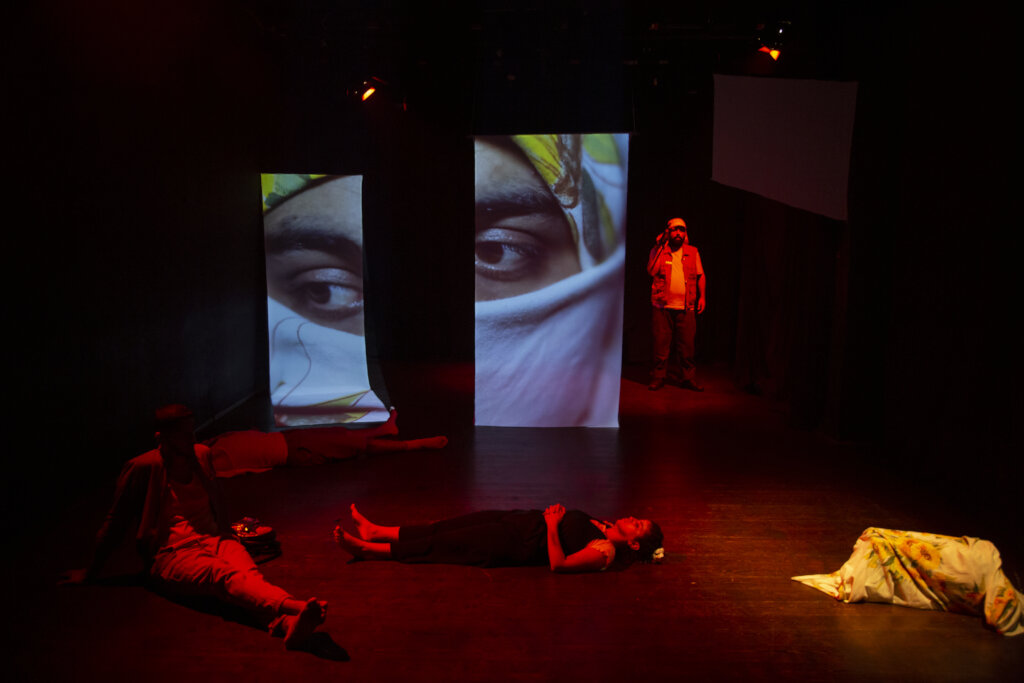
In April our third-year students premiered Still Looking, a piece they wrote themselves about what it is to be a teenager in Palestine right now. It went on to the Nuwar Nissan Festival and was written up in the press. The parents in the audience have not stopped talking about it.
We also kept our stage in Ramallah open through the spring, with film screenings, discussions with the artists, and a monodrama from The Freedom Theatre in Jenin.
Palestinian theatre, out in the world
Thirty-five years of work means we are invited into rooms where decisions about culture get made, and we go, thanks to you and our incredible partners and friends around the world.
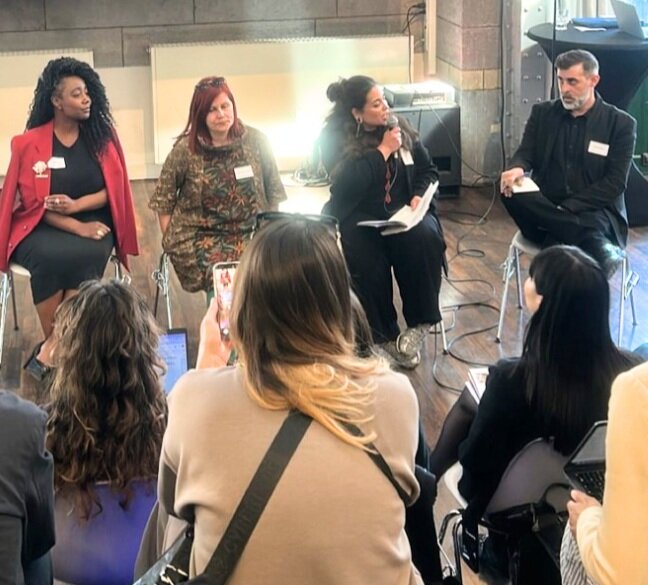
Our director spent two weeks in Minneapolis with a group of international directors, teaching the ASHTAR Liberatorium Technique and lecturing on what theatre can do in the face of genocide. Our artistic director joined the Edinburgh International Children's Festival and led workshops for theatre-makers and acting students in Edinburgh and Glasgow, building the university partnerships that our new academy will need. In Portugal he sat on a panel in Lisbon on the conditions Palestinian artists work under, and taught a two-day workshop in Amadora on how personal stories become political ones. In Belgium he spoke at Antwerp's arts schools and at the Art in Crisis conference in Brussels, on cultural boycott and on what conditional funding does to institutions like ours.
Our filmed production of Guernica, Gaza: Visions From the Center of the Earth by Noami Wallace and Ismail Khalidi, reached the TaPRA conference in the UK, where our board member presented our new Performing Arts Academy and our research fellow presented her work on the ASHTAR archive.
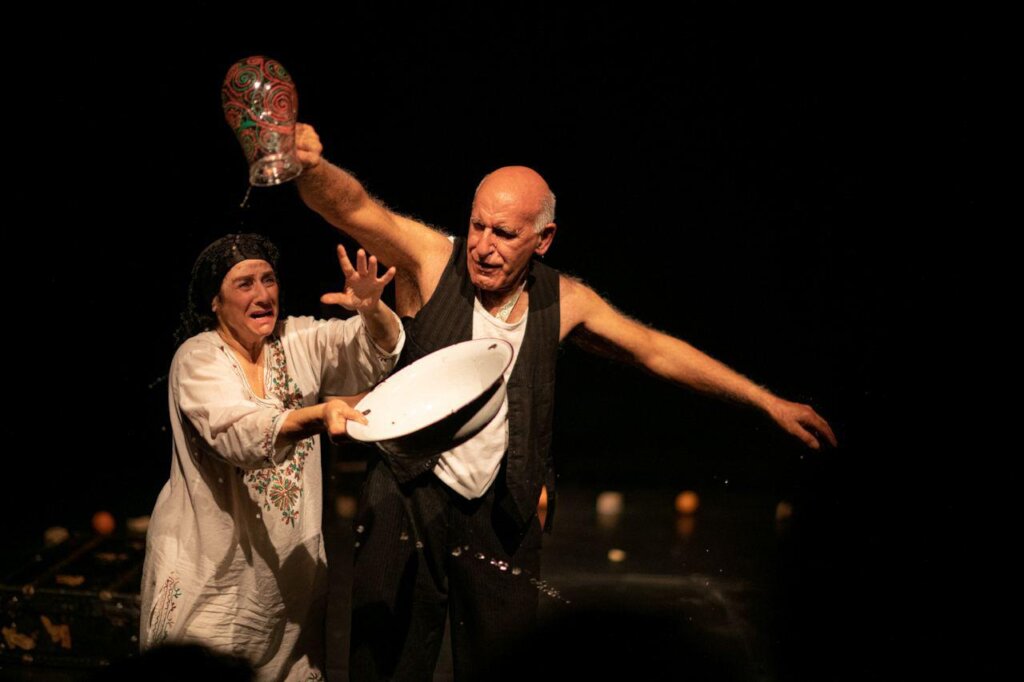
And Oranges and Stones, which we performed one last time in our Ramallah theatre this year, has now been staged more than 160 times around the world.
A new home in Birzeit
We are leaving the Ramallah building that was our home for 31 years and moving to Birzeit, into a building from 1921 that is being rehabilitated into The Performing Arts Academy and the ASHTAR Performing Arts Village, forming a new exciting possibility with the Palestinian Circus. Arup, the engineers behind the Sydney Opera House and the Centre Pompidou, have allocated their own internal funds to advise us on the auditorium, the acoustics and the performance spaces at no cost to ASHTAR. We are grateful, and slightly astonished.
What the core fund actually pays for
Much of the programme work above was made possible by restricted grants from partners who support specific activities. Those grants pay for sessions. They do not pay for the organisation that makes the sessions possible: the coordinators who design them, the administration that reports on them, the supervision that keeps trainers standing after a day in a room full of grieving children, the electricity, the insurance, the salaries.
Since October 2023 our funding landscape has changed in ways that are hard to explain from outside Palestine. Some Western funders stopped working with Palestinian institutions. Some asked for their money back. Others we have declined ourselves, together with the rest of the Palestinian Performing Arts Network, because we will not accept money that comes with conditions on what we are allowed to say.
That position costs us, and the cost is measured in people. An institution is its staff. Thirty-five years of accumulated skill and trust live in a small number of trainers, technicians, coordinators and teachers, most of whom have been with us for a decade or more. If we cannot keep paying them, that knowledge leaves and does not come back, and no future grant can rebuild it.
So far 79 of you have given, 6 of you every month, and together you have raised $17,311 of our $100,000 goal. There is $82,689 to go.
If you can, please give again, or set up a monthly gift, or send this to one person who would understand why it matters. Unrestricted giving is the only kind that keeps an institution alive between projects.
We will write again with news from Birzeit.
With thanks and in solidarity,
ASHTAR Theatre, Ramallah and Birzeit
Links:
Project reports on GlobalGiving are posted directly to globalgiving.org by Project Leaders as they are completed, generally every 3-4 months. To protect the integrity of these documents, GlobalGiving does not alter them; therefore you may find some language or formatting issues.
If you donate to this project or have donated to this project, you can receive an email when this project posts a report. You can also subscribe for reports without donating.



Support this important cause by creating a personalized fundraising page.
Start a Fundraiser