By Odo Effiong | Project Director
Strengthen 100 Vulnerable Households in Calabar
Second Quarter Report 8/3/2019
In the second quarter of the project under review, the focus of project team was geared towards ensuring the beneficiaries were adequately prepared to succeed on the project. Activities included:
enrolled Caregivers on the project.
SIGNING OF MEMORANDUM OF UNDERSTANDING
In other to ensure each project stakeholder was aware of and adheres to his/her responsibilities and to build a stronger relationship and commitment between the various stakeholders, a Memorandum of Understanding (MoU) was drafted stating clearly the responsibilities of each stakeholder for the completion and sustainability of the project.
The MoU was signed by for each beneficiary by both parties as well as one between the organisation and the consultants participating in the project.
The signing of this document was significant as it enables the beneficiaries understand the project better and increases their commitment and responsibility to it.
FINANCIAL LITERACY AND TECHINCAL TRAINING
A two day capacity building workshop on financial literacy and best practices for cultivation of proposed crops for the first twenty enrolled caregivers took place at 139 Marina Road, Bayside, Calabar South, Calabar on Thursday January 31st – Friday February 1st 2019. The training was attended by 20 participants and it was aimed at achieving the following objectives:
The technical sessions on financial literacy and crop cultivation were facilitated by Mr. Dennis Ikapli and Mr. Edwin Ayuk respectively, adopting a participatory and learner centered methodology. During the financial literacy sessions, Mr. Ikpali taught topics such as value for money, saving, budgeting and record keeping. At the end of his sessions, participants realized the importance of savings and record keeping and hence committed to doing so. This was significant because though many of the beneficiaries have been involved in business and petty trading very few if any had a culture of keeping records. Most of them didn’t see the need to. Record keeping is a new habit that they have to learn.
Mr. Ayuk on the other hand handled topics that had to do with crop cultivation addressing land preparation, production of organic manure, its application and its uses. He also held sessions on the various types of crop cultivation as well as the methods of crop cultivation where he spoke about the use of sack bags in situations where there is no land for direct planting.
Beneficiaries were evaluated after the trainings using a set of previously set questions based on training objectives. Results showed that most of the women (about 95.5%) understood the sessions and could put into practice what they have been taught.
LAND PREPARATION AND FERTILIZATION
Ensuring the availability of adequate land for the beneficiaries had been a major challenge to the project. Most had struggled to get land that was sizeable enough to achieve the desired targets.
The land was their own contribution to ensure their commitment to the project. Several visits had to be made over the course of the last several weeks to inspect various tracts of proposed land. Beneficiaries who could not come up with their own tracts of land or who did not show sufficient commitment at this stage were dropped from the project and an additional process of recruiting additional beneficiaries was done to achieve the minimum target number of twenty.
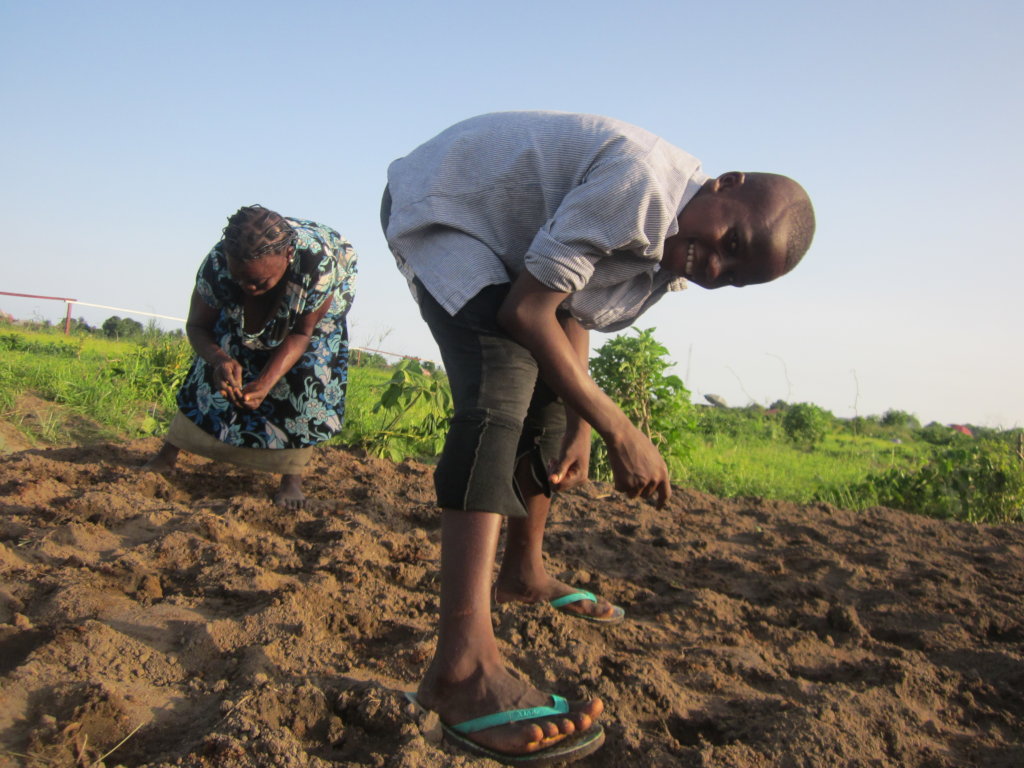
After the approval of land, it was now important to prepare the land for planting the beneficiaries had been taught how during the technical sessions of the workshop. To ensure highly productive and prompt responses from the beneficiaries the agricultural consultant Mr. Edwin Ayuk and the technical team of the Foundation paid a number of visits to the caregivers in their farms to conduct site monitoring and confirm readiness for planting.
It was observed that 90% of the beneficiaries had completed land preparation and application of organic fertilizers. Some beneficiaries made use of the sack bag gardening in the absence of adequate farm land. The women also proudly displayed their financial records showing resources they have expended so far.
Conclusion: During this phase of the project a lot of attention has been paid to ensuring the beneficiaries are ready in terms of their attitude, commitment, knowledge and skills to embark on the activities designed to significantly enhance their income. Particular attention was paid by the monitoring team to understand the peculiar situations of each household. Those who fell short were dropped from the project and replaced with others. Our next activity is to provide them with the agricultural inputs required for cultivation.
We are grateful to everyone who has supported the project thus far. We are confident of its progress, the journey to sustainable successes is a long one we would continue to put one foot in front of the other as we walk down this path.
Thank You
Odo Effiong
Project Director.
Project reports on GlobalGiving are posted directly to globalgiving.org by Project Leaders as they are completed, generally every 3-4 months. To protect the integrity of these documents, GlobalGiving does not alter them; therefore you may find some language or formatting issues.
If you donate to this project or have donated to this project, you can receive an email when this project posts a report. You can also subscribe for reports without donating.



Support this important cause by creating a personalized fundraising page.
Start a Fundraiser