By Emily Correale | Manager, Development
We are proud to report that 8,193 midwives have been trained through the Stand Up for African Mothers campaign, thanks in part to you! This means over four million women will now have access to pre- and post-natal care and basic health needs. YOU are helping us to save lives across sub-Saharan Africa. Thank you!
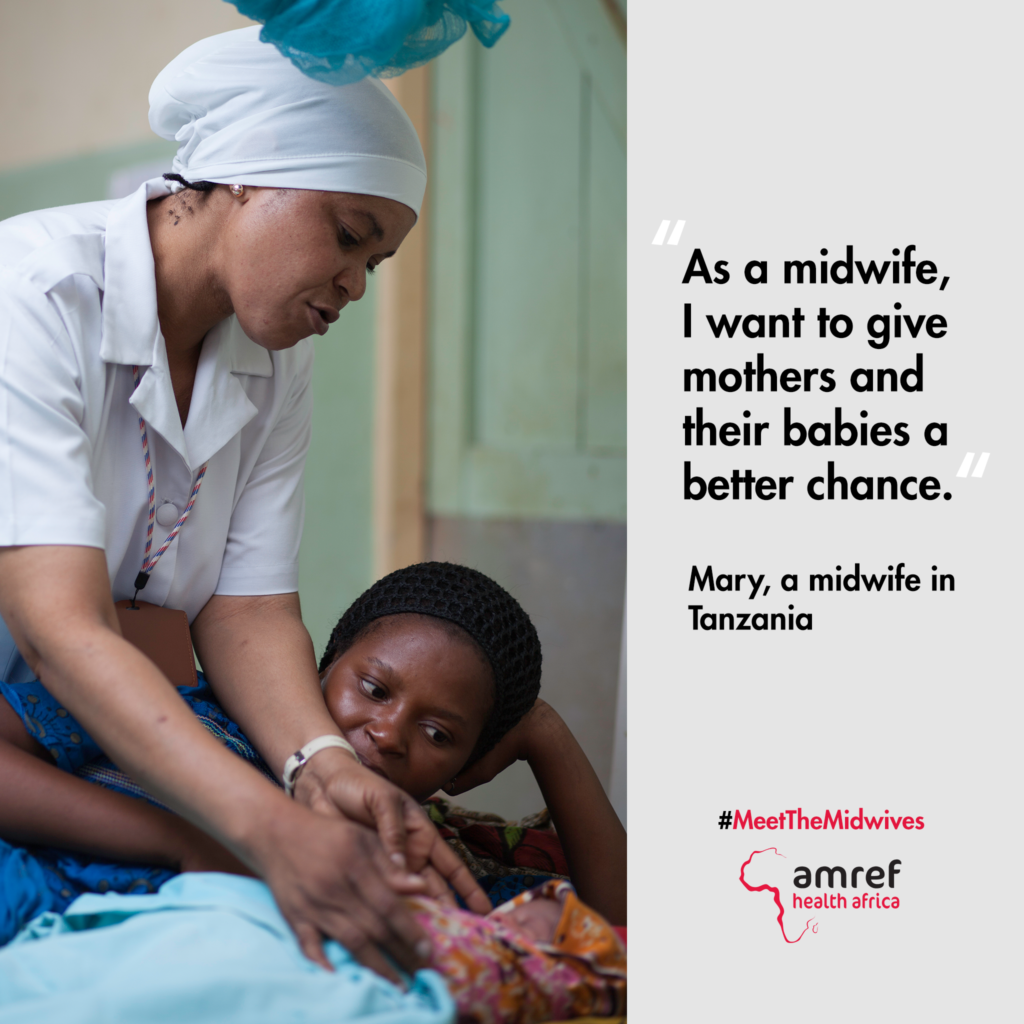
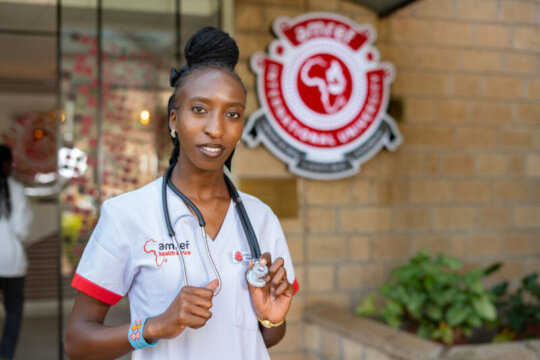
Meet the Midwife - Hear from Mary, an Amref Health Africa-trained midwife in Tanzania:
Delivering a baby can be challenging. Delivering a baby in the dark is even more challenging. But helping mothers to give birth by the light of candles, kerosene lamps – or even mobile phones – is not unusual if you’re a midwife in Africa.
Once, I was helping a mother deliver her baby in the middle of the night when the power went off. She was already in labour, so I had to keep going using only the light from my mobile. The lights might go out, but we’ve still got mobile phones. I had to keep pressing buttons on my phone just to illuminate the room. To complicate things further, the colleague who was helping me had to rush off and help another woman in labour. The baby became very tired and I had to resuscitate him when he arrived. Thankfully, both he and mother came through.
I’m a midwife in Tanzania and delivering babies by the light of a mobile phone is just one of the challenges we have to contend with. Tanzania has one of the highest rates of maternal mortality in the world, registering 454 deaths for every 100,000 live births.
Poverty; limited access to health care services in rural areas; plus an insufficient number of qualified nurse-midwives and other skilled health care workers all contribute to these high death rates. There are just four midwives to every 10,000 women in my country, so many women end up giving birth without a health care worker beside them. They might just have the help of a so-called ‘traditional birth attendant’, especially if they live in rural areas. Of all deliveries in Tanzania, only 51% are assisted by a skilled nurse or midwife.
Being a midwife is all I’ve ever wanted to do. As a girl, I loved children and was fascinated by pregnancy. The first time I helped deliver a baby was frightening, though – all I knew of birth was what I’d heard from the labour wards and I got quite a shock. Luckily, the birth wasn’t complicated – which made it less traumatic for the mother, and for me too. That was 12 years ago. Since then, I’ve helped deliver hundreds of babies.
As a midwife, I want to give mothers and their babies a better chance. There’s so much for them to look forward to, but there’s much to worry about too. Like mothers anywhere, they’re anxious about caring for their baby without much money and how a new addition to the family might affect their lives.
That’s why my colleagues and I don’t just deliver babies. We work in the hospital and in the community to support the well-being of mothers as well as their newborns. We monitor babies to check their feeding and weight. As for the mother, we’ll make sure she’s healing well after the delivery and provide advice on family planning – it’s important mothers feel they can have these discussions with us.
All this means that life is pretty hectic. I wake up at about 5am and make breakfast for my family. I have a daughter of my own and also care for my brother’s daughter. We all live at my mothers house and she’s a big help. Both girls think I’m too busy at work, but they understand I’m doing a good job.
Usually, I’ll get to work about 7.30am, when I’ll look at the night nurses’ report. I’ll also get the instruments and medication ready for the day ahead, and have everything on standby for any deliveries. I’ll then start on my ward round, checking up on post-natal cases. I’m involved in deliveries from start to finish and the length of my working day varies depending on the number of cases we’ve got.
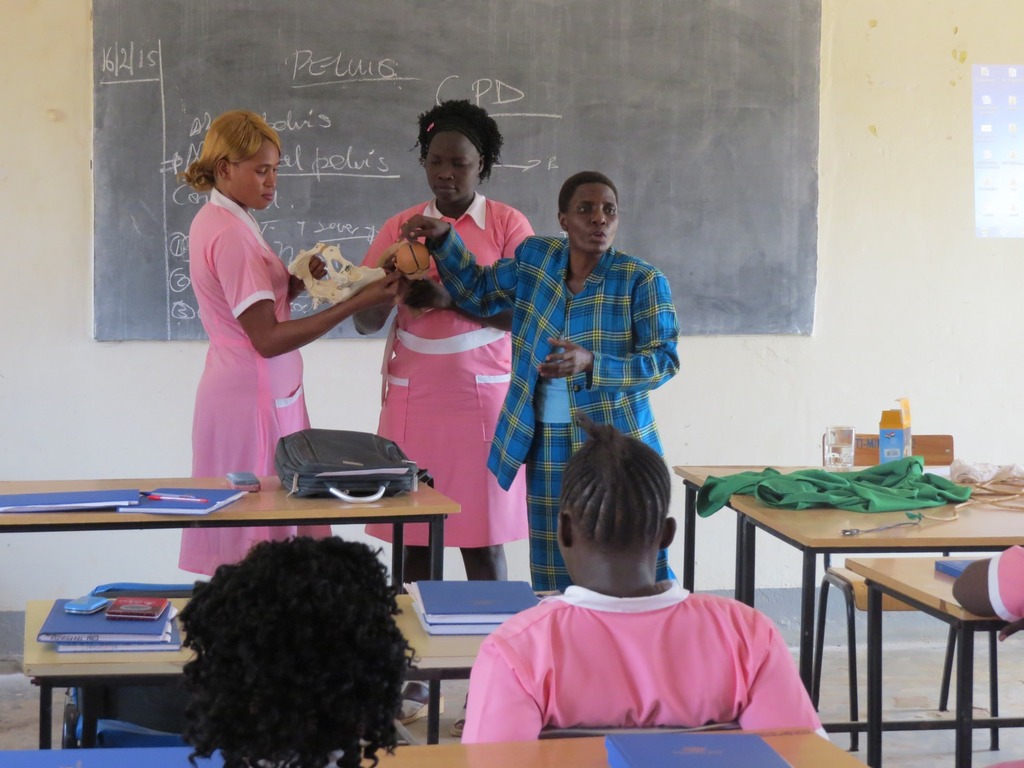
At the moment, I’m also fitting further study around my work. I want to do more for mothers and their children. But with limited resources, I couldn’t go back to school. So, I’m doing a distance learning course to develop my skills. I’m one of 89 students in Tanzania studying through an ‘e-learning’ programme that is supported by Africa’s health development organisation Amref Health Africa and the health care company GSK. The two organisations have worked together for a long time to help strengthen health care systems in countries like mine.
Education like this will help us swell the ranks of skilled midwives, allowing us to care for more women and children. The training I’m doing means I’ll be able to manage more cases on my own. It gives me more confidence in diagnosing problems and offering advice to colleagues – even the doctors. I’ve started giving talks to patients too. They ask me why I’m doing this and I tell them I want to share what I’ve learned.
Hopefully, the more skills I can get, the more women I can reach – and the more lives I can help save.
Links:
By Emily Correale | Manager, Development
By Emily Correale | Associate Manager, Development
Project reports on GlobalGiving are posted directly to globalgiving.org by Project Leaders as they are completed, generally every 3-4 months. To protect the integrity of these documents, GlobalGiving does not alter them; therefore you may find some language or formatting issues.
If you donate to this project or have donated to this project, you can receive an email when this project posts a report. You can also subscribe for reports without donating.