By Simon Bradley | SOS Communications and Marketing Officer
Major ivory haul seized in Cameroon
A haul of ivory worth more than $190,000 has been seized in Cameroon, one of the largest single seizures made in the country.
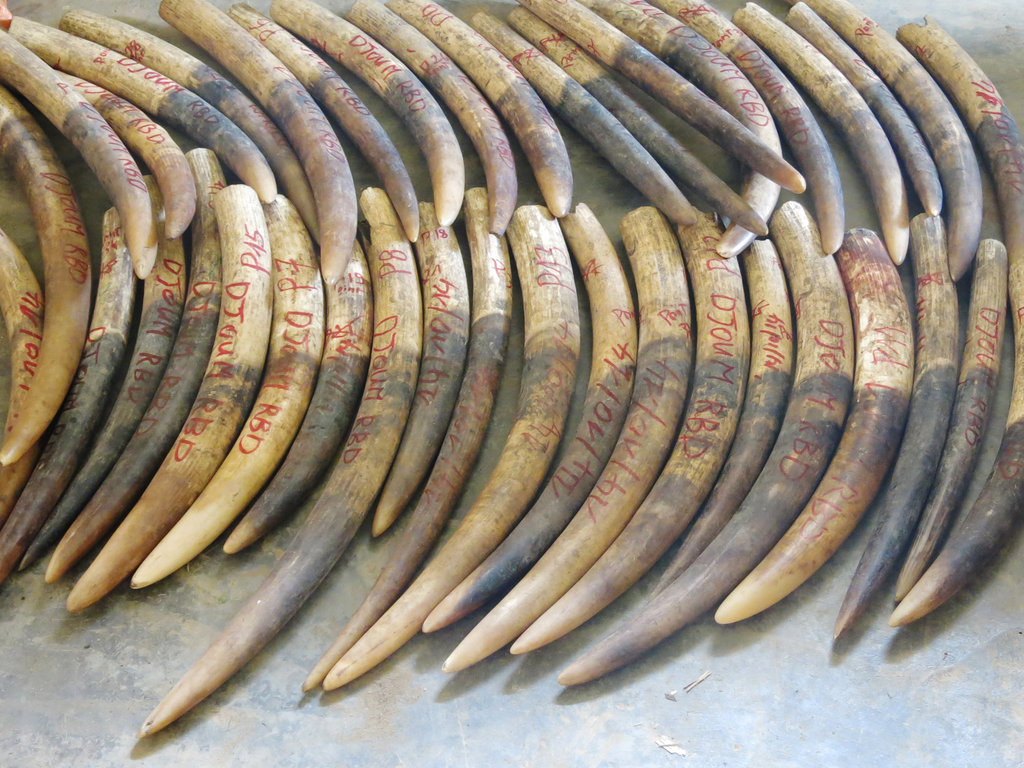
The grim discovery of 39 forest elephant tusks was made by ecoguards from the Dja Biosphere Reserve, one of the protected areas under the Cameroon Ministry of Forestry and Wildlife (MINFOF), following a tip-off from an intelligence network supported by the Zoological Society of London (ZSL).
The forest elephant tusks were found concealed beneath cocoa bags in a truck intercepted in Djoum, a town in the southern region of Cameroon.
The illegal cargo weighed a total of 91kg, with each tusk weighing less than 4kg. The number and small size of the tusks indicates that at least 20 young elephants were slaughtered to obtain the black market goods.
The tusks were most likely destined for South East Asia where demand for ivory jewellery and trinkets has fuelled a 60% decline in African forest elephants since 2001.
A local businessman who owned the truck carrying the ivory has been arrested and is awaiting trial. Traffickers in Cameroon can face up to three years in prison for one tusk. But prosecutions are rare, which is why MINFOF and ZSL are keen to keep the case in the public eye.
Achile Mengamenya Goué, the MINFOF Conservator of the Dja Biosphere Reserve says: “A kilo of ivory can fetch up to $500 on the Cameroonian black market and up to $2,100 on the Asian market. It is therefore important to prosecute anyone involved in order to deter those tempted by this illegal trade.”
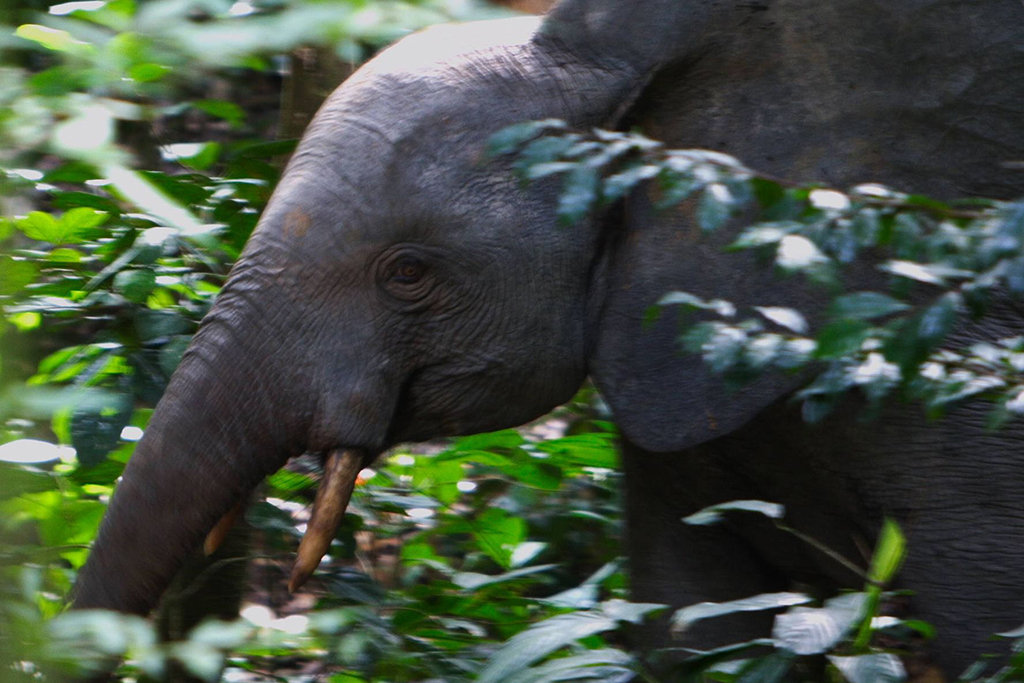
Forest elephants are the smallest African elephants. They have straighter, stronger tusks than their savannah cousins that enable them to push through dense undergrowth. Demand for their tusks means the elephants are now listed as ‘Vulnerable’ on the IUCN Red List.
Professor Jonathan Baillie, Director of Conservation at ZSL, says: “Criminals involved in the illegal ivory trade must face heavy penalties if we are to have any chance of stopping it. People buying ivory also need to take a hard look at themselves and ask whether trinkets are worth the slaughter of these magnificent, majestic animals.”
ZSL has been working with local partners in Cameroon since 2007 to protect forest elephants. Conservation activities include supporting law enforcement, surveying elephant populations and empowering local communities to fight wildlife crime through community surveillance networks.
Jean-Christophe Vié, Deputy Director of the IUCN Global Species Programme and Director of SOS – Save Our Species adds: “More frequently poachers and traffickers alike are being caught through the coordinated efforts of those on the frontline of conservation working under difficult conditions and taking significant risks.
“The success in Cameroon provides further impetus for conservationists meeting tomorrow at IUCN’s World Parks Congress who will be highlighting the role effective enforcement of protected areas plays in reducing wildlife crime.”
Tackling wildlife crime is a major focus for SOS - Save Our Species. ZSL’s work in the Dja Biosphere Reserve is one of 85 projects funded by the global partnership.
Protecting threatened species is critical because we are protecting parts of our life support system. Wildlife and nature supply us with so many basic necessities from food to fuel and shelter, but also inspiration in art, language and design to name but a few examples. Right now we are protecting more than 200 species please contribute to SOS to help us continue to protect more of our natural heritage.
Links:
Project reports on GlobalGiving are posted directly to globalgiving.org by Project Leaders as they are completed, generally every 3-4 months. To protect the integrity of these documents, GlobalGiving does not alter them; therefore you may find some language or formatting issues.
If you donate to this project or have donated to this project, you can receive an email when this project posts a report. You can also subscribe for reports without donating.