By Michelle Frausing | Communications Assistant
In a country where 60% of people are under 25 years of age, capturing and transferring traditional knowledge across generations that can improve conservation actions is a race against time. A glimpse at three projects from IUCN's SOS Lemurs initiative illustrates how Malagasy conservationists are addressing this challenge.
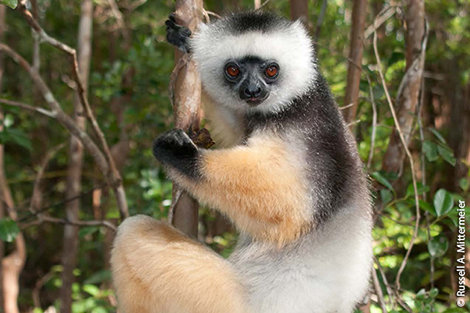
By global standards, Madagascar – an island about the same size as France - is famous for its 113 species of lemurs – forest dwelling primates only found here (with two species also found in parts of the Comoros Islands).
Madagascar’s incredible biodiversity extends beyond lemurs: approximately five per cent of the world’s species can be found here, and four out of five of Madagascar’s species are endemic, meaning they exist only here. It is also home to more than 25 million Malagasy, made up of 18 different ethnic groups. While young and open to the world, a large part of the population still depends on farming for sustenance and livelihood.
However, deforestation is a significant threat that could alter the country’s development prospects. In fact, IUCN's InfoFLR reports that "according to a conservative estimate, about 40% of the island's original forest cover was lost from the 1950s to 2000, with a thinning of remaining forest areas by 80%". Primary causes of deforestation include slash-and-burn agriculture, logging and mining, as well as firewood and charcoal production.
Solutions generally revolve around education, provision of alternative fuel and nutrition sources, management of forest resources and protected areas as well as the generation of alternative livelihoods including improved agricultural practices. In addition, harnessing traditional knowledge has played an important role in engaging local communities when implementing lemur conservation action across the country, including in the Northern Highlands, the South-west and South of Madagascar.
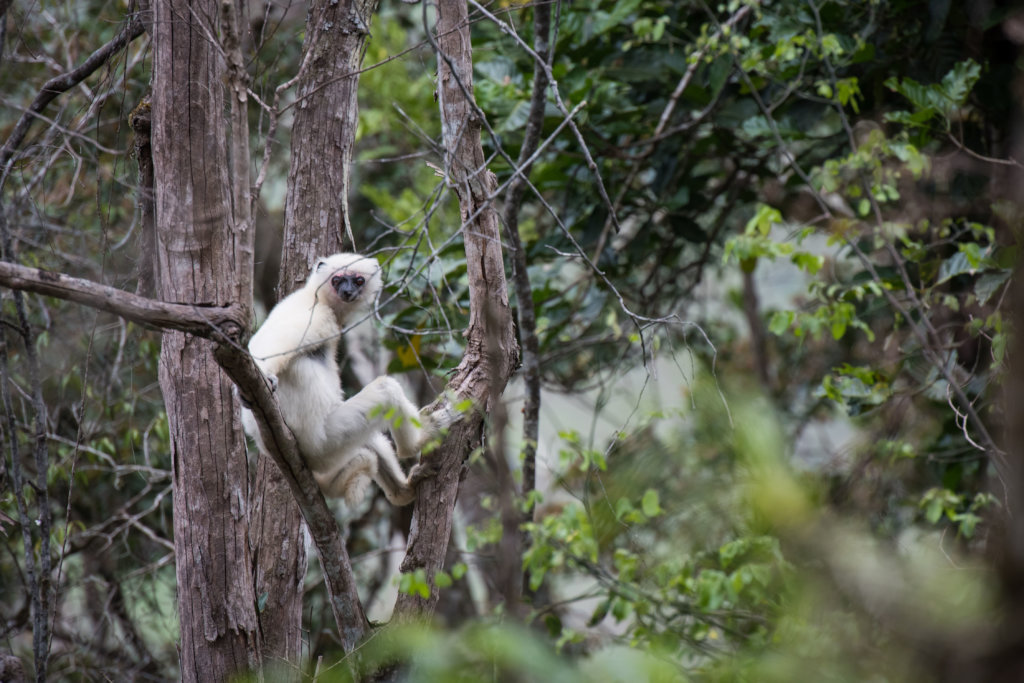
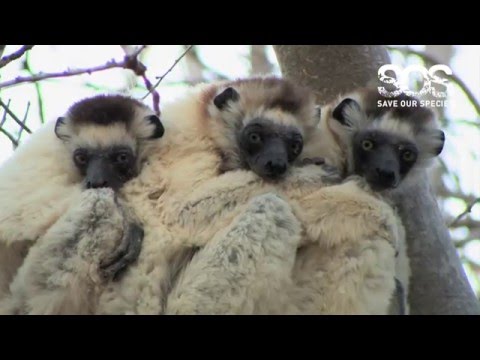
The Northern Highlands are home to one of the largest forest blocks in Madagascar. Relatively intact and protected from human intrusions in some parts, this area represents a bastion of Madagascar's exceptional biodiversity. The Critically Endangered Silky Sifaka (Propithecus candidus), best known for its snow-white fur, is endemic to this region.
Here WWF Madagascar is working with indigenous communities to restore forests through a reforestation programme, which involves planting 45,000 trees across at least 18 hectares of land in the Forest Corridor Marojejy-Anjanaharibe South-Tsaratanàna. Locals have been instrumental in selecting the tree species most suitable for the area, Famelona (Chrysophyllum boivinianum), and identifying the right time for seed collection. Furthermore, tree nurseries are being developed, monitored and cared for by the communities who have also begun planting trees for wood energy and timber.
The Landscape Manager with the project said:
"The tree species identified are well adapted to local conditions and high altitudes up to 1,750 meters. Its fruits are food for the lemurs, and the digested seeds are creating new young shoots. An approach that contributes to forest restoration and the preservation of the Silky Sifaka!"
The Tsitongambarika Forest in the extreme south of Madagascar is home to no less than seven lemur species. Over the past few decades, the forest has experienced one of the highest annual rates of deforestation among Madagascar’s humid forests: prior to 2005, assessments showed that deforestation rates were exceeding 2% annually.
Asity Madagascar have worked to conserve lemurs in this region since the creation of a Protected Area in 2006. Extensive research into the deforestation, changes in biodiversity and the impact of socioeconomic development, showed that a reduction in deforestation was dependent on three key factors: involvement of indigenous communities, participation of local authorities in law and policy reinforcement, and contribution to local development.
With this knowledge, Asity initiated forest restoration projects in close collaboration with 13 local associations, who were able to identify the most appropriate tree species to use. The team also introduced passive restoration, where areas lay fallow, with local communities monitoring the areas to avoid further cutting of trees.
Asity also focus on livelihood development that can help reduce community dependency on the forest for income generation and sustenance, as well as awareness raising within the local community to increase the understanding of the potential value of this unique landscape.
The South-west of Madagascar is covered with vast savannahs, sometimes dotted with trees and shrubs. But 43km North-west of Sakaraha is something rather unexpected in this otherwise dry landscape: a large humid forest. Its occurrence is made possible by orographic rainfall – precipitation caused by air cooling as it rises to pass over a high mountain.
It is easy to see why the local Bara people consider this forest to be the spiritual home of their ancestors. For centuries, the Lonaky (the local Bara Kings) have insisted that their subjects respect this sanctuary. Consequently, throughout most of the forest, one can enjoy the rare experience in Madagascar of wandering without seeing a single cut tree: truly a paradise for the many species, including seven species of lemurs, that reside here.
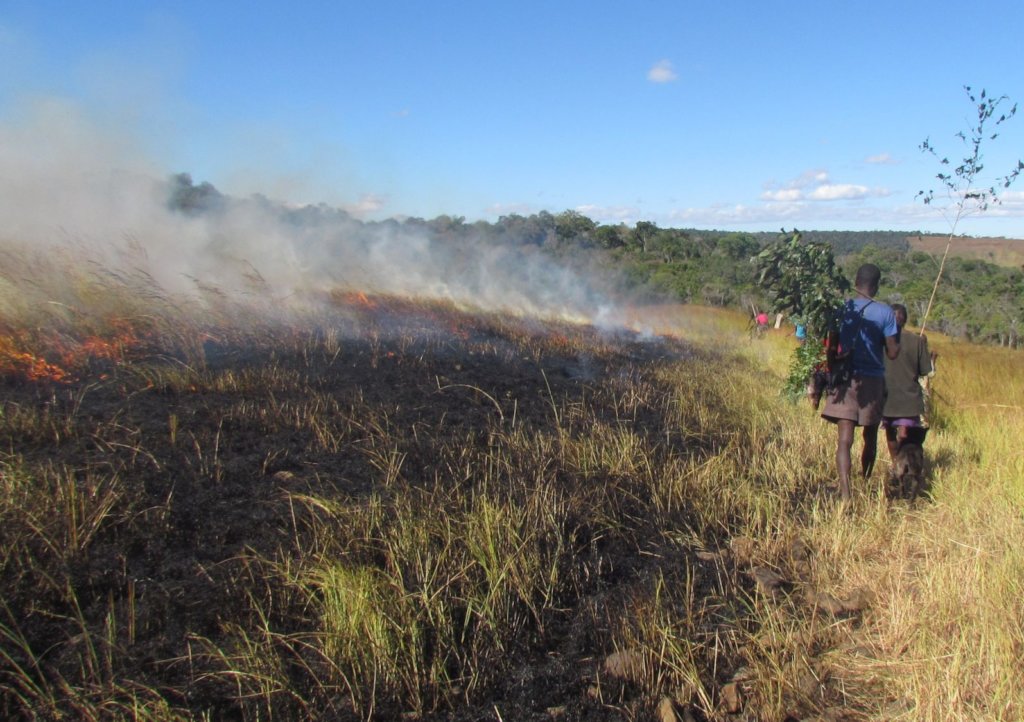
Responding to the threat of wild grassland fires, which have recently penetrated the forest in a number of places, Missouri Botanical Garden (MBG) is working closely with the Lonaky to strengthen protection by installing burnt firebreaks in the grassland at locations where the adjacent forest is particularly vulnerable to burning from ferocious late-season fires. Responsible installation depends on advice from the Bara on how fire is likely to behave depending on the dryness of the grass, time of day, direction and strength of the wind, as well as topography. In 2019, together with 160 Bara people mobilised by the Lonaky, the community installed almost 10km of firebreaks in the grassland adjacent to the forest, helping protect this key habitat for multiple lemur species in the region.
IUCN’s SOS Lemurs initiative was originally launched in 2017 to support lemur conservation through the implementation of IUCN Species Survival Commission’s ‘Lemur Conservation Strategy’. A key aim for the initiative is to empower indigenous peoples with skills and livelihood options to help them co-exists with lemurs, as well as support local communities in realising the potential of ecotourism in the area.
Links:
Project reports on GlobalGiving are posted directly to globalgiving.org by Project Leaders as they are completed, generally every 3-4 months. To protect the integrity of these documents, GlobalGiving does not alter them; therefore you may find some language or formatting issues.
If you donate to this project or have donated to this project, you can receive an email when this project posts a report. You can also subscribe for reports without donating.