By Simon Bradley | Marketing and Communications Manager
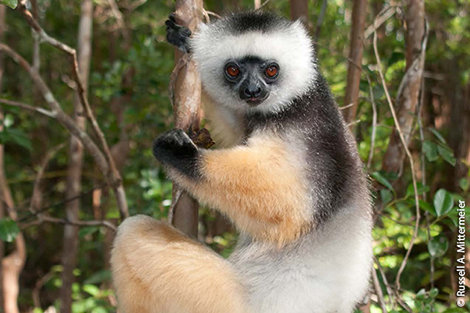
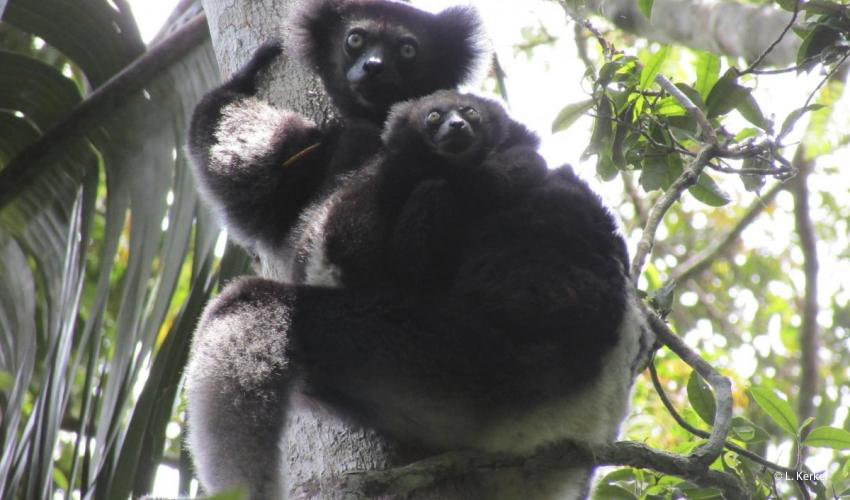
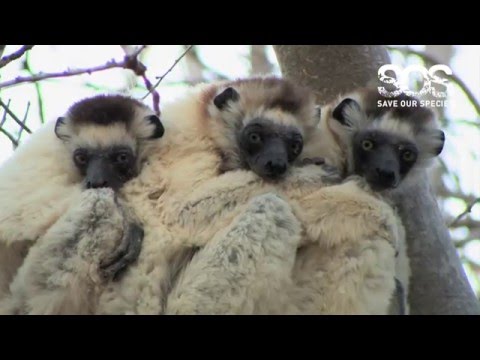
Forest cover in Madagascar is estimated to be only 10% of its original extent. This is of critical importance to Malagasy communities and wild species including Madagascar’s 113 lemur species.
Deforestation is a significant threat to the island’s largely endemic biodiversity, in particular to the forest-dwelling lemurs, whose habitats are shrinking and increasingly fragmented. At the same time, local communities, who often live in or near protected areas, are at risk of losing access to the ecosystem services and forest resources on which they depend.
Many of the civil society organisations who have received grants from IUCN’s SOS – Save Our Species Lemurs initiative have developed alternative livelihoods projects with local communities in order to provide alternatives to the use of limited forest resources, while at the same time strengthening local communities’ capacity to use forest resources sustainably (without depleting them in the long-term).
For example, SOS grantee GERP (Groupe d’Etude et de Recherche sur les Primates de Madagascar) has implemented a livelihoods project with the local communities living around the Maromizaha New Protected Area located in the Eastern part of Madagascar. Nine local community associations have benefited from trainings to learn new skills in pig rearing, chicken rearing, sewing and embroidery.
The associations that chose pig rearing received one pair of piglets (one male and one female) and those that chose chicken rearing got two chicks. The association that chose sewing and embroidery was provided sewing materials. In addition, fifteen households have benefited from rabbit rearing and were each given one pair of rabbits, while about 45 households have been trained in the application of a new rice-growing technique.
The local communities have welcomed the alternative livelihoods programme and are hopeful that it will help them to increase their income, while making them less reliant on forest resources to feed their families. Preliminary results indicate that forest exploitation has decreased since the implementation of the project started in October 2017.
In order to reduce the bush-meat and wood collection within the Strict Nature Reserve of Betampona in the Eastern part of Madagascar, another SOS grantee, Madagascar Fauna and Flora Group, is providing fuel-efficient stoves and vaccinations for chickens within the villages surrounding the reserve. A total of 12 villages have benefited from this project; 700 stoves were distributed in May 2018 and a total of 7,118 chickens were vaccinated against Newcastle disease, a viral bird disease which is transmissible to humans.
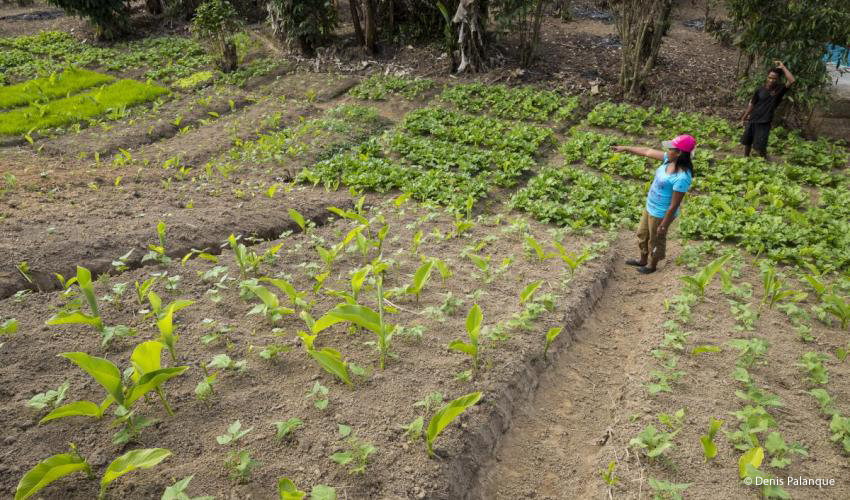
Meanwhile, another grantee Association Fanamby has implemented a livelihoods programme in order to decrease forest exploitation in the forest of Anjozorobe-Angavo. So far, 300 households within 3 villages surrounding the park have benefited from agricultural projects such as the growing of beans, maize and green vegetables, providing both food and income for the local communities.
Projects such as these allow the local communities to become less dependent on the forest and its resources. By providing both food and a source of income for the local communities, they furthermore enable the local communities to improve their living conditions.
These are just some examples of sustainable alternative livelihood solutions generated through the SOS Lemurs initiative. You can learn more about each project through our interactive map. Helping people find practical solutions to help meet their own needs is not only a story of hope, it can benefit species and habitats as well when managed and implemented according to best-practices.
We look forward to sharing more news and examples of working solutions as work progresses at each of the project sites around Madagascar during the SOS Lemurs initiative.
Links:
Project reports on GlobalGiving are posted directly to globalgiving.org by Project Leaders as they are completed, generally every 3-4 months. To protect the integrity of these documents, GlobalGiving does not alter them; therefore you may find some language or formatting issues.
If you donate to this project or have donated to this project, you can receive an email when this project posts a report. You can also subscribe for reports without donating.