By Monique Pool | Founder and Director
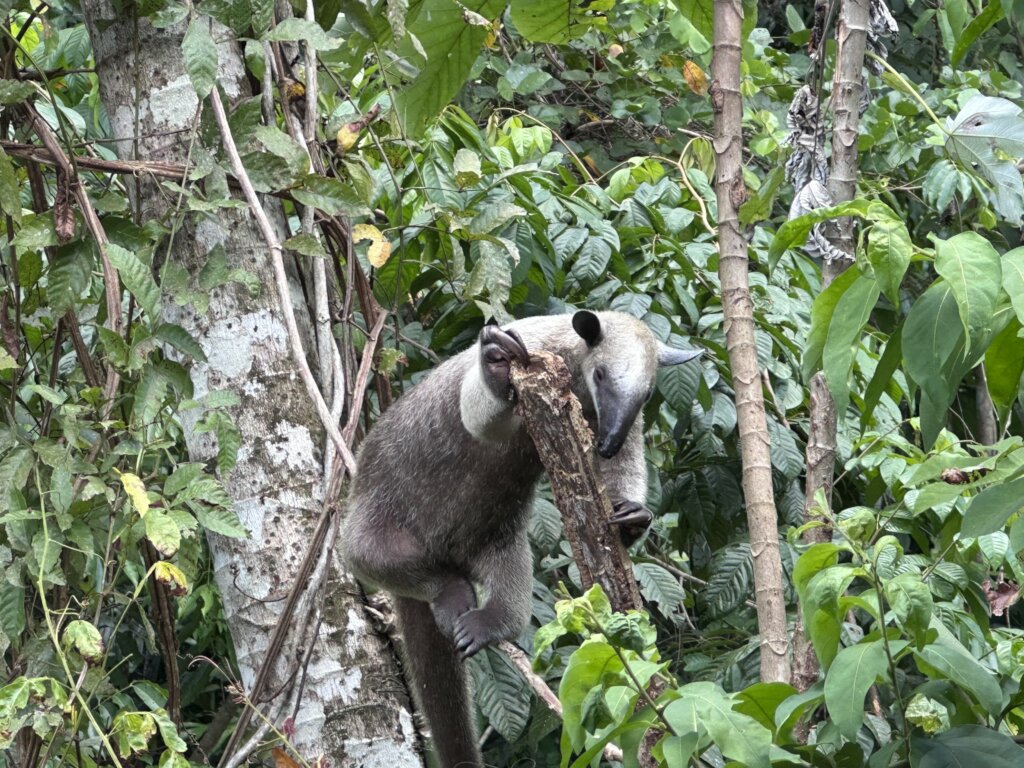
As you may remember, the Xenarthra are a group of animals that includes sloths, anteaters, and armadillos. Today I am going to tell you about a lucky anteater.
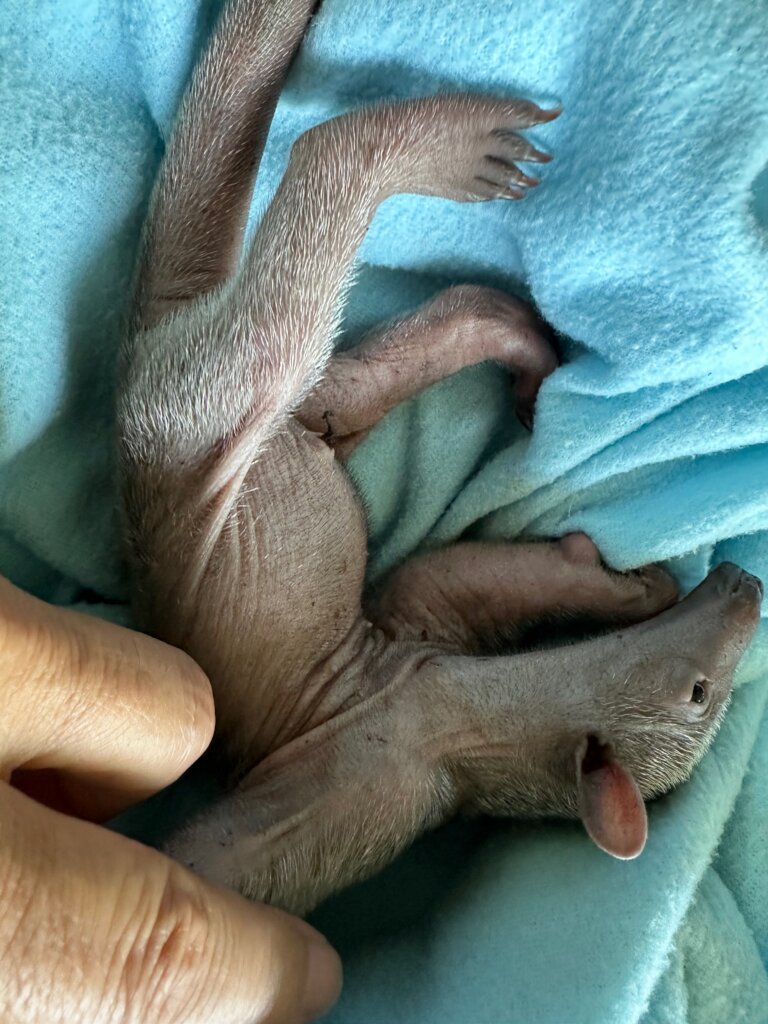
As I was getting ready for a special event in November, I received a call. A baby anteater had just been found. When the children of this animal-loving family went to look for mangoes on the ground, because a fruiting tree had just been cut earlier that day, they heard a sound. They explored in the fallen foliage and found a 1-day-old baby anteater. They raced to me with the baby, and I left the little one in a warm nest until I came back from my event. The baby kept calling for its mother throughout the night and the next day, and I hardly slept a wink. I immediately provided it with the necessary water, food, and warmth. Warmth is a key element in keeping such tiny anteaters alive and healthy, as they stay with their mothers for one year.
This family of animal lovers called me the next day to ask how the baby was doing, and told me they had given the baby the name Lucky. And indeed, that was an appropriate name for her, because one night alone in the “tropical” cold could have made the difference between life and death for this “Lucky” baby. With feeding around the clock – every two hours for the first few weeks – the animal became adjusted to her new situation. Since our animal caretaker was away on a holiday, I had the pleasure of being in charge of this important task. And fortunately, I had Jessie around, an experienced cat rehabilitator, who offered to help me when my duties called me away. The animal was eating well once it realized we were offering it milk with a pipette, drop by drop, dripping it into its tiny mouth.
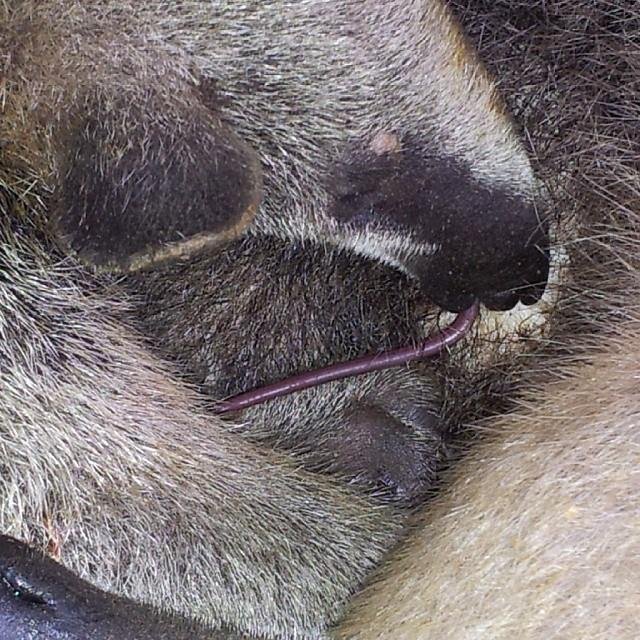
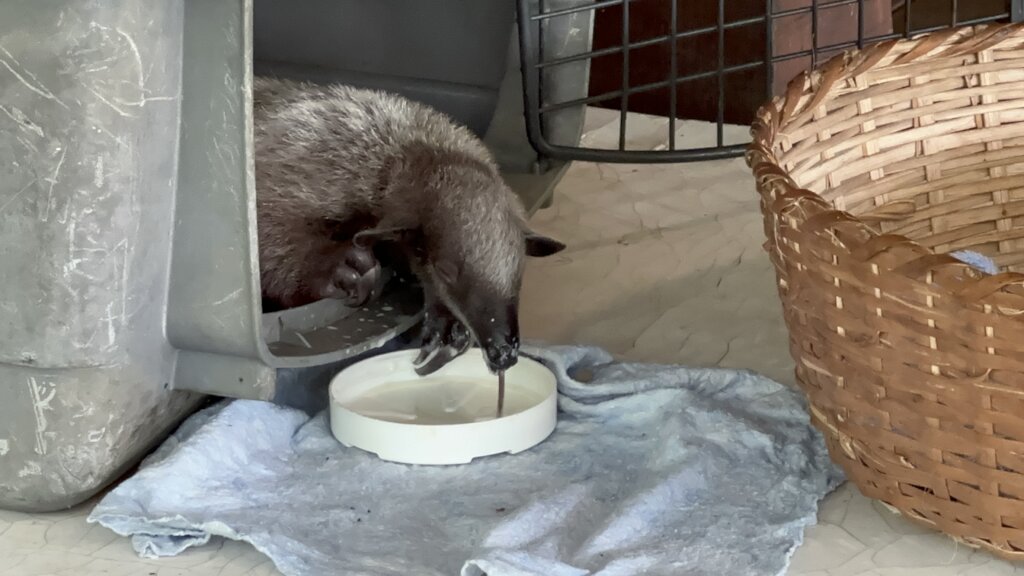
As you may know, anteaters do not have teeth. They have a tiny mouth through which their amazing tongue protrudes to lick up all the goodness they can find in nature. They also cannot suck if their tongue is not fully out of their little mouths, and milk could end up in their lungs. And it takes a little while for the animal to fully grasp that. For the first two weeks, we kept her permanently in the incubator. This meant her body temperature was stable throughout the night and day.
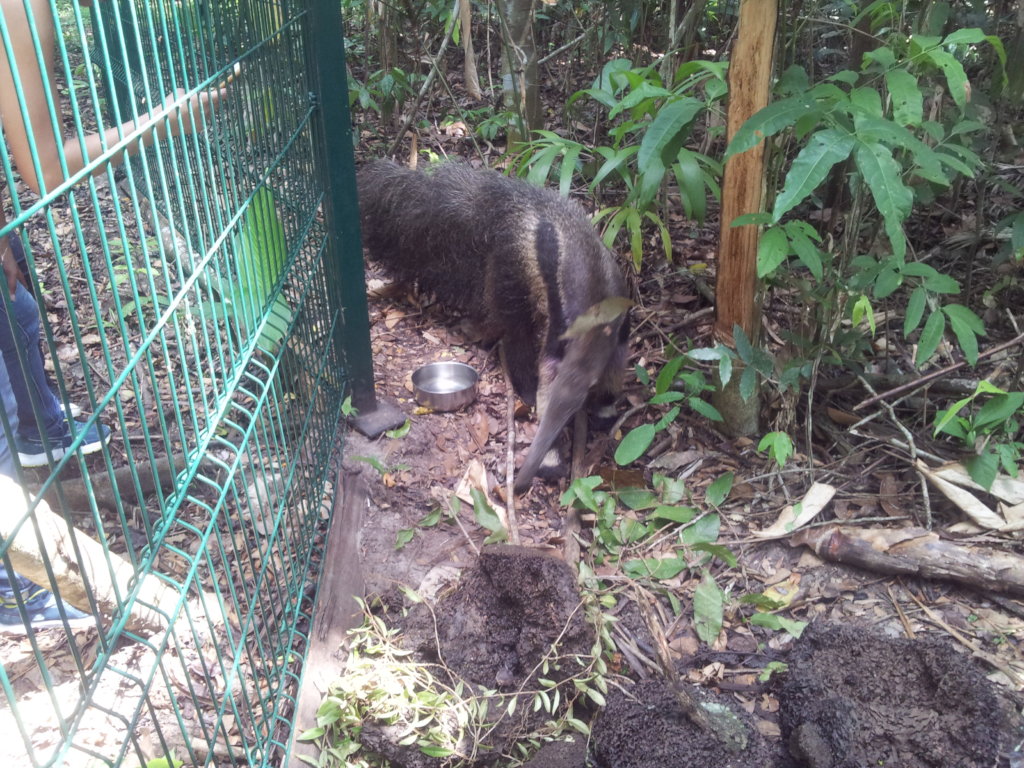
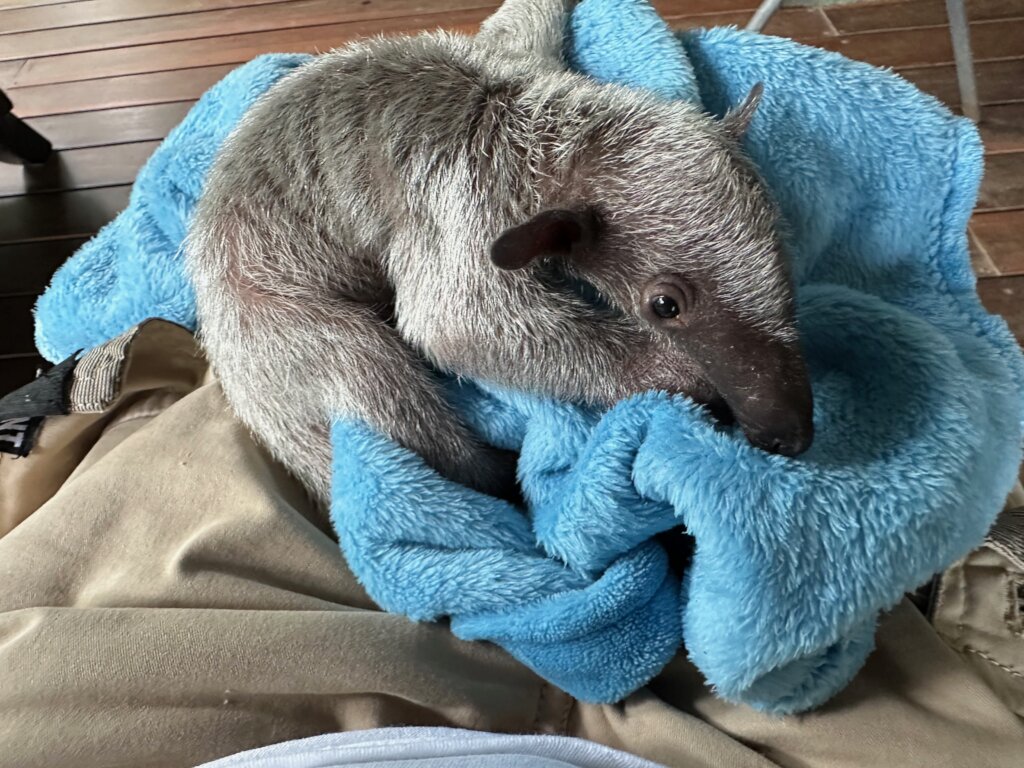
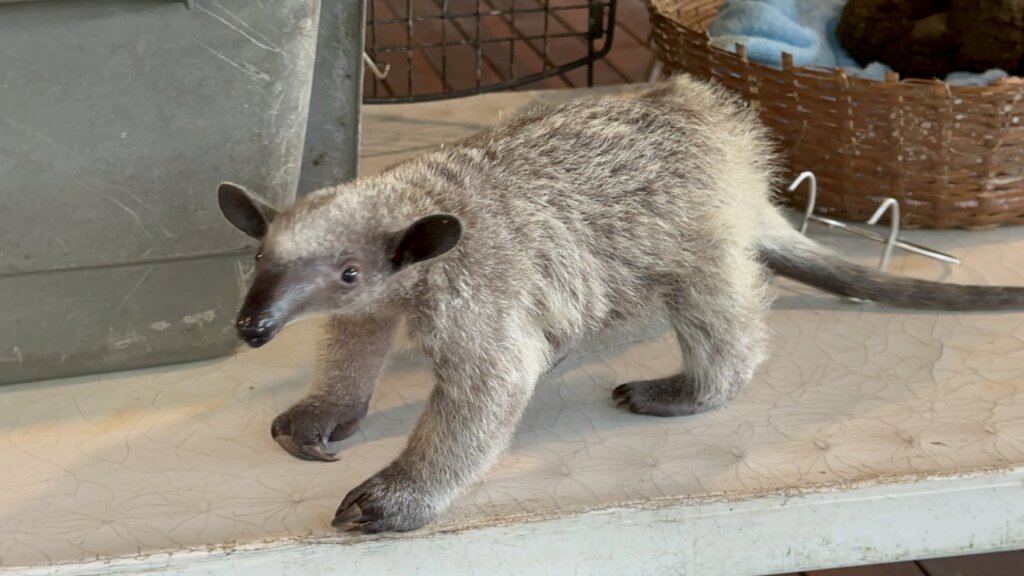
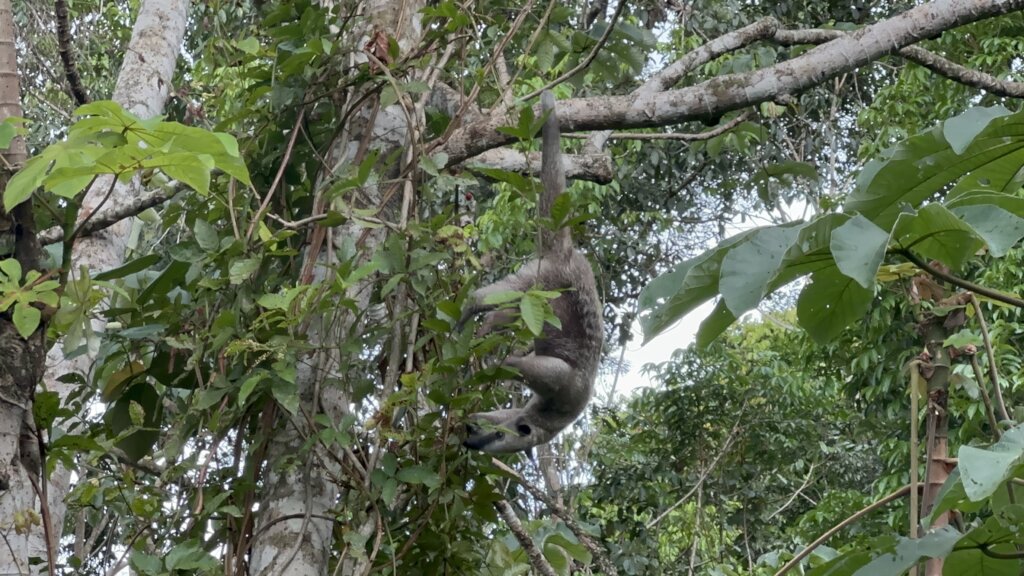
When Lucky arrived, she had very short hair; she almost looked naked. It was such an amazing sight to actually see her hairs growing. Until she had a beautiful long blond coat. The anteaters we mostly work with, called the southern tamandua, are mostly known for their vest. A darker-colored patch of their fur that looks as if they are wearing a dark vest. However, for the past twenty years, I have never seen an animal with a clearly dark vest. Mostly, they are a brownish-blond shade. And Lucky has an evenly colored coat as well.
Now, after almost 8 months, Lucky has grown into an almost fully adult girl. She is allowed to roam the trees in search of ants and other snacks, while still receiving some food twice a day. As soon as she feels ready, she can go off into the forest to meet other anteaters and to look for her own food. It will be a sad day, the day we will not see her come back. But also a happy day, because after all, we do this work so that they can be successfully reintroduced to nature at their own pace.
We appreciate your commitment to our work, which has made rescues like these possible. Please share your commitment with others and ask them to help us continue our work by making a donation too. So, we can continue helping animals like Lucky to return to their natural habitat. Thank you!
Project reports on GlobalGiving are posted directly to globalgiving.org by Project Leaders as they are completed, generally every 3-4 months. To protect the integrity of these documents, GlobalGiving does not alter them; therefore you may find some language or formatting issues.
If you donate to this project or have donated to this project, you can receive an email when this project posts a report. You can also subscribe for reports without donating.



Support this important cause by creating a personalized fundraising page.
Start a Fundraiser