By Julianne Sapi | Project Leader
University Walkabout is an initiative set up by Bismarck Ramu Group (BRG) in late 2017 to engage university students on issues of development in their home provinces. With this new initiative, BRG saw an opportunity to engage students of both East and West Sepik provinces on the campaign against the development of the Frieda River Mine, which threatens to devastate the Sepik River and the livelihoods of 300,000 indigenous people who live along and depend on this river for their survival.
Large resource extraction projects led by foreign companies are now appearing in every pocket of land in Papua New Guinea (PNG). It is an obvious race for profit, requiring exploitation of the local people and their natural resources, and beginning with devious processes for accessing and alienating the indigenous communities’ customary land, waterways, and seas. Given this, it is vital that BRG helps young people in PNG to critically analyze and understand the issue of ‘development’ in the country. Young people need to start asking themselves ‘development’ for what and for whom? Who is this so-called ‘development’ benefitting? It quickly becomes clear that the way ‘development’ is happening in PNG right now, it is benefitting only outside companies and elites, and not the indigenous communities.
And so the University Walkabout initiative aims to inform young and future generations about the importance of their identity, their land-based livelihoods, and their resources, and to support young Sepiks to take pride in their culture and their way of life, and thus become the voice of reason to SAVE THE SEPIK RIVER and BAN FRIEDA MINE. In this way, BRG believes that young people and others from East and West Sepik provinces will take active roles in critical discussions and conscious decision-making about development activities in their villages and provinces.
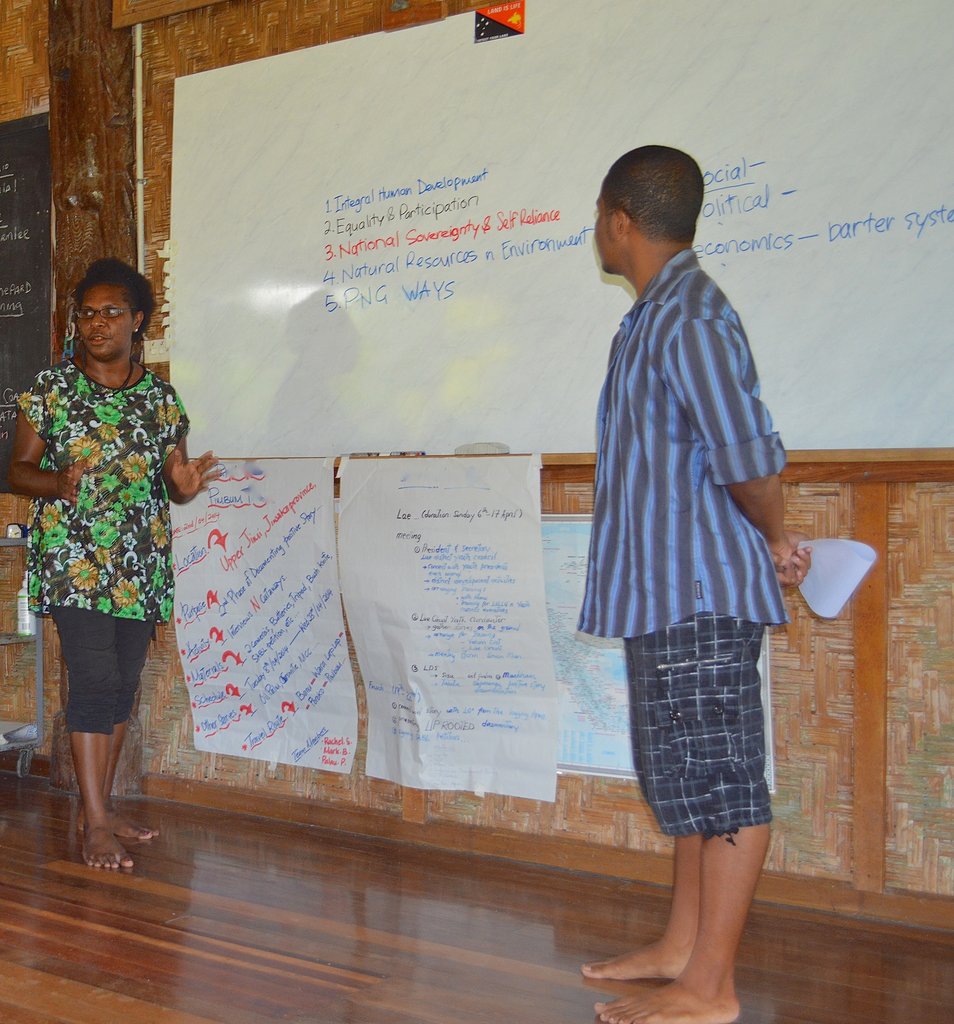
In October 2017, the BRG team visited three PNG universities – Divine Word University in Madang, University of Papua New Guinea (UPNG) in Port Moresby, and University of Goroka (UOG) in the Highlands region – to talk to the respective Sepik Students Associations about the issue of the Frieda Mine. At UOG, there were about 150 people present. Many students downloaded the slideshow presentation and committed to carry out awareness in their home communities during the holidays. Those present were thankful and requested that BRG try to find ways to continue such programs going forward. At UOG, the BRG team was also able to talk to New Guinea Islands students about the issue of experimental seabed mining.
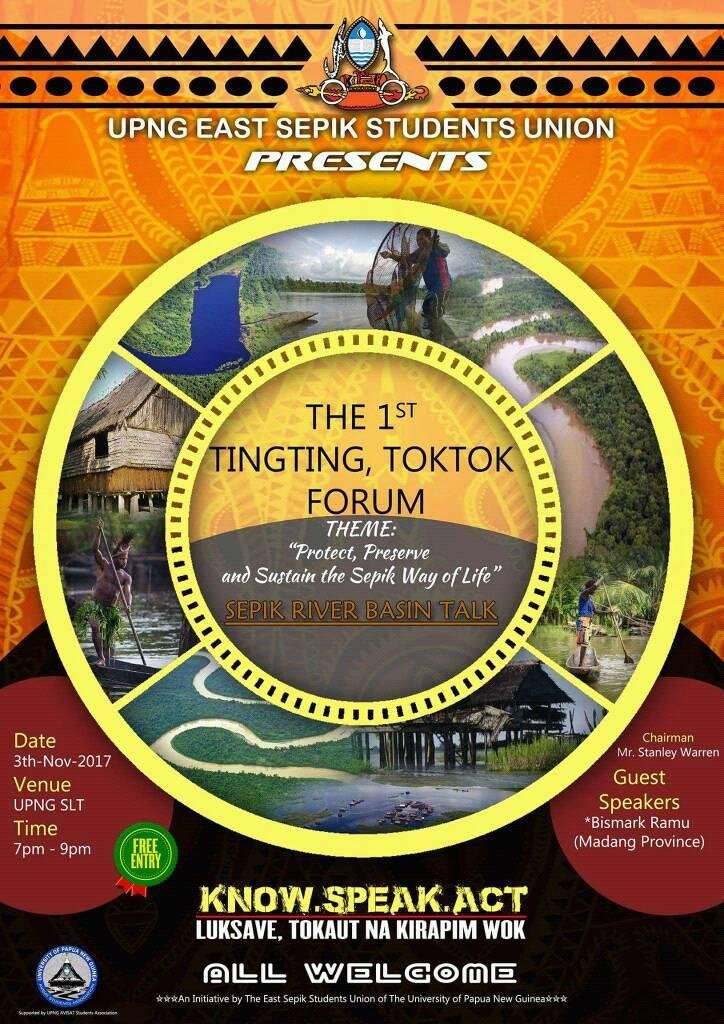
At UPNG, the audience was equally eager. The leader of the UPNG Avisat (Sepik River) student club gave his assurance that Avisat would develop a plan to talk with communities along the Sepik River about the dangers of the Frieda Mine. To this end, the Avisat club is now planning a fundraising drive to be held in mid-May to raise funds for a major awareness campaign about the Frieda Mine during the end-of-year holidays when many students go to their home provinces and villages. Another outcome was the launching of the annual Tingting Toktok (“Thinking Talking”) Forum by the students of East Sepik province, providing an opportunity for students to gather to discuss development issues pertaining to their home province.
The University Walkabout Campaign has inspired many young Papua New Guineans to be optimistic about defending their future. This is a huge step in the campaign against the Frieda Mine. If you would like to help support these university students and others in their struggle to stop the Frieda Mine and prevent environmental and social devastation of the Sepik River, please donate to the Sharing our Future project.
Project reports on GlobalGiving are posted directly to globalgiving.org by Project Leaders as they are completed, generally every 3-4 months. To protect the integrity of these documents, GlobalGiving does not alter them; therefore you may find some language or formatting issues.
If you donate to this project or have donated to this project, you can receive an email when this project posts a report. You can also subscribe for reports without donating.