By Tulika & Rina | Project Manager
Introduction
This report presents all the events organized by the Balsena collective and the programs conducted in schools during the period from July to September 2026. The events focused on the holistic development of children through practice and learning. They were organized to build leadership skills in children, to encourage their participation, and to help them grow into responsible citizens. The events were therefore based mainly on life skills, child rights and leadership, and were conducted in schools and in slum communities.
Balsena Point Activities
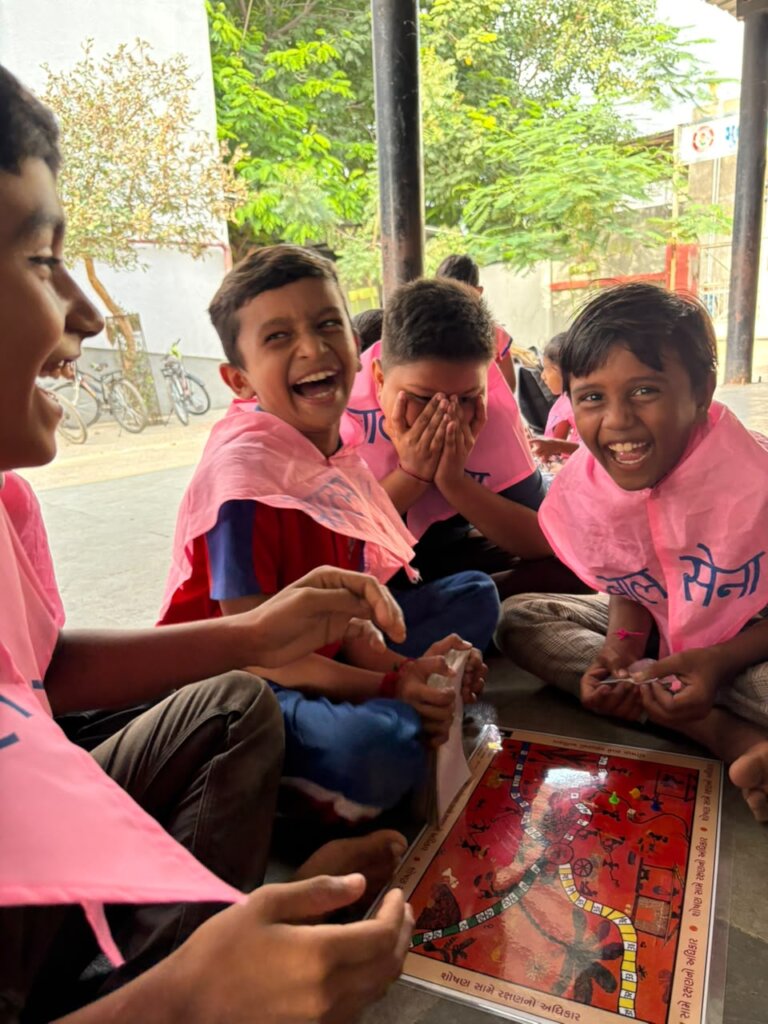
Over the three months, various activities, referred to as “point activities,” were held in the communities with Balsena children at 13 points in Bhavnagar. These activities were themed on child rights, hygiene and the environment.
The child rights sessions began with an understanding of a child’s needs and wants, and an activity based on this theme helped children to understand and learn about their rights. The activity discussed who is a child and how a child’s needs and wants are directly equivalent to the child’s rights. It also discussed that every person associated with a child is responsible for ensuring that the child’s rights are fulfilled and for safeguarding the best interests of the child for their holistic development.
Through teaching and learning materials, four categories of rights were discussed:
Children gather once a week with the facilitators, who facilitate their learning about their rights so that they become increasingly aware of them. The children have developed an understanding of their rights and take a stand for themselves as a collective whenever required.
Environment:
Environment activities were organized in the communities, where children learned about air, noise and land pollution, how pollution affects the environment, and what small steps children can take to create a peaceful environment to live in.
Point activities on personal hygiene were also organized, in which children were shown how to wash their hands and feet, and why brushing twice a day and bathing every day are important for one’s health.
Meetings by the Children: Formation of Committees and Programs Organized by Children
The children in the communities organized point meetings at all 13 points in Bhavnagar, where they raised issues such as the lack of a proper place for their weekly point activities and the physical violence to which children are subjected by their parents in the community.
In different meetings, the children formed committees to keep the point activities well organized. The committees ensured that:
The children voluntarily took responsibility for managing and organizing one another and for maintaining discipline, so that their learning would be fruitful.
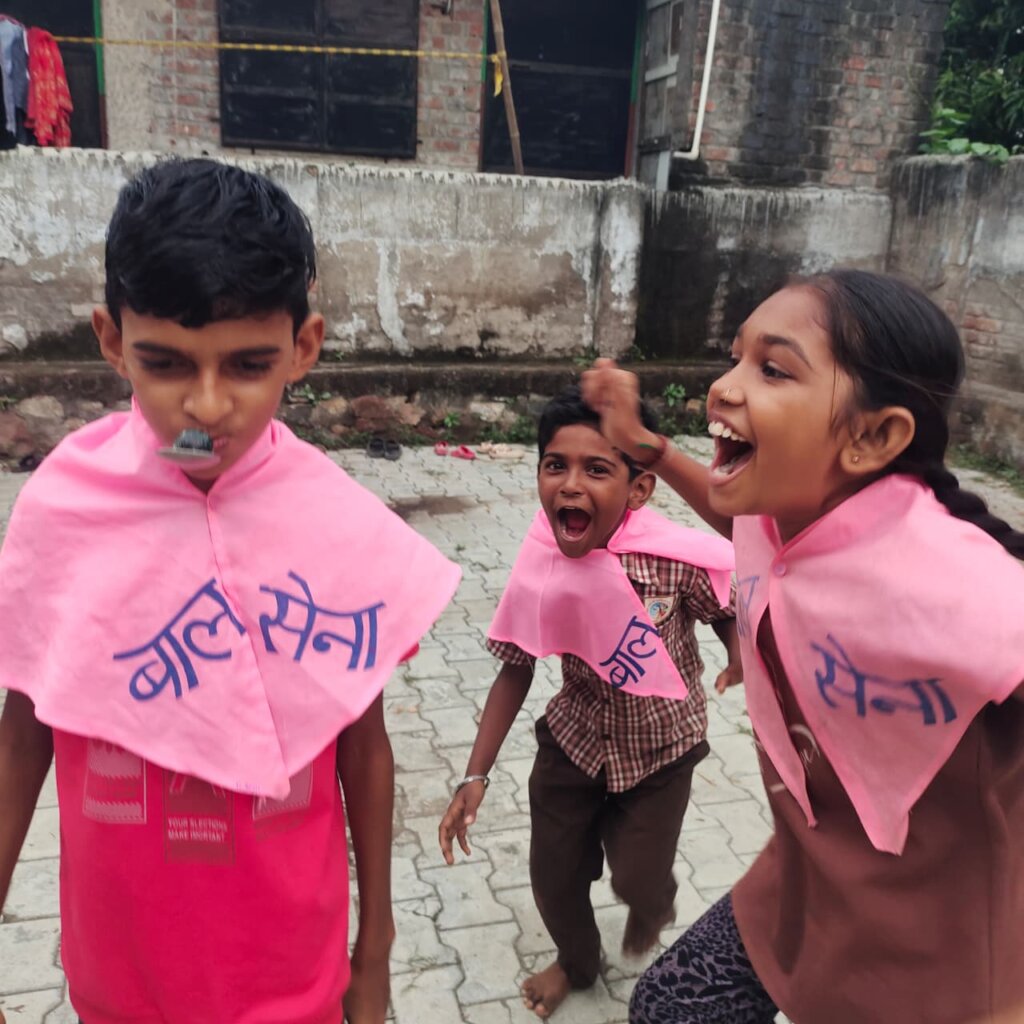
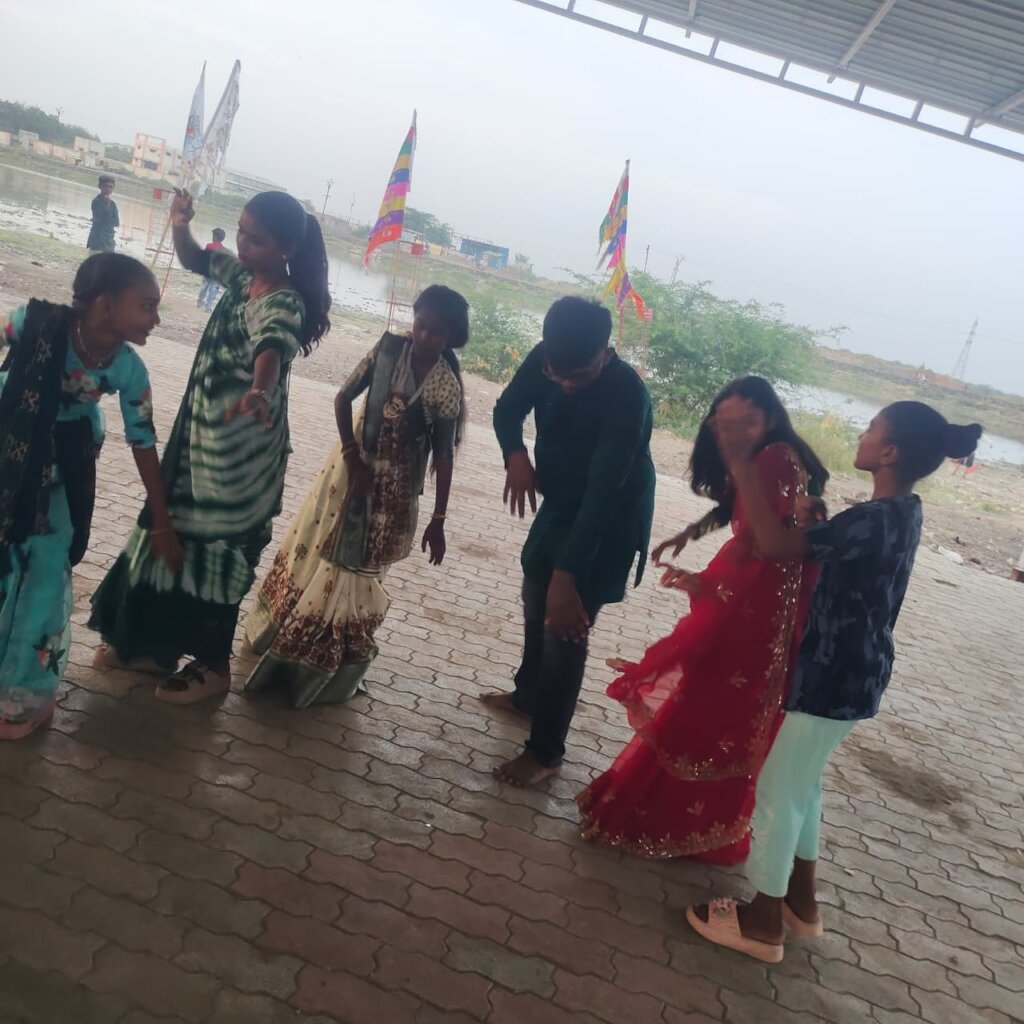
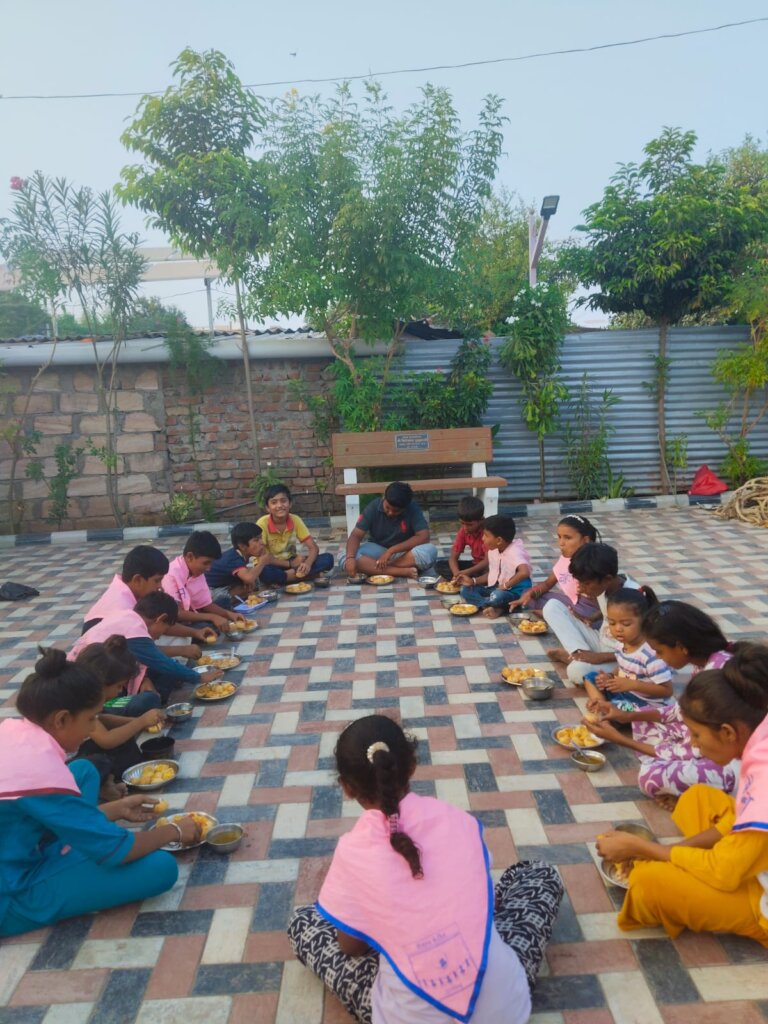
The children also organized various programs, such as a collective lunch, cooking together, and rallies in the communities to make people and other children aware of the harmful effects of excessive consumption of packaged snacks such as chips. They also performed role plays on substance abuse. They pledged to say “NO” to their parents when asked to buy betel nuts and cigarettes, in order to raise concern against substance abuse and addiction among children, as parents often do not pay attention to their children. The role plays and rallies helped the children to take part in spreading awareness among parents and children in the community. They also spread awareness through drawings on addiction-free living and on how addiction leads to the deterioration of children’s health at a very young age.
These programs were planned and managed entirely by the children themselves, which helped them to develop leadership skills and the ability to organize and work as a team, taking responsibility for every aspect of a program. The children approached the facilitators whenever they needed help, but they made every effort to make the programs and events successful.
The Balsena children also took the help of the Child Helpline to support other children in the community who live with a single parent, so that these children could receive the benefit of government schemes.
Council Meeting
Council meetings are organized on the first Sunday of every month at Shaishav’s training center. Over the three months, 43 to 45 children participated in each meeting.
The council meetings included a recap of the previous meetings and a discussion on the plans for the upcoming months. They also covered the problems and difficulties faced in different areas, programs on addiction-free themes, and the planning and date fixing for the annual program, Child Rights Week and the Kishore and Kishori Mandal (adolescent program).
The meetings were facilitated by Balsena’s president and vice president, who spoke about the importance of Balsena strengthening itself as a collective and the importance of children understanding their responsibilities and becoming leaders.
Balmela Organized by the Active Children and Their Training
The Balmela (children's fair) was organized by the children, and 153 children participated. The active children took full responsibility for managing the program: they handled the registration, distributed the materials, formed the groups and conducted the activities.
The children organized a drawing session, origami and child-friendly games for all participants. The program was organized for children aged 6 to 10 by the older children. This initiative helped the active children to develop teamwork, communication, decision-making, facilitation and collaboration skills, as well as the ability to take and fulfill responsibility.
The active children shared the following experience:
“It felt as if, just like Teachers’ Day, we celebrated Baldost (Friends of children) Day. We understood how difficult it is to remain patient at times, especially when the children were being naughty. We learned how to deal with children with patience, calmness and love. We felt empathy for the Baldosts.”
Shaishav also provided the active children with certificates acknowledging their efforts.
Balsena Elections
One of the biggest events of Balsena is the election, in which all the children democratically choose their representatives. It was a two-day event held on 18 and 19 July 2026. Thirty-five council members, 18 active team members and two former Balsena children took part in the process.
The children were first introduced to the various systems of governance, and to the qualities, values and responsibilities of a leader, through different activities, games and a movie. The children then participated and chose their leaders. The entire process was engaging, and the facilitators helped the children to understand why collective participation was important. All decisions on choosing the representatives were taken by the children, and Balsena received its representatives for the session 2026–2027.
The chief guest was a former editor of Saurashtra Samachar –A local daily. The entire program was organized and anchored by two Balsena children. In his address, he encouraged the children to speak the truth fearlessly, to identify local issues and concerns related to their rights, and to approach the relevant authorities through proper representation in order to address these issues as responsible citizens.
Kishori Night Over
A night stay was organized at Shaishav’s training center for the adolescent girls who are members of Balsena. Forty-six girls participated. The girls had many questions about the changes in their bodies, which had been raised in previous Kishori TOT sessions.
The girls were shown the movie “True Spirit” as an inspiration, to convey that girls can also chase their dreams and have the right to dream big and make their dreams come true. Activities were conducted to make the girls aware of the restrictions placed on them because of social beliefs, customs and traditions, and to make them aware of gender equality.
The girls asked many questions about love and attraction, sexual safety in relationships, healthy sexuality, the changes that occur in their bodies during puberty, and what happens to their bodies during menstruation. All their questions were answered with correct facts and information. Activities and games were held in different sessions to help them understand gender equality and to show that women are very strong human beings. The aim of this program was to empower the girls and spread awareness among them.
Faliya Meetings
Regular faliya (Mohalla- neighbourhood) meetings were held in the communities with parents regarding their children and their holistic development. Over the three months, 79 faliya meetings were held at 13 different points. The parents were informed about how the children are learning about their rights, which activities the children take part in during the point activities, and how these activities are helping them grow into responsible citizens. The parents were happy to learn about their children’s growth.
Discussions were held on the safety of children during the monsoon. Waterlogging in the community is unsafe for children and has made it difficult to find a safe place for the point activities. The parents were supportive in helping to find a safe place for their children’s activities.
Other issues raised by the parents were also discussed. These included whether their children receive quality education in school and the food provided to them in schools, about which there have been some issues. The parents also raised the concern that teachers do not pay attention when children get into a fight and do not resolve the issue.
The parents also expressed concern that their children are picking up bad habits from other people in the community. Because of their work, the parents are not at home to look after their children and are unable to give them proper attention.
Volunteer from the US
A young woman from the US came to Shaishav in July for a one-month internship. She took part in all the school and point activities in the field. She facilitated activities with the children, such as card games, and shared her experience and knowledge from the US. She interacted comfortably with the children and helped them engage more in the activities by bringing creativity into them and encouraging the children to think differently and out of the box.
She shared that she had an amazing time at Shaishav, learning a great deal from the team and the children. She enjoyed her time in the field and felt happy engaging with the children.
Case Study: Change in a Family’s Way of Thinking
In one of the communities in Bhavnagar where Shaishav works, there is a family that belongs to a very orthodox community, in which the girls and women were always restricted from going out. During a point activity, the eldest daughter joined the activity. As the activity was held right in front of the girl’s house, her mother used to keep an eye on her. Gradually, the mother understood that the activity was helping her daughter’s growth, and she gave her permission to participate regularly. However, the girl was still restricted from participating in other meetings.
The parents were therefore called to a faliya meeting, and they were regularly informed and oriented about the activities in which their children participate. The social worker also began visiting their house regularly and gained their trust. Now, all the children from the family participate regularly in all the programs, and their parents support their learning.
Conclusion
From July to September 2026, Balsena carried out many activities for children in Bhavnagar. Through weekly point activities at 13 points, children learned about their rights, hygiene and the environment. They also formed committees, organized their own programs and meetings, and spoke up about problems such as addiction and violence against children.
Events such as the Balmela, the Balsena elections and the Kishori night over helped children to build leadership, teamwork and confidence. The faliya meetings kept parents informed and involved, and the school sessions reached students of Standards 5 to 8. The case study shows the positive change that these efforts have brought: a family became supportive of its children’s learning and how their mindset slowly changed as well.
Overall, the work of these three months helped children to become more aware, responsible and confident. It also showed that when children receive opportunities and support from parents and social workers, the
By Rina Chauhan | Senior facilitator
By Isha | Project Consultant
Project reports on GlobalGiving are posted directly to globalgiving.org by Project Leaders as they are completed, generally every 3-4 months. To protect the integrity of these documents, GlobalGiving does not alter them; therefore you may find some language or formatting issues.
If you donate to this project or have donated to this project, you can receive an email when this project posts a report. You can also subscribe for reports without donating.


Support this important cause by creating a personalized fundraising page.
Start a Fundraiser