By Joel Clarin | Funding officer
Final project report: Seeds of Autonomy
As the Seeds of Autonomy project comes to a close, we are proud to share the results of a collaborative effort that has strengthened food sovereignty, local production, and agroecological knowledge in rural Boyacá, Colombia. Thanks to the support of our partners and donors, farming communities now have the infrastructure, technical skills, and organizational capacity to continue producing agroecological seedlings independently and sustainably.
Implemented between August 2025 and August 2026 in the municipalities of Arcabuco and Gachantivá, the project directly benefited 71 small-scale farmers from the Tierra Digna and El Convite Campesino associations and indirectly reached approximately 300 people across the surrounding communities.
Building the foundations for local autonomy
The central objective of the project was to enable farmers to produce their own agroecological seedlings rather than depending on external suppliers. This seemingly simple change has important long-term implications: it reduces production costs, improves access to quality planting material, strengthens local food systems, and creates new economic opportunities within the communities themselves.
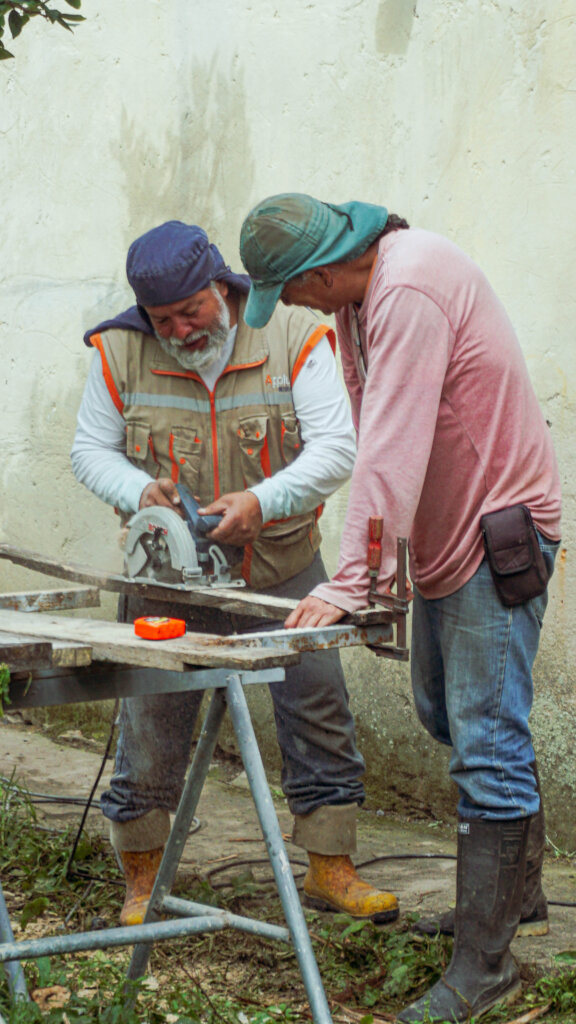
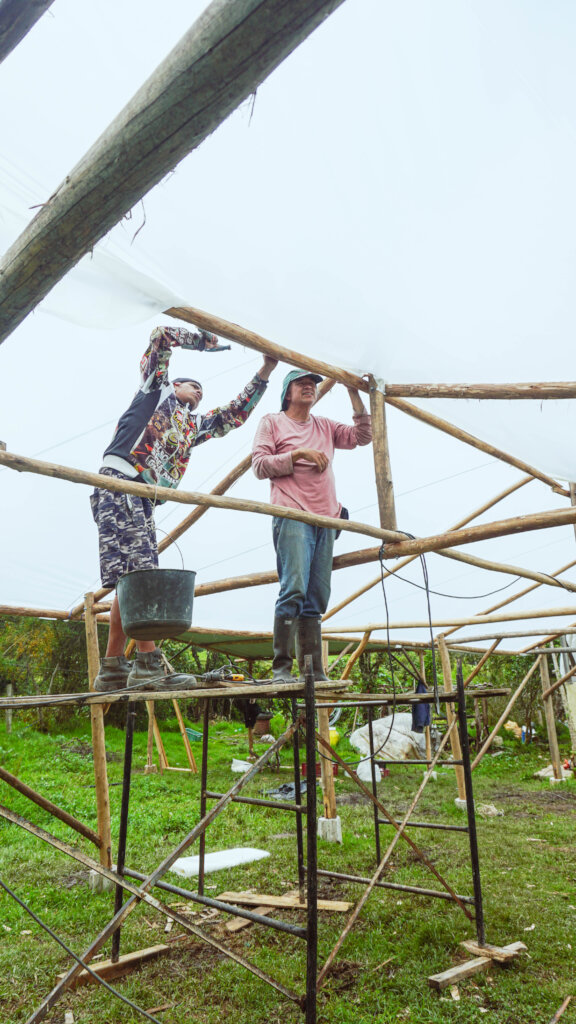
To achieve this goal, the project focused on both physical infrastructure and human capacity. Three agroecological greenhouses were constructed and fully equipped to serve as local seedling production centers. Each greenhouse was designed with durable materials, elevated structures for improved longevity, and protected growing conditions that allow year-round seedling production.
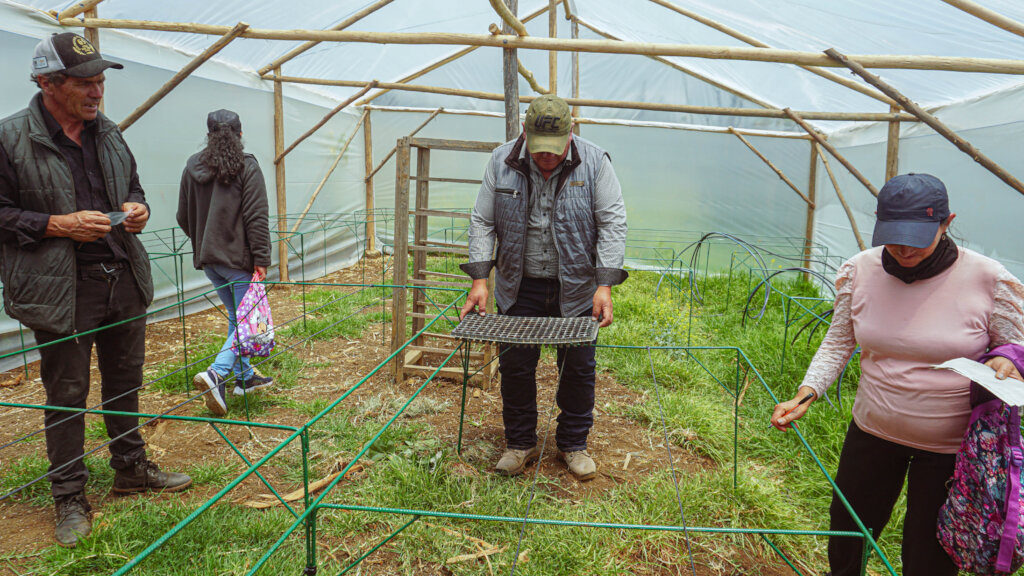
The greenhouses were equipped with germination tables and trays, irrigation systems, misting equipment, thermohygrometers, growing substrates, and high-quality seeds, providing farmers with everything needed to begin autonomous seedling production immediately.
Strengthening farmers’ knowledge and skills
Infrastructure alone is not enough to ensure long-term success. For this reason, the project invested heavily in practical training and farmer-to-farmer learning.
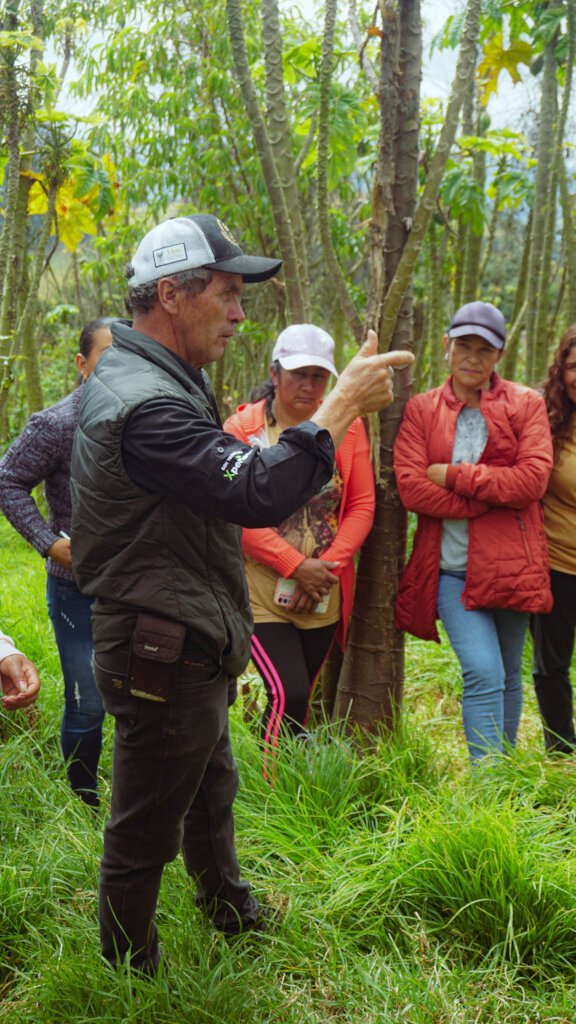
Two technical workshops were conducted on agroecological nursery management and seedling production, using a participatory field-school methodology that emphasized hands-on learning and knowledge exchange among producers. An experienced farmer from the community played a leading role in facilitating the training, reinforcing local ownership of the techniques and promoting the exchange of practical experience.
Participants learned key agroecological practices, including:
A third workshop focused on the economic management of seedling production. Farmers strengthened their capacity to calculate production costs, plan production volumes, estimate sale prices, and evaluate profitability. This training was essential for transforming seedling production into a sustainable economic activity rather than simply a technical practice.
One of the project’s most encouraging outcomes was that all participating farmers reported improved knowledge in both agroecological nursery management and production cost estimation, exceeding the original training targets.
A participatory approach that strengthened local ownership
One of the project’s greatest strengths was its participatory methodology. Farmers were actively involved in selecting greenhouse locations, validating technical designs, contributing to construction processes, and shaping the training activities.
The selection of greenhouse sites was based on jointly agreed technical and social criteria, including water availability, accessibility, previous experience with seedling production, and the potential to develop a viable local business model.
This collaborative approach ensured that the infrastructure responded to real community needs and increased the sense of ownership among the participating associations. Rather than receiving external assistance passively, farmers became active co-creators of the project.
Community exchange and project visibility
Throughout the implementation period, the project promoted knowledge sharing and public visibility. Communication activities documented the construction process, training workshops, and farmer experiences through photographs, videos, social media content, and public events.
The closing event, held on August 2, 2026, brought together farmers, partner organizations, and the project team to celebrate the results achieved and reflect on future opportunities. Participants shared their experiences, visited one of the greenhouse production units, and discussed how the new infrastructure and skills could contribute to the long-term development of their communities.
The event also highlighted the importance of international solidarity and the valuable support that made the initiative possible.
Challenges and lessons learned
Like many rural development initiatives, the project faced several implementation challenges. Prolonged periods of heavy rainfall delayed greenhouse construction, while logistical delays affected the delivery of construction materials. Changes in project coordination and the seasonal availability of farmers also required adjustments to the implementation schedule.
These challenges reinforced several important lessons. Flexible planning is essential when working in agricultural contexts where weather conditions and production cycles can significantly influence project timelines. Equally important is the value of participatory approaches, which build local ownership, encourage peer learning, and increase the sustainability of project outcomes.
The experience also demonstrated that combining technical training with economic and organizational strengthening creates more durable impacts than focusing on production alone.
Looking beyond the project
Although this project has officially ended, its most important outcomes are only beginning.
The three greenhouses will continue producing agroecological seedlings for years to come, providing local farmers with reliable planting material and reducing dependence on external markets. The trained producers now possess the technical and financial knowledge needed to manage these production systems independently.
The participating associations are also exploring opportunities for joint commercialization of seedlings and other agricultural products, creating new sources of income and strengthening their collective economic autonomy.
Future efforts will focus on consolidating these production models, expanding market access, and extending the benefits of the initiative to additional farming families. We also plan to continue building partnerships with local institutions and technical organizations to further strengthen agroecological production in the region.
A shared achievement
Seeds of Autonomy has demonstrated that small-scale investments in community infrastructure, farmer training, and participatory organization can generate lasting change. The project has strengthened local capacities, increased productive autonomy, promoted sustainable agricultural practices, and created a foundation for future economic opportunities.
To everyone who supported this project through GlobalGiving, thank you. Your contribution helped farming families build not only greenhouses, but also the knowledge, confidence, and collective capacity needed to shape a more resilient and sustainable agricultural future.
Project reports on GlobalGiving are posted directly to globalgiving.org by Project Leaders as they are completed, generally every 3-4 months. To protect the integrity of these documents, GlobalGiving does not alter them; therefore you may find some language or formatting issues.
If you donate to this project or have donated to this project, you can receive an email when this project posts a report. You can also subscribe for reports without donating.



Support this important cause by creating a personalized fundraising page.
Start a Fundraiser