By Connie Chow | Director and Founder
Dear friend,
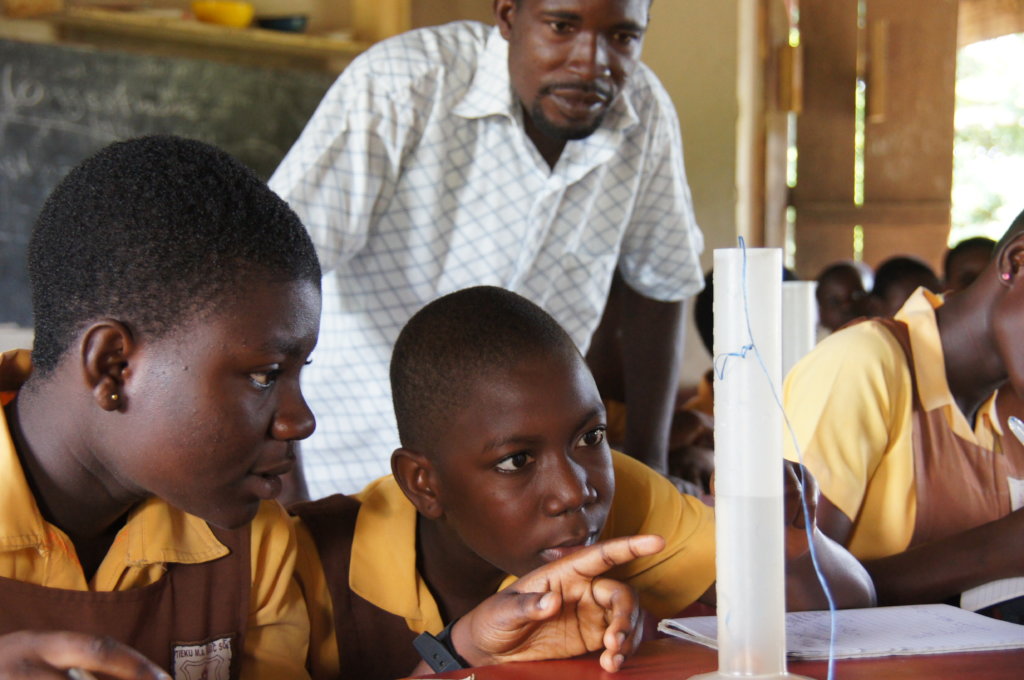
You may remember that this past term, our Explorers were studying the human body. (If not, do check out the last report linked below). They've looked for their pulses, listened to their hearts beat; measured their height, lung capacity, and heart rate before and after exercise; studied how pressure and muscles help their hearts, lungs and guts work. Our Explorers have loved it.
How can we make learning about the human anatomy and physiology even more relevant? We brought in role models and challenged our Explorers to design physical models to put it all together, of course!
Visit from health professionals
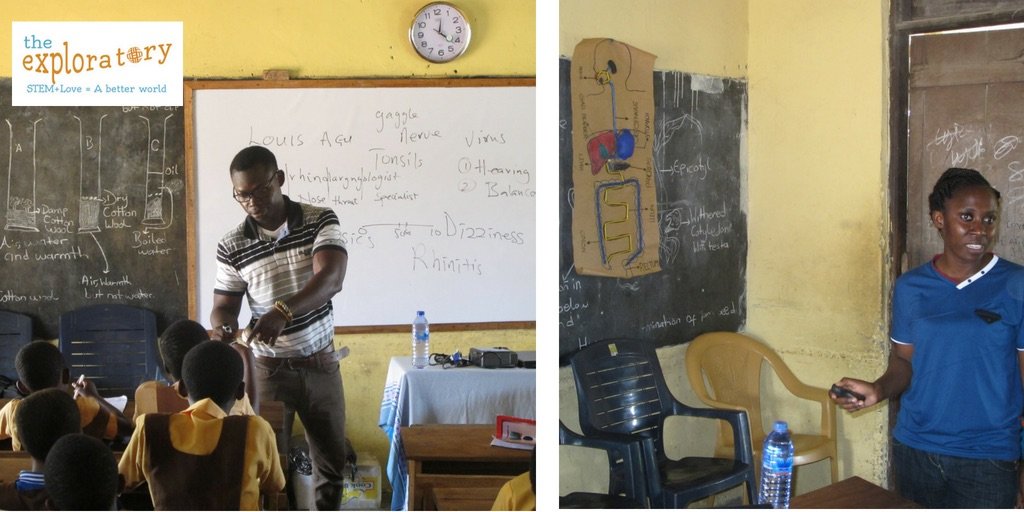
Thanks to your support, a total of 18 professionals in health care and health sciences visited our clubs during March. They included 8 medical doctors whose are experts in internal medicine, surgery, pediatrics, and ear, nose and throat; 6 nurses whose specialties range from community health to psychiatry to midwifery; a physiotherapist and a prosthetist and orthotist; 1 lab technician focusing on biochemistry and microbiology; a psychologist and IT consultant; and a lecturer and researcher in neuroscience. They hail from large hospitals to local clinics. Students' perspectives were broadened.
Our visitors used stories, models, illustrations and slides to illustrate the functions and illnesses of the human body and mind, and how they as professionals contribute to the health of their patients. Our Explorers loved learning about the breadth of experiences, the real life applications, health tips, and the encouragement from role models to study hard and reminder that they too can use science to make their world a better place. A few of the role models enjoyed the experience so much they volunteered to come more than once!
"…once we are determined there is nothing we cannot do, we just need to identify our talent and work towards it", said one Explorer after a visit.
#DesignChallenge
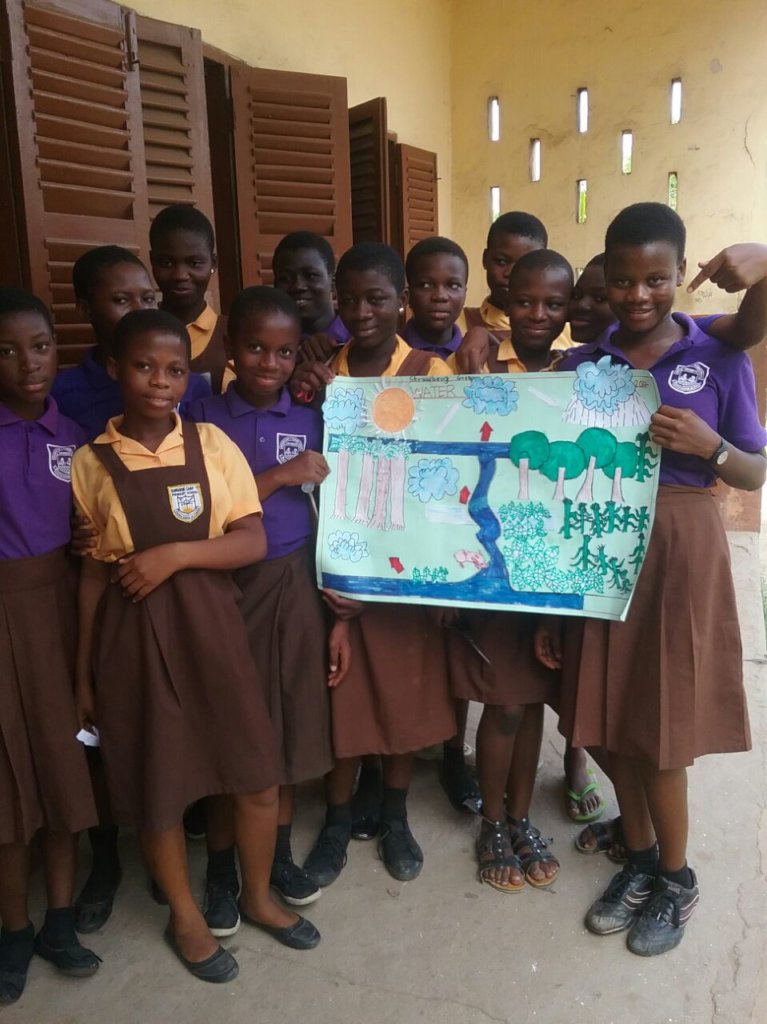
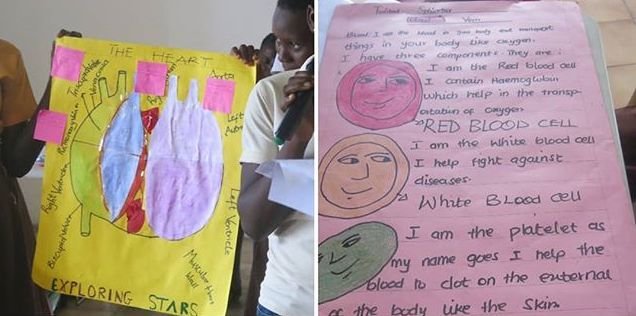
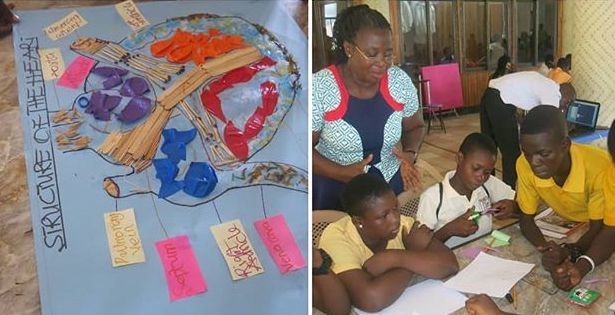
As a wrap up for the term, Explorers put their knowledge to work in our 2nd design challenge during their April vacation break. On the first day, over 600 Explorers from different schools gathered in each of the 4 towns where we have clubs. They brainstormed ideas, created posters and presented those at the end of the day.
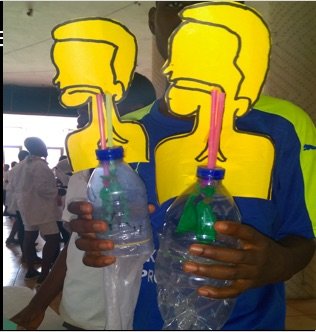
The younger group were asked to use visual and physical models to help low-literacy members of a community understand the dangers of second hand smoke. The latter were asked to create working models as teaching aids for understanding the circulatory system. See the photos for some our Explorer's ideas.
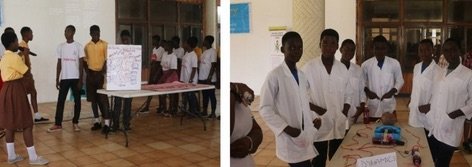
The best team from each division (primary and junior high) moved on to the final the following Friday, which was held at the Museum of Science and Technology in Accra. They had to build working models - there brought pumps, bottles, tubing, soot - and there was even a Scratch (computer) game. It was a day of excitement, concentration, elation and a bit of disappointment!
Our judge said, "“The projects were impressive and innovative, some students even exhibited knowledge beyond what I will expect them to know at their level.”
We are so grateful for your support to make these experiences possible. Please share the word about this important work. Have a wonderful summer!
Links:
Project reports on GlobalGiving are posted directly to globalgiving.org by Project Leaders as they are completed, generally every 3-4 months. To protect the integrity of these documents, GlobalGiving does not alter them; therefore you may find some language or formatting issues.
If you donate to this project or have donated to this project, you can receive an email when this project posts a report. You can also subscribe for reports without donating.