By Jennifer Gilmer | Development Committee Chair
As we wrap up our 5th year as a non-profit dedicated to rehabilitating wild birds and educating the public on their conservation, we have the opportunity to reflect on the wide variety of cases we handle. The year is not quite over yet, but we can report that we have seen the largest volume of patients in a single year in our history! With this report we would like to highlight a few of our interesting cases.
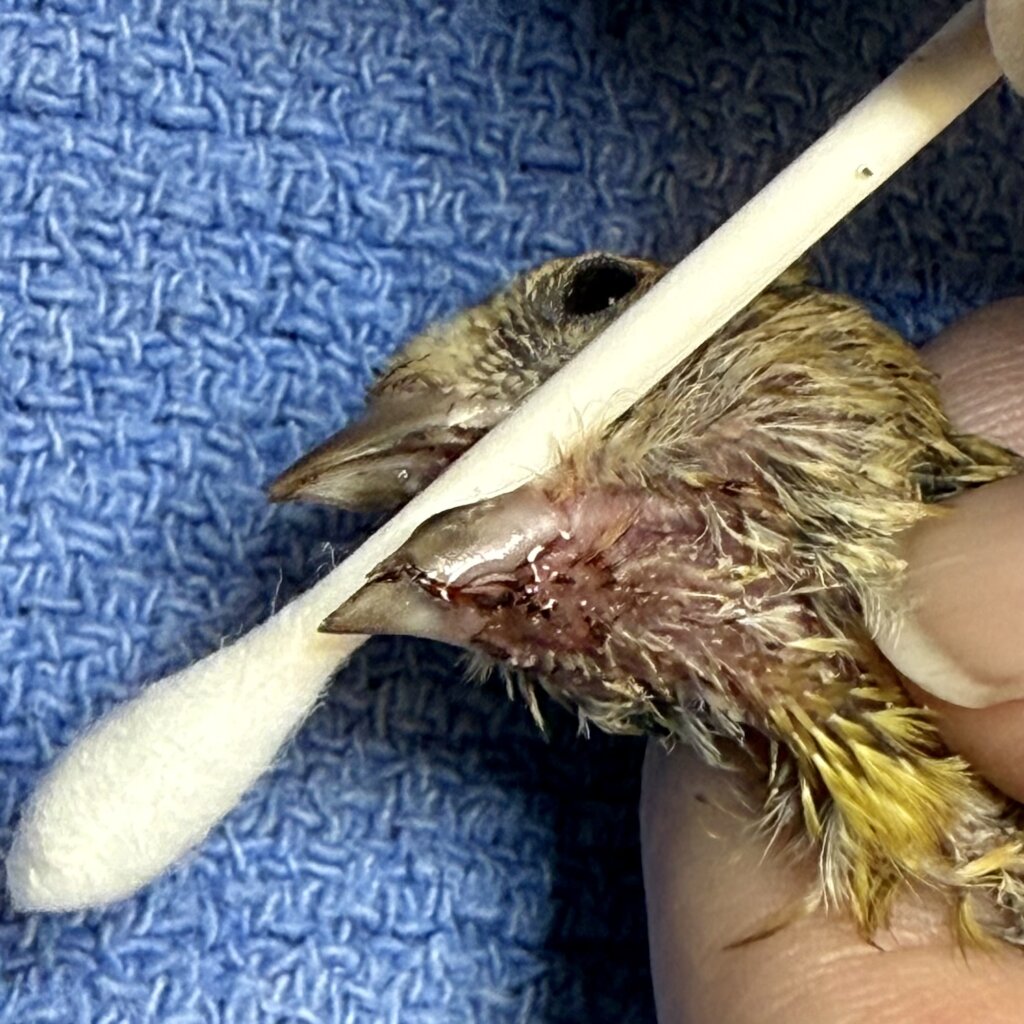
One of our patients, a beautiful American Goldfinch, arrived to us with a split lower beak. We were able to splint the beak (see photo), but the patient was unable to self-feed while the beak was healing. For cases such as this, we create special liquid formulations to hand feed our patients to provide them with much needed nutrition and calories. We develop a feeding schedule based upon the weight and breed of the patient, then our volunteers follow a scheduled routine to provide the patient with formula.
Among the more rare species we treat, this year we have cared for a handful of Cuckoos. One of these cases was identified by a homeowner who noticed the bird just sitting on the ground in the same spot for 24 hours. Upon examination, we noticed head and eye trauma likely from a collision of some sort. The bird was quite thin and would not eat on their own.
This is yet another story where hand feeding, and in this case force feeding, was required in order to help the patient regain weight. After some time, we incorporated a variety of live insects to the diet. It turns out that the patient did regain weight and was back to flying and perching as normal. This particular patient remains in our care as of today as we are still treating the vision impairment issue.
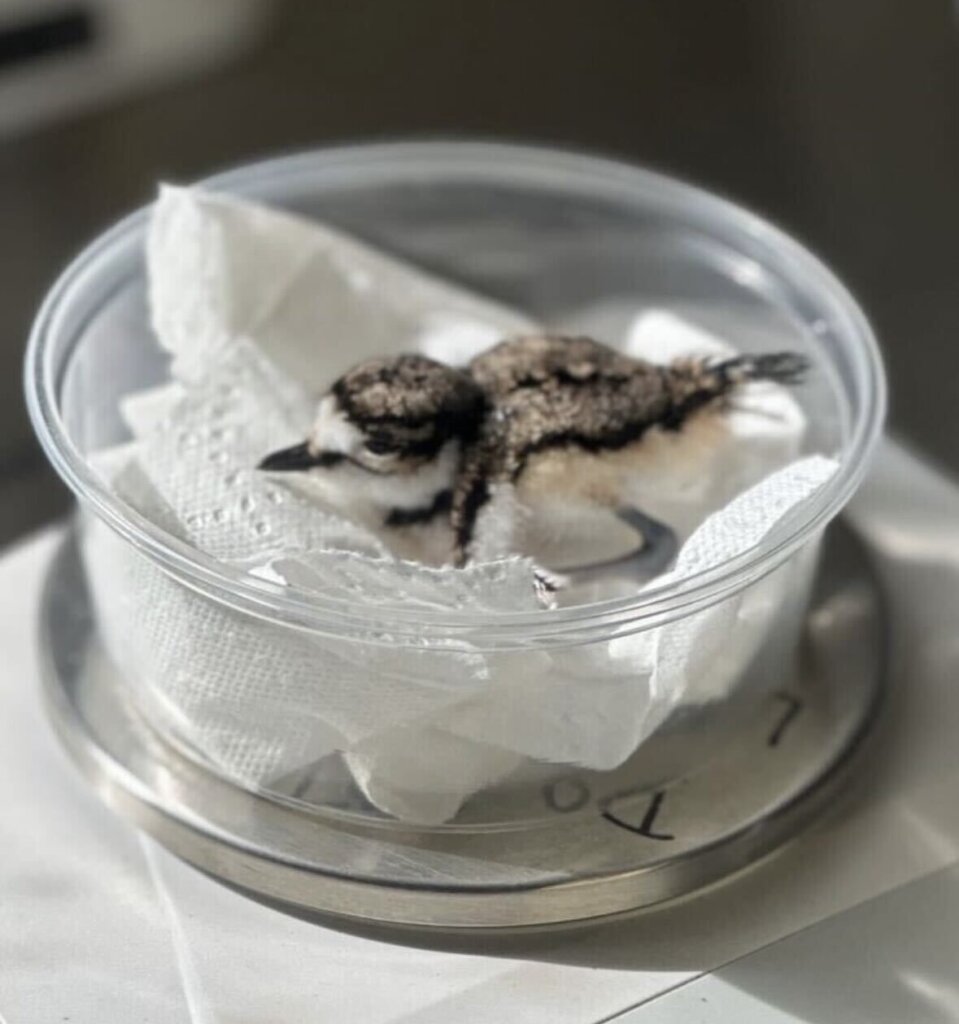
In early June we received a call via our helpline regarding a nest of baby Killdeer. This little guy (see photo) and his hatchling nest mates lived in a contained area around an industrial air conditioning system. It had concrete walls, but no top. Sadly, that situation attracted a hawk which killed the rest of his family. One of the employees heard the screaming birds and went out to investigate. She found this little guy alive and brought him to us.
Although he wasn't physically harmed, he was very traumatized. He would not self feed, which as a precocial chick, he should be able to do. We kept him in a quiet environment along with all the foods he should be eating. To make sure he was getting the nutrition he needed we force-fed him a formula until he was comfortable enough to self-feed again. Eventually he came out of shock and started self feeding. He is now thriving out in the wild.
THANK YOU!
Our ability to treat cases like these is highly dependent on donations such as those we receive from you. Without your support we would not be able to handle the more complicated or involved patient cases. We are grateful for your support.
Project reports on GlobalGiving are posted directly to globalgiving.org by Project Leaders as they are completed, generally every 3-4 months. To protect the integrity of these documents, GlobalGiving does not alter them; therefore you may find some language or formatting issues.
If you donate to this project or have donated to this project, you can receive an email when this project posts a report. You can also subscribe for reports without donating.