By Dr. Chris R. Shepherd | Founding Director, Project Leader
We are pleased to report that thanks to your support, and together with funding from other sources, we have successfully collected all the data required to carry out our analysis of the hornbill trade in two key trade hotspots, and are in the final stages of wrapping up the manuscripts for submission to peer-reviewed journals.
In Indonesia, we found that illegal trade in hornbills is both widespread and highly visible, clearly indicating a blatant disregard for the law, and a lack of effective enforcement. Numerous species of hornbills are involved, and the illicit trade continues to operate with relative ease and limited concealment - much of it conducted openly on online platforms, allowing traffickers to reach a broad audience with minimal risk of detection or prosecution.
Our analysis also highlights a significant gap in the enforcement process: while seizures do occur, the penalties imposed on offenders are often minimal and lack the severity needed to act as a meaningful deterrent. In many instances, prosecutions resulted in low fines or short prison sentences, which fail to reflect the conservation importance of hornbills or the seriousness of the offenses.
This weak enforcement response undermines national conservation objectives and allows the illegal hornbill trade to persist largely unchecked. Strengthening legal frameworks, increasing investigative capacity, and ensuring stronger penalties are essential steps if Indonesia is to effectively protect its hornbill populations from ongoing exploitation.
In Vietnam, our investigation based on seizure and prosecution records revealed a notable volume of illegal trade in hornbills. We also found that a key mechanism used to combat this trade has been the wildlife crime hotline operated by Education for Nature – Vietnam (ENV) which has proven instrumental in generating public reports that have led directly to enforcement actions against illegal hornbill trade. However, our analysis also shows that penalties imposed in hornbill trade cases are typically lower than what is permitted under existing legislation. This discrepancy weakens the deterrent effect of law enforcement and underscores the need for stronger judicial action, better application of existing laws, and continued public engagement through initiatives like the wildlife crime hotline.
We will share the final publications on these projects, which will contain details on the trade in hornbills in both countries, when they are ready.
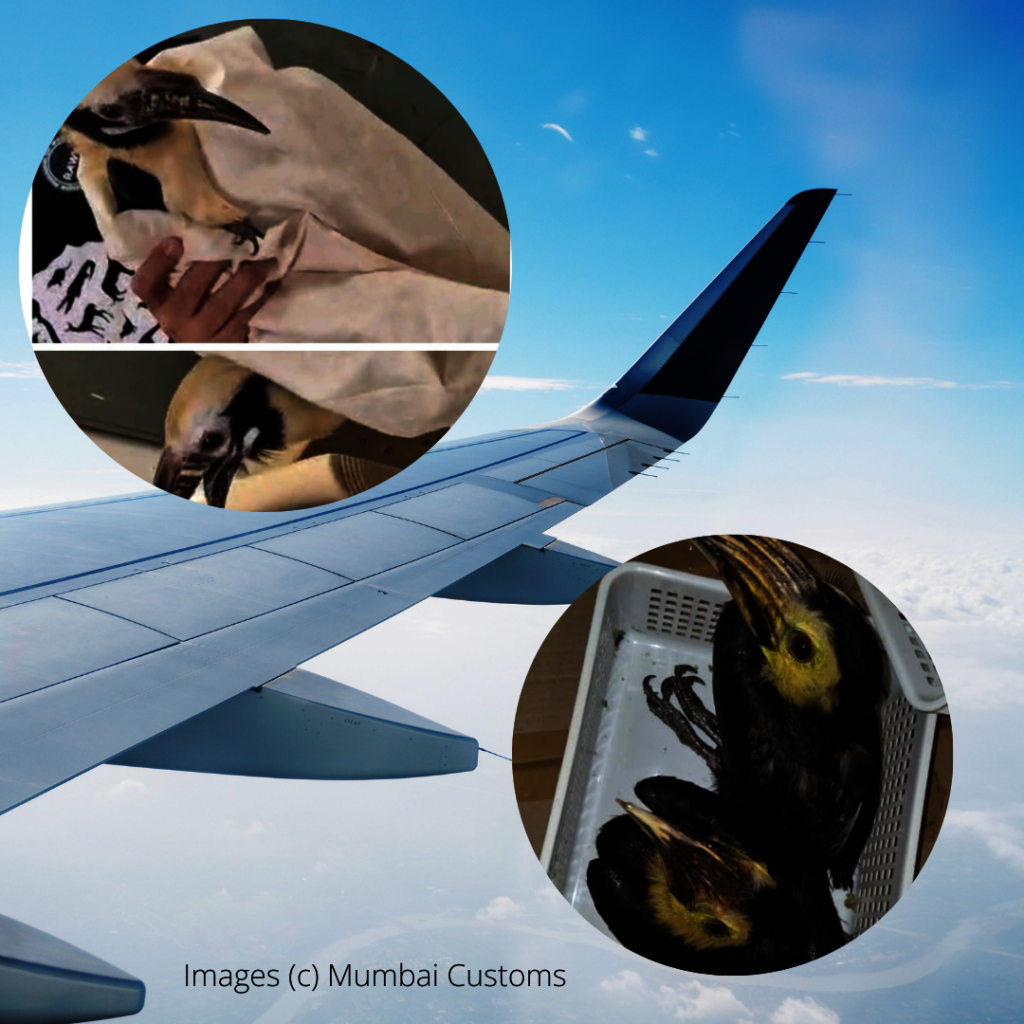
We are continuing our efforts to investigate and combat the illegal trade in hornbills across Asia, with Thailand as our next focus. Thailand plays a central role in the global illegal wildlife trade and is also home to several extraordinary hornbill species. Sadly, these species face increasing threats from illegal trade, habitat loss, and other human-driven pressures.
In parallel, we are working to better understand the rising demand for hornbill heads from Africa. Through the collection and analysis of trade data, we aim to support a proposed listing of these species under Appendix II of the Convention on International Trade in Endangered Species of Wild Fauna and Flora (CITES). This data will also contribute to the development of stronger national policies and enforcement mechanisms.
Your support is vital. It enables us to keep investigating illegal hornbill trade, advocate for stronger legislation, assist with enforcement, and raise global awareness about the urgent need to protect these incredible birds. Thank you for supporting us in this effort.
By Loretta Shepherd | Communications Coordinator
By Dr Chris R. Shepherd | Executive Director
Project reports on GlobalGiving are posted directly to globalgiving.org by Project Leaders as they are completed, generally every 3-4 months. To protect the integrity of these documents, GlobalGiving does not alter them; therefore you may find some language or formatting issues.
If you donate to this project or have donated to this project, you can receive an email when this project posts a report. You can also subscribe for reports without donating.