By Oregon Zoo | Grant writer
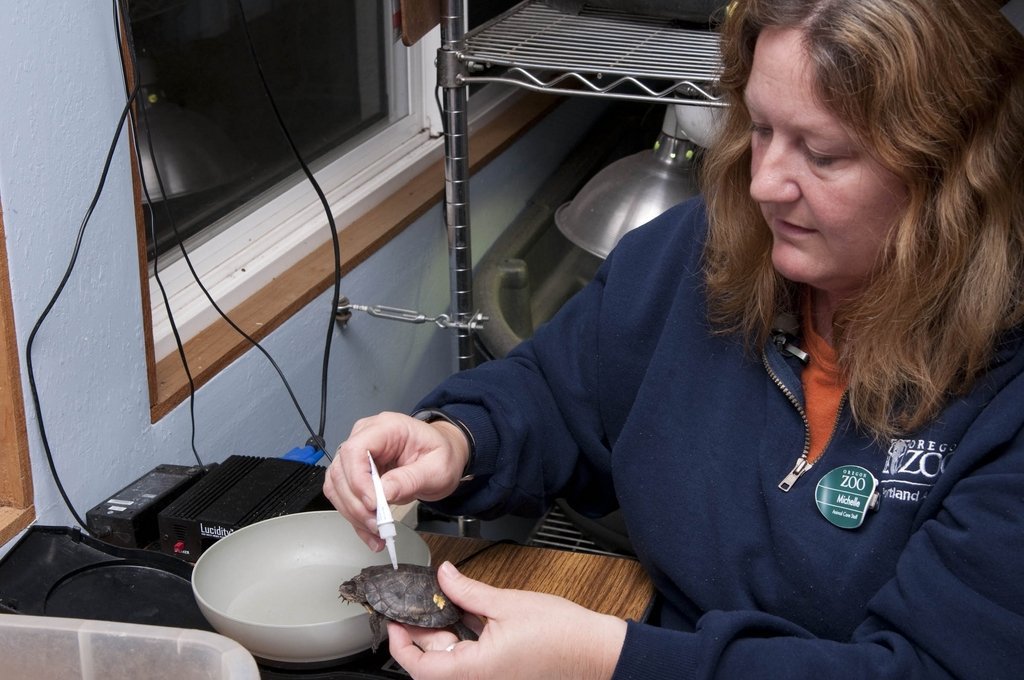
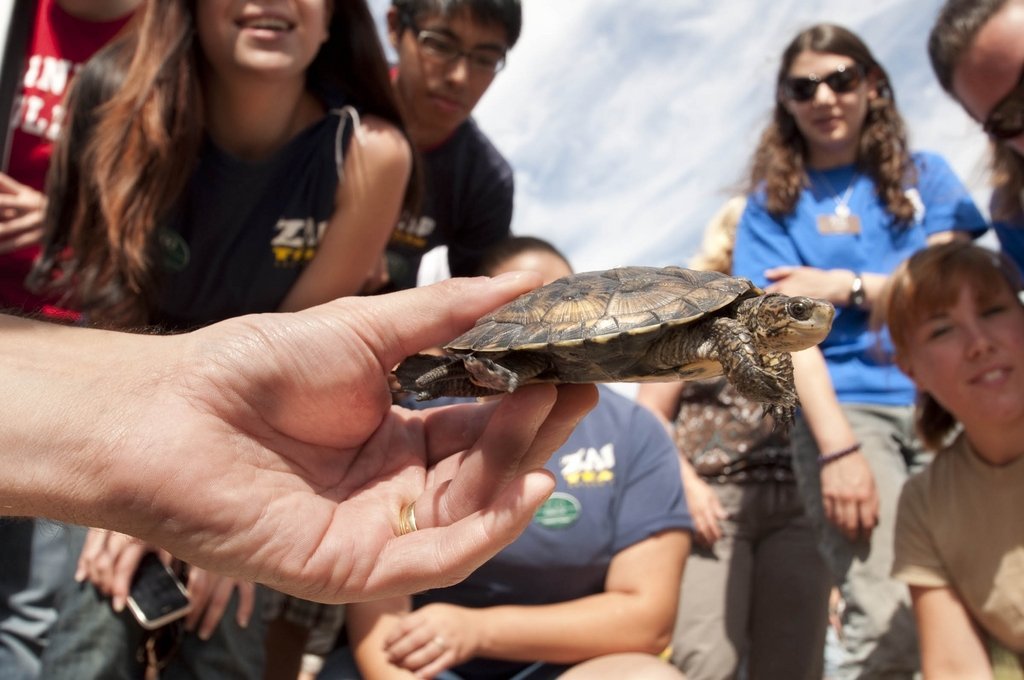
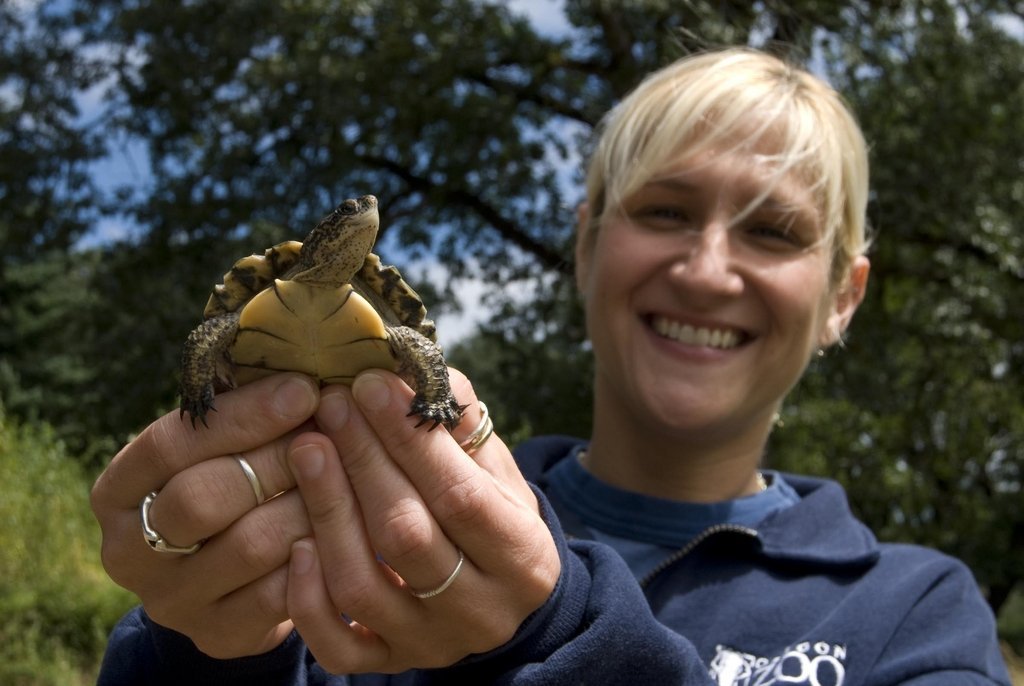
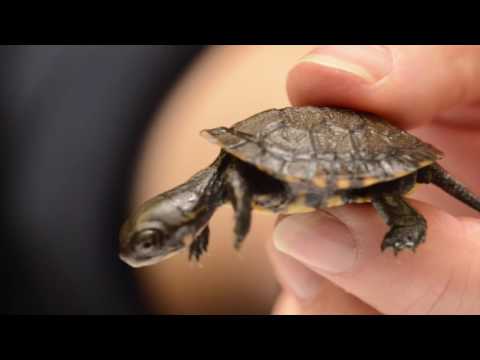
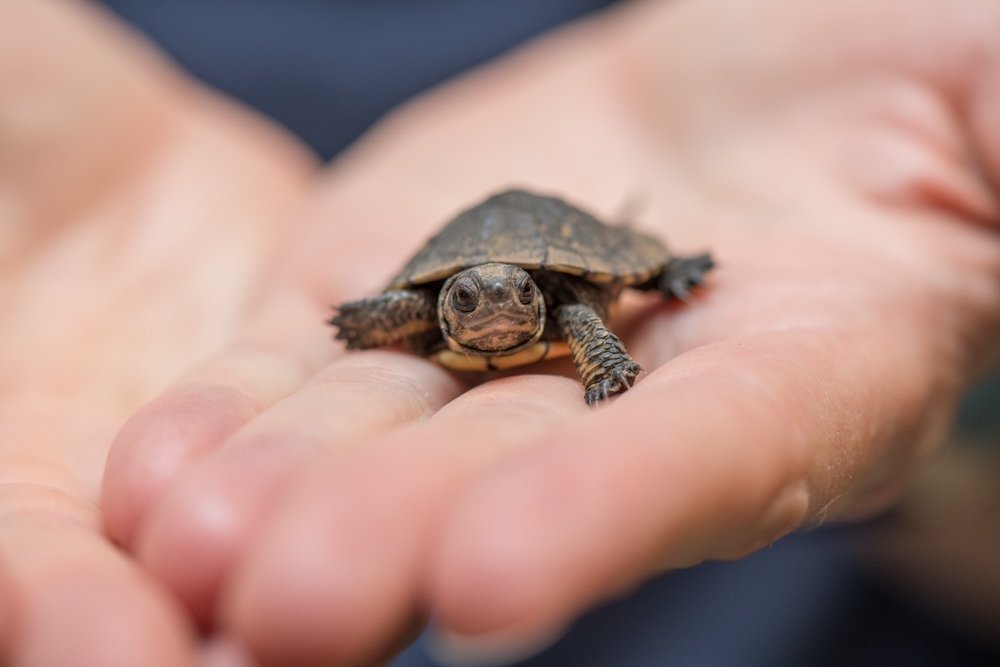
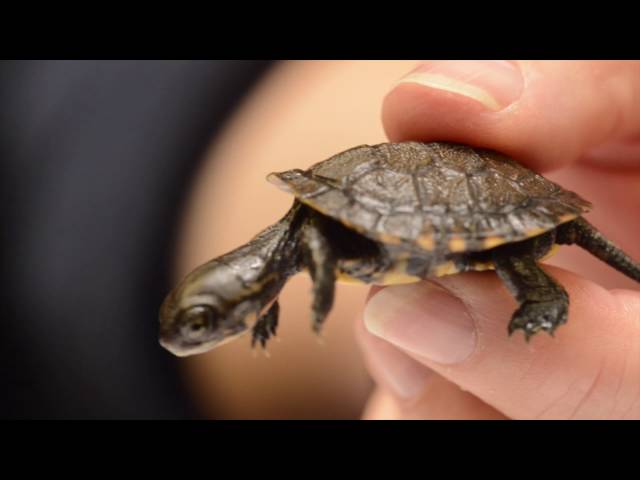
The Oregon Zoo’s conservation lab has 20 reasons to shell-ebrate as 20 baby western pond turtles settled into their new home in mid-October. Smaller than a nickel, the hatchlings are extremely vulnerable to predators. To give them a fighting chance, the tiny turtles are collected from the wild and reared in the zoo’s turtle conservation lab until they’re big enough to go back to the pond.
“Baby turtles are really small when they hatch, so they’re the perfect size for a lot of animals to eat,” said Shelly Pettit, the zoo’s senior keeper for reptiles and amphibians. “And the biggest problem they have right now are the invasive, or introduced, bullfrogs — they prey on turtle hatchlings right out of the nest.”
For video of the tiny turtles, visit http://bit.ly/20TinyTurtles
Native to the eastern United States but considered invasive here, the American bullfrog is the largest frog species on the continent. It can tip the scales at more than a pound and has been driving pond turtles and a host of other small, vulnerable aquatic species to the brink of extinction.
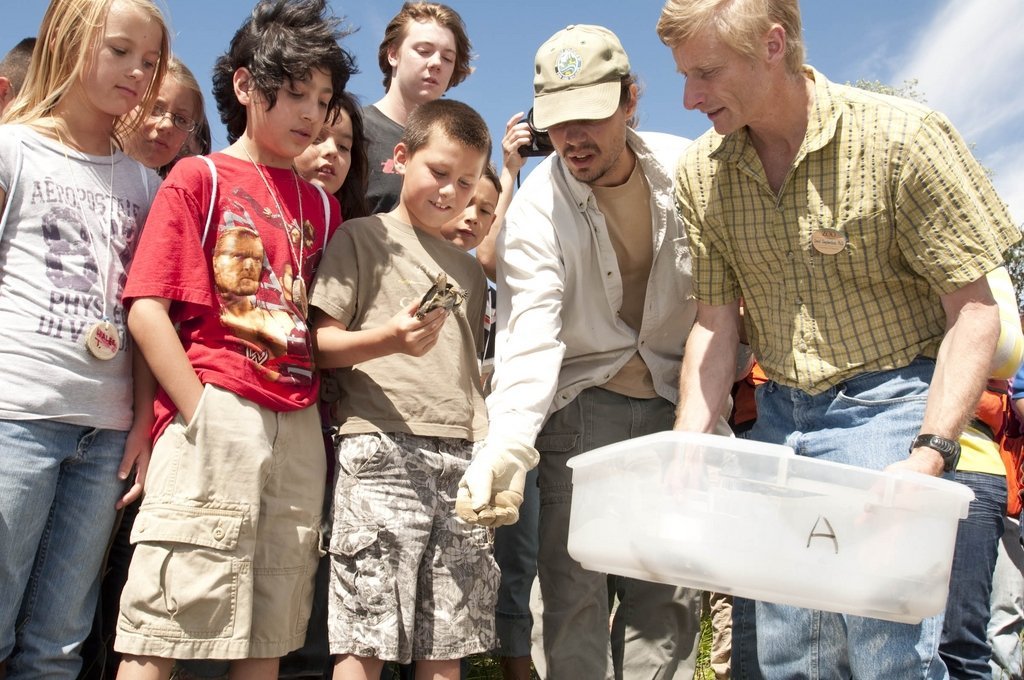
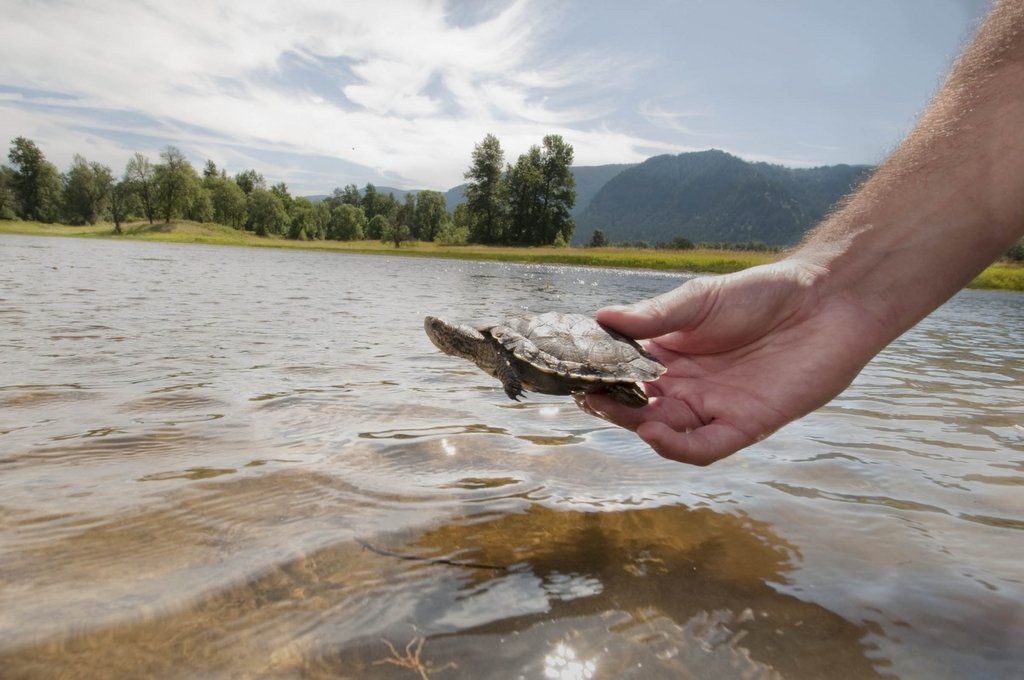
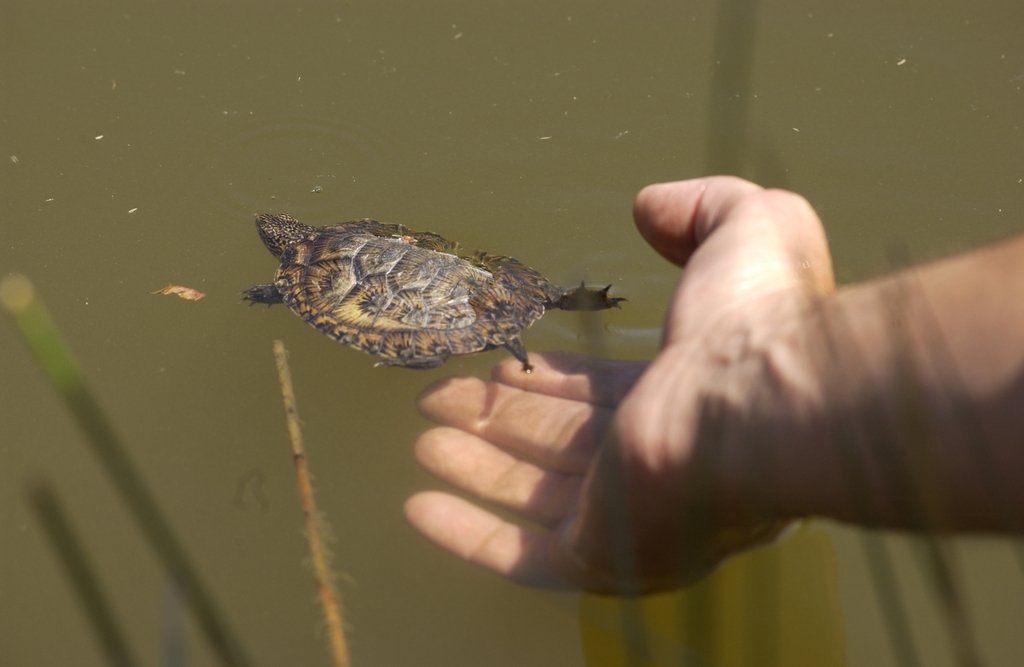
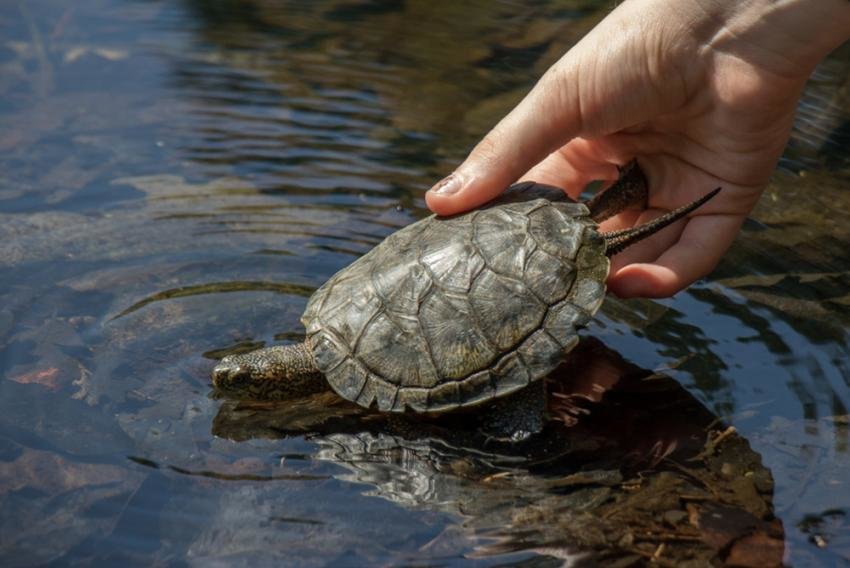
In October, Pettit and her colleagues helped Washington Fish and Wildlife collect 20 western pond turtle hatchlings from sites in the Columbia Gorge. The zoo is “head-starting” these tiny turtles, caring for them until next spring when they will be large enough to avoid the bullfrogs and have a fighting chance on their own in the wild.
Unlike recovery programs for other endangered species like California condors or Taylor’s checkerspot butterflies — which take place offsite or behind the scenes — this conservation effort is easy to see. Oregon Zoo visitors can watch the small turtles as they grow inside the zoo’s Nature Exploration Station.
The turtles experience summer year-round, with heat lamps and plentiful food, so they don’t go into hibernation.
“We keep these little turtles warm, safe and well-fed in the lab,” Pettit said. “As a result, they grow to about the size of a 3-year-old during the nine months that they stay with us.”
Once the turtles reach about 50 grams (a little more than 2 ounces), they are returned to their natural habitat and monitored for safety.
The western pond turtle, once common from Baja California to the Puget Sound, is listed as an endangered species in Washington and a sensitive species in Oregon. Two decades ago, western pond turtles were on the verge of completely dying out in Washington, with fewer than 100 turtles left in the state. Since then, more than 1,500 zoo-head-started turtles have been released.
“We’re at a critical point with this species,” said Pettit. “We really have to grow them up in their population numbers if we’re going to save them in time.”
The Western Pond Turtle Recovery Project is a collaborative effort by the Oregon Zoo, Woodland Park Zoo, Washington Department of Fish and Wildlife, U.S. Fish and Wildlife Service, Bonneville Power Administration, U.S. Forest Service and other partners.
By Oregon Zoo | Communications
By Oregon Zoo | Grant writer
Project reports on GlobalGiving are posted directly to globalgiving.org by Project Leaders as they are completed, generally every 3-4 months. To protect the integrity of these documents, GlobalGiving does not alter them; therefore you may find some language or formatting issues.
If you donate to this project or have donated to this project, you can receive an email when this project posts a report. You can also subscribe for reports without donating.