By Mavia Haight | Grants Manager
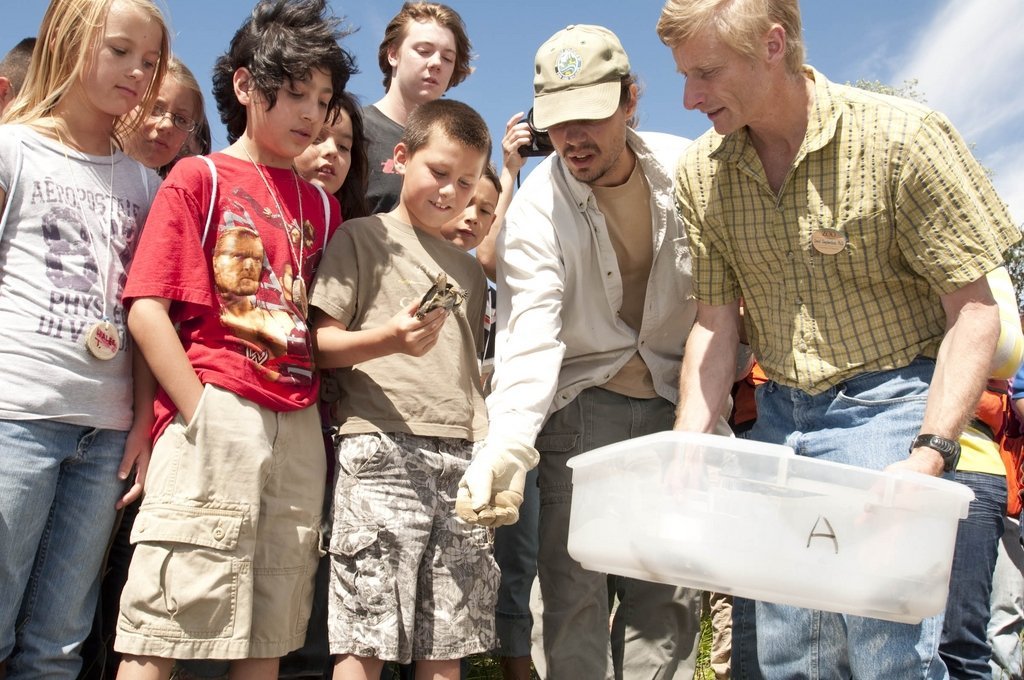
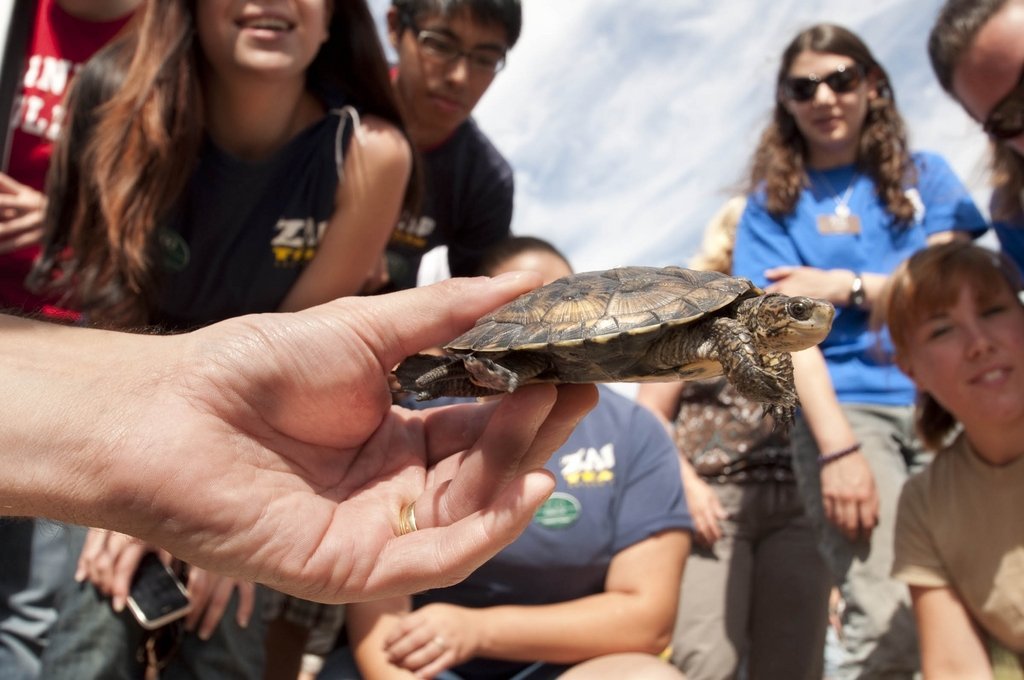
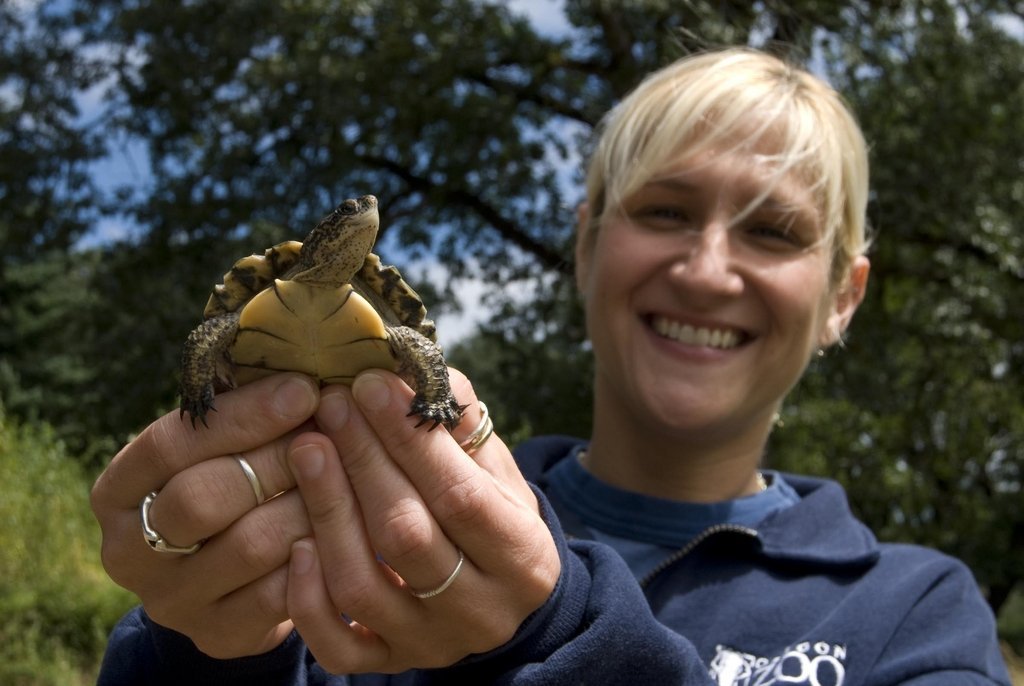
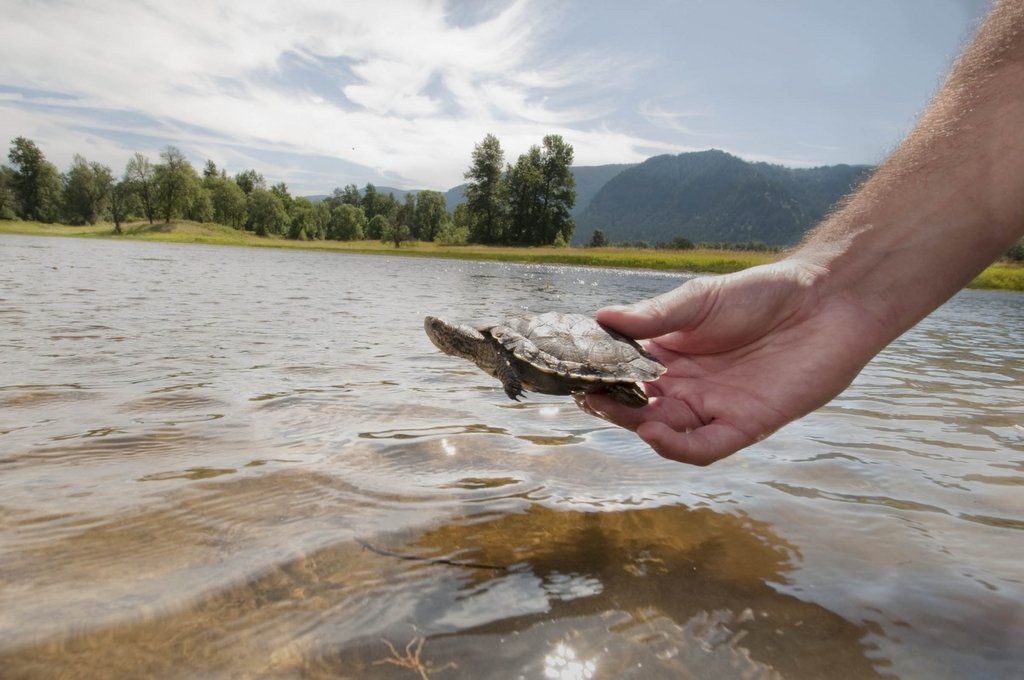
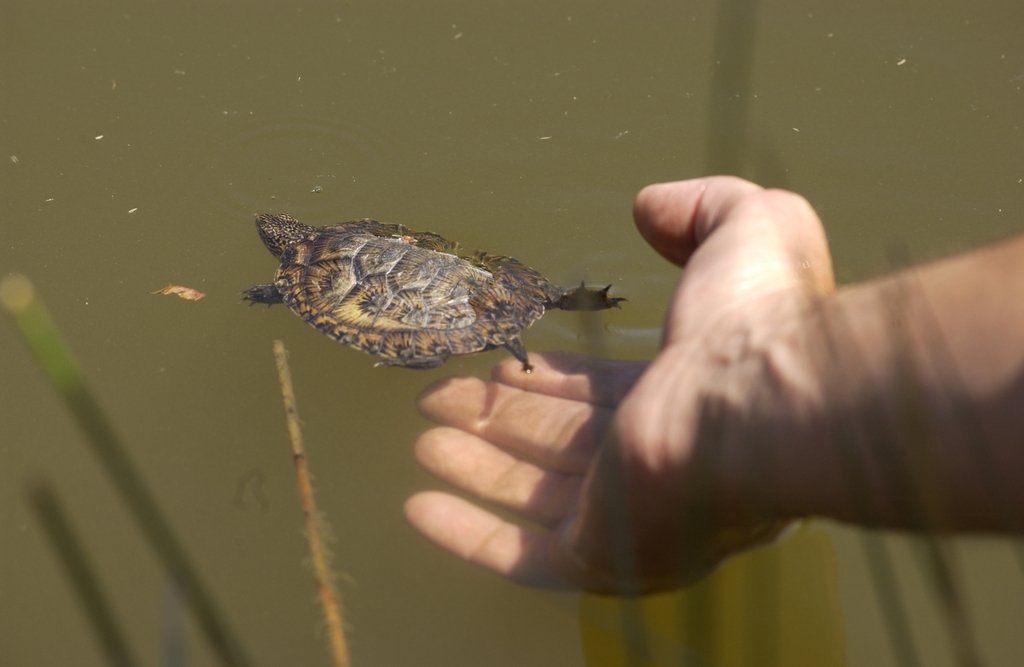
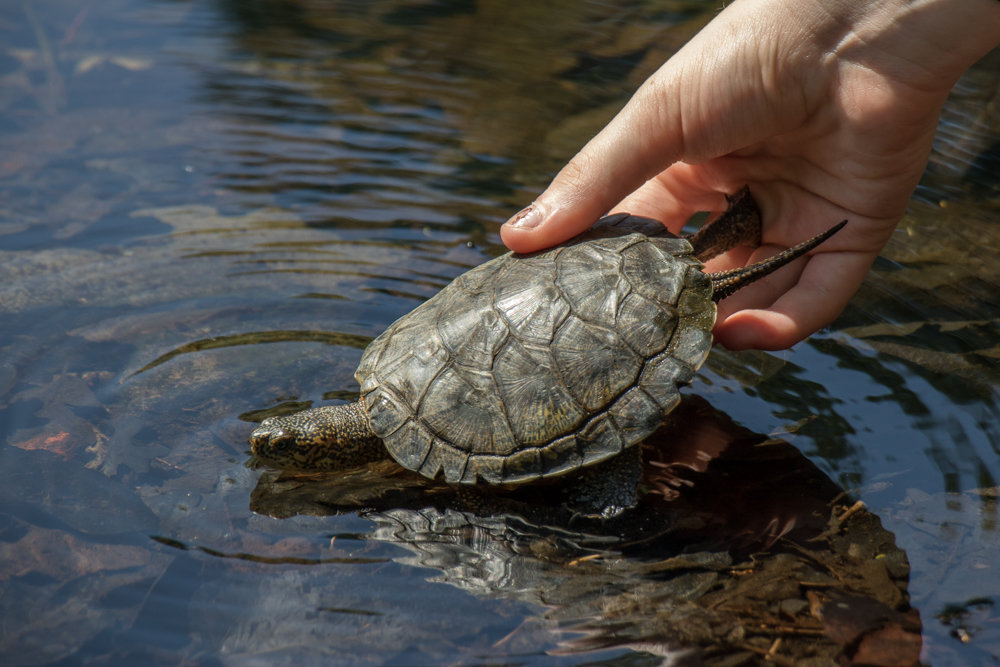
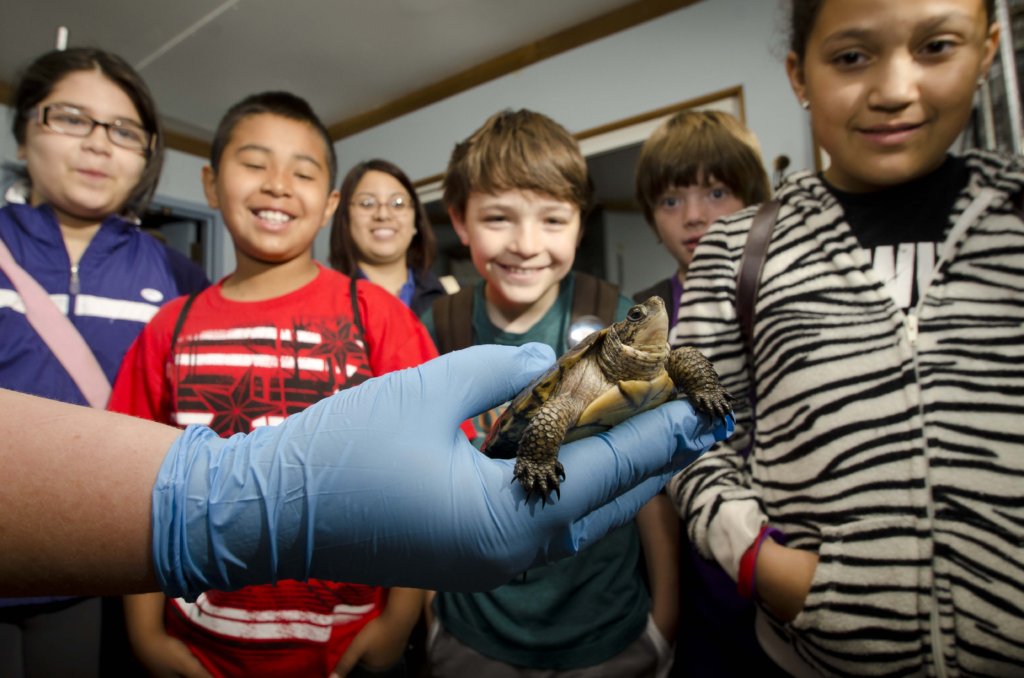
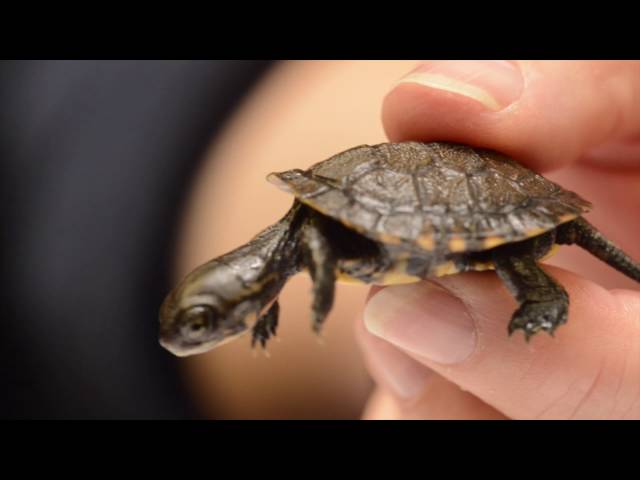
More than 20 western pond turtles returned to their home ponds in the Columbia River Gorge this morning — the latest release in a 25-year collaboration aimed at helping this yellow-speckled local reptile survive.
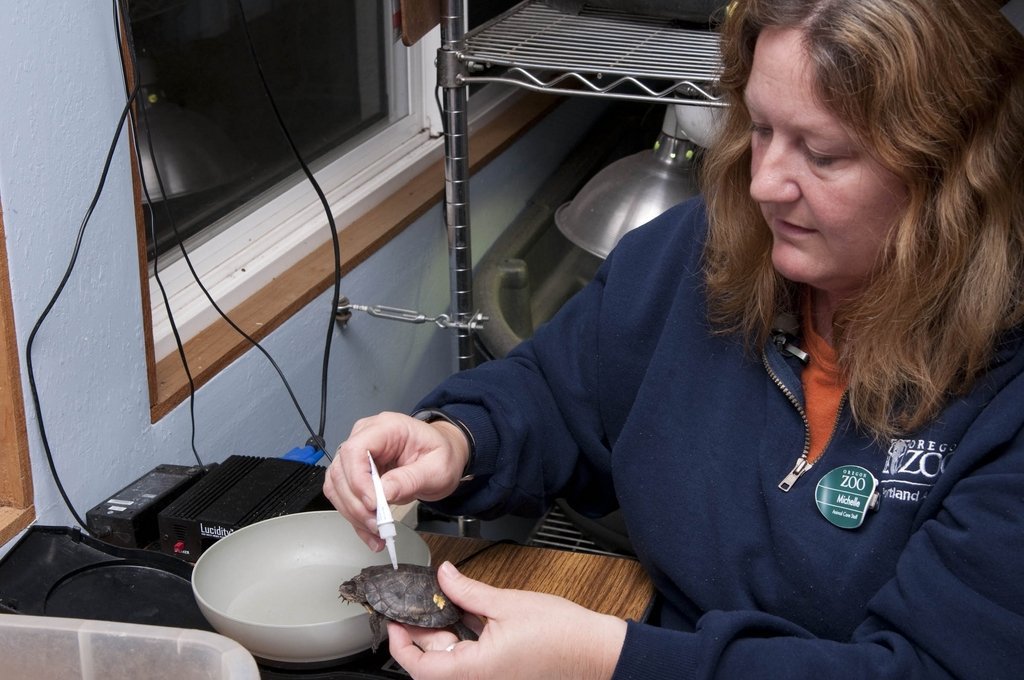
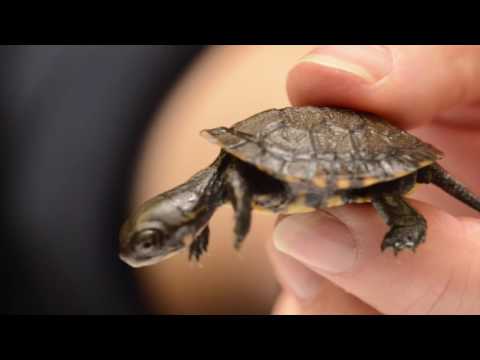
For 14 of these turtles, reared at the Oregon Zoo, an eight-month stretch of warm days and nights has just drawn to an end. Since last September, the turtles basked in the warmth and light of a simulated summer in the zoo’s conservation lab, growing large enough to have a fighting chance in the wild.
But this year, there were nine additional turtles — and some new helping hands — at the release site.
In addition to participating in the head-start program, the zoo has been treating adult turtles from the Gorge affected by a severe shell disease. Conservation technicians from Larch Corrections Center support that veterinary work, serving as an infirmary for the recovering reptiles, and providing daily care, observation and minor treatments.
Nine of these turtles were deemed fit for return to the Gorge, and for the first time, caregivers from Larch were able to participate in the release.
“We have a running relationship with Larch, but this is the first time they have been part of the final step of turtle recovery,” according to Dr. David Shepherdson, Oregon Zoo deputy conservation director.
Larch, a minimum-security prison in Vancouver, Wash., with the motto “Doing Good While Doing Time,” is part of the Sustainability in Prisons Project — a partnership between the Washington Department of Corrections and The Evergreen State College. Larch also grows narrow-leaf plantain — a food source for the federally endangered Taylor’s checkerspot butterflies raised at the Oregon Zoo.
“Sustainability in Prisons brings together people who haven’t felt included in the conservation movement before,” said Joslyn Trivett, the project’s national network manager. “It makes conservation the business of a wider group.”
Western pond turtle work is a particularly noble cause. The species — one of only two native turtles in the Pacific Northwest — has lost significant ground over the past two decades. Once common from Mexico all the way up to Vancouver, B.C. (where it’s now extinct), these turtles are considered endangered in Washington and declining in Oregon and California.
In one study, scientists estimated that 95 percent of the head-started turtles released back to sites in the Columbia Gorge survive annually, and today nearly a thousand of the turtles range across six ponds in the Columbia Gorge.
Thank you for your support of this fight against extinction.
Links:
By Mavia Haight | Grants Manager
By Heidi Wilcox | Corporate & Foundation Relations Manager
Project reports on GlobalGiving are posted directly to globalgiving.org by Project Leaders as they are completed, generally every 3-4 months. To protect the integrity of these documents, GlobalGiving does not alter them; therefore you may find some language or formatting issues.
If you donate to this project or have donated to this project, you can receive an email when this project posts a report. You can also subscribe for reports without donating.