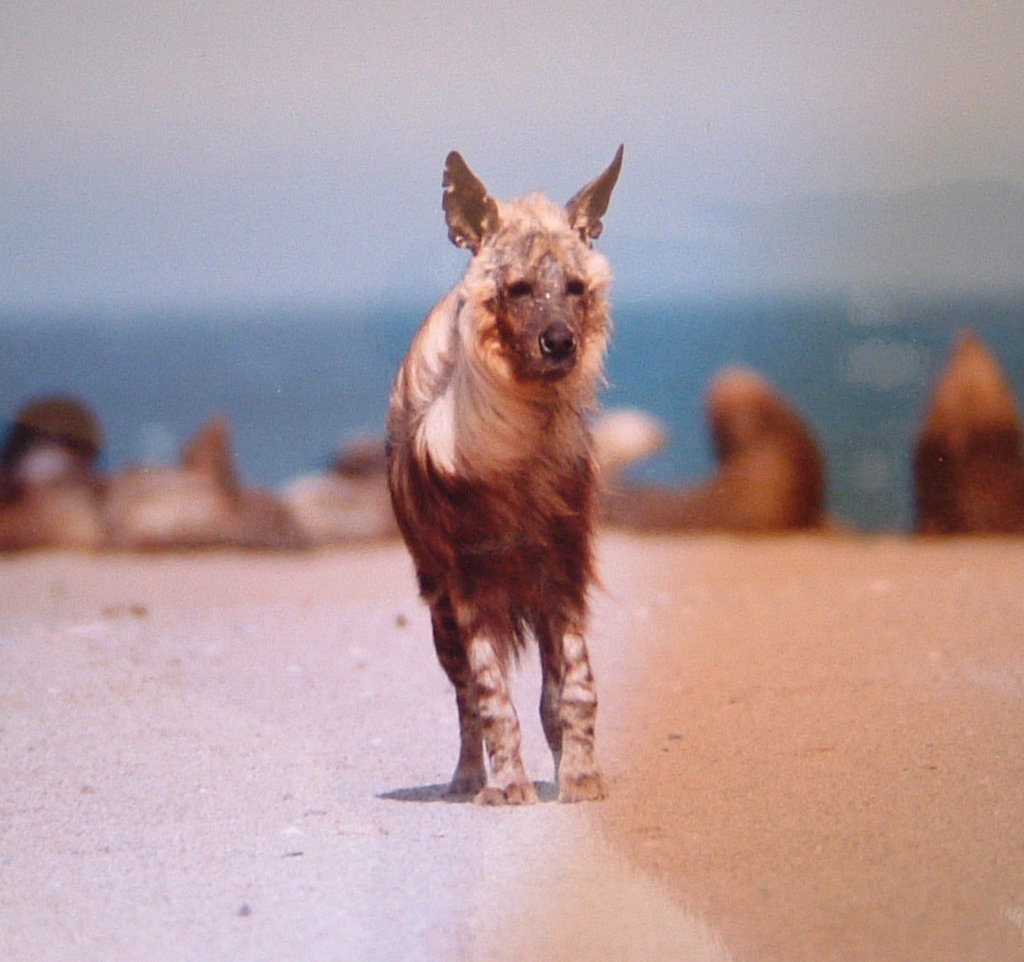
This project is trying to improve the odds for brown hyaenas in and near Pilanesberg National Park. Despite their traditional bad reputation, brown hyaenas are actually social mammals living in tight-knit clans; members will even help suckle each other's young. Like other carnivores and large scavengers, brown hyaenas suffer from shrinking habitats and conflict with humans. Learning more about what they need to survive in and near protected areas will help save the remaining 1,700 living in SA.
The land around protected areas is being increasingly developed, and hyaenas that venture into neighboring farmland and game ranches are at risk of being poisoned, trapped, or hunted down as pests.
Volunteers survey protected and unprotected lands for brown hyaenas and other scavengers critical for any ecosystem. Surveys by foot and vehicle look not only for hyaenas, vultures, and insects but also for their tracks, droppings, feeding sites, dens, nests, etc. Researchers capture and tag individual animals, monitor populations, and assess habitats. The study also does predator population counts at night, playing tape recordings of prey to attract lions and leopards for spotlight transects
Attempts to improve the situation for hyaenas depend upon a thorough understanding of the regions they inhabit and of the roles of other scavengers. Maintaining a balance between hyaenas, vultures, and dung beetles-three key scavengers in the area-is essential for a healthy ecosystem. Assessing them in one project will provide critical data for future overall conservation efforts.