By Freda Koomson | Partnerships & Development Associate
In July 2016, the Liberia Ministry of Health (MOH) and its implementing partners launched the National Community Health Assistant (NCHA) Program. As a key implementing partner and technical advisor of the MOH, Last Mile Health’s (LMH) vision of “a health worker for everyone, everywhere, every day” is now being brought to scale at a national level.
Since the momentous launch of the NCHA Program, significant progress has been made to finalize many of its major components and ensure operational readiness at the central level for national roll-out. Over the past months LMH has supported the MOH and other implementing partners via the development of standardized curricula for the CHA and Community Health Services Supervisor (CHSS) cadres. Aligned with the newly revised National Community Health Services Policy and Strategic Plan, approved by the MOH and endorsed by the Cabinet of Her Excellency President Ellen Johnson Sirleaf in February 2016, these curriculum packages draw upon internationally recognized best practice, incorporating elements specific to the Liberian context in line with the experiences of and feedback from those most cognizant of the health care challenges facing the country’s most isolated areas.
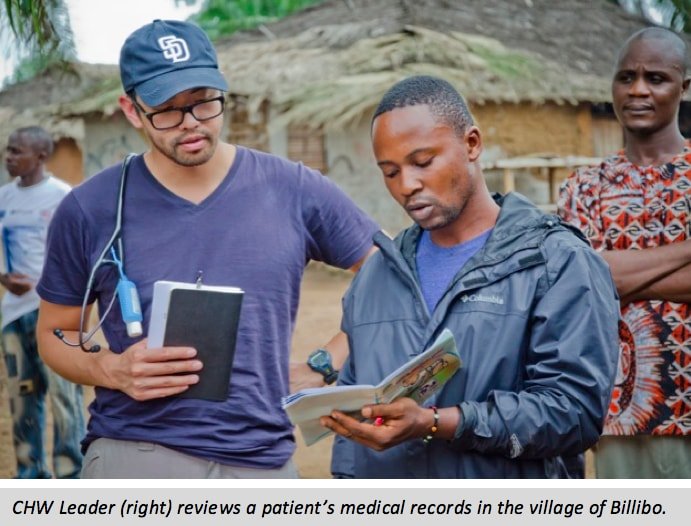
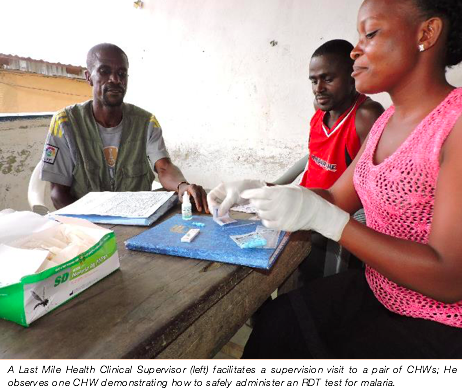
Community Health Assistants (CHAs) like Yassa and Asamoah of the Sand Beach Gold Camp Community in Rivercess County are working in Rivercess County under the NCHA Program. They serve as shining examples to the thousands more who will join their ranks across the country delivering essential healthcare services. The young couple serve over 200 households in one of Liberia’s remote communities. Residents, so grateful for their healthcare assistance refer to them as their “doctors.”
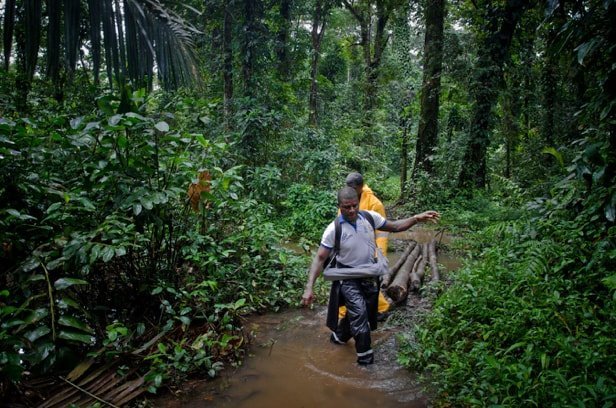
The development of the NCHA Program, tailored to Liberia’s ‘last mile’ communities will do more than provide protection against future infectious disease crises. By creating over 4,100 jobs, alleviating the disease burden on marginalized communities, and encouraging health-seeking behavior, the program is expected to produce a “resilience dividend” that will yield far-reaching social and economic returns for the approximately 1.2 million Liberians living more than five kilometers from the nearest health facility.
We hope you'll share in our pride of what has been accomplished in Liberia, as well as in our optimism that Liberia's NCHA Program is advanced as a model for global community health system change.
Links:
Project reports on GlobalGiving are posted directly to globalgiving.org by Project Leaders as they are completed, generally every 3-4 months. To protect the integrity of these documents, GlobalGiving does not alter them; therefore you may find some language or formatting issues.
If you donate to this project or have donated to this project, you can receive an email when this project posts a report. You can also subscribe for reports without donating.