Project Report
| Aug 3, 2016
Intensive anti-poaching program
By Emmanuelle Normand | Director of WCF West African Office in Abidjan
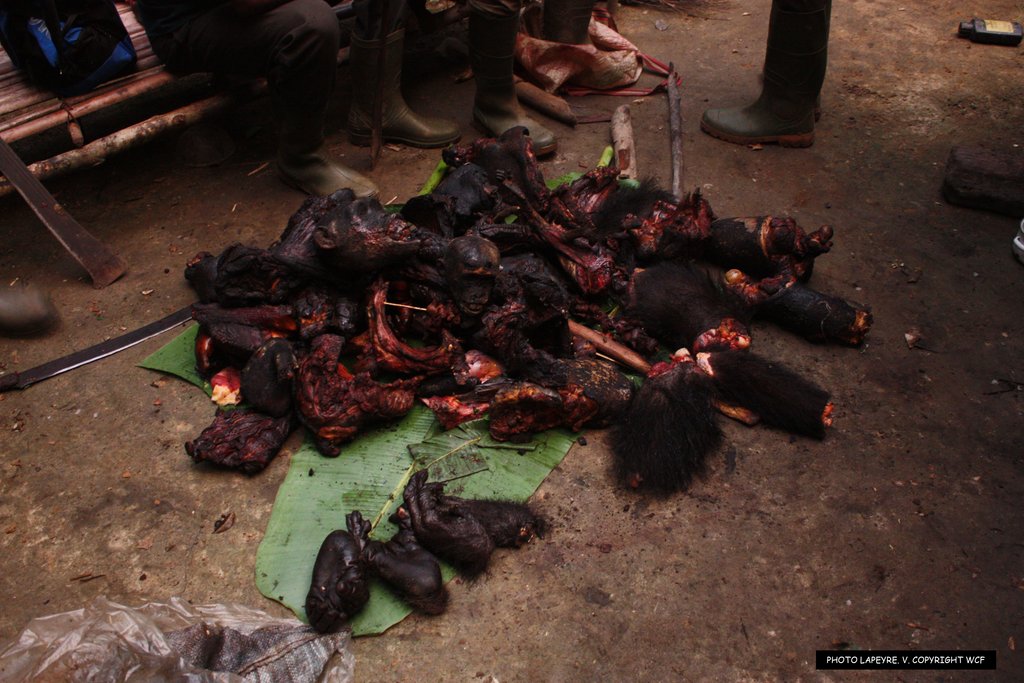
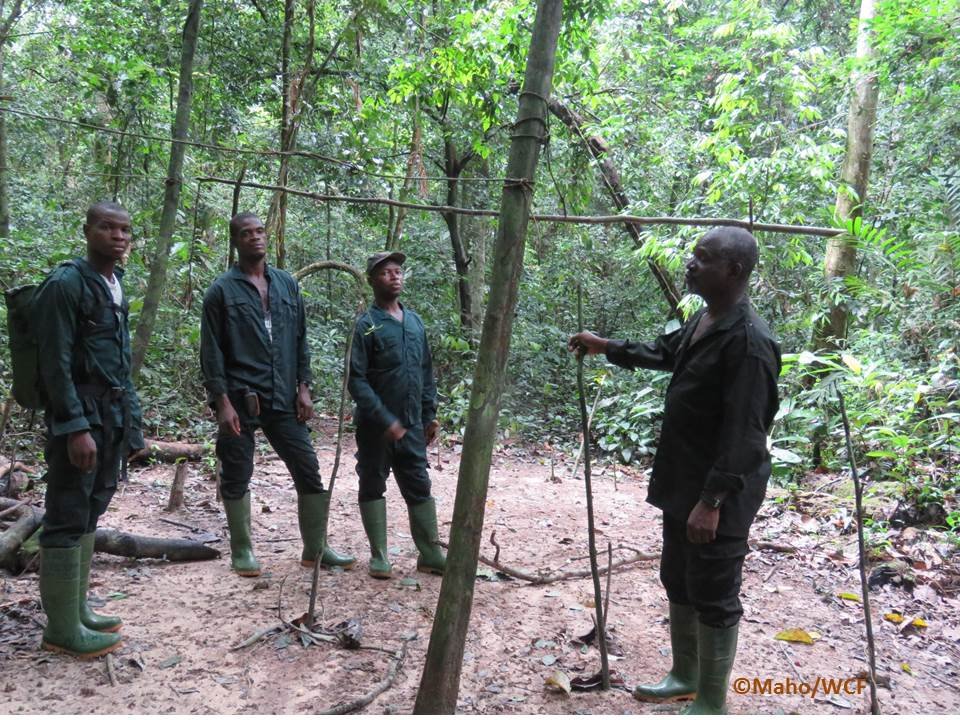
![Anti-poaching team discovering a poacher camp]()
Anti-poaching team discovering a poacher camp
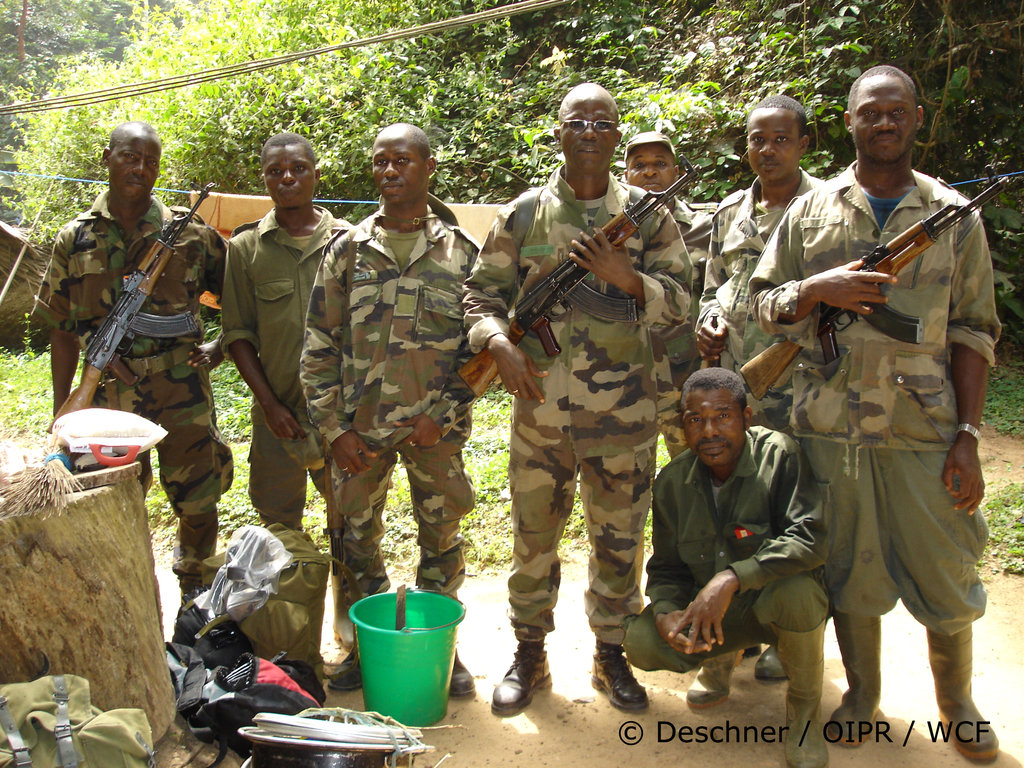
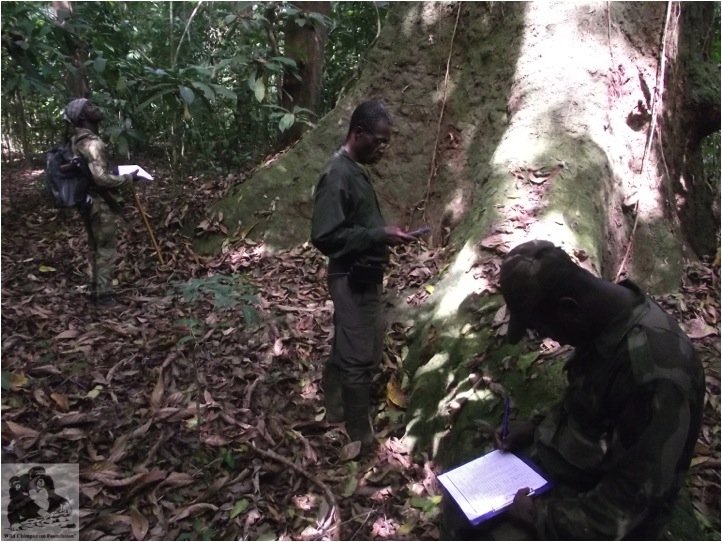
In the priority area of the Taï National Park (chimpanzee research and eco-tourism site), WCF and the park rangers from the Office Ivoirien des Parcs et Réserves (OIPR) have set up an intensive anti-poaching program, which combines improved law enforcement and continuous monitoring to test chimpanzees and large mammal’s recolonization.
Between 2012 and 2015, we observed a decrease of illegal human activities such as poaching and logging by 90% in the priority area of the park.
Part of this decrease can be explained by national sensitization and law enforcement forbidding the consumption of bush-meat following the last Ebola outbreak of the neighboring countries: Guinea and Liberia.
However, our anti-poaching team reported this year (2016) that poachers came back recently in the park, our team found traces, gunshots, and used cartridges. Poachers are less worried now as the two neighboring countries were declared Ebola free, even if few cases are still recorded.
The patrols of the OIPR rangers are still operational, and hopefully will stop the illegal human activities in the park.
With the analyses of this new monitoring data collection in the priority area, we will soon know what is happening this on-going year concerning illegal poaching activities and determine whether it has an impact on chimpanzees’ and other mammals’ abundance.
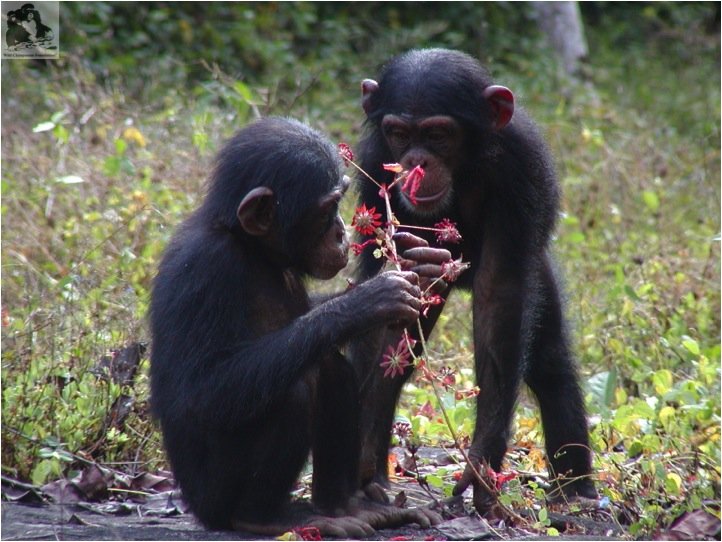
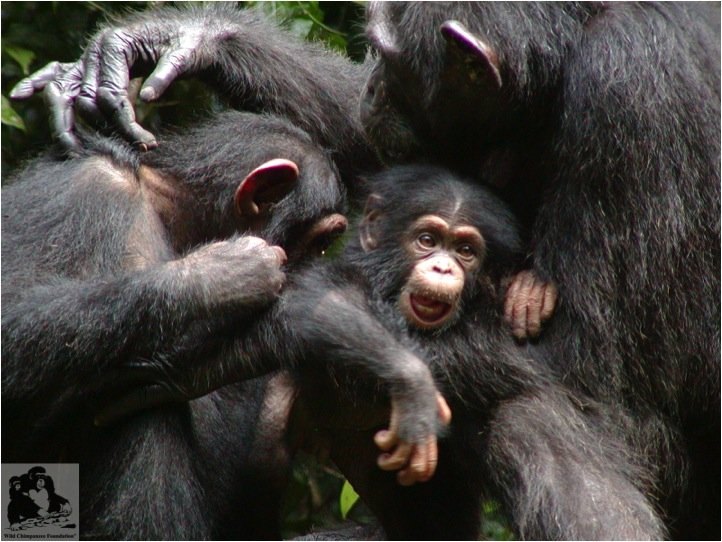
Thank you for you continuous support, it helps maintain the anti-poaching program - crucial for chimpanzee conservation!
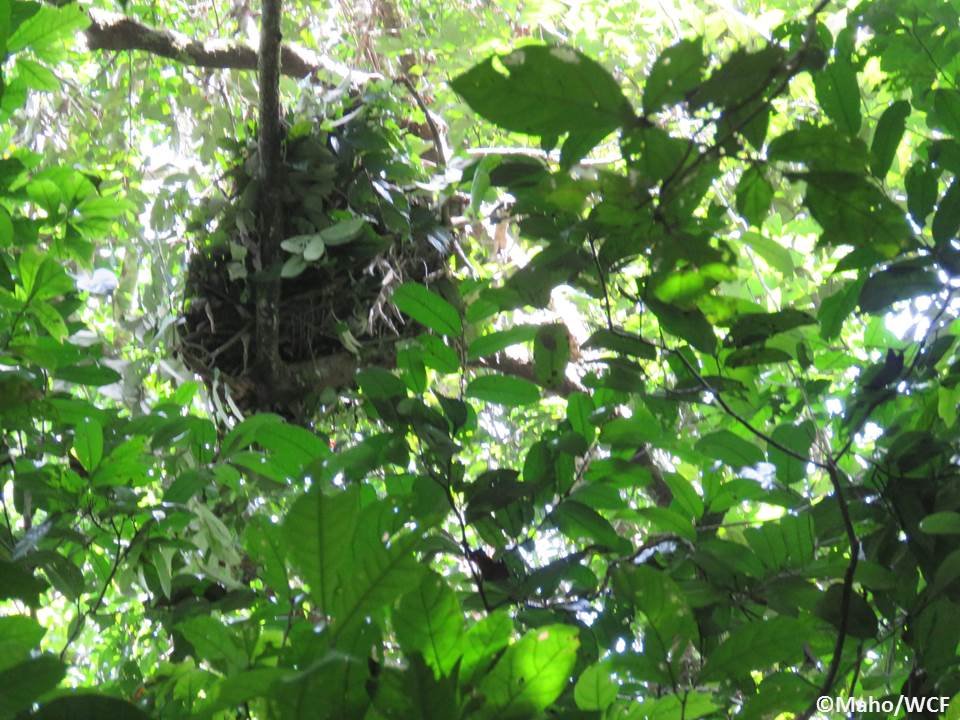
![Anti-poaching team discovering a chimpanzee nest]()
Anti-poaching team discovering a chimpanzee nest
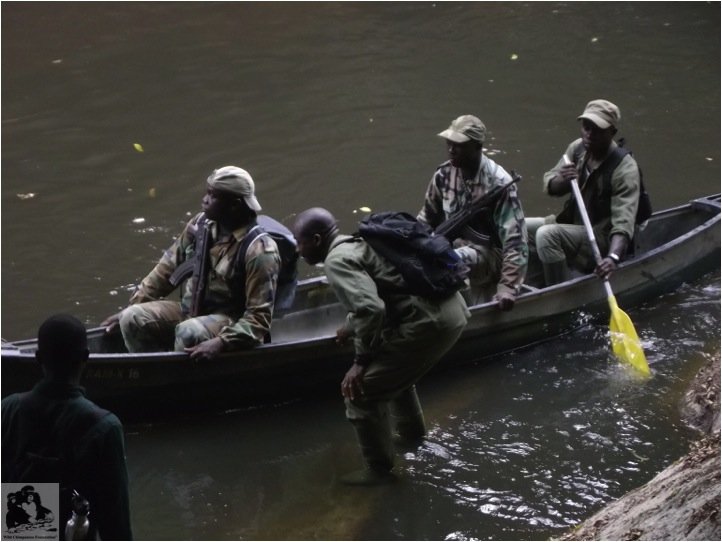
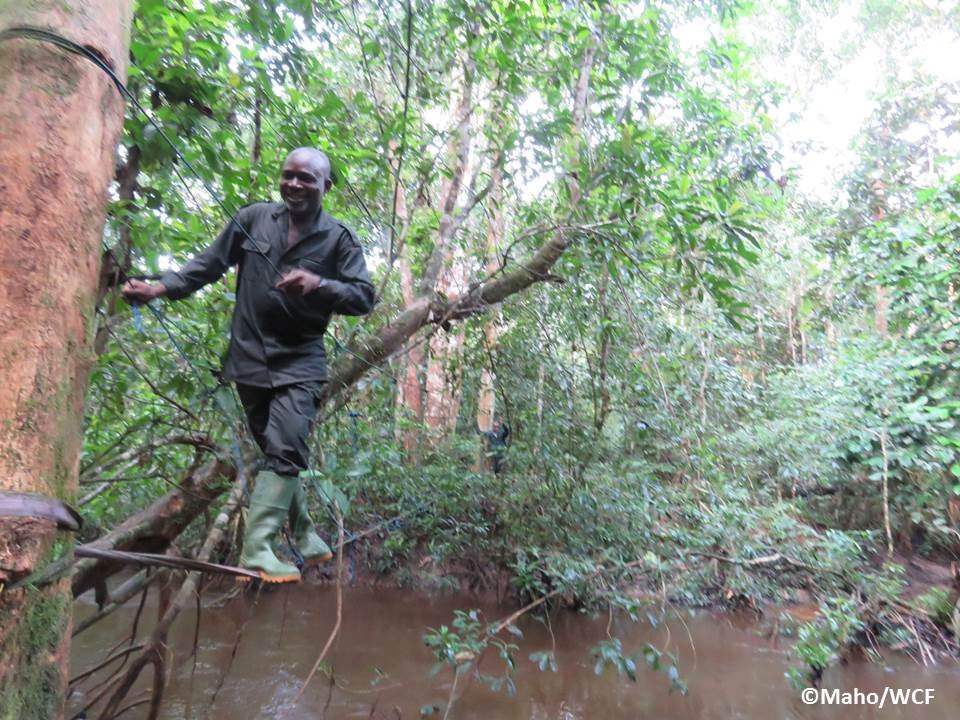
![Anti-poaching team crossing a river]()
Anti-poaching team crossing a river
![Share on Twitter]()
![Share on Facebook]()
May 11, 2016
Law enforcement missions in Liberia
By Dervla Dowd | WCF Liberia Director
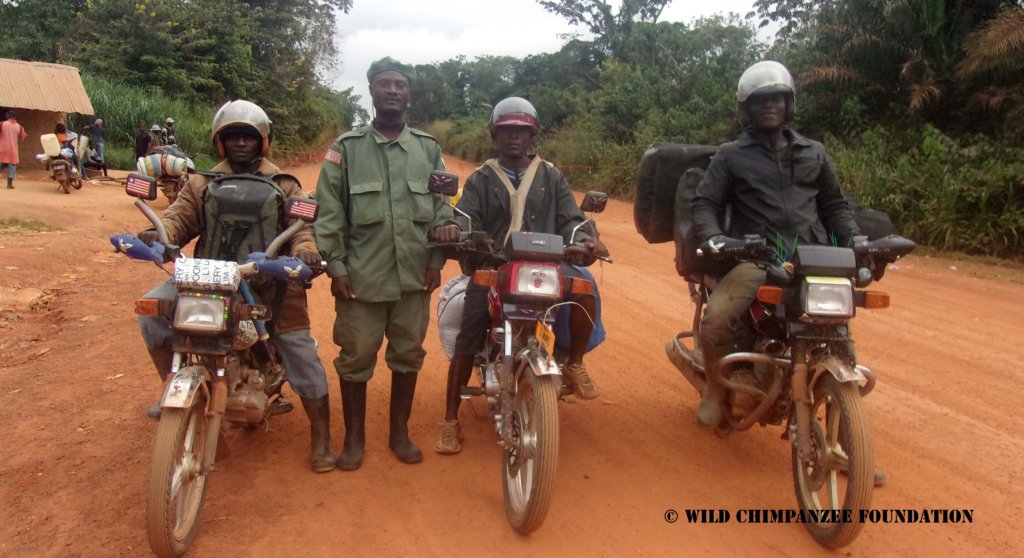
![Eco-guards on their mission]()
Eco-guards on their mission
The Wild Chimpanzee Foundation (WCF) has been able to support some recent targeted law enforcement missions in the Proposed Grebo-Krahn National Park (new name since November 2015) in southeast Liberia, led by the national authorities: the Forestry Development Authority (FDA). During four missions, led by teams of 19 to 30 rangers, FDA was able to arrest 59 illegal settlers, while 22 poacher/mining/chewing stick camps were removed in this proposed national park. Additionally, a total of five shot-guns were confiscated along with eleven 12-shot-gun cartridges. Such important results to save endangered wildlife and biodiversity were only achievable thanks to the increased numbers of rangers that went on each mission. It is thanks to the support provided through GlobalGiving that FDA could send more rangers to lead these urgent law enforcement missions. Though we do not have enough long-term data yet, we have seen through previous missions led by FDA and WCF some encouraging results: Through community eco-guard patrols and awareness activities led in the communities, people were finally dissuaded encroaching on the forest of the proposed national park. Continued targeted law enforcement is required to keep FDA’s presence in this proposed national park and to prevent any persons from settling there. We very much hope to be able to enhance this much needed program with your help!
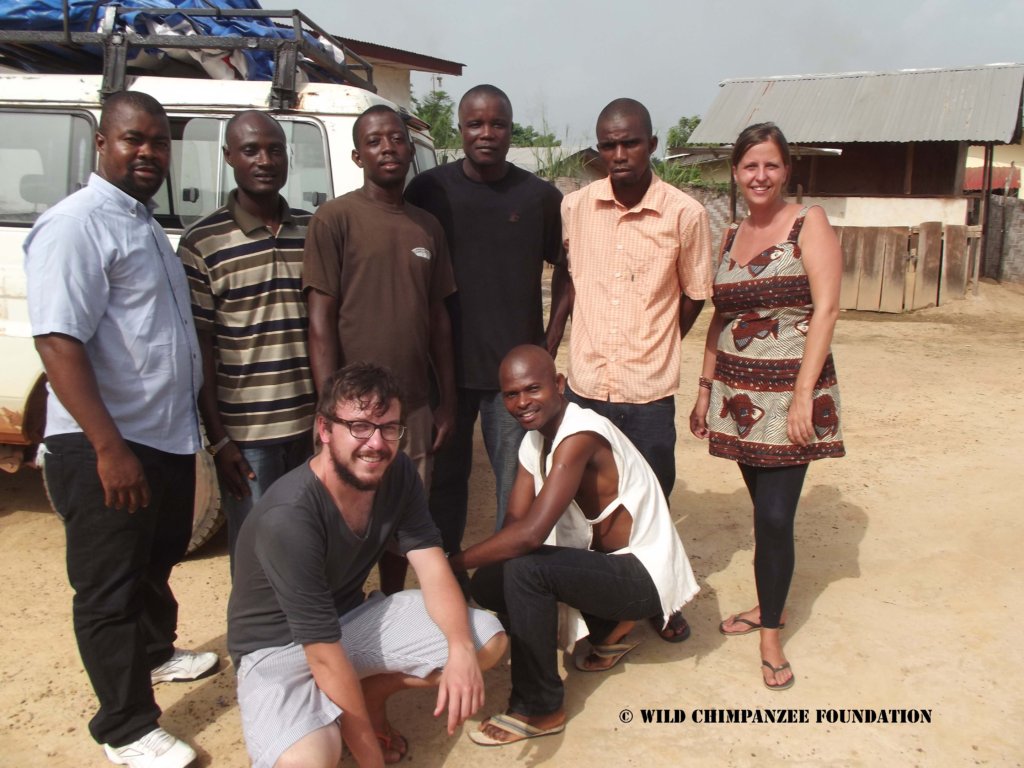
![WCF Liberia team]()
WCF Liberia team
![Share on Twitter]()
![Share on Facebook]()
Feb 10, 2016
New Community Eco-guard training
By Emmanuelle Normand | Project Leader
![Community Eco-guards training]()
Community Eco-guards training
This year, we kick-started our activities by re-training our team of Community Eco-guards to support the Forestry Development Authority (FDA) in patrolling the new proposed Grebo-Krahn National Park (previously called Grebo-Forest National Park) in Liberia. The workshop helped the Community Eco-guards to refresh and refine their field skills, i.e. learning to navigate efficiently in the tropical forest, collecting data and planning patrols. Over 4 days, the WCF and FDA trainers taught lessons on animal species identification, methodology, navigation and equipment usage. This was then followed by a practical session to put what they had learnt into practice. After the training, the Community Eco-guards were tested to ensure they had taken on board all that was demonstrated over the 4 days. Now that they have completed the training, the Community Eco-guards are preparing for their first mission in the proposed national park. During the 2-week mission, the Community Eco-guards, supervised by FDA and WCF, patrol a minimum of 40 km across the national park, targeting known threatened areas with illegal human activities. They collect precise data on any threats to wildlife and forest they cross, such as gold-mining sites, bush-meat hunting tents, or illegal harvesting of forest products such as chewing sticks and then relay the information back to the local authorities, the FDA. FDA can then use this detailed data to lead targeted law enforcement missions in the future, which means they do not lose their time searching for the threats, but rather know prior to the mission where they have to aim for. This approach has proven to be very effective for the conservation of the proposed Grebo-Krahn National Park and is helping to protect the local wildlife. It also encourages the local communities to take an active role in the protection of the wildlife and their forest home. We hope that you will continue to support these efforts in protecting some of West Africa’s last tropical rainforest!
![Community Eco-guards training]()
Community Eco-guards training
![Share on Twitter]()
![Share on Facebook]()