By Akanksha and Pooja | Communication Officer and Field Executive
Your support is helping us to implement Saloni Model focused on issues and problems of adolescent girls in slums of Lucknow in Uttar Pradesh. Saloni model brings proven strategies and tools to engage adolescent girls, their families, wider community members and public service providers systematically. These strategies include slum level participatory action plan, developing community volunteers, behavioural change communication, basic life skill development and vocational training for drop out girls, convergence with government service schemes such as health, nutrition, education, social security.
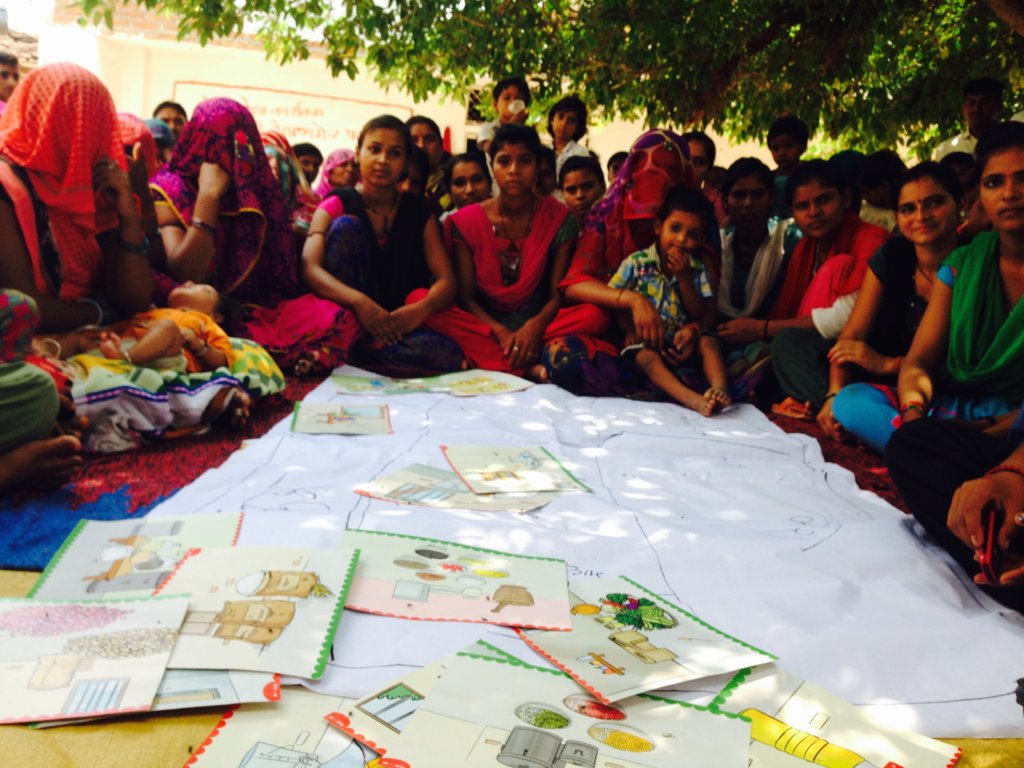
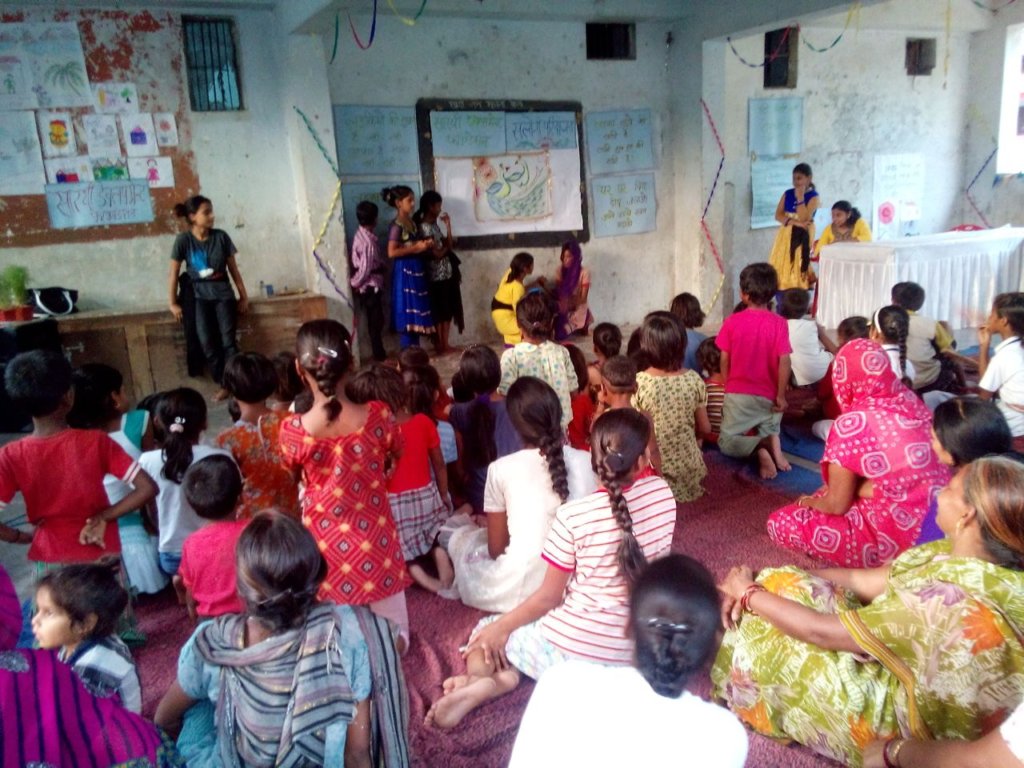
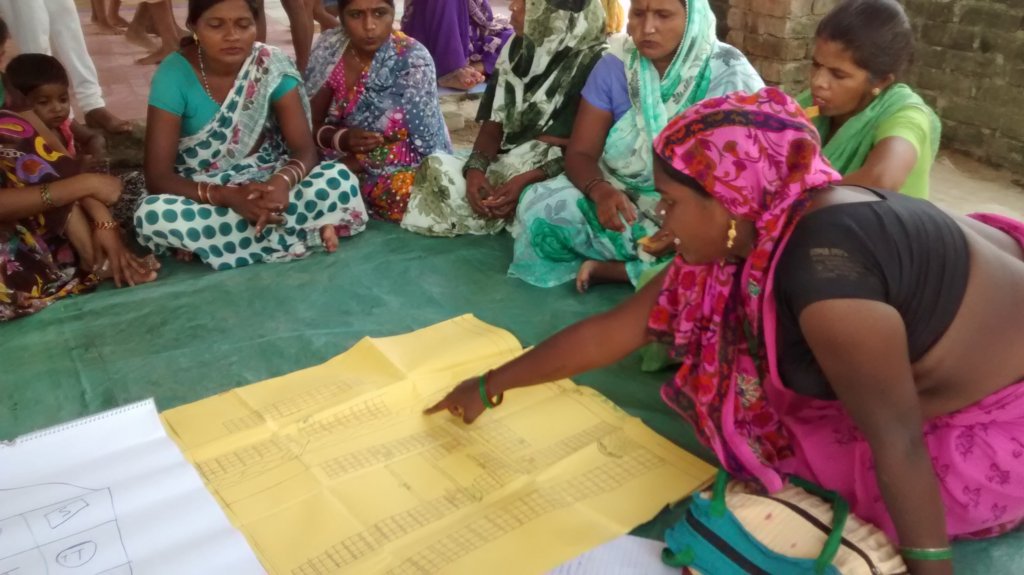
During the quarter from June to September 2015, we facilitated formulation implementation of slum action plans in 85 slums with engagement of 175 community volunteers, 2975 adolescent girls in age group of 10 -19 years and around 3000 community members including women and men. This participatory process focussed on the issues including early marriage, enrolment in schools, health & nutrition, menstrual hygiene and community development issue such as water, sanitation, women & child health. 7500 households were communicated by adolescent girls groups and community volunteers on behavioural change issues such as sending girls to schools and continuing their education, risks of early and child marriage, hand wash with soap at critical timings such as before taking meals and after using toilet, use of sanitary pads for menstrual hygiene. Slum level change map including all households and behavioural change indicators were developed and updated adolescent girls and community volunteers in 80 slums during this quarter. It indicated 6200 families’ demonstrated awareness and beginning of change on behavioural issues as mentioned above.
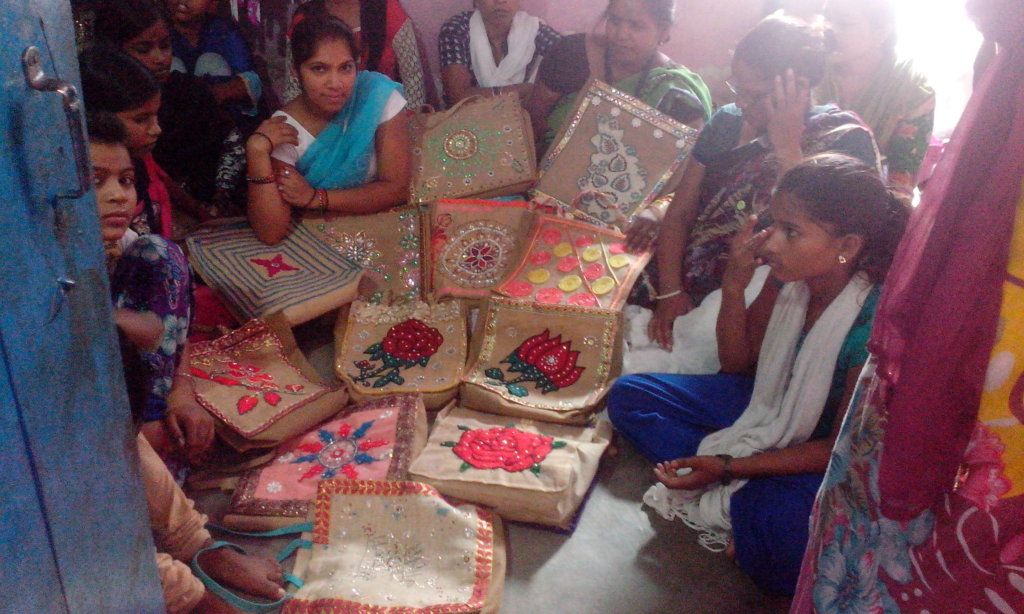
It is encouraging to note that adolescent girls are taking self initiatives and family & community level supportive environment is emerging in slums of our intervention. It is very well reflected in the data. 154 drop out adolescent girls vulnerable to early marriage rejoined upper primary schools, 140 adolescent girls joined vocational training such as communication skills, computer, beauty & wellness, 2650 girls gained awareness on government schemes related to health, nutrition, social security and seeking the services from the government, 2700 adolescent girls are using sanitary pads by generating their own saving. Above all, visible change in attitude of parents, family and community members is creating hopes and giving opportunities to adolescent girls for their empowerment journey.
Fareen is member of one of the Adolescent Girls Groups running in her community. Fareen was withdrwan from school by her parents after grade 8th to get her. She was only 17 then. Fareen wasn’t the part of this decision. She didn’t want to get married so early as in her group meeting the affects of early marriage were discussed. She discussed this issue with the group. The group decided to talk about this to Fareen’s parents and her family. They discussed about early marriage not only being illegal but also the problem Fareen might face after marriage. But this wasn’t enough to motivate her parents. The group discussed on this issue time to time trying hard to make them understand and change the decision. When this didn’t seem to work-out the group member had a plan B. They didn’t give up. They convinced Fareen’s parents to permit her to join the vocational trainings happening in their slum. The purpose was to delay the marriage till Fareen reaches the right age. Parents considering their daughter’s peer request permitted Fareen to join the training. The group kept engaging them in different trainings and didn’t talk on the marriage issue further. This helped in delaying marriage of Fareen. In that span of time, Fareen’s parent came across an incident that happened in the family which shook them. Fareen’s cousin who was married at the age of 16 lost her life due to early pregnancy and physical stress. This not only shook the entire family but made Fareen’s parents think over their decision for her. Then they decided to wait for the marriage till their daughter reaches the right age. When the group thanked Fareen’s parents for their decision, they thanked the group instead. They thanked the group for not giving up on Fareen and constantly trying to delay the marriage till the right time and right age.Fareen has completed her trainings. Today, she is supporting her family. She has opened a small boutique in her house and with help of her stitching and designing skills she contributes in the family with her earning. This story is not about one girl. This story is of many other girls may be belonging to different community, a different place but facing similar issue. Fareen and her stories represent them all.
We are hugely indebted to our donors for supporting us. We assure for sustainable change among adolescent girls and socially & economically marginalised communities in slums.
Project reports on GlobalGiving are posted directly to globalgiving.org by Project Leaders as they are completed, generally every 3-4 months. To protect the integrity of these documents, GlobalGiving does not alter them; therefore you may find some language or formatting issues.
If you donate to this project or have donated to this project, you can receive an email when this project posts a report. You can also subscribe for reports without donating.