By Kate Clopeck and Kathryn Padgett | Executive Director and Ghana Country Director
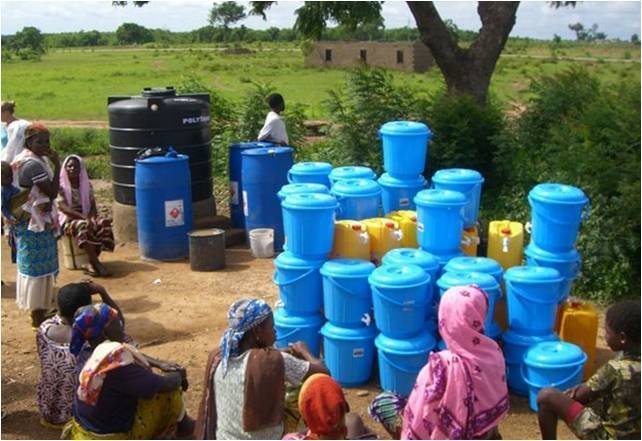
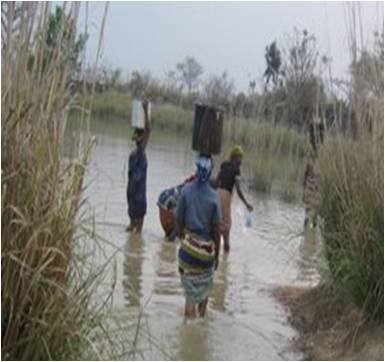
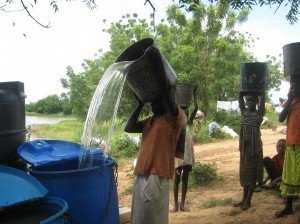
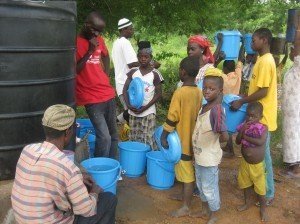
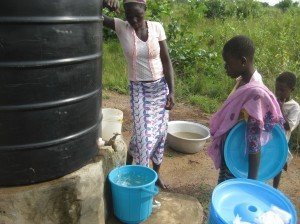
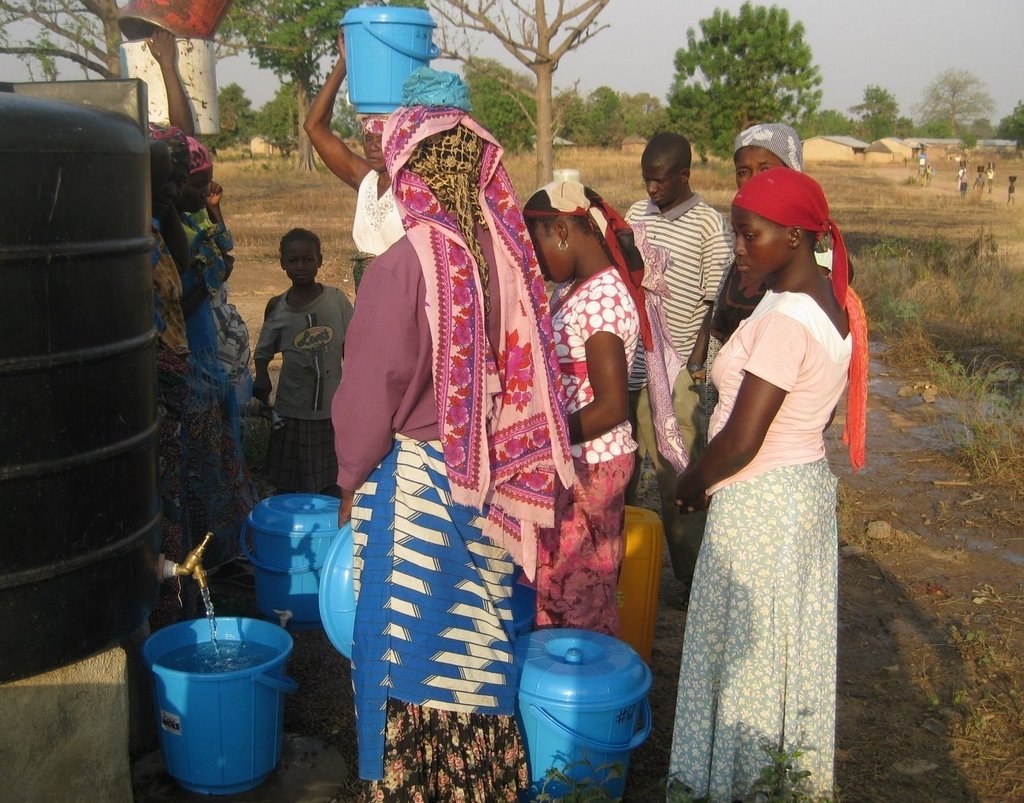
The rainy season in Ghana has arrived, which for CWS means a halt in new village implementations and a change of focus to monitoring. Traditionally during the rainy season, many villagers switch over to rainwater collection. In CWS villages that have houses with tin roofs, like Yipela, Cheko, Kpalbusi, Gidanturu, and even Tacpuli or Kushini, this means that people are able to use their safe storage containers to capture funneled rainwater. However, in other villages, like Zanzugu-Yipela, Gbateni or Kpalguni, there aren’t enough tin roofs to go around, so many people still rely on the CWS water treatment centers for drinking water. Needless to say, the say the dry-to-rainy-season-transition can be tricky as some centers remain almost empty (settled blue drums standing by should scooping be necessary) while others deal with even higher demands (Wambong villagers seem to drink even more when it rains), which is why we switch our focus away from expansion to monitoring during this season. CWS' new Ghana Country Director, Kathryn, recently wrote an article for the CWS blog about the importance of monitoring which we would like to share with our network of globalgiving donors so you can each gain some insight into her work on the ground. So with out further ado, here's what Kathryn:
Monitoring and evaluation can often seem like the less glamorous younger sister of exciting implementation, who comes first, steals the show, is effortlessly photographable and charms everyone around her. As a CWS staff member whose job starts when the implementers go home, however, I’m here to tell you that monitoring ensures that implementation becomes something more than superficial AND has a certain charm of her own!

Kpalung center operator, Zaratu, and her son pose for a picture during a check-up conversation. Kpalung continues to impress follow-up staff (and hopefully visa versa)!
I recently read that, disturbingly, 50,000 rural water points representing $215-360 million in investments are in disuse or disrepair across the continent of Africa. This trend holds in the context of Northern Ghana, where we operate. In 2009, IIED surveys reported that 58% of established water points needed repair in this region. ABSURD!! While it is awesome to take pictures on opening day, it is even more awesome to take pictures 5 or 10 or 20 years down the line, with projects that continue work in the communities they were intended to serve.
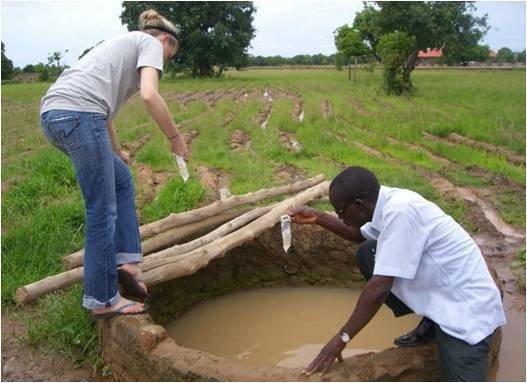
CWS’ dedication to monitoring and evaluation led me to participate this week in a webinar titled “Test of Time: Practical Tools and Methods for Post-Implementation Monitoring”. I joined 90 other water and sanitation practitioners who listened to a panel discussion from sector leaders and innovators, moderated by Water for People’s CEO (and my long time celebrity crush… too lame?) Ned Breslin. The discussion was interesting in many ways, but what struck me most was how many cutting-edge monitoring “innovations” are already engrained in CWS daily operations! Routine project follow up? CHECK. Customer satisfaction surveys? DAILY. Use and publicizing of crowd-sourcing technologies like SMS, mapping, and data collection? Our new monitoring platform, ghanawaters.crowdmap.com has all these capabilities! I gotta say I was pretty proud of our commitment to follow-up that day. That’s not to say we don’t have ways to grow. Cool opportunities for continued follow-up include continuing an emphasis on behavior change and health education, continuing “capacity building” (NGO-ish for helping people become more competent and confident in relevant skill sets), and incorporating supplies like extra buckets and chlorine into the village market scene. But, with the help of some intensive initial monitoring (which allows us to DETECT problems, SOLVE problems, and SCALE UP solutions), 10 and 20 years down the line I envision CWS partner villages being functioning, self-sufficient and satisfied customers.
Here’s to bucking the trend!
-Kathryn
Links:
Project reports on GlobalGiving are posted directly to globalgiving.org by Project Leaders as they are completed, generally every 3-4 months. To protect the integrity of these documents, GlobalGiving does not alter them; therefore you may find some language or formatting issues.
If you donate to this project or have donated to this project, you can receive an email when this project posts a report. You can also subscribe for reports without donating.