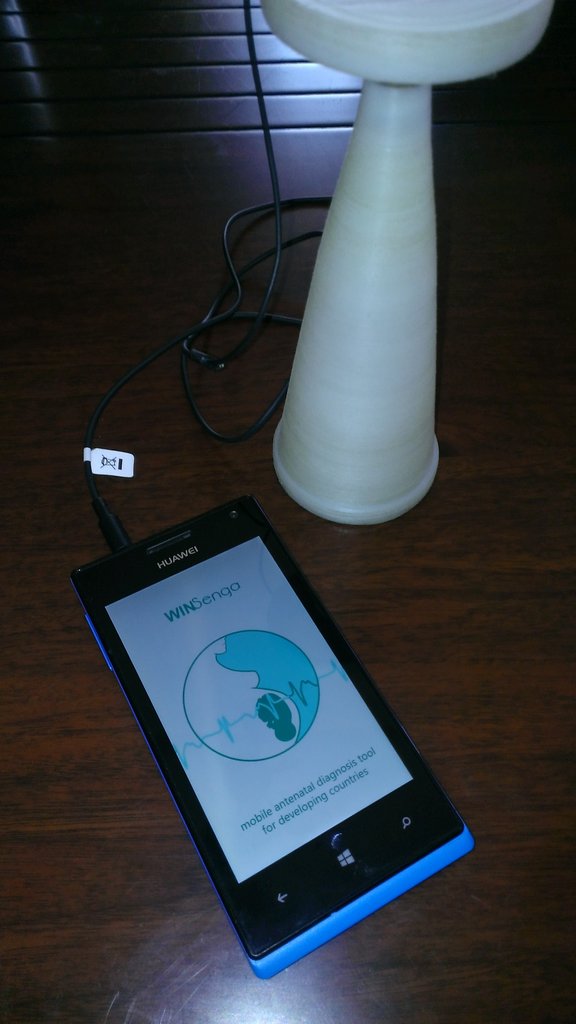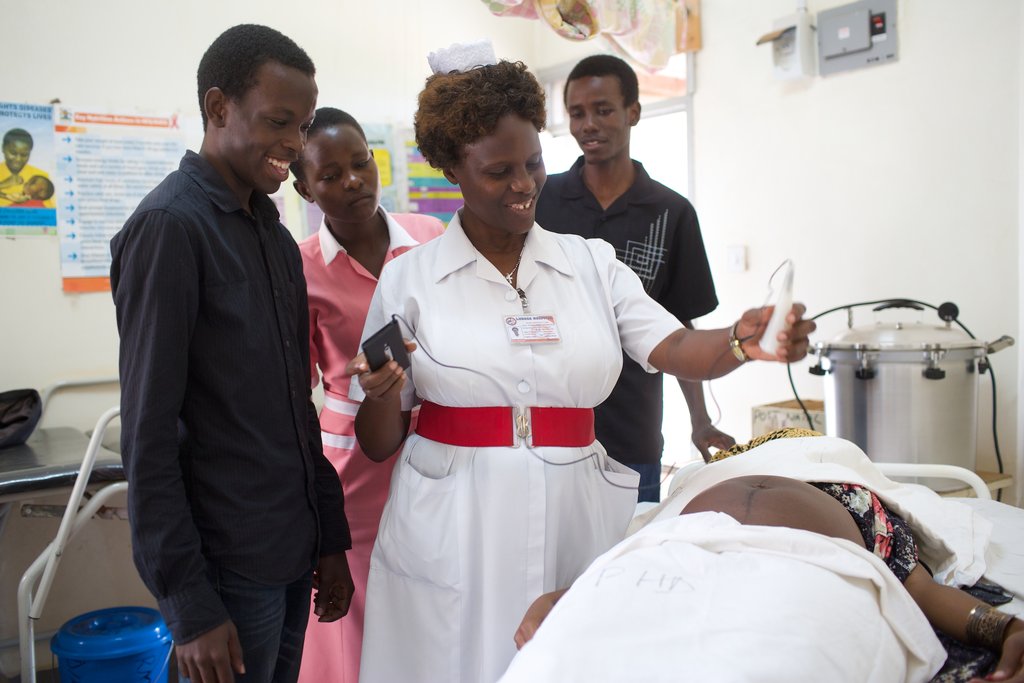
WinSenga eFHR is an affordable mobile ultrasound designed to improve prenatal care in the developing world. The handheld device can scan a pregnant woman's womb and report fetal age, heart rate and the health of the fetus. The project is a venture of entrepreneurs Aaron Tushabe and Joshua Okello, whose startup company Cipher256 is providing innovative and low-cost maternal health solutions.
In many areas of Sub-Saharan Africa, women have little access to quality and standardized prenatal care. This leads to high maternal mortality rates due to complications and preventable risks during pregnancy and childbirth. WinSenga will give women without access to expensive ultrasound machines the ability to have their pregnancy monitored. It uses a traditional pinard horn - a common tool for monitoring fetal heart rate - an app, and a microphone to transmit information into a smart phone.
WinSenga will help care providers accurately and conveniently monitor fetal health. The device diagnoses conditions and potential risk factors, alerts care takers to any risks, suggests courses of action based on the alerts, and helps make referrals. It is more affordable than any device currently in use.
The goal of WinSenga is to give high-risk mothers in developing countries access to life-saving prenatal care. By doing this, deaths from undiagnosed risk factors like fetal distress and pre-eclampsia will be dramatically reduced.