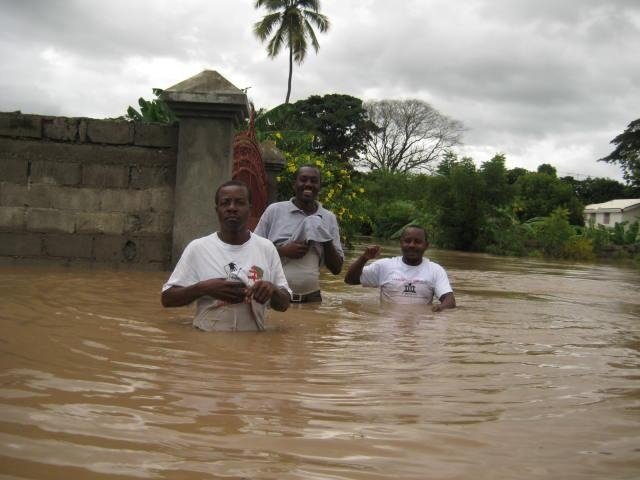
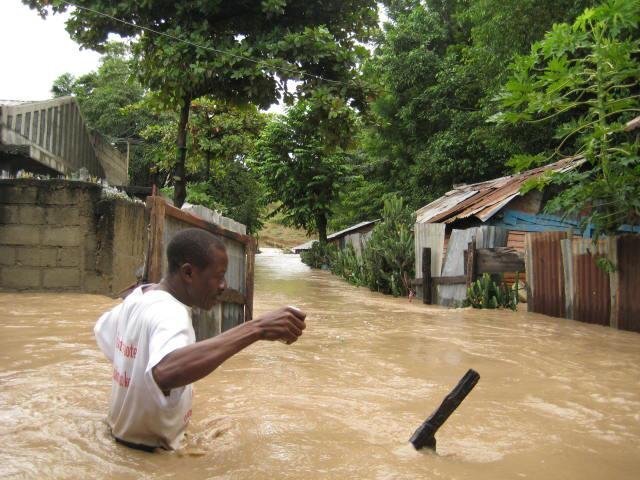
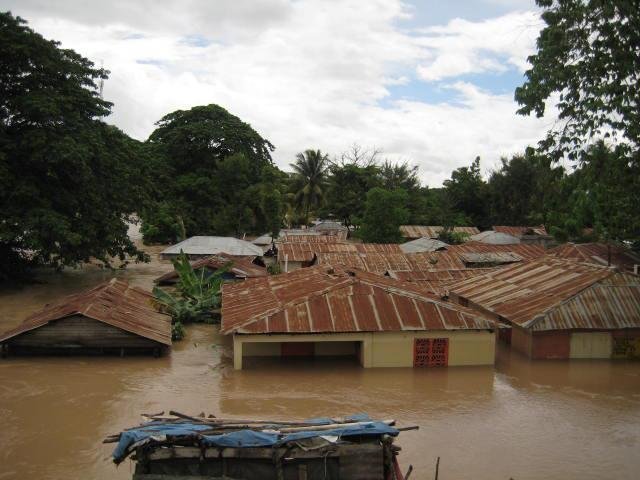
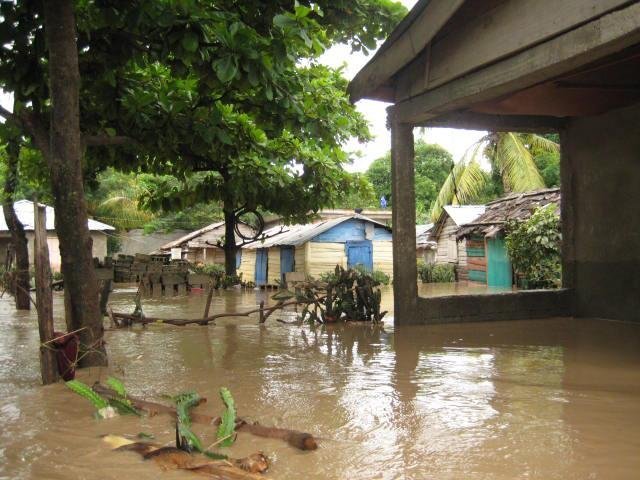
Thank you to all of the donors who have already given to this project. Your support has been critical to our success in responding so quickly at this time. Partners In Health is responding to needs both in the short-term and long-term. We are currently estimating the damages from the storms will require roughly $3 million: $1 million for short-term relief and $2 million for longer-term rebuilding and assistance. We will also need financial resources to assist as many as 1,000 families who have lost their homes, and these housing repair and reconstruction efforts could require an additional $1 million.
The following describes our immediate priorities and medium and long-term plans in several geographical areas.
Artibonite Department: Gonaives
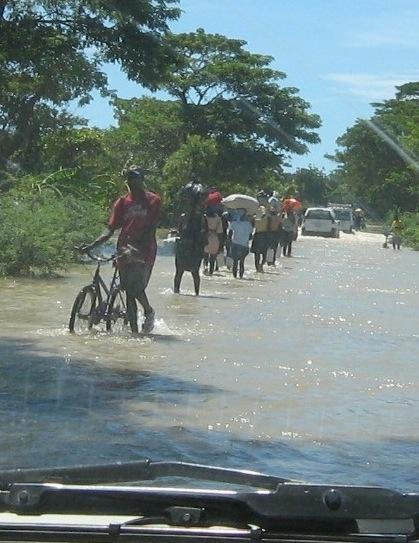
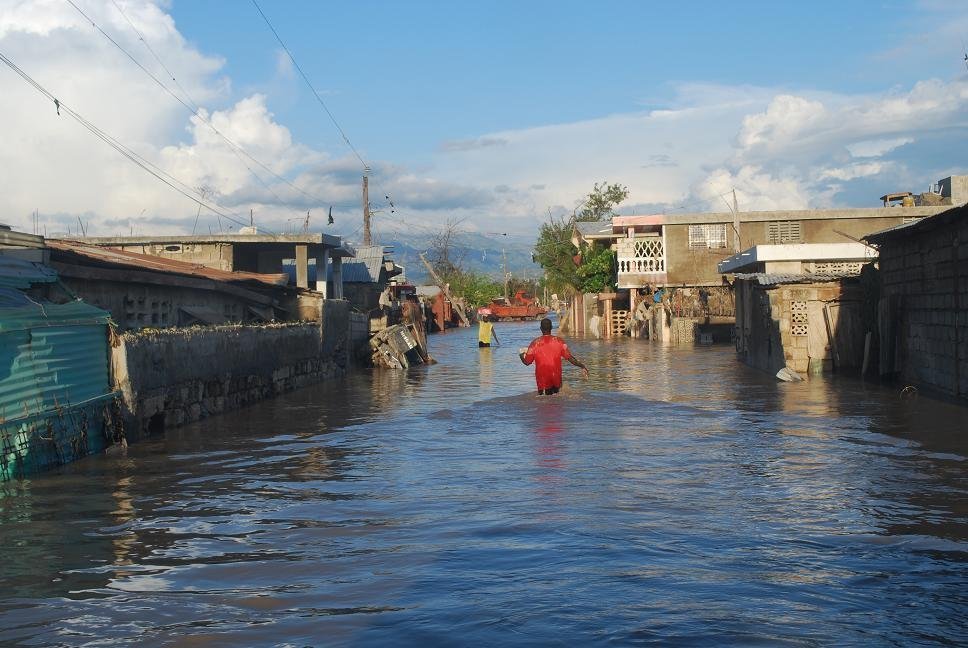
Gonaives is the country’s third largest city, with 300,000 residents, and was completely flooded by Tropical Storm Hanna. An estimated 80% of the city’s residents have been displaced by the storm, with people literally stranded on rooftops for days without aid, unable to leave because of the high water level.
• Zanmi Lasante’s immediate intervention in the first week of September was to send staff to Gonaives to help public health officials deal with the emergency. Indeed, the District Health Commissioner of the Artibonite District phoned ZL from the roof of his house, to see if he could evacuate patients at the hospital in Gonaives to HSN in Saint-Marc. At the last minute, the patients were evacuated to a hospital in Port-au-Prince.
• Zanmi Lasante donated medical supplies from our inventory to the temporary clinic replacing the incapacitated hospital in Gonaives. ZL vehicles helped to evacuate ZL staff and their families who had been stranded in the city of Gonaives and brought some supplies to HIV and TB patients known to live there.
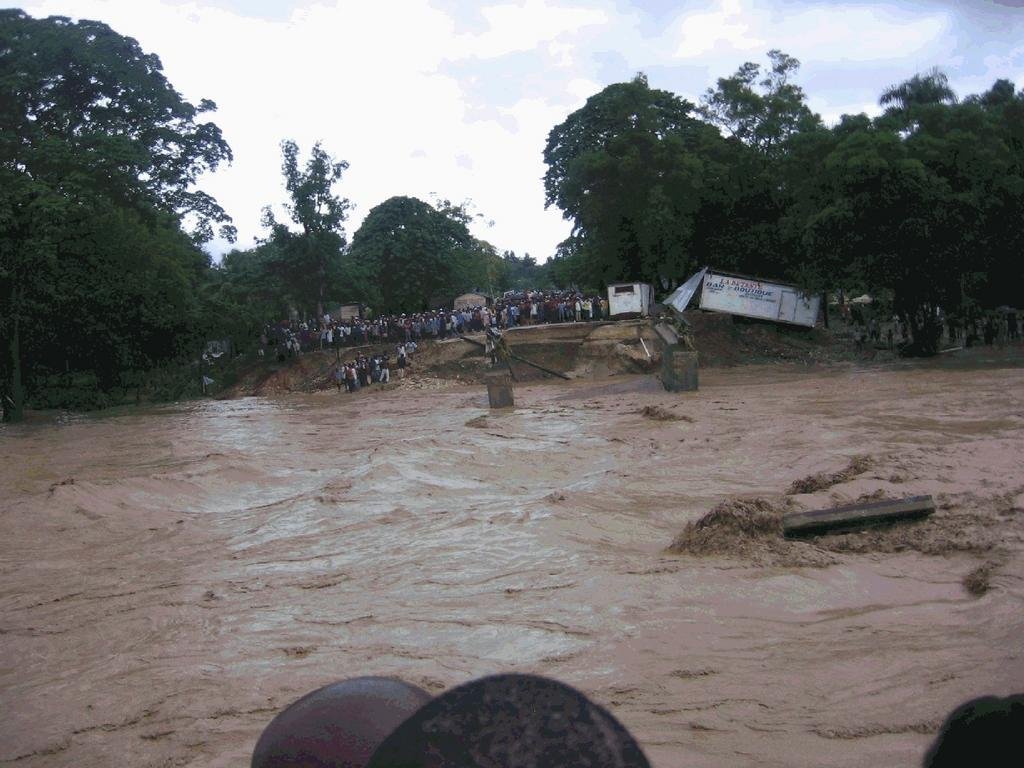
• Over the weekend of September 6-7, the last remaining road to the Artibonite Department from Port-au-Prince was washed out due to a bridge collapse in a flash flood. This cuts the Artibonite Department off from the rest of the country by road in all directions, further isolating Gonaives. Therefore, we are concentrating our efforts on our clinical sites south of the city.
Artibonite Department: Saint-Marc and Petite-Rivière de l’Artibonite
PIH and ZL work extensively in two Ministry of Health hospitals in the Artibonite Department: Hospital St. Nicholas (HSN) in the coastal city of Saint-Marc, about 1.5 hours drive south of Gonaives, and the Centre Medical Charles Colimon (CMCC) in Petite-Rivière de l’Artibonite, about 40 kilometers from Gonaives. In Saint-Marc, three major low-lying areas of the city were flooded. Saint-Marc is also coping with many refugees from Gonaives. Petite-Rivière de l’Artibonite also experienced heavy flooding from the nearby Ester and Artibonite Rivers.
• In response to the thousands of displaced people streaming out of the Gonaives area on foot, ZL is bolstering medical capacity at HSN and CMCC in Saint-Marc and Petite-Rivière, to handle the surge in patient volume in the coming weeks and months.
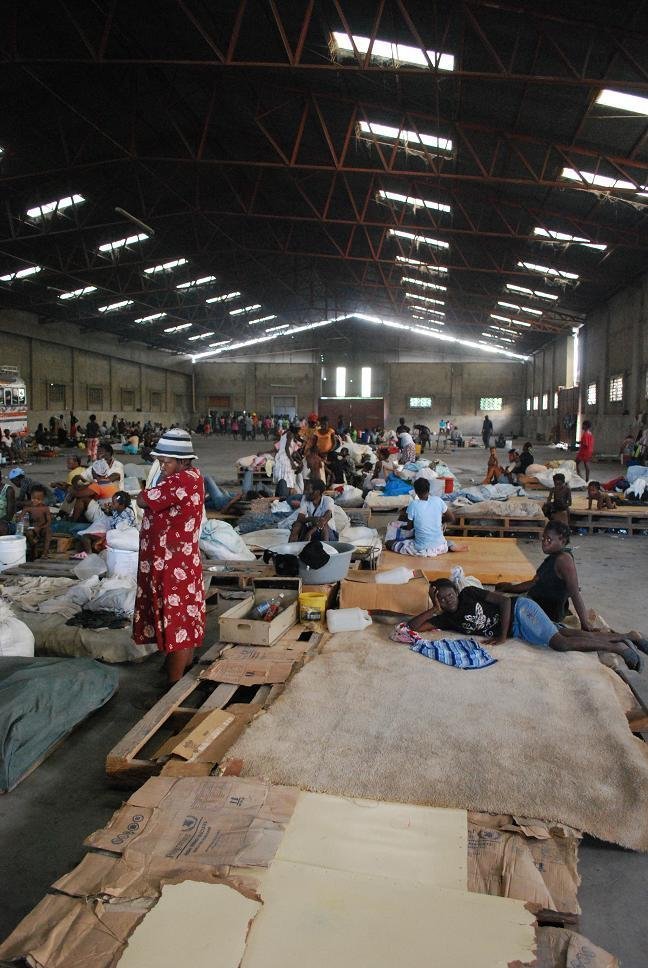
• In Saint-Marc, 3,000 or more people have been displaced, including 100 ZL patients and their families and 8 ZL staff members and their families. There are more than 2,000 people housed in 4 shelters in the city of Saint-Marc. ZL is providing assistance to these displaced people and our team is conducting needs assessments of the other shelters in the area.
• In Petite-Rivière, 3,726 people have been displaced (and many areas have not been reached yet), including 95 families of ZL patients. More than 3,000 people are being housed in 21 shelters in the three zones of the city that we serve. ZL is providing drinking water to 7 shelters.
Central Plateau: Mirebalais
Mirebalais is a crucial junction between Port-au-Prince and the Central Plateau and the administrative headquarters of ZL. It is also the central warehouse for the ZL/World Food Program food distribution program that provides food support for our HIV and TB patients. Mirebalais has experienced severe flooding when the nearby river overran its banks. The flash flooding and degree of damage that occurred over a four-hour period of rain during Hurricane Ike is unprecedented in this area and was all the more devastating because of the unexpected, rapid onset of the floods. An estimated 500-800 people have been displaced by the flooding.
• ZL is assisting roughly 50 orphans whose orphanage in Mirebalais was destroyed and who are currently living in the Mirebalais hospital.
• Working with the local government and other relief agencies, ZL is also coordinating emergency shelter, food, water, shelter and medical care for over 300 people in Mirebalais who have lost their homes.
• The warehouse network and logistical system that ZL has developed in recent years in partnership with WFP in Mirebalais, Hinche, and our other Central Plateau sites is helping ZL to stage and deliver emergency aid. We are using this warehouse network to distribute food to HIV patients and other emergency rations that have been provided by WFP, as well as to store supplies.
• ZL is also trying to purchase small boats to ferry patients and supplies across the swollen La Tombe river in the Central Plateau where a major bridge collapse isolated the town of Mirebalais from the Mirebalais hospital and disrupted the major vehicular route to the Artibonite Department and subsequently Gonaives.
• Over the long term, PIH will work with the Ministry of Health to rehabilitate Mirebalais hospital. We were already planning to undertake this work over the next year, but given the severity of the damage in Mirebalais from the storms, we will prioritize these renovations in the coming months. For now, ZL is trying to establish minimal functions at the Mirebalais hospital by providing staffing support, supplies, and essential medicines.
Central Plateau: Hinche
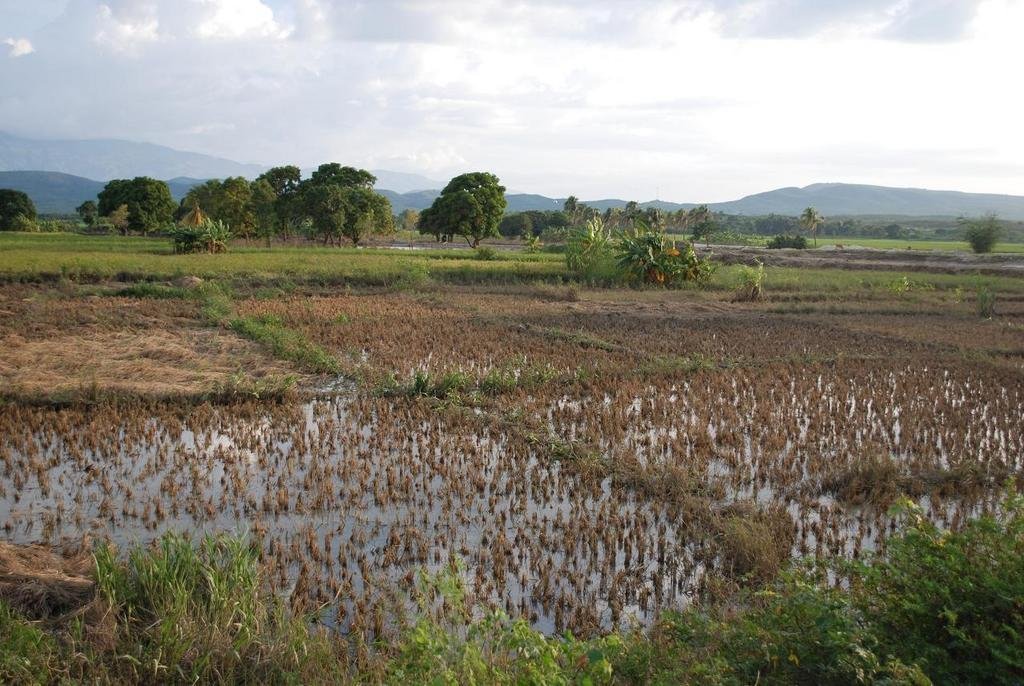
Hinche is the largest city in the Central Department, with 104,000 residents. ZL works in partnership with the Ministry of Health hospital in Hinche. Hinche is surrounded on three sides by rivers and has experienced very severe flooding. An estimated 2,500 people have been displaced.
• In the immediate aftermath of the storm, ZL’s network of community health workers located 100 HIV patients in the Hinche area who had lost their homes and ensured that they and their families had shelter. We have moved these patients into a central location where we can be certain that they are getting their medications and that mothers enrolled in our prevention of-mother-to-child transmission of HIV program are receiving formula, bottles, and clean water. There are also 10 ZL staff and their families who have lost their homes and ZL is offering support to these people as well. The cost of covering these needs is an estimated $50/family/week.
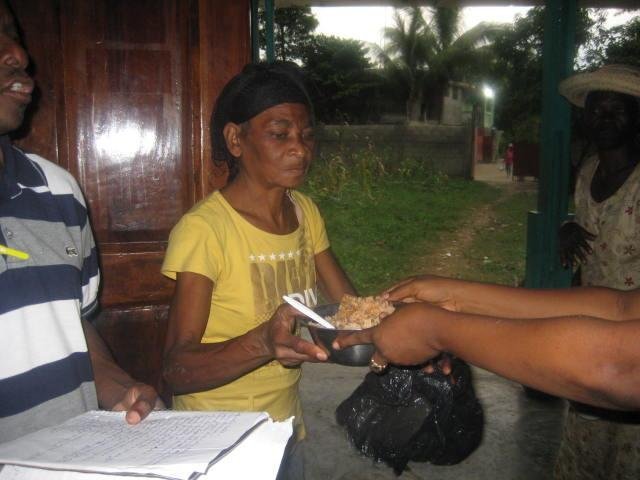
• In the immediate aftermath of the storms, there were 2,500 people living in shelters (churches and schools), and ZL is cooperating with other agencies, Red Cross and World Vision, to meet their needs. During the week of September 8, ZL was arranging food for over 1,000 people each day (buying supplies on credit at the market). Going forward, ZL is providing clean water to more than 2,000 who are still in the shelters.
• ZL doctors and nurses from the Hinche hospital provided medical services via a mobile clinic at several of the shelters in the first few days after the storms to treat injuries and illnesses – diarrhea, abrasions, and presumed infectious diseases.
• ZL nurses are providing vaccinations to children for diseases like measles, which is standard procedure in emergency shelters during disasters.
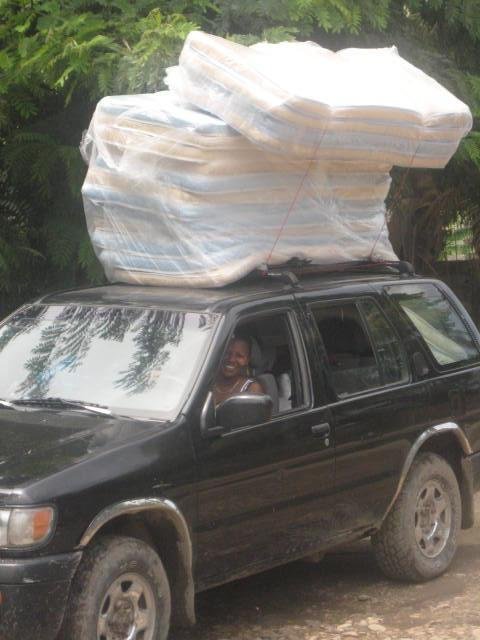
• We are working with the Ministry of Health, which has cleaning teams that are going through damaged homes to clean out mud and to disinfect so that people can return. For those who are able to leave the shelters (if their homes are still standing and are reparable), we ensure that they leave with a week’s worth of dry goods (rice, flour, beans, oil, sugar, etc), and if needed, a stove and cooking fuel, clothes, a sleeping mat, and water purifying solution. We estimate the cost of food alone to be $60 for one week for a family of 5.
• We are putting together a long-term assistance plan for patients and their families in Hinche that have been most affected by the storm. Emergency funds will be needed to help these patients, many of whom had their children's birth certificates and school entrance papers in their homes and lost these items, among all of their other belongings.
![Share on Twitter]()
![Share on Facebook]()