By Krit Sharma | Project Leader
Summary of the report
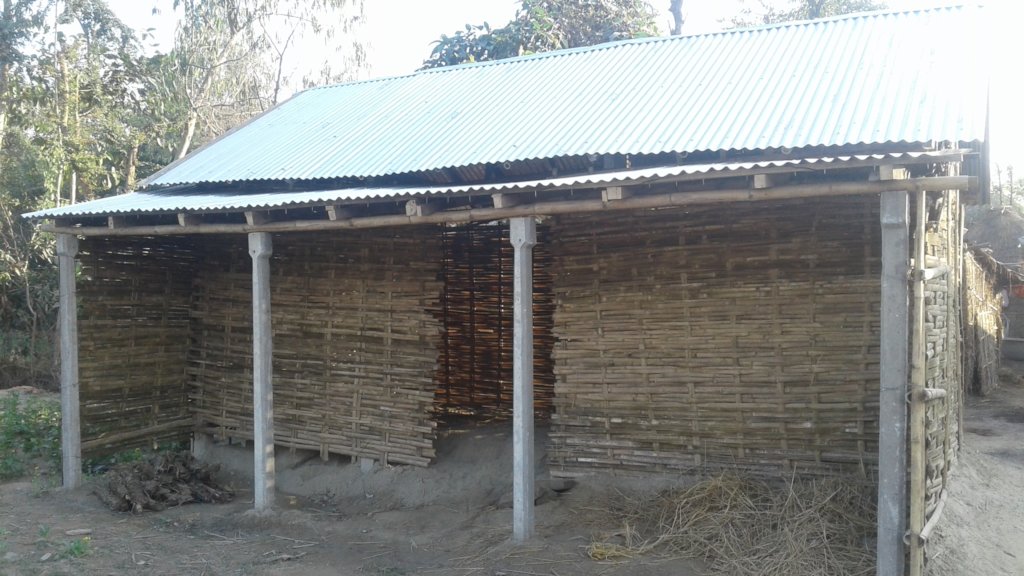
235 labours, hundreds of bamboos and tones of bricks and concreate took to complete the foundation, wall and roof of the five houses. Now, the ladies of the house will plaster the walls by using traditional skills and arts. Five toilets are 50% completed and ten more toilets will be built over the next month. Digging of the two bore-hole for clean water have been completed and three not-working ones have been repaired. Now, the five families have access to clean water at their door.
Considering the completed work and the remaining work, we can conclude that the project is 75% completed and, so far we have spent 665,100 rupees (£5038) only. Despite the challenges we had to face in the last month and the previous, we have made a significant progress.
The main activities carried out in the month
Rama, Jugeshwar, Ramchandra, Chandeshwar and Bishundev, the beneficiaries of the project will have a safe home in a week time. The builders have already completed foundation, wall and roof of the houses. It took 235 labours, 234 bamboos, 75 cement pillars, 650 meters of tin roof, 63 tractors full of soil, 3000 bricks, 28 sacks of cement and three tractors full of sands and greets. We have allocated 520,000 rupees for the activity and so far have spent 430,000.
In total, we will build fifteen toilets in the village, and so far five are 50% completed. A number of the toilet is greater than the houses built because ten families whose houses were damaged by the flood have repaired themselves before we arrive. But the ten families do not have a toilet so the families asked us for a toilet instead.
To build the toilets and water pump, we have allocated 184,000 rupees, and so far we have spent 90,000 rupees to buy plastic pipes, toilet rings, cement, toilet pan, bricks, concreates, tin roof, cement pillars, pump head, bamboos, and fittings. Similarly, we have dug two new bore-holes for clean water and repaired three.
To support the livelihoods of affected families, we have provided seeds to grow vegetables to the eight families in the last month. The veg garden is looking fantastic, and the families will have sufficient vegetables from the next week.
The activities will be carried out in the next month
In Nepal, the tradition is to plaster the wall with a special kind of mud. The ladies do it, and only they have the skills. The plastering mud is made by mixing of straw, cow dung and some other stuff. The ladies of the houses will be plastering the walls over the next weeks.
Ten more toilets will be built over the next month. The government of Nepal has announced- Saptari district as a faeces-free area, and anyone found doing so will be fined. The announcement has created a high demand for a toilet, but the families will not be able to afford one. Hence we are building a toilet for them, and they are grateful.
The challenges
Here, in Nepal, it is a winter season now. Until 11 am or sometimes until 1 pm, it is really cold and foggy. So the labours aren’t working on the speed hence costing more. However, building the houses will be completed in a week time so the loss wouldn’t be significant. Similarly, the toilets will take about three to four weeks to complete and the labours working on toilet are contracted to a fixed price.
By Krit Sharma | Project Leader
By Krit Sharma | Project Leader
Project reports on GlobalGiving are posted directly to globalgiving.org by Project Leaders as they are completed, generally every 3-4 months. To protect the integrity of these documents, GlobalGiving does not alter them; therefore you may find some language or formatting issues.
If you donate to this project or have donated to this project, you can receive an email when this project posts a report. You can also subscribe for reports without donating.