Education  Ghana Project #64698

Reading is Basic: Literacy to reduce Dropouts

by Street Children Empowerment Foundation
Reading is Basic: Literacy to reduce Dropouts

Project Report | Jun 11, 2026
Reading Is Basic (RIB) - Phase 3, Year 2

By Anthony Kojo Bosomtwe | Programme Manager

Baseline Data Collection — 23 Schools, Ga South Municipality

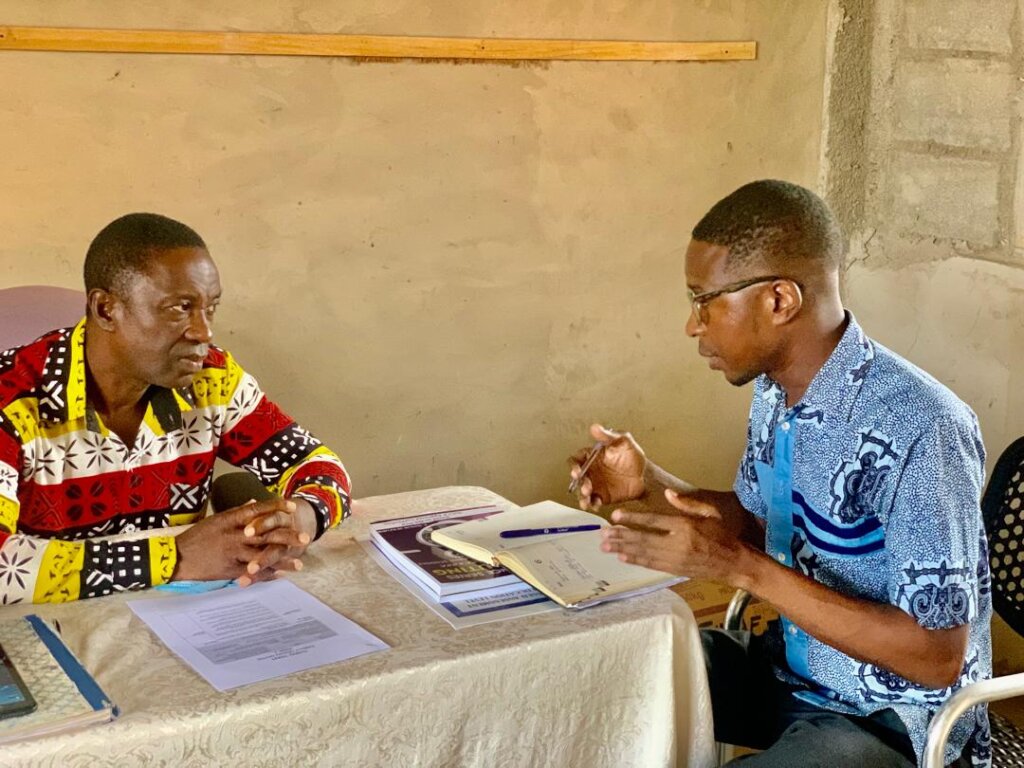
Year 2 began with a comprehensive baseline assessment exercise across all 23 participating basic schools in Ga South. The baseline establishes the starting point against which all Year 2 progress will be measured, in line with international monitoring and evaluation good practice (baseline–midline–endline design).

  • Coverage: all 23 partner schools in the Ga South Municipality, engaging 44 head teachers and teachers and 184 school learners.
  • Instruments: a qualitative, participatory methodology combining focus group discussions, key informant interviews, and structured school observations, adapted to the Ghanaian basic-school context.
  • Process: trained enumerators and SCEF programme staff administered assessments in collaboration with head teachers and the Ghana Education Service (GES) at the municipal level, with informed consent and child-safeguarding protocols observed throughout.
  • Use of findings: results are being analysed to profile each school’s reading levels, target teacher support, and set realistic, school-specific improvement benchmarks for the midline and endline assessments.

Headline findings: Across the 23 schools assessed (44 head teachers and teachers; 184 learners), 20 out of 23 schools had no library of any kind, and none had structured reading time on their official timetable. In addition, not a single teacher had ever received training in library management. These findings confirm the urgent relevance of RIB’s model, and they directly shape the activities reported below and planned for the coming period.

Construction and Procurement of Bookshelves

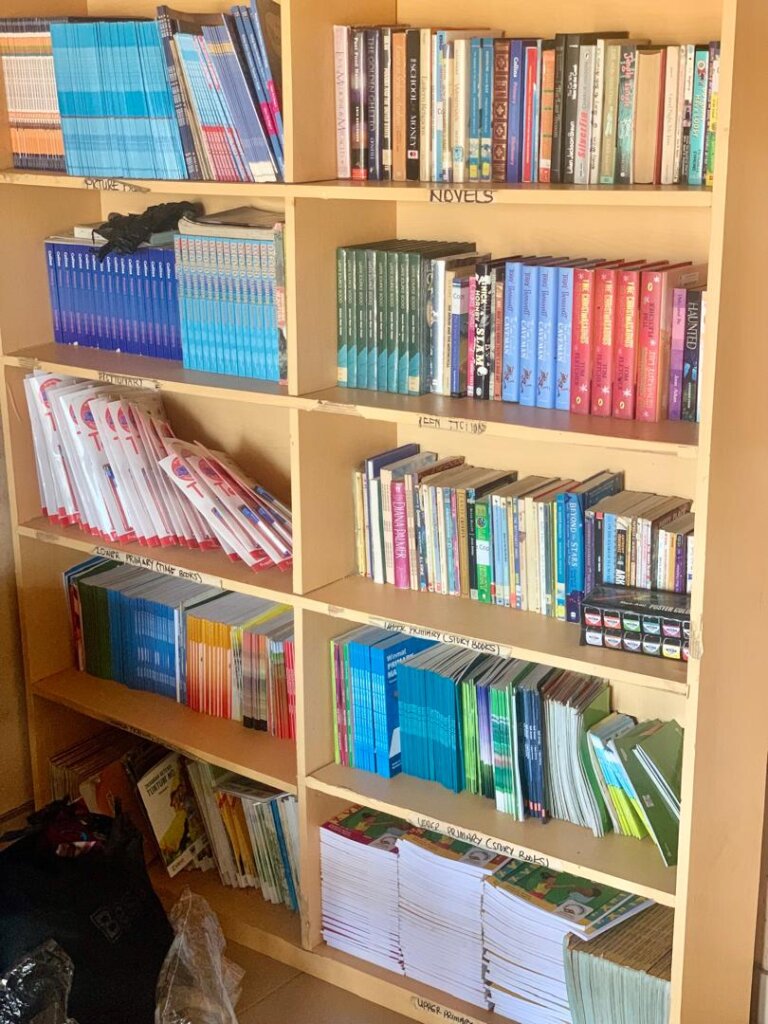
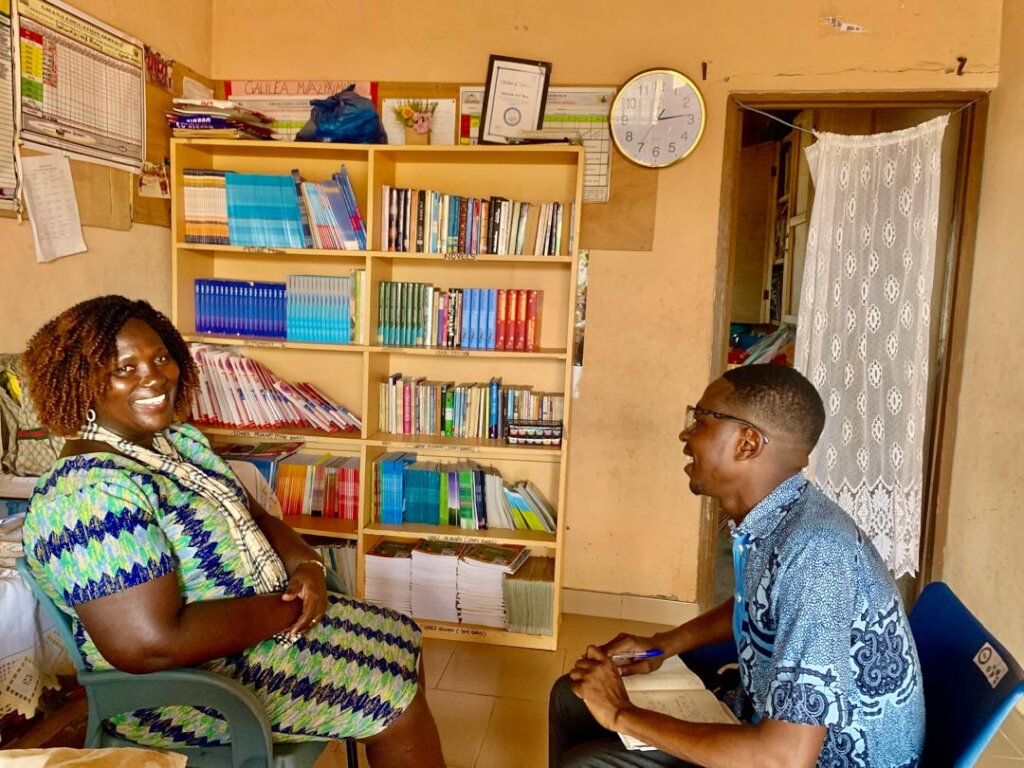
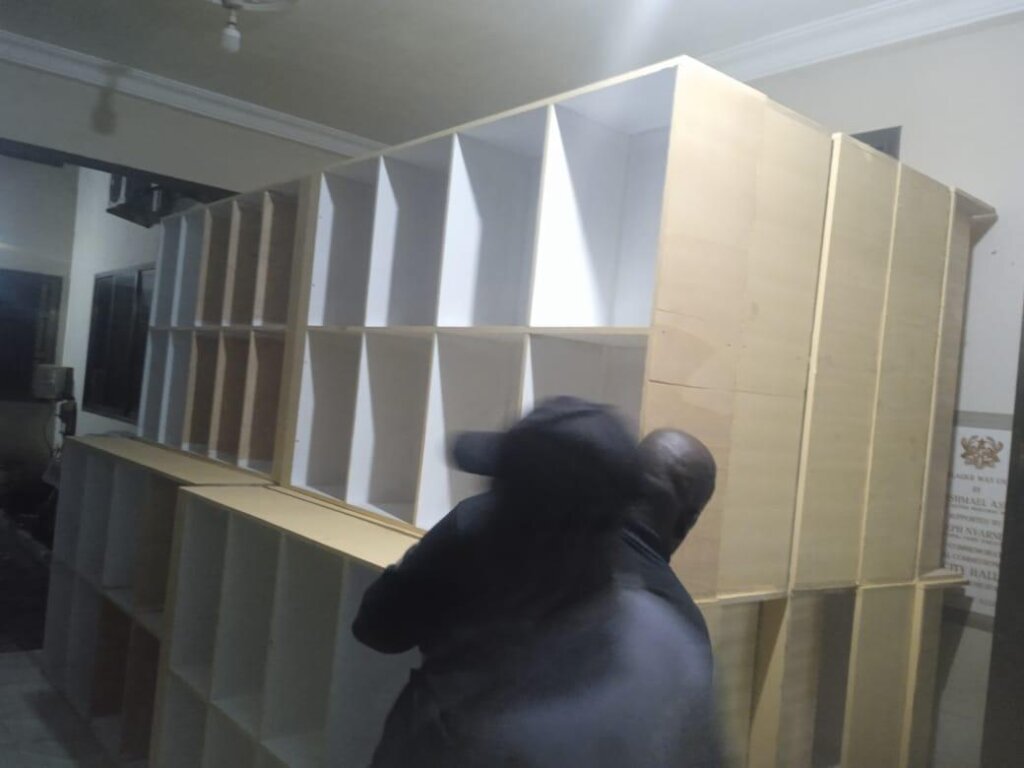
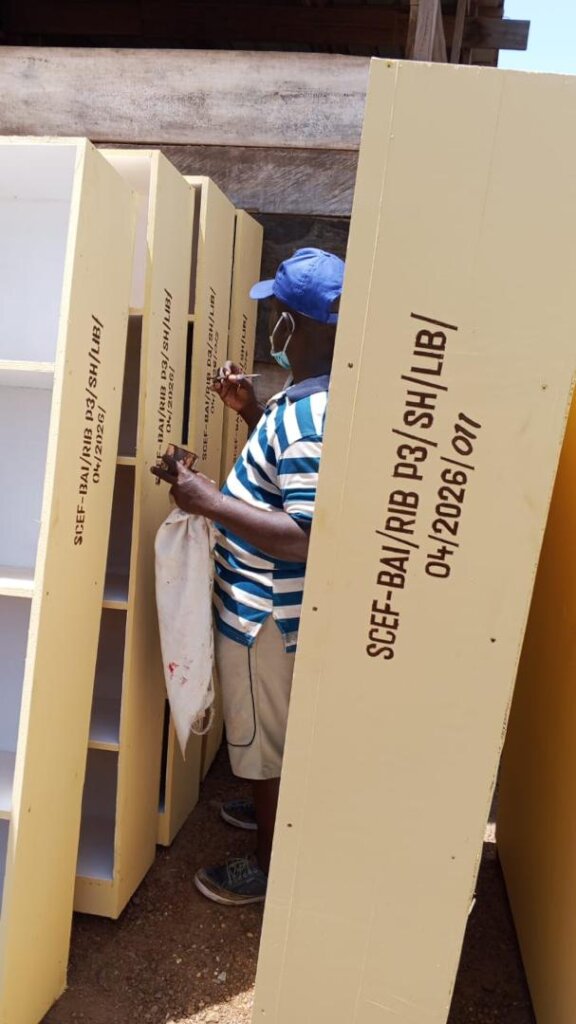
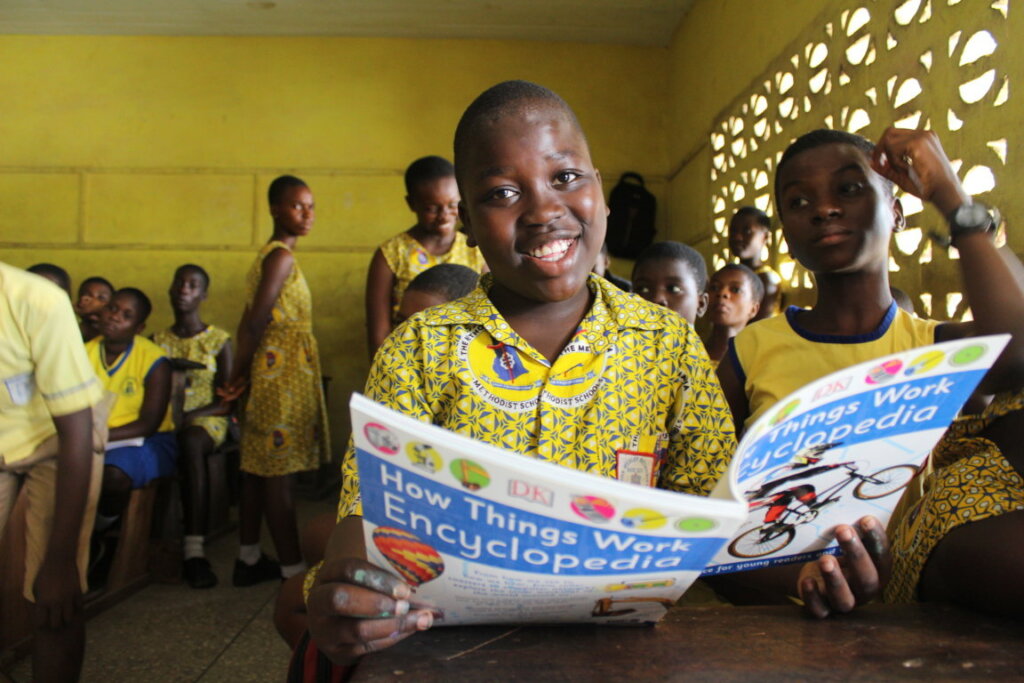
Following the baseline, SCEF constructed and procured bookshelves for the 23 Ga South schools. This step is foundational: books donated to schools without storage are frequently locked away in head teachers’ offices, damaged, or lost. Purpose-built shelving keeps books visible, organised, protected, and within children’s reach, converting ordinary classrooms into functioning mini-libraries.

  • 23 bookshelves — one for each partner school — have been constructed, built by local artisans, keeping project funds circulating within the very communities the project serves.
  • Shelves were designed for durability and child accessibility, at heights appropriate for lower- and upper-primary learners.
  • Placement has been agreed in advance with each head teacher and the school’s English Language teachers, who will take responsibility for the care and rotation of books.
  • Distribution is deliberately sequenced: each school will receive its shelf and its books together, immediately after the stakeholder, teacher, and library prefect trainings, ensuring that every library arrives with trained people ready to manage and use it from day one.

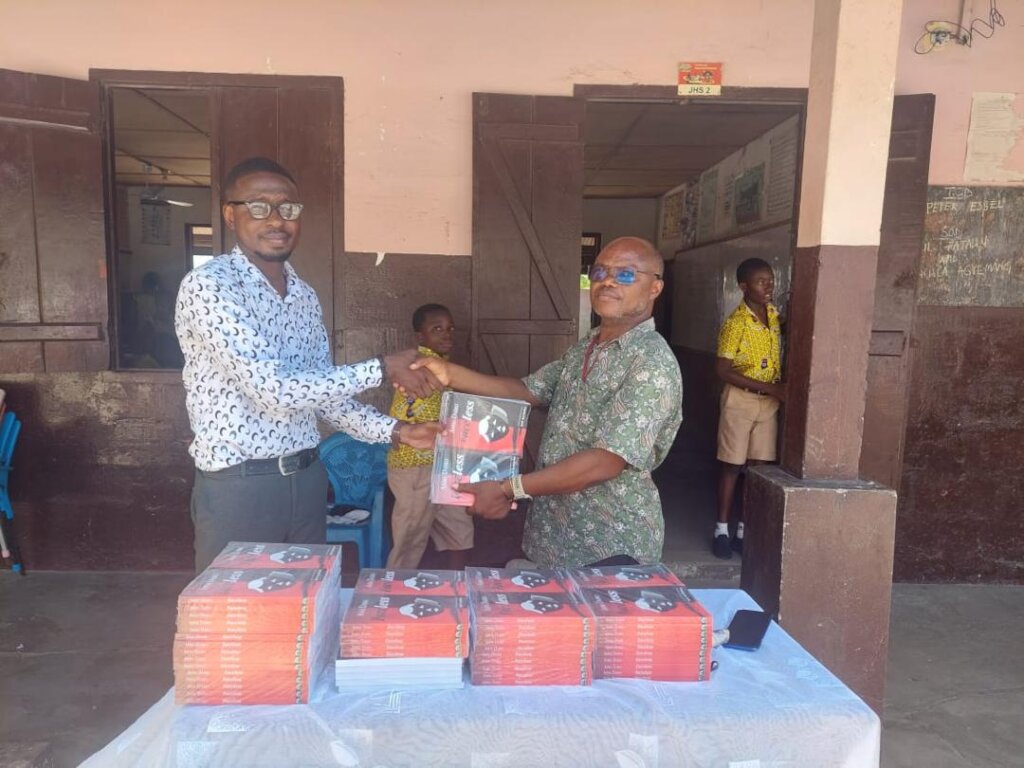
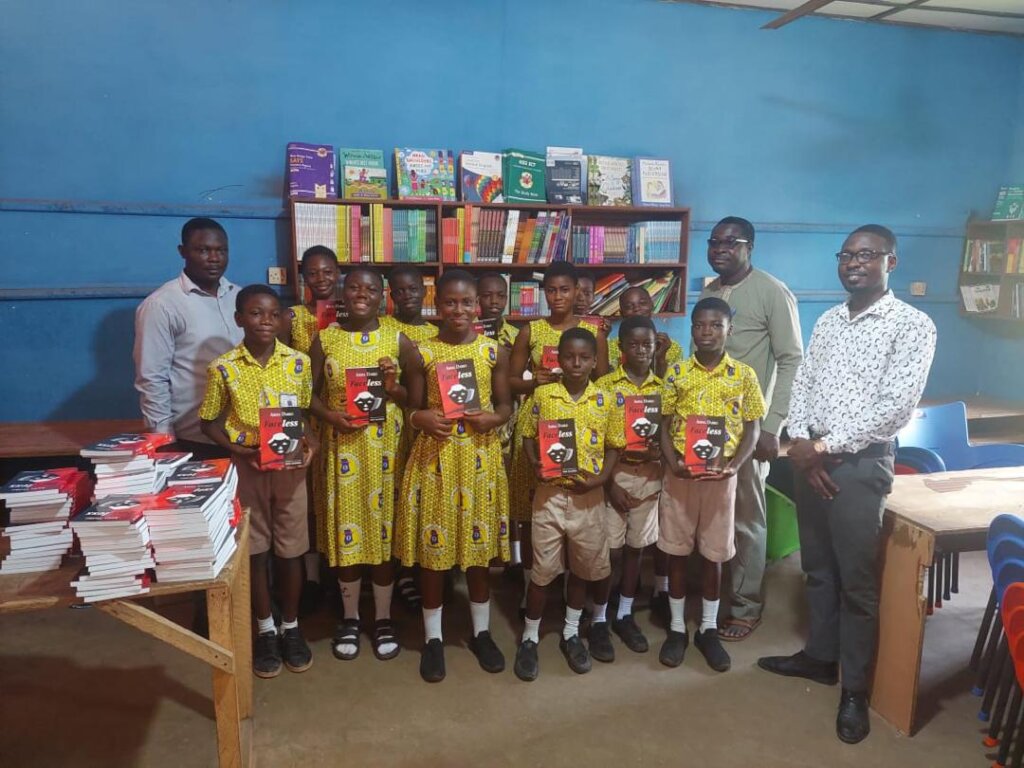
500 African-Themed Books for 5 Schools — Accra Metropolitan Area

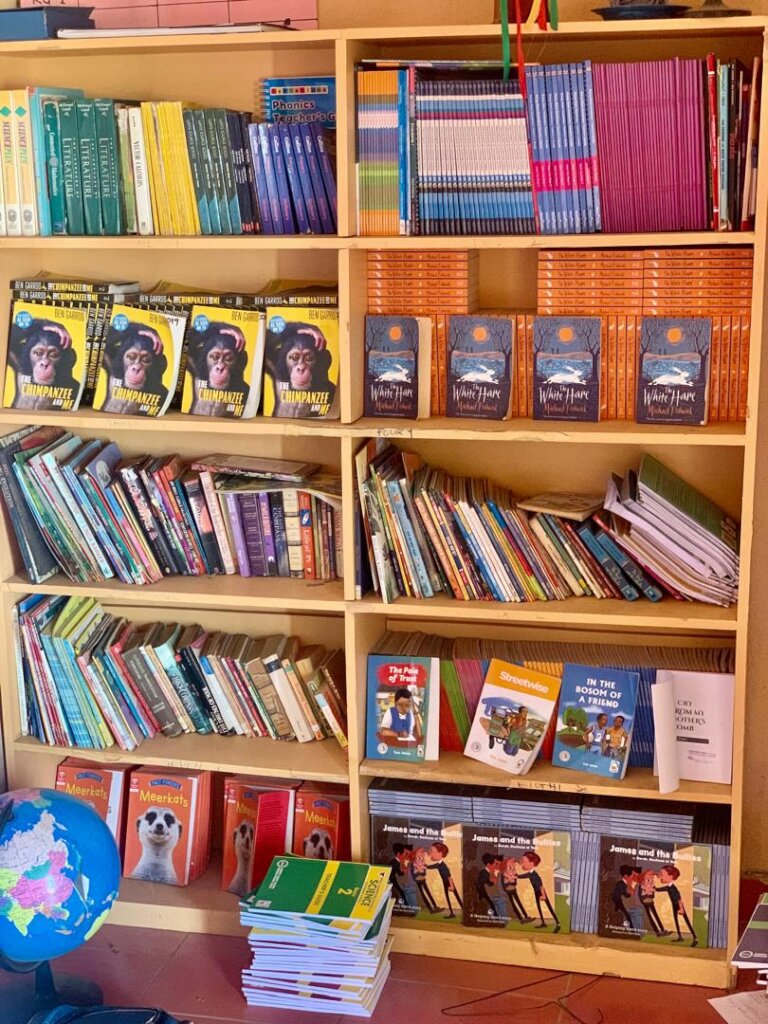
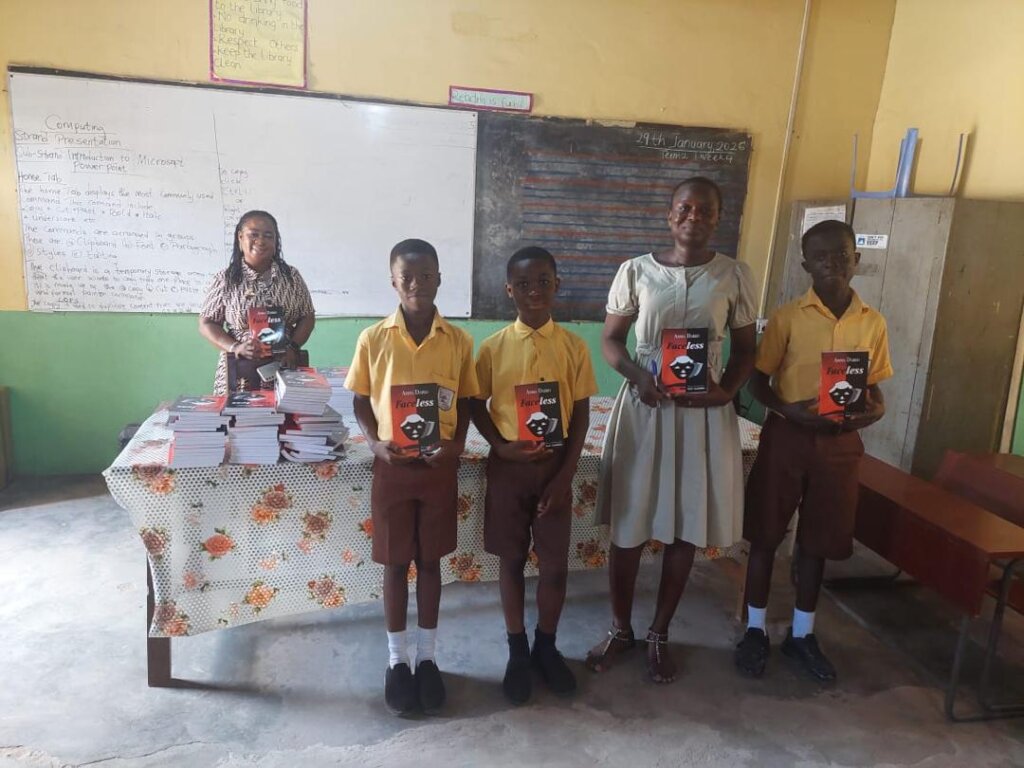
In parallel, SCEF supplied 500 African-themed storybooks to 5 partner schools in the Accra Metropolitan Area — the first of 22 schools targeted to receive African-themed books this project year. Research and our own classroom experience consistently show that children engage more deeply, read more frequently, and comprehend better when stories reflect their own culture, environment, and lived experience. These titles feature African characters, settings, authors, and values, affirming children’s identity while building reading skills.

  • 500 books distributed across 5 schools (an average of 100 books per school), reaching an estimated 3,652 pupils.
  • Titles were selected for age-appropriateness, curriculum relevance, and cultural resonance, sourced from Sub-Saharan publishers — supporting the African publishing ecosystem while putting authentic African stories in children’s hands.

Each consignment was formally handed over to school leadership and logged into the school’s book inventory to support accountability and tracking.

A Story from the Field

During one of the baseline focus group discussions in Ga South, our team asked a group of upper-primary learners a simple question: “Where do you go when you want to read a storybook?” The room went quiet. Finally, one learner raised her hand and answered honestly that there was nowhere to go. Her school, like 20 of the 23 we visited, had no library, no shelf, and no reading time on the timetable. The only books she had ever held were textbooks, shared between desks.

Today, the answer to that question is taking shape. Twenty-three newly built wooden bookshelves crafted by local artisans stand ready, and the African-themed storybooks destined to fill them are clearing through the Ghana Library Authority. Once they arrive, teachers and library prefects will be trained, and each school will receive its shelf and its books together: not just furniture, not just paper, but a working library and the people prepared to run it. When that learner is asked our question again, she and thousands like her will finally have an answer. That is what your support is building.

Monitoring, Evaluation and Learning

RIB Phase 3 follows a baseline–midline–endline assessment framework consistent with international development standards. The Year 2 baseline now provides school-level data that will be compared against a midline assessment planned for later in the project year and an endline at its close. In addition to learning data, SCEF tracks book inventories, shelf condition, frequency of reading sessions, and teacher engagement through routine monitoring visits, ensuring that donated resources remain in active use and in children’s hands.

All data collection adheres to SCEF’s child safeguarding policy and the Children’s Act, 1998 (Act 560) of Ghana, with consent obtained and children’s identities protected in all reporting.

Challenges and Lessons Learned

  • Scheduling baseline assessments around the school calendar and examination periods required flexibility and close coordination with GES and head teachers.
  • Rising costs of timber and transport affected shelf production budgets; sourcing from local artisans helped contain costs while benefiting the community.
  • Sourcing African-themed books proved a significant challenge: prices from bookstores were high, and local publishers did not have the capacity to print the full order in a single run. SCEF responded by working directly with Sub-Saharan publishers and phasing procurement — a lesson that will inform earlier ordering and bulk-negotiation in future cycles.

Next Steps (Coming Period)

  • Book arrival and school deliveries: awaiting the arrival of the book consignment, currently undergoing clearance through the Ghana Library Authority; once cleared and trainings are completed, each of the 23 Ga South schools will receive its newly constructed shelf together with a curated, age-appropriate book collection.
  • Stakeholder and teacher training: training for head teachers, English Language teachers, and key stakeholders on library management and reading-session facilitation — responding directly to the baseline finding that no teacher had previously received library management training.
  • Library prefect training: selected pupils in each school will be trained as library prefects, giving children ownership of the day-to-day care, lending, and organisation of their classroom libraries.
  • Disseminate baseline findings to head teachers, GES municipal officers, and partner stakeholders, and set school-level reading targets, including the introduction of structured reading time on school timetables.
  • Conduct the midline assessment later in the project year to measure early progress against the baseline.

Thank You — Your Impact

Every shelf built, every assessment completed, and every one of the 500 African-themed books now in a child’s hands traces directly back to your generosity. Because of you, 23 schools in Ga South now have the evidence and the shelves standing ready to transform reading outcomes this year, and children in 5 Accra Metro schools are opening books in which they can finally see themselves. Thank you for standing with the children of Greater Accra. We look forward to reporting on the trainings, the school deliveries, and the midline results your support is making possible.

Links:

Share on Twitter Share on Facebook

About Project Reports

Project reports on GlobalGiving are posted directly to globalgiving.org by Project Leaders as they are completed, generally every 3-4 months. To protect the integrity of these documents, GlobalGiving does not alter them; therefore you may find some language or formatting issues.

If you donate to this project or have donated to this project, you can receive an email when this project posts a report. You can also subscribe for reports without donating.


Sign up for updates

Organization Information

Street Children Empowerment Foundation

Location: Accra, Greater Accra - Ghana
Website:
Facebook: Facebook Page
X / Twitter: Profile
Project Leader:
Anthony Kojo Bosomtwe
Accra , Greater Accra Ghana
$1 raised of $20,000 goal
 
2 donations
$19,999 to go
Donate Now

Help raise money!

Support this important cause by creating a personalized fundraising page.

Start a Fundraiser

Learn more about GlobalGiving

Teenage Science Students
Vetting +
Due Diligence

Snorkeler
Our
Impact

Woman Holding a Gift Card
Give
Gift Cards

Young Girl with a Bicycle
GlobalGiving
Guarantee

Get incredible stories, promotions, and matching offers in your inbox

WARNING: Javascript is currently disabled or is not available in your browser. GlobalGiving makes extensive use of Javascript and will not function properly with Javascript disabled. Please enable Javascript and refresh this page.