By Erick Bosire | Project leader
COMMUNITY SCHOOLSCHOOL PROGRESS AND IMPACT REPORT – 2026
Reporting Period: January–August 2026
Implementing Organisation: WE REACH
Project: Community School – Affordable and Inclusive Early Childhood Education
Location: Joyland, Kakamega County, Kenya
Current Status: Operational and actively admitting children
1. Executive Summary
The Community School is a social enterprise initiative established by WE REACH to provide affordable, safe and quality education to children from the surrounding community, with particular attention to children from vulnerable households.
The school opened its doors in January 2026 and has now progressed from the establishment phase into active operations. Children are currently being admitted into Playgroup, PP1, PP2, Grade 1 and Grade 2, and demand for admission continues to grow.
The school was established in response to a challenge identified through WE REACH's work with vulnerable women and families in Kakamega County. Many low-income and vulnerable households struggle to access quality early childhood education because of school fees, childcare costs and limited household income. Children of vulnerable mothers are particularly at risk of missing out on quality early learning.
The Community School addresses this challenge through an inclusive social enterprise model. Families who can afford to pay school fees contribute towards the running costs of the school, while the model creates opportunities for children from vulnerable households to access education at subsidised or supported rates.
The school therefore seeks to achieve two interconnected objectives: improve children's access to quality education and reduce the childcare barriers that prevent vulnerable mothers from pursuing economic opportunities.
Since opening, significant progress has been made in establishing the school, developing learning infrastructure, enrolling children, engaging parents and integrating education with WE REACH's broader work on child wellbeing and women's economic empowerment.
The school is now entering an important growth phase. Additional investment is required to expand classroom space, improve sanitation and WASH facilities, provide furniture and learning materials, strengthen the school kitchen and create a more comprehensive learning environment.
2. Background and Community Need
WE REACH has worked for several years with vulnerable communities in Kakamega County, including women, children, young people and survivors of exploitation.
Through this work, the organisation identified a recurring challenge among vulnerable mothers: access to childcare and affordable quality education remains a major barrier to economic empowerment.
Many mothers want to engage in small businesses, employment or other income-generating activities but have limited options for safe and affordable childcare.
At the same time, families with limited incomes often have few options for quality early childhood education.
This creates a cycle in which:
The Community School was established to provide a practical response to these challenges.
3. Establishment of the Community School
The Community School was established by WE REACH as a social enterprise with a strong social purpose.
From the beginning, the school was designed to serve both children from the wider community and children from vulnerable households.
The model is intentionally inclusive. Children from different socioeconomic backgrounds learn together in the same environment, reducing stigma and promoting dignity and social integration.
The school is also designed to become increasingly financially sustainable through school fees generated from families who are able to pay.
4. Progress Since Opening
4.1 The school is now operational
One of the most significant achievements during the reporting period has been the transition from planning and construction to actual service delivery.
This represents an important milestone because investments in the school are now directly benefiting children and families.
4.2 The school is actively admitting children
The Community School is currently admitting children into:
The expansion of admission opportunities reflects the growing demand from parents seeking affordable and quality education.
The school will continue to expand enrolment while ensuring that infrastructure and teaching capacity grow alongside the number of learners.
4.3 Supporting children from vulnerable households
A central objective of the Community School is to ensure that children from vulnerable households are not excluded from quality education because of poverty.
The school provides an opportunity for children from vulnerable families, including children of survivor mothers supported through WE REACH programmes, to access education in an inclusive environment.
Rather than separating vulnerable children from other learners, the school integrates them into the wider school community.
This approach promotes dignity, inclusion and equal opportunity.
5. Infrastructure Development
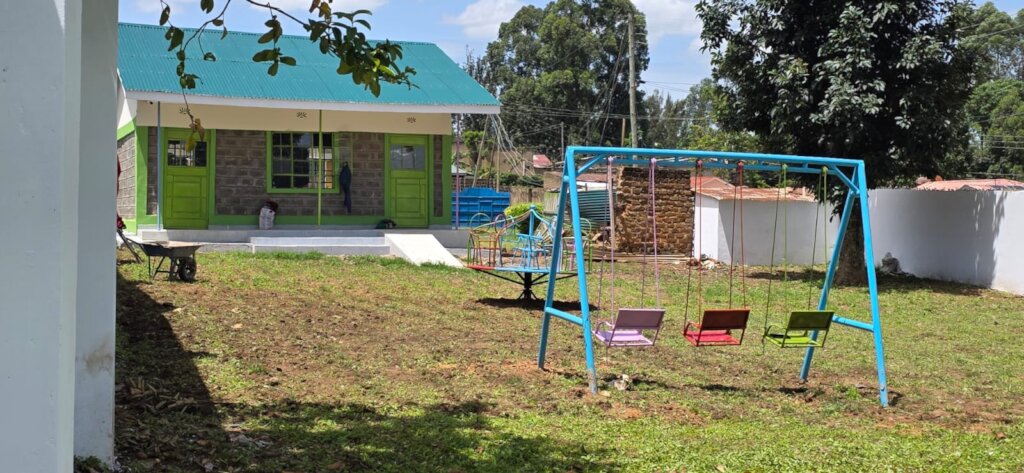
WE REACH has invested its own resources in establishing the school and creating the initial learning infrastructure.
A classroom has already been constructed through the organisation's own contribution.
This investment demonstrates WE REACH's commitment to the sustainability of the initiative and its willingness to contribute resources alongside donors contributions
The priority areas include:
Additional classrooms
Additional classrooms are required to accommodate learners in other upper classes and allow more children to access the school.
Furniture
The school requires additional tables, chairs, desks, shelves and storage facilities appropriate for young learners.
Learning materials
Additional books, teaching aids, play materials and other learning resources are required to support quality teaching.
Sanitation
Child-friendly sanitation facilities are essential for protecting children's health, dignity and safety.
School kitchen
A functional kitchen will support the provision of nutritious meals and improve children's wellbeing.
WASH facilities
Additional water, handwashing and hygiene infrastructure will strengthen the school's ability to maintain a healthy learning environment.
6. Education and Child Development
The Community School recognises that early childhood education is not simply about teaching children to read and write.
The early years are critical for children's cognitive, social, emotional and physical development.
The school therefore promotes holistic child development through:
The school aims to create an environment where children feel safe, valued and encouraged to learn.
7. WASH, Hygiene and Child Health
WASH is an important component of the Community School's development.
WE REACH has extensive experience implementing WASH programmes in primary schools across Kakamega County, reaching thousands of children and supporting schools to improve hygiene practices.
This experience will be incorporated into the Community School.
Children will be encouraged to practise:
The next phase of school development will focus on strengthening the physical WASH infrastructure so that hygiene education is supported by adequate facilities.
8.0 Nutrition and Child Wellbeing
Young children require adequate nutrition to support healthy growth and effective learning.
The Community School therefore intends to strengthen its capacity to provide meals and improve children's nutritional wellbeing.
A functional school kitchen is an important priority.
The kitchen will enable the school to prepare meals in a safe and organised environment and provide a foundation for strengthening the school's nutrition programme.
9.0 Supporting Vulnerable Mothers Through Education
The Community School is closely connected to WE REACH's wider work supporting vulnerable women.
For a mother trying to start or grow a small business, childcare can be a significant challenge.
A mother may receive entrepreneurship training, start a business and have the motivation to work, but still be unable to participate fully because she has young children requiring constant care.
The Community School provides a safe and structured environment where children can learn while their mothers pursue economic activities.
This creates an important link between:
Education → Childcare → Women's Economic Participation → Household Income → Improved Family Wellbeing
The school therefore contributes to both child development and women's empowerment.
10. The Social Enterprise Model
The Community School is being developed as a social enterprise rather than as a project that depends entirely on grants.
The school uses a cross-subsidy approach.
Parents who are able to pay school fees contribute towards the cost of operating the school. This revenue helps support the wider school system and creates room for vulnerable children to receive subsidised educational opportunities.
The model is intended to create long-term sustainability.
As enrolment grows, school-generated income is expected to cover an increasing proportion of operational costs.
External funding is particularly important during the early growth stage because the school requires significant capital investment before it can reach its full enrolment and revenue potential.
11. Growing Community Demand
Since opening, the school has experienced growing interest from parents seeking affordable and quality education.
The decision to actively admit children into additional classes responds to this demand.
The school is positioned to serve families within the surrounding community while also providing an education pathway for vulnerable children connected to WE REACH's programmes.
The growing demand provides an opportunity to expand the school while maintaining its social mission.
12. Key Achievements
During the reporting period, the Community School has achieved the following:
13. Challenges
Despite the progress achieved, the Community School continues to face several challenges.
Infrastructure needs
Growing enrolment creates demand for additional classrooms, furniture, sanitation facilities and learning materials.
Cost of quality education
Providing quality education requires investment in qualified teachers, learning materials, nutrition, sanitation, utilities and school management.
Supporting vulnerable learners
The school must balance affordability with the actual cost of providing quality education.
Early-stage financial sustainability
As a newly established school, enrolment and school-generated income are still growing. External support remains important during this early development phase.
14. Priorities for the Next Phase
WE REACH will focus on the following priorities:
Increase enrolment
Continue community engagement and parent outreach to reach more children.
Complete additional classrooms
Expand classroom space to accommodate other upper classes.
Provide furniture
Purchase tables, chairs, desks, shelves and other essential classroom equipment.
Improve sanitation
Develop safe and child-friendly sanitation facilities.
Strengthen WASH
Improve water access, handwashing facilities and hygiene infrastructure.
Establish and equip the kitchen
Develop a functional kitchen to support child nutrition.
Expand learning resources
Provide books, teaching aids, play materials and other age-appropriate resources.
Strengthen teaching quality
Support teachers through training, supervision and access to appropriate teaching resources.
Strengthen sustainability
Improve school management, financial planning, enrolment strategies and parent engagement so that school-generated revenue can increasingly cover operational costs.
15. Expected Impact
With continued investment, the Community School expects to achieve the following results:
16. Sustainability
Sustainability is a core principle of the Community School.
The school is being developed to generate part of its own income through school fees.
The long-term sustainability model is based on increasing enrolment while maintaining affordable fees and ensuring that families who can afford to pay contribute towards the wider social mission.
School-generated income will increasingly support:
Donor support is particularly important for capital investments that will create long-term value, such as classrooms, sanitation facilities, furniture, kitchen facilities and WASH infrastructure.
The ultimate goal is for the school to become increasingly self-sustaining while continuing to provide opportunities for children from vulnerable households.
17.Monitoring, Learning and Accountability
WE REACH will continue monitoring the school's progress using clear indicators.
Key indicators will include:
WE REACH will maintain programme and financial records and use monitoring information to improve the school's quality, sustainability and impact.
18. The Human Impact
The Community School is about more than buildings, classrooms and school fees.
It is about giving children a stronger start in life.
For a child from a vulnerable household, access to a safe learning environment can create opportunities that would otherwise be difficult to access.
For a vulnerable mother, knowing that her child is safe and learning can create the freedom to work, run a business or participate in economic activities.
For the community, the school represents an investment in children and families.
The initiative is therefore helping create a pathway in which:
Children learn.
Mothers work.
Families become stronger.
Communities become more resilient.
19. Conclusion
The first eight months of 2026 have marked an important period in the development of the Community School.
The progress demonstrates that there is a clear community need for affordable and quality education.
However, the school is now at a critical stage of growth. Increasing demand must be matched with additional classrooms, furniture, learning materials, sanitation, WASH facilities and kitchen infrastructure.
GlobalGiving support will help the school respond to this demand while maintaining its focus on vulnerable children and families.
The long-term vision is to develop a sustainable, inclusive and quality community school that gives children a strong foundation for their future while enabling vulnerable mothers to pursue economic opportunities.
The Community School is not simply an education project. It is an investment in children, mothers, families and the future of the community.
Project reports on GlobalGiving are posted directly to globalgiving.org by Project Leaders as they are completed, generally every 3-4 months. To protect the integrity of these documents, GlobalGiving does not alter them; therefore you may find some language or formatting issues.
If you donate to this project or have donated to this project, you can receive an email when this project posts a report. You can also subscribe for reports without donating.



Support this important cause by creating a personalized fundraising page.
Start a Fundraiser