The One Billion Literates Foundation (OBLF) is a grassroots non-profit whose mission is to create better futures for the underserved rural communities of Anekal Taluk, in the outskirts of Bangalore. OBLF focuses on enhancing English language skills among primary school children in rural, under-resourced communities in India. In Anekal Taluk, OBLF addresses teacher shortages by training local women as educators and combining digital tools with traditional teaching methods to improve proficiency in government schools.
About the Remedy Program
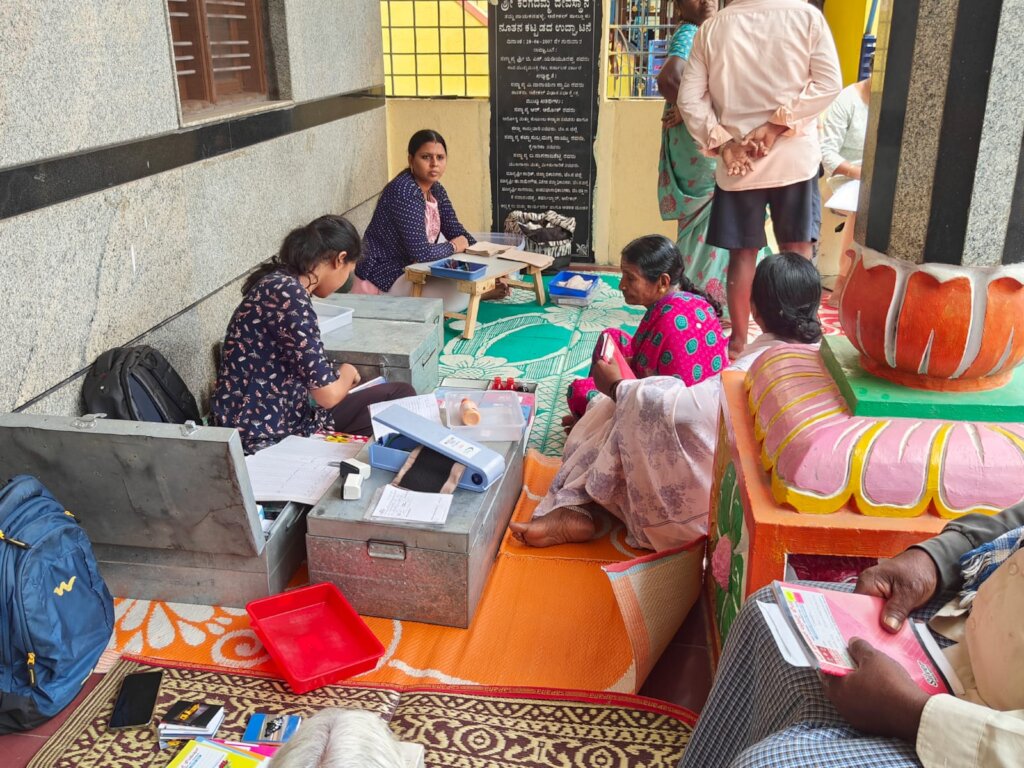
At OBLF, our integrated healthcare approach ensures seamless transitions and comprehensive care as community health needs evolve. We address the burden of non-communicable diseases (NCDs), other Life Limiting illnesses, and Mental Health disorders by providing and integrating village-based Primary Health Clinics, Home Care Visits, Geriatric-Palliative Care, and Mental Healthcare into our scope of the continuum of primary health care.
Our approach to healthcare ensures close engagement of the communities, early detection, holistic treatment, and continuous management. This integration enhances accessibility and adherence to treatment protocols, reduces stigma, and fosters a sustainable care model that adapts to our community’s evolving needs. We are dedicated to delivering compassionate care that uplifts and supports every individual’s well-being.
The Need
Rural Anekal Taluk faces a growing health crisis, with non-communicable diseases (NCDs) like hypertension and diabetes, life-limiting illnesses (LLIs), and mental health issues disproportionately affecting vulnerable populations. Older adults, individuals with chronic conditions, and economically disadvantaged groups lack access to affordable healthcare and support. Left untreated, these conditions lead to premature deaths, severe financial burdens, and declining community well-being, trapping families in cycles of poverty and poor health.
The Solution
Since 2021, OBLF’s Remedy program has focused on building a strong community-based healthcare model to address non-communicable diseases (NCDs) and reduce preventable cardiovascular diseases (CVDs) through early screening, detection, and management of hypertension and diabetes in rural communities. The model integrates frontline health workers, a skilled medical team, and support staff, including counselors and pharmacists.
Through its work in primary healthcare, OBLF identified additional challenges faced by older adults and those with Life-Limiting Illnesses (LLIs), such as strokes, cancers, and other serious conditions, often accompanied by mental health issues like anxiety, depression, and loneliness. These issues intersect with poverty, adding complexity to healthcare delivery in rural settings.
In response, OBLF evolved its Continuum of Care Framework to provide accessible, affordable, and predictable healthcare. This includes:
- Primary Care: Regular village-based clinics and mobile health units for early screening, prevention, and treatment.
- Palliative Care: Home-based and center-based services offering pain relief, rehabilitation, and emotional support for those with LLIs.
- Mental Health Program: Addressing anxiety, depression, and loneliness to improve overall well-being.
- Health Awareness Initiatives: Educating communities on preventive care and healthy lifestyles.
Serving over 100,000 people in Anekal Taluk, Remedy aims to improve quality of life by integrating NCD management, geriatric and palliative care, and mental health support, contributing to the SDG goal of reducing premature mortality from NCDs by one-third by 2030.
Remedy Program Achievements (2024-2025)
High-Burden Cardiovascular Diseases
- Expanded to 32 villages, reaching 15,000 people with limited healthcare access.
- Conducted 540 health clinics and 15,938 consultations, with 50% addressing chronic illnesses like hypertension and diabetes.
- Screened 63% of the target population, identifying 21% prevalence of NCDs. Diagnosed 1,065 with hypertension and 827 with diabetes for early treatment.
- Launched Health and Wellness Clubs in 5 government schools, promoting healthy habits among children.
Geriatric and Palliative Care
- Established a Geriatric and Palliative Care Centre for outpatient and rehabilitation services.
- Conducted 238 consultations and identified 105 individuals (44%) requiring clinical interventions.
- Provided care for 46.2% stroke survivors, 21% with frailty, and others with chronic conditions.
- Integrated services into Anekal General Hospital and partnered with panchayats for elderly transportation support.
Mental Health Program
- Piloted in 12 villages, serving 38,000 people. Developed a patient line list with 120 individuals receiving personalized care.
- Trained 25 frontline health workers with 20 hours of training and 128 hours of supervision.
- Conducted 4 awareness campaigns, reaching 8,000 individuals, and facilitated 15 referrals for advanced care.
The Remedy Program delivers accessible, integrated care for rural populations, addressing NCDs, geriatric needs, and mental health with impactful results.
Attachments:
![Share on Twitter]()
![Share on Facebook]()