By Lori Brister | Resource Development Officer
Like most of International Medical Corps’ staff around the world, Doa’a is a member of the community she serves. She understands the problems in war-torn Yemen because they are her problems too. In May 2015, fighting broke out in Aden, forcing Doa’a and her family to flee their home in the city’s Touwahi neighborhood. After three months, they were able to return home, but Doa’a, now pregnant with her second child, is eager to move to a new neighborhood. She said, “The problem in Touwahi is water—or lack of it. In our new neighborhood, we will have eight hours of running water every day. In Touwahi, there is eight hours of water, but only every two days.”
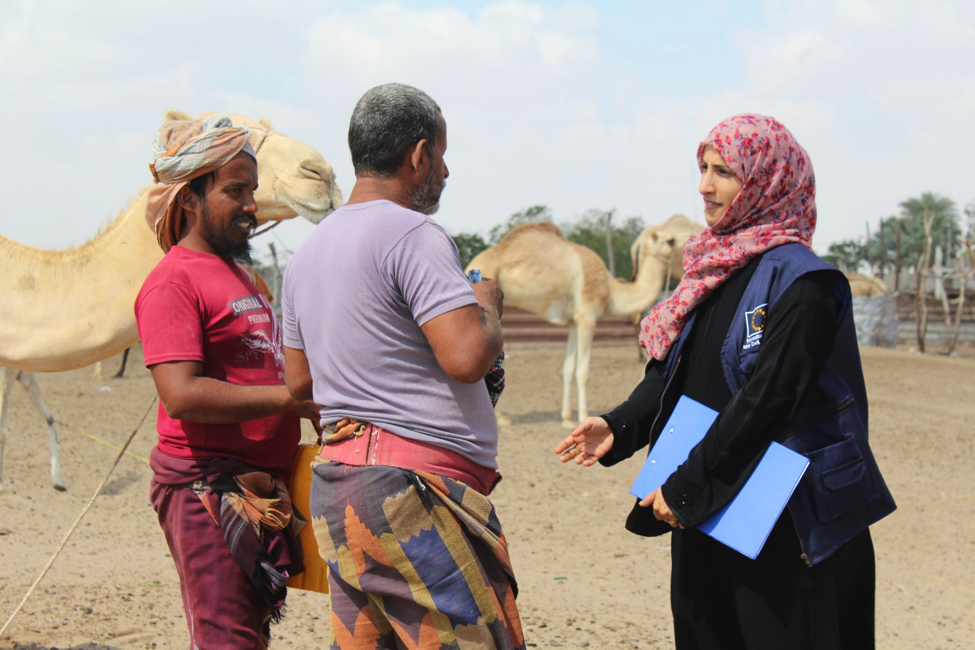
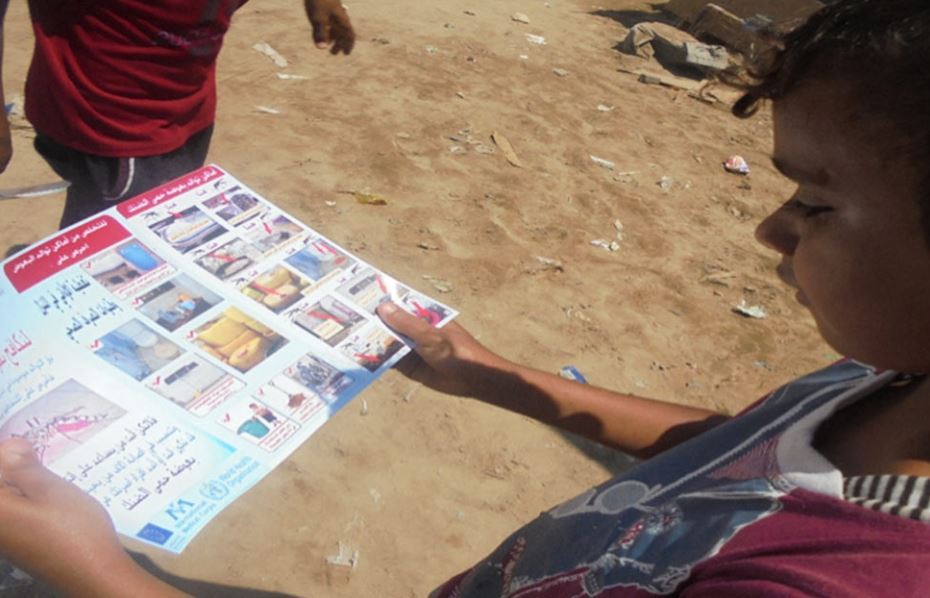
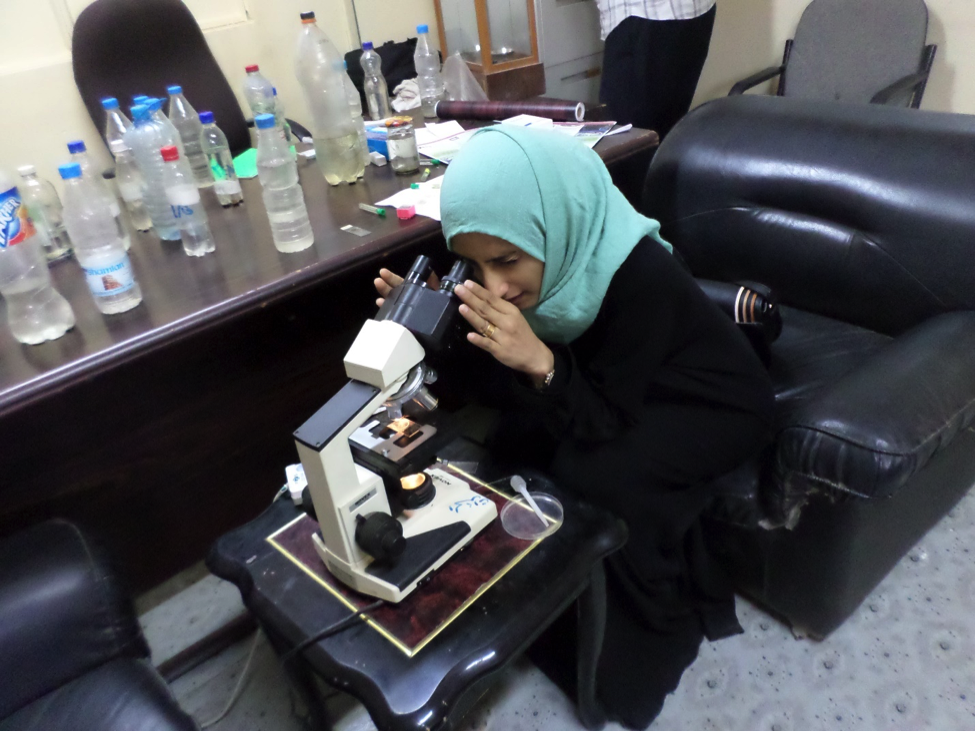
Not only is Touwahi’s water supply limited, but it is also improperly stored. Doa’a explained, “The way it is stored here makes it relatively easy for mosquitos to breed that carry dengue fever.” In her role at International Medical Corps, Doa’a frequently teaches families about the dangers of contaminated or standing water, and she knew that the water supply in her own neighborhood was putting her family’s health at risk.
After more than a year and a half of conflict, Yemen’s civil war has led to the steady deterioration of humanitarian conditions, including a severe lack of water. An estimated 19.4 million people are without clean water and adequate sanitation. Neighborhoods that do have water often rely on open tanks, which can become contaminated or act as breeding grounds for vector-borne diseases. The war has also caused widespread shortages of fuel, which is required to operate water pumps.
In response to persistent needs, International Medical Corps supports seven health facilities and seven hospitals in Yemen by providing water trucks to keep healthcare providers operational in conflict-affected communities. We have coordinated with community leaders in Aden, as well as in Sana’a, Taizz and Ibb, to establish safe water storage tanks in areas with large populations of people internally displaced by the war. Our teams are also conducting hygiene promotion activities and plan to distribute ceramic water filters and hygiene kits, including items such as soap, toothpaste and toilet paper.
“We continue with our work against a backdrop of violence that is never far away,” Doa’a said of her International Medical Corps colleagues. She confided, “I carry the hope that this war will end soon. I would love to plan for our future and the future of our children, but, for now, conditions don’t permit that.”
We would like to thank the GlobalGiving community for helping us provide clean, safe water and hygiene supplies to the people of Yemen.
Project reports on GlobalGiving are posted directly to globalgiving.org by Project Leaders as they are completed, generally every 3-4 months. To protect the integrity of these documents, GlobalGiving does not alter them; therefore you may find some language or formatting issues.
If you donate to this project or have donated to this project, you can receive an email when this project posts a report. You can also subscribe for reports without donating.