By Robert Rutherford | Resource Development Officer
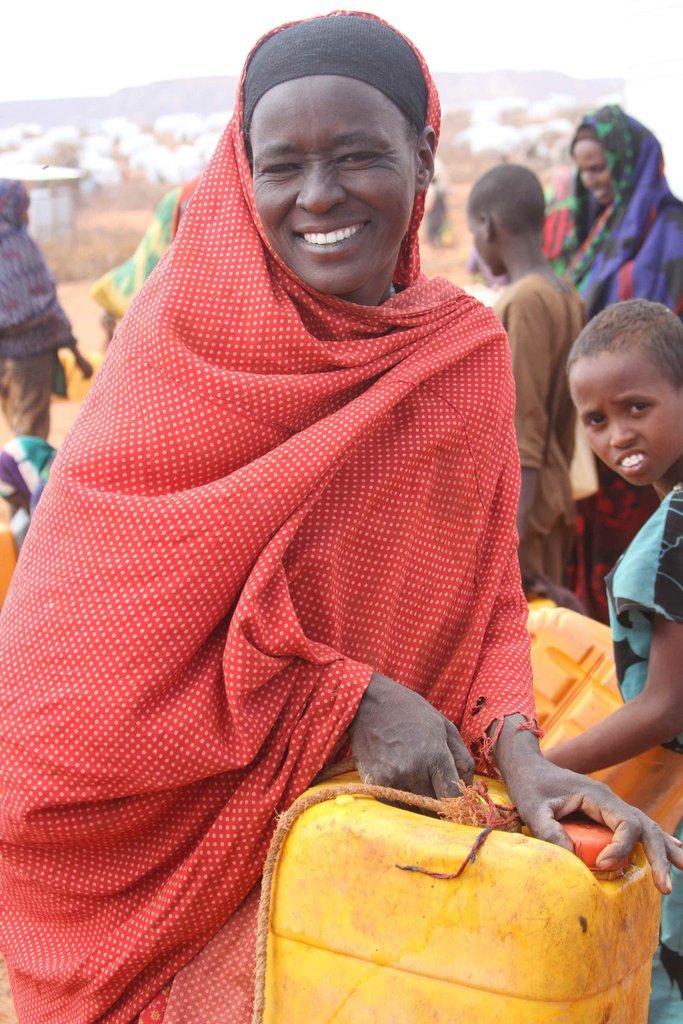
Severe flooding in late May and early June 2014 caused thousands of internally displaced persons (IDPs), living in 57 settlements across the five zones of Kismayo, Somalia, to seek refuge in Dalxis IDP camp, located on higher ground in the Farjano zone of Kismayo. The local Jubbaland authorities have built 65 latrines in the camp, but access to safe water in the form of shallow wells is still mostly lacking. As many as 60% of households are affected, according to International Medical Corps’ assessment in early December 2014. The few existing nearby wells are not always serviceable or adequately protected, and more reliable water sources are often located 1-2 km away, needing an average of 2-3 hours for the return trip by foot.
International Medical Corps has targeted existing shallow wells for rehabilitation in locations that are safe for women and girls to access. Minimum standards for the rehabilitation of shallow wells as set out by the Somalia water, sanitation and hygiene (WASH) cluster , which brings together local and international non-governmental organizations, government departments and UN agencies who are actively involved in the implementation of WASH promotion activities in Somalia, will be closely adhered to. The rehabilitation work will include removal of well debris, repairs of concrete aprons, drainage channels, soakage pits, well linings, and head walls, and shock chlorination of the water.
To serve the maximum number of people, the target wells will either be communal or owned by a group of households. To ensure ongoing oversight for each of these wells, International Medical Corps will establish a community water committee consisting of 8 specially trained men and women. The committees will manage ongoing maintenance, promote sound sanitation and hygiene practices , and engage in community outreach and engagement.
With the generous support of GlobalGiving and other donors, International Medical Corps is able to improve access to safe drinking water with projects such as these for families and communities who have lost their homes because of conflict and natural disasters.
Project reports on GlobalGiving are posted directly to globalgiving.org by Project Leaders as they are completed, generally every 3-4 months. To protect the integrity of these documents, GlobalGiving does not alter them; therefore you may find some language or formatting issues.
If you donate to this project or have donated to this project, you can receive an email when this project posts a report. You can also subscribe for reports without donating.