By Davis Nordeen | Resource Development Assistant
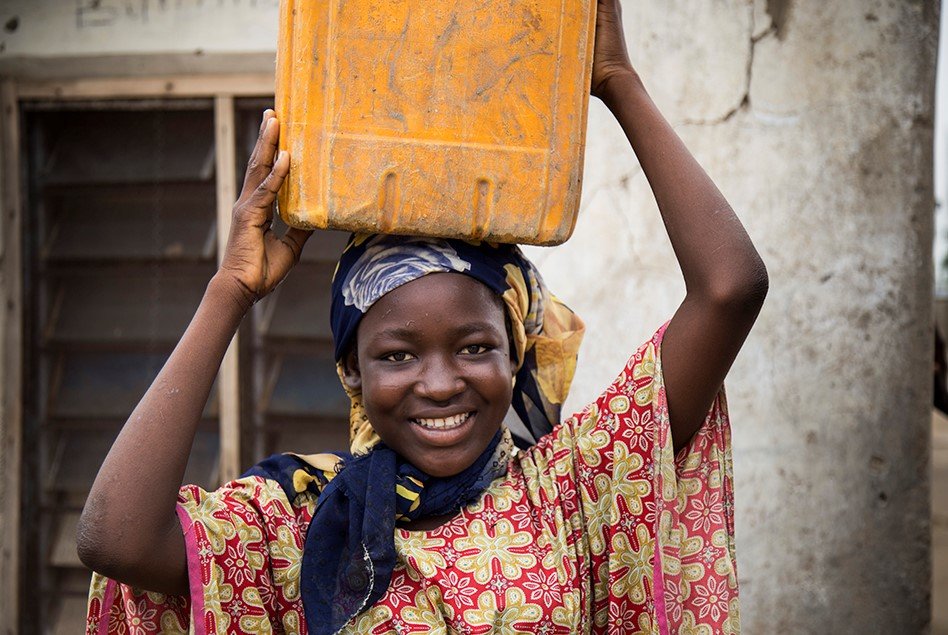
Helen was only 14 years old when she fled her hometown of Baga after Boko Haram attacked her village in 2014. She and her family settled in Wulari, a neighborhood of 11,000 people in the bustling epicenter of northeastern Nigeria’s largest city, Maiduguri.
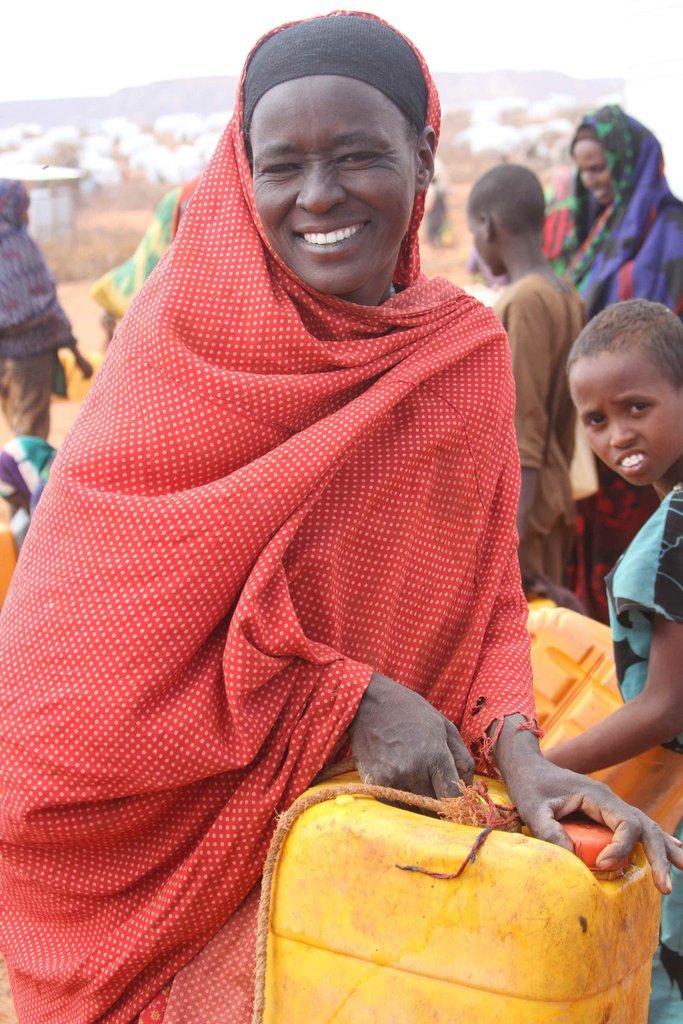
When they first arrived, Helen had to travel to other neighborhoods to fetch water, where she would wait for hours in long lines. To make matters worse, she had no way of knowing if the water was contaminated and on several occasions, it made her sick.
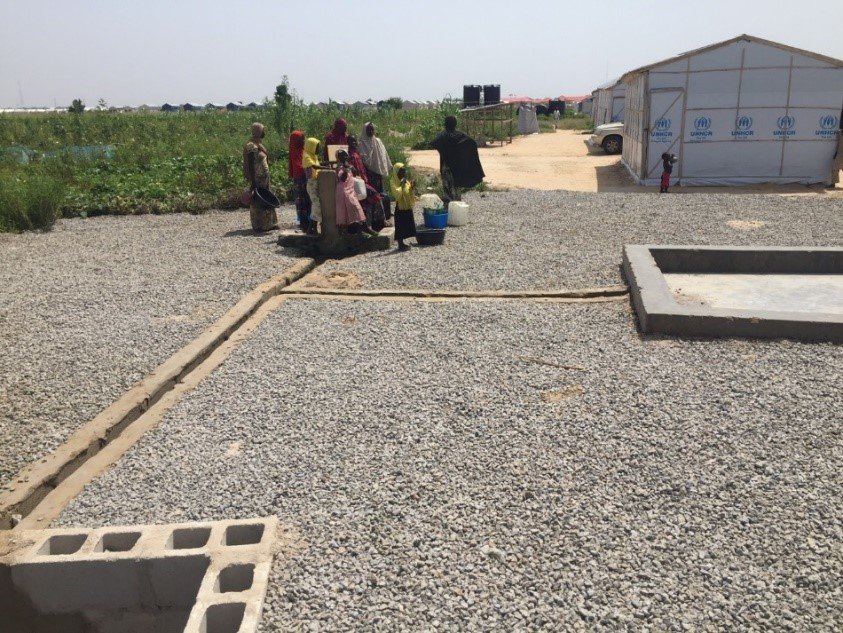
Today, Helen gets her water from a pump beside her home, built by International Medical Corps. Including the one in Waluri, International Medical Corps has constructed a total of 12 boreholes throughout the city this year, each fit with a hand pump and maintained by a trained community volunteer—work which has provided a safe and accessible source of water to some 26,500 people.
“It is now easy to get water,” Helen said. “I am very happy with the water pump that has been provided because it has given me relief. The water is clean. It does not make us sick.”
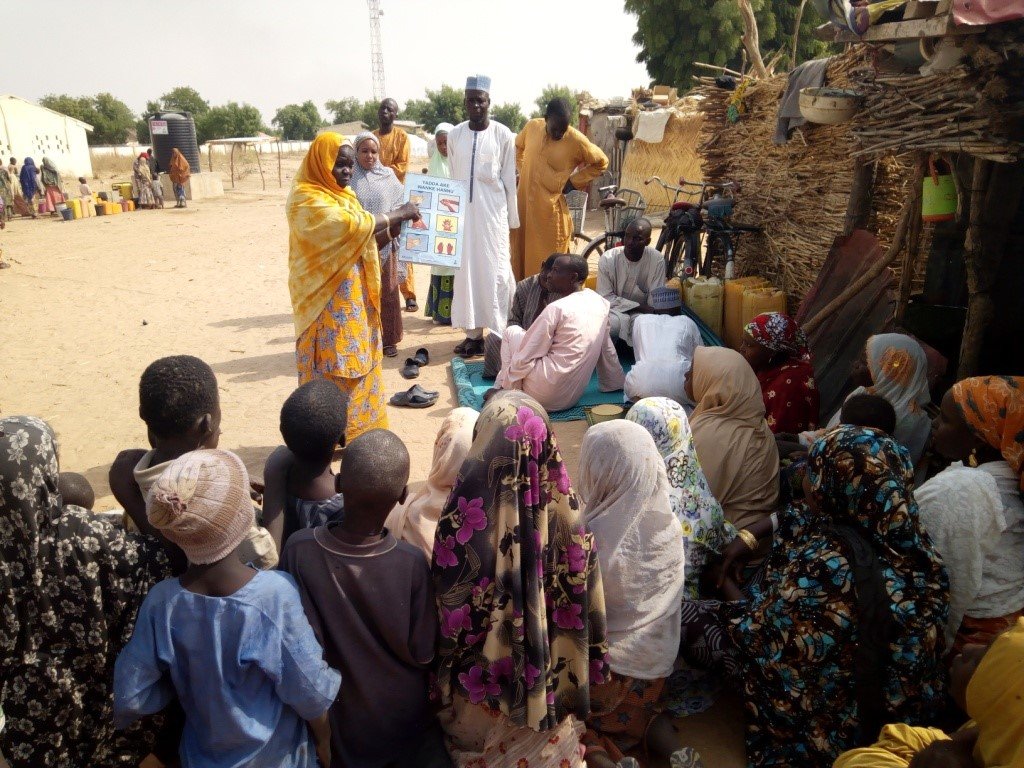
International Medical Corps has been working in Maiduguri since 2015 supporting the health, protection, and water, sanitation, and hygiene (WASH) needs of displaced Nigerians like Helen throughout the city and its surrounding areas. Today we are focused on ensuring that internally displaced persons (IDPs) living in both host communities and IDP camps have access to clean water and adequate sanitation services by rehabilitating infrastructure, monitoring water quality, distributing hygiene supplies, and training community members to spread awareness of proper sanitation and hygiene practices.
In a city like Maiduguri, this is no easy task. The city has been a landing point for Nigerians fleeing violence across the northeastern Borno State—its population has nearly doubled, from one million to two million since the conflict began. Overcrowding has deteriorated already poor living conditions and put a strain many basic services. Only approximately 23% of the IDPs living in host communities in Maiduguri have adequate access to clean water and only and 9% have adequate access to sanitation services. As recent as September 2017, these gaps manifested in an outbreak of cholera in the Muna IDP camp on the western outskirts of the city, leading to 5,365 suspected cases and 61 deaths.
To complement the provision of clean water, International Medical Corps has built or rehabilitated 620 latrines across host communities and IDP camps in Maiduguri since January to limit the spread of waterborne disease. International Medical Corps also upgraded 2,795 meters of existing drainage channels in three communities in Maiduguri to reduce the build-up of stagnant water and incidences of flooding that have led to mosquito breeding and malaria in the past. One of these projects served Helen’s neighbourhood in Waluri.
“We have greatly enjoyed the drainage,” Helen said. “We use it to get rid of waste.”
Moving forward, International Medical Corps hopes to build upon the progress we have made so far and plans to rehabilitate an additional eight boreholes this month to provide additional communities with access to reliable and clean water.
For Helen, her focus is now on pursuing a higher education, despite an uncertain future away from home. Her dream is to one day become a doctor.
We thank the GlobalGiving community for their continued support and dedication to providing vulnerable communities like Helen's with access to clean water.
Project reports on GlobalGiving are posted directly to globalgiving.org by Project Leaders as they are completed, generally every 3-4 months. To protect the integrity of these documents, GlobalGiving does not alter them; therefore you may find some language or formatting issues.
If you donate to this project or have donated to this project, you can receive an email when this project posts a report. You can also subscribe for reports without donating.