By Anne Tattam | Associate Director of Foundation Relations
With backing from GlobalGiving donors, Western Rivers Conservancy is permanently protecting land along outstanding rivers across the western United States. Your gift supports the core costs of purchasing and conserving land for the benefit of fish, wildlife and people. Your contribution is dedicated to such efforts as preserving salmon and wildlife habitat, and creating new hiking trails, boating access and recreational opportunities.
Thanks to your support, Western Rivers Conservancy has:
• Expanded grouse habitat and public access on Washington’s Upper Columbia River
• Conserved the Spring-Fed Jewel of the Golden State, California’s Fall River
Washington’s Upper Columbia River:
Western Rivers Conservancy has successfully conveyed the 2,135-acre Big Bend Ranch to the Washington Department of Fish and Wildlife (WDFW), permanently conserving a beautiful sweep of sagebrush-steppe along the Upper Columbia River. Completed in November 2025, the transfer protects 1.5 miles of Columbia River shoreline, expands the Big Bend Wildlife Area, and increases habitat protections for Columbian sharp-tailed grouse—all in an area that is experiencing increased riverfront development.
Located 14 miles northwest of Grand Coulee, Big Bend Ranch sits along the south shore of Rufus Woods Lake, the 51-mile reach of the Columbia River between Grand Coulee Dam and Chief Joseph Dam. Despite its name and two dams that bookend this reach, the river here still maintains a moving current and supports a number of resident fishes, including kokanee salmon and rainbow trout. Above Chief Joseph Dam, efforts led by the Colville Tribes to restore anadromous fish give this stretch of the Columbia renewed ecological importance, making the protection of intact riparian and upland habitat especially timely.
The ranch lies across the river from the Colville Indian Reservation and is set amid the dramatic landscape of Alameda Flats—a place of rugged basalt cliffs, rolling grassland benches and sweeping views of the Columbia River Basin. Within this arid region, Big Bend Ranch stands out as a mosaic of habitats that support a wide array of wildlife, including one of Washington’s most imperiled birds: the Columbian sharp-tailed grouse. The ranch’s sagebrush steppe is prime grouse habitat, and its seasonal wetlands and wildflower meadows provide much-needed breeding and brood-rearing grounds.
For neotropical migratory songbirds, Big Bend Ranch is a rare oasis of cover, forage and water in an otherwise dry landscape. Mule deer, upland game birds, raptors and small mammals also rely on the ranch’s diverse plant communities. By adding the property to the adjacent Big Bend Wildlife Area, WRC and WDFW have ensured landscape scale habitat connectivity across thousands of acres of public lands.
WRC’s conservation of Big Bend Ranch also opens the door for new recreational access. Under WDFW stewardship, the property will offer opportunities for hunting, fishing, wildlife viewing, horseback riding, hiking and mountain biking—expanded public access along a scenic reach of the Columbia that has historically been dominated by private land, save for the public lands within the state wildlife area.
WRC purchased Big Bend Ranch in early 2024 and then worked with WDFW for nearly two years to secure permanent funding to add the property to the state wildlife area. With the conveyance now complete, a key piece of the river’s natural heritage has been safeguarded for fish, wildlife and people. The project is a meaningful win for conservation in a landscape long shaped by dams—proof that even along the most engineered rivers, we can still protect wild places and restore ecological resilience for generations to come.
California’s Fall River:
At the heart of the Fall River Valley, WRC successfully conserved the 270-acre Pope Jensen Ranch by purchasing and then immediately conveying it to the Pit River Tribe. The effort protects three miles of the Fall River, including excellent habitat for fish, birds and other wildlife, while placing ancestral lands back into the hands of their original stewards. The Tribe can now begin critically needed restoration on nearly 135 acres of freshwater wetlands.
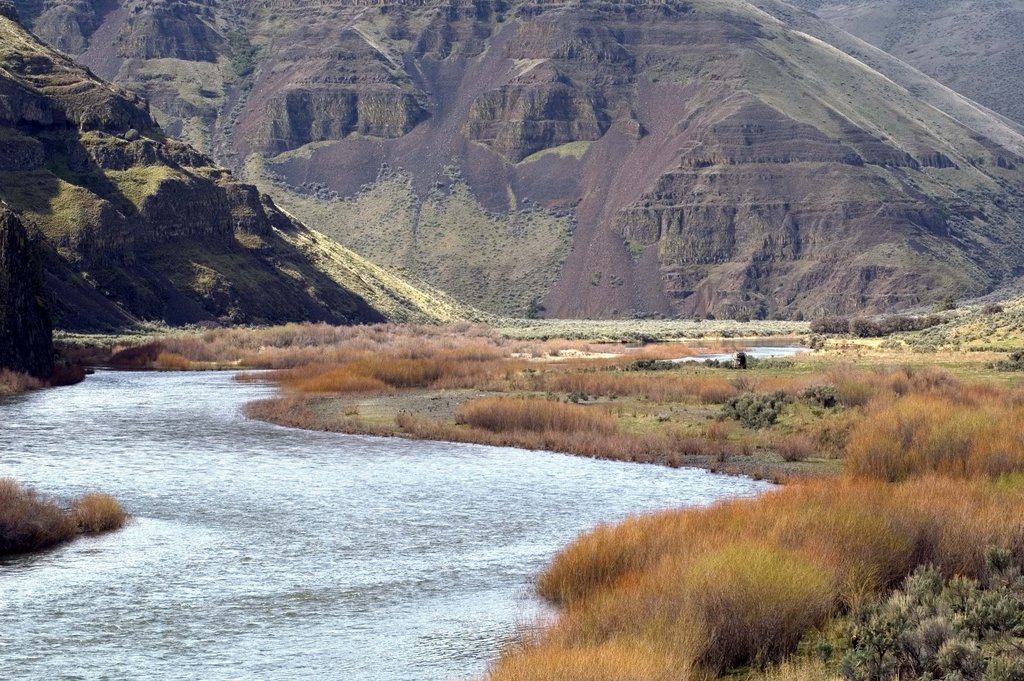
The Fall River—one of the largest spring-fed rivers in the nation—is a geological marvel. The cold water that rises from ancient lava beds to form the Fall is a combination of rain and snowmelt, which, in some cases, has been stored and filtered through underground aquifers for as long as 25 years. This water resurfaces cold, clean and primed to sustain a diverse array of life, including some of the state’s biggest trout.
Given its water quality and flows, the Fall River is uniquely important. In midsummer, when rivers throughout the state grow exceedingly low and warm, and sometimes even lethal for fish, the Fall flows steady and cold, with temperatures rarely rising above the low fifties. As a result, the river sustains one of the most productive and famous rainbow trout fisheries in California, including some of the largest rainbow trout in the Lower 48. The river also supports a variety of other native fish including the bigeye marbled sculpin, a state-listed Species of Moderate Concern.
Beyond trout habitat, the Fall and its tributaries form a mosaic of sloughs, ponds and wetlands that migratory birds rely on. The Fall River Valley is a critical resting point along the Pacific Flyway, one of America’s major north-south flyways for birds like long-billed curlew, willet, Wilson’s phalarope, sandhill crane and many more. With its grasslands and riparian vegetation, the ranch also provides habitat for wildlife like mule deer, beaver and muskrat.
Over half of Pope Jensen Ranch is classified as wetland. The Pit River Tribe plans to restore this crucial habitat using Indigenous Traditional Ecological Knowledge to reintroduce plants and control invasive species. An increased number of native plants will benefit both conservation and tribal resilience, providing for the availability of natural resources used for basket making, medicines and to promote subsistence-based uses. The plants will help stabilize riverbanks and provide shade and habitat for fish and wildlife.
This effort is not only a win for fish and wildlife, but a win for tribes who have inhabited this area since time immemorial. The result will be a healthier river system, restored cultural practices and protected habitat for the species that depend on the Fall River’s cold, clear waters.
Conclusion
The Columbia and Fall river projects are just some of our recent projects. WRC currently has nearly 30 active projects in seven states. With the support of GlobalGiving donors, Western Rivers Conservancy is expanding our efforts to protect riverlands for fish, wildlife and people.
We love to hear from our supporters. Please contact Anne Tattam at 503-241-0151, ext. 219 (or atattam@westernrivers.org) for further information. Thank you.
Project reports on GlobalGiving are posted directly to globalgiving.org by Project Leaders as they are completed, generally every 3-4 months. To protect the integrity of these documents, GlobalGiving does not alter them; therefore you may find some language or formatting issues.
If you donate to this project or have donated to this project, you can receive an email when this project posts a report. You can also subscribe for reports without donating.



Support this important cause by creating a personalized fundraising page.
Start a Fundraiser