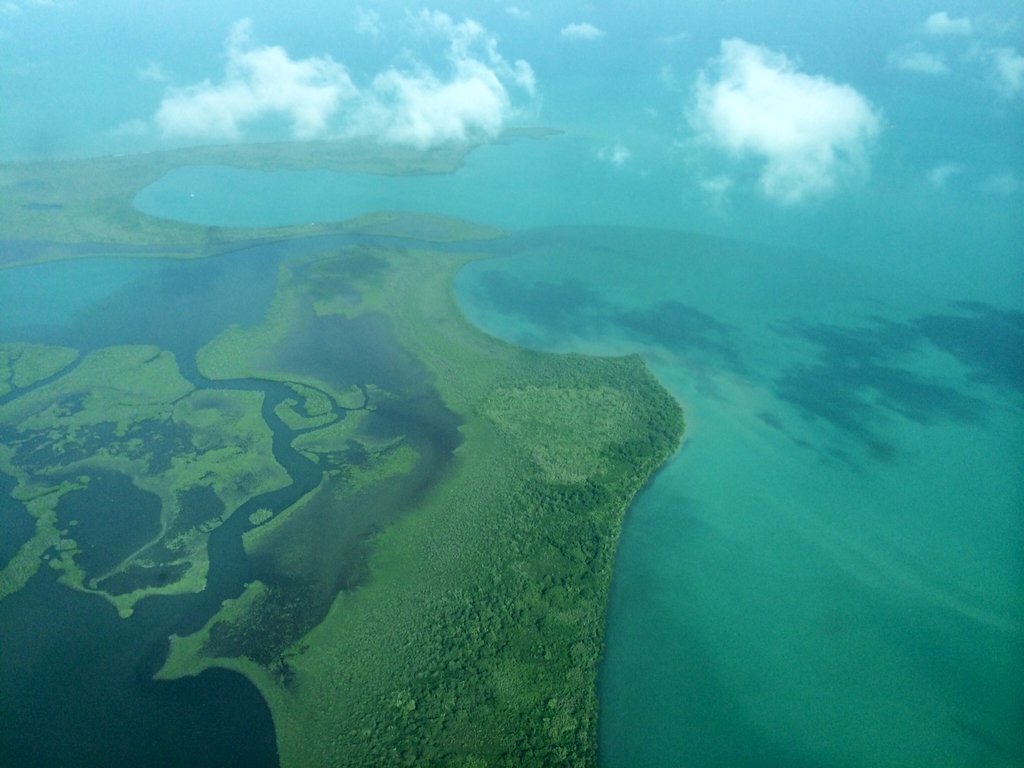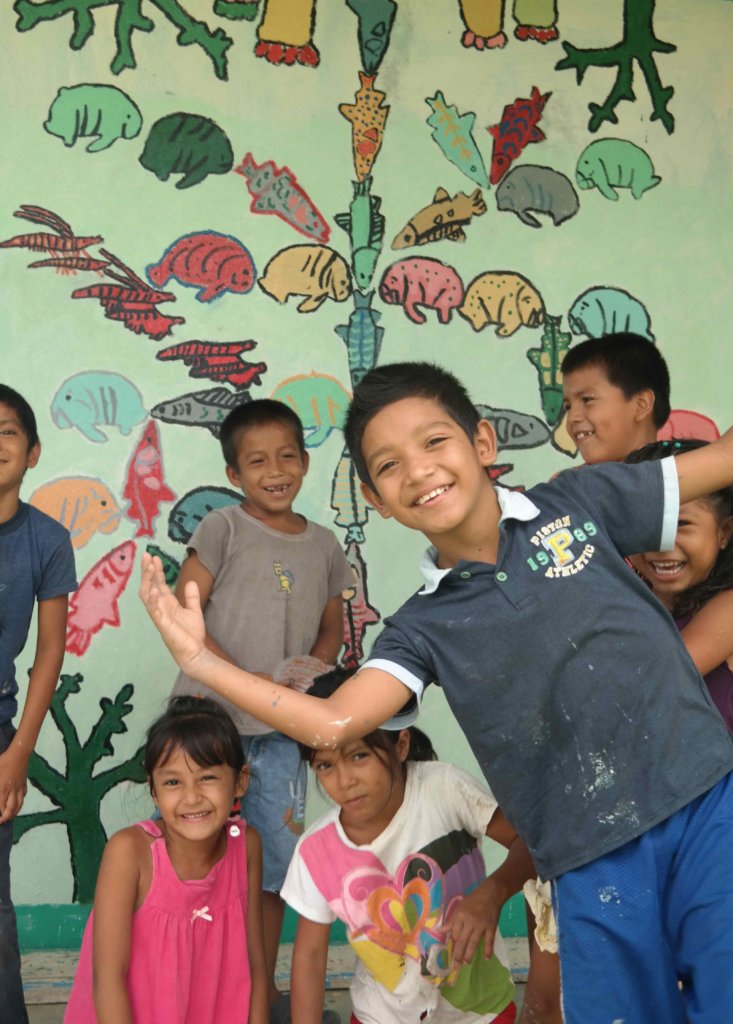
Marine and coastal ecosystems in Belize and Guatemala support some of the greatest biodiversity on Earth. They also ensure livelihoods to local communities that rely on fishing, forestry, and tourism. However, these ecosystems are threatened by climate change and human behaviors. We train conservation leaders and educators to use arts-based tools to more effectively lead initiatives, encourage sustainable behaviors and engage communities in overcoming these challenges.
The Gulf of Honduras is home to over 450 species of mammals, reptiles, amphibians and birds. Thousands more live in water. Many are vulnerable and endangered, and local conservation leaders struggle to educate and enforce sustainable behaviors among the approximately 12.4 million residents of the Gulf of Honduras watershed. Without buy-in from local people to manage resources and protect their natural heritage, we all risk losing the flora, fauna and the place they call home forever.
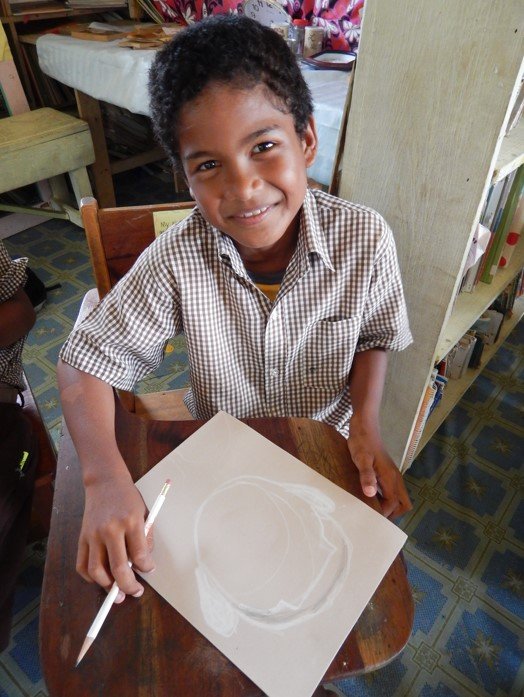
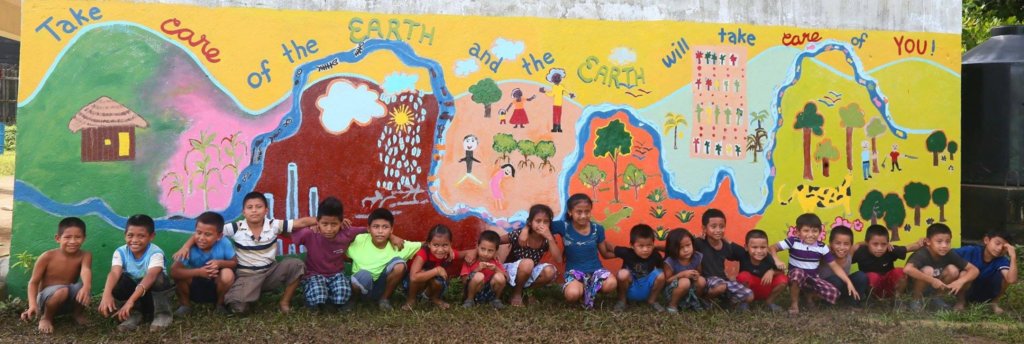
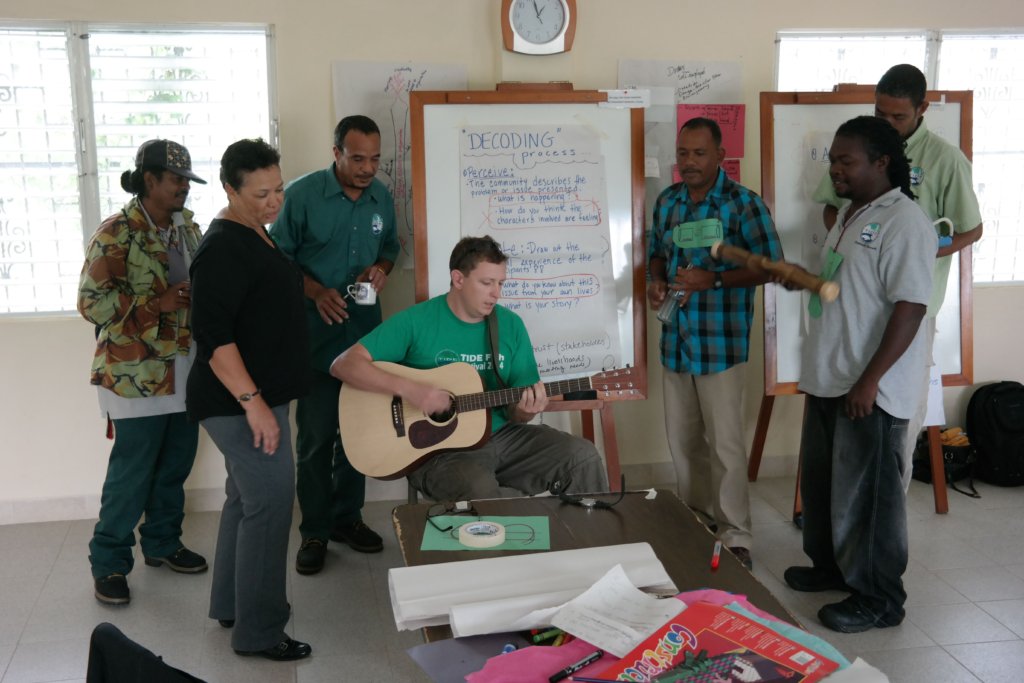
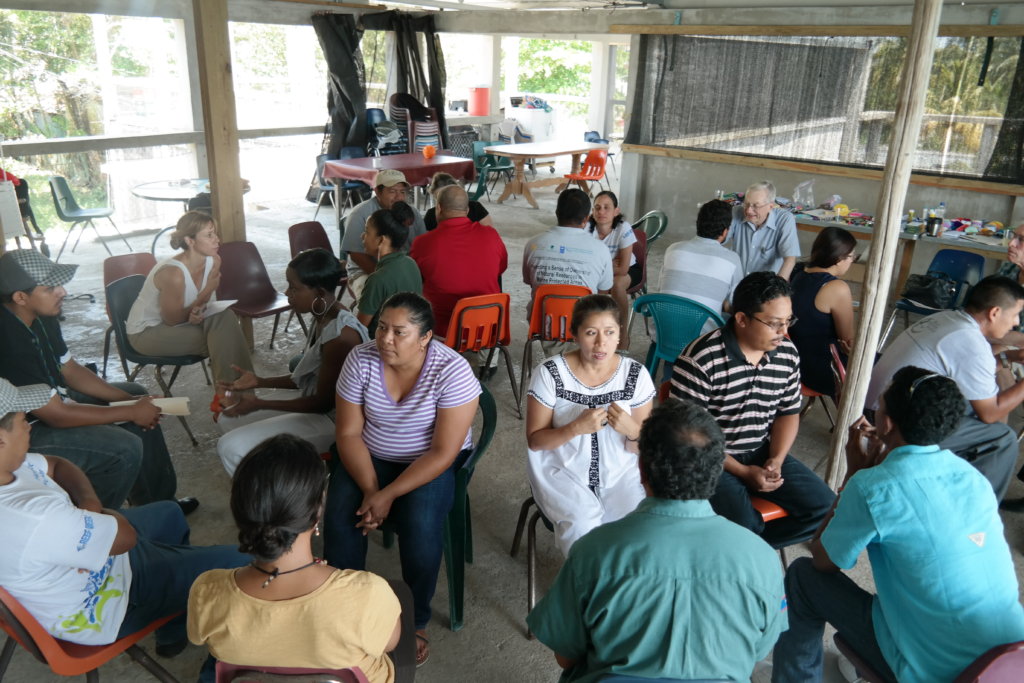
We build the capacity of community leaders and educators to facilitate dialogue with local residents and design inclusive processes for identifying solutions. Arts-based tools and creative strategies create a powerful platform for collaboration around contentious issues and inspiration for action. With these resources, organizations and local residents can more effectively make their voices heard and take action to better protect the environment and sustain local livelihoods.
Over a two year period, we are partnering with select conservation organizations (TIDE, SEA, SACD, FUNDAECO, Ya'axche and SATIIM) to design and implement creative community education and outreach projects to support the preservation of the incredible Gulf of Honduras ecosystem. This project will serve to produce a free, open-sourced conservation curriculum, incorporating key arts-based tactics for environmental outreach and education, with the goal of wider replication.