By Asha Shridhar | Executive Director
Enabling Education, Independence and Equal Opportunity for Persons with Visual Impairment
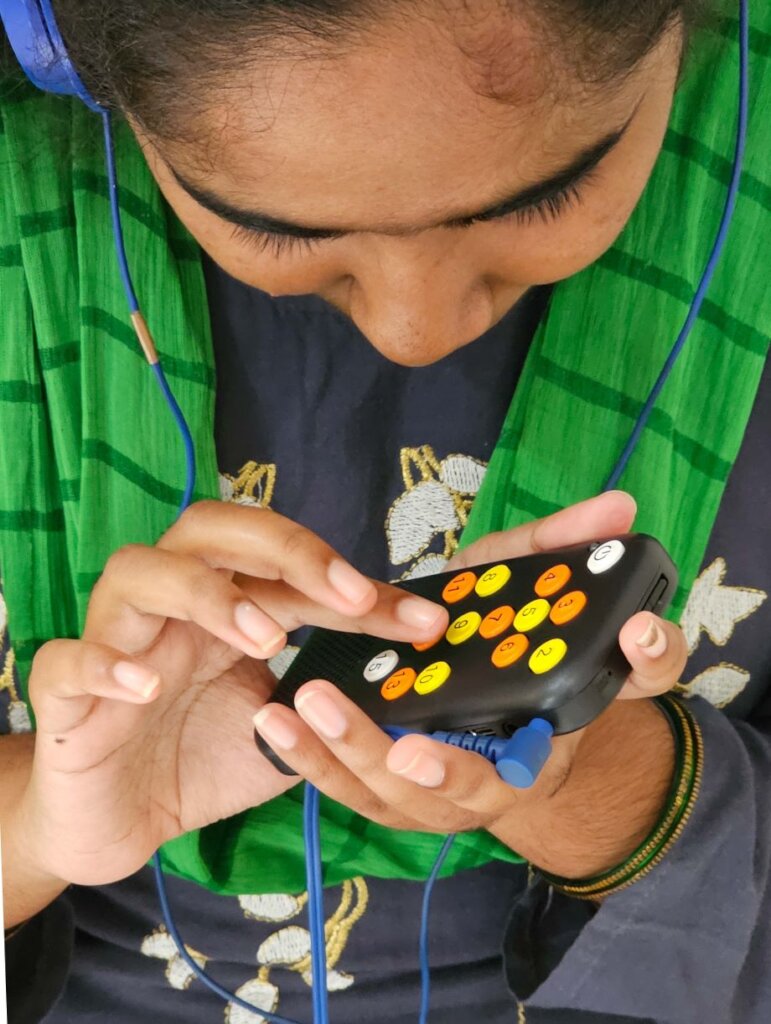
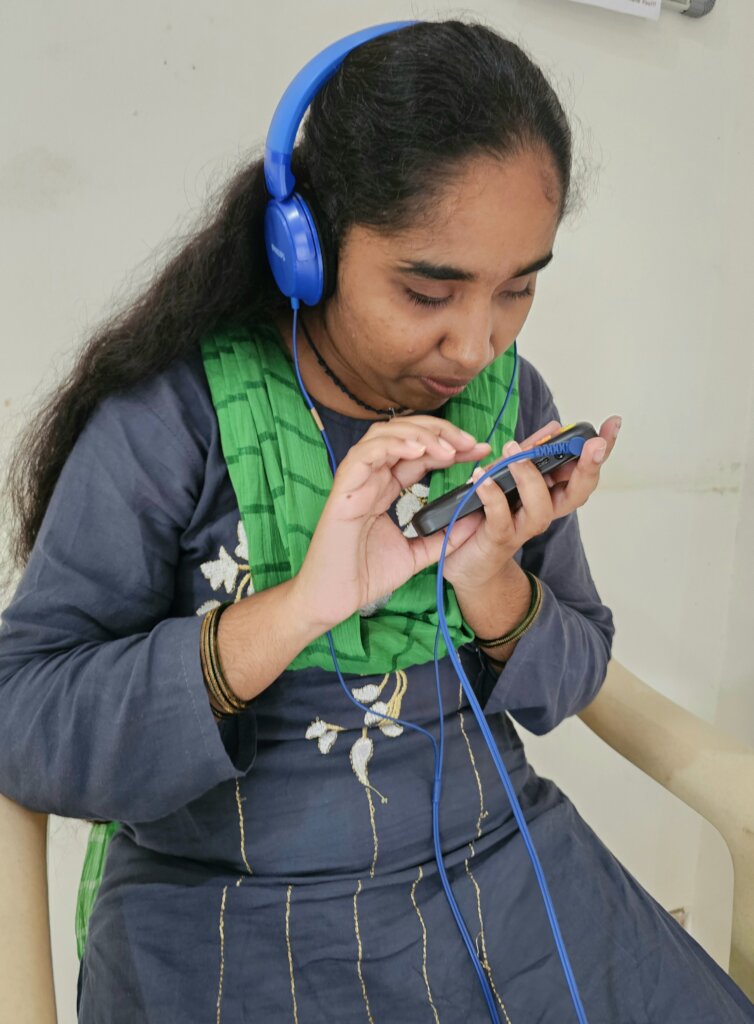
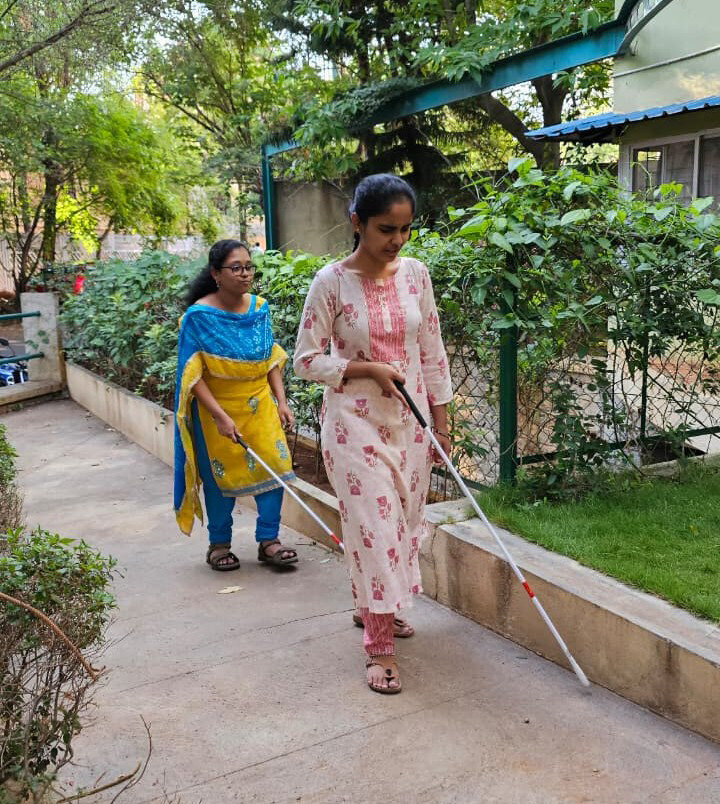
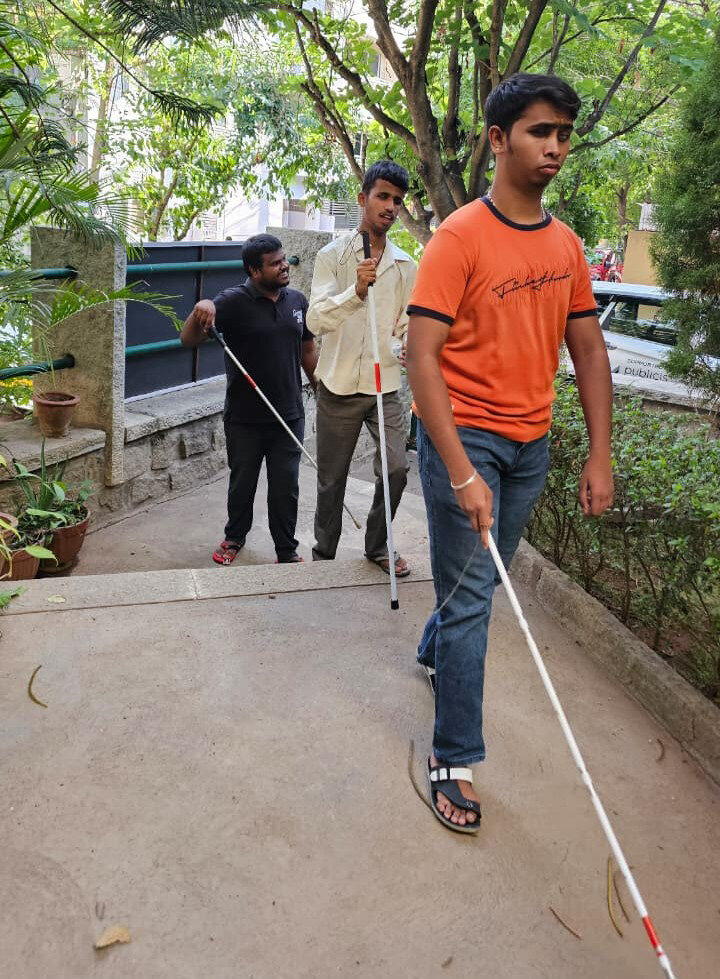
Introduction - For a visually impaired student, access to the right assistive technology can be the difference between depending on others and becoming independent.
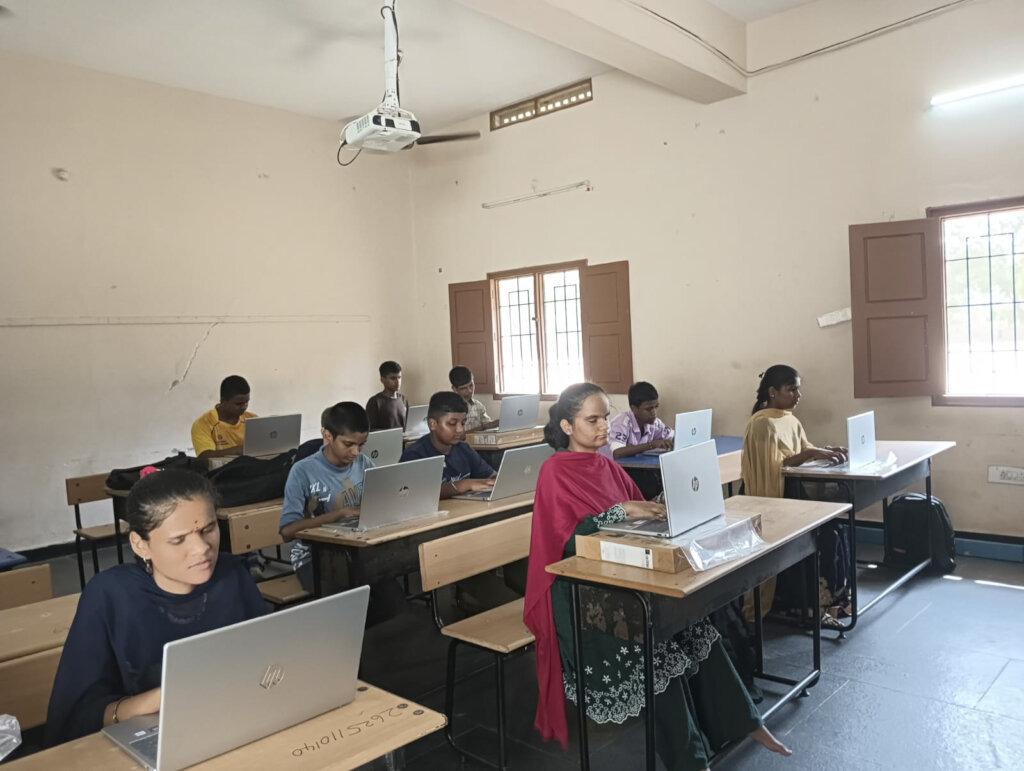
A laptop equipped with appropriate accessibility features is not simply a device for a student with visual impairment. It is a gateway to education, information, communication, examinations and future employment. It enables students to access digital learning resources independently, complete assignments, communicate with teachers and peers, and, most importantly, write their examinations independently without having to depend on a suitable scribe.
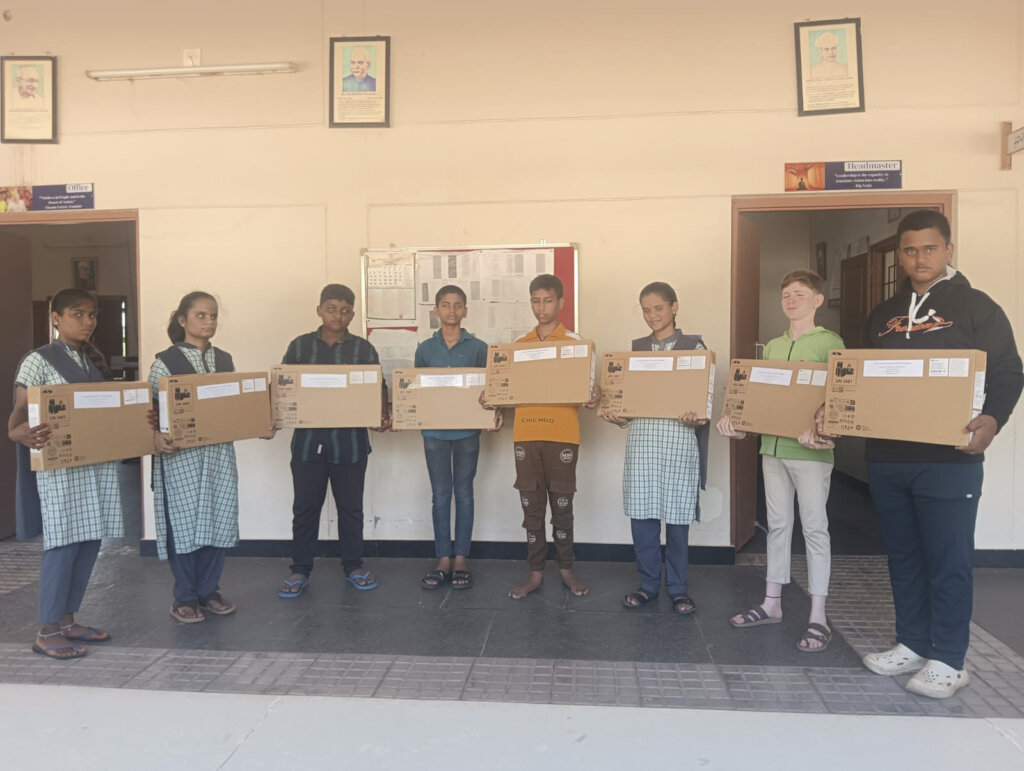
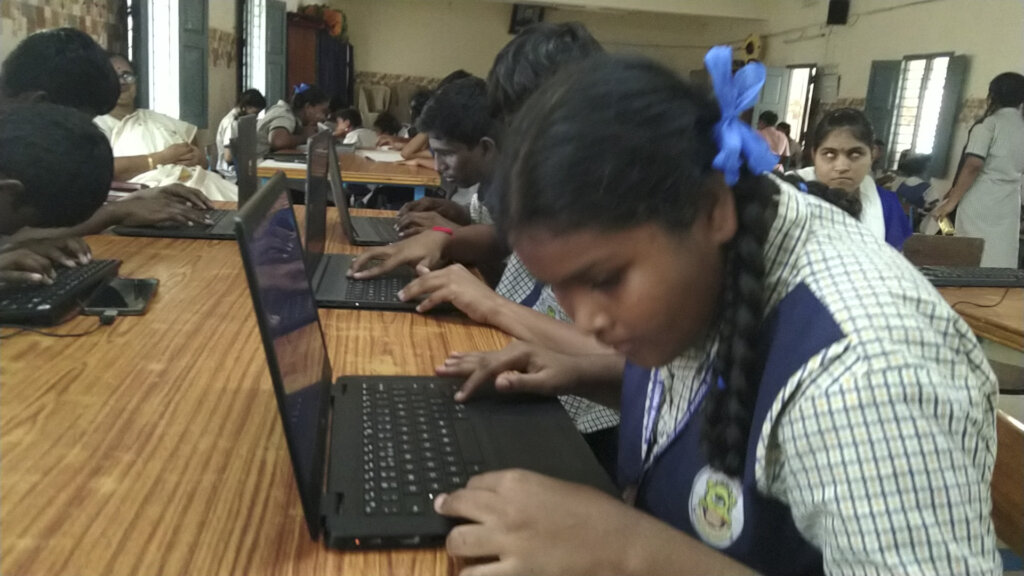
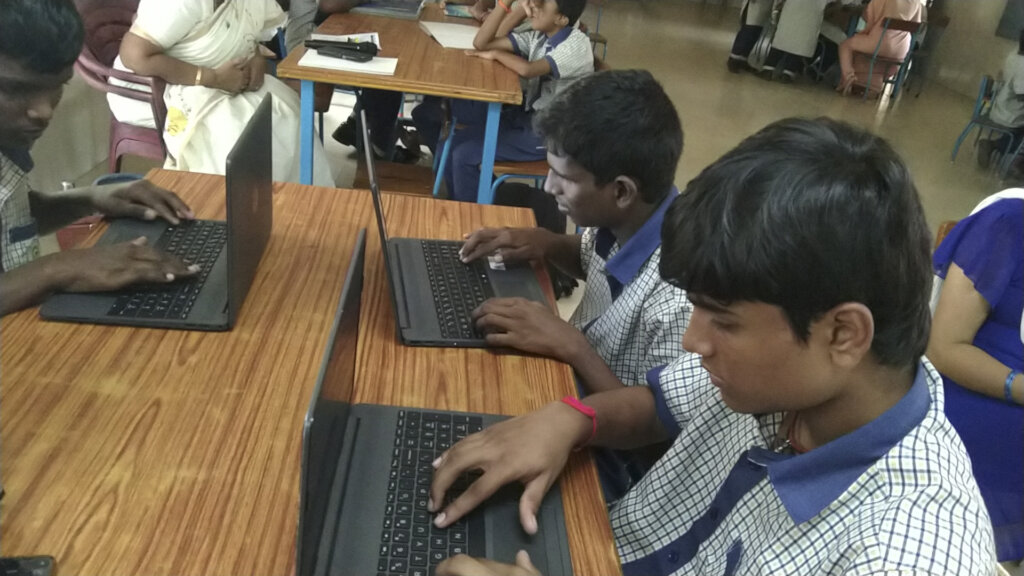
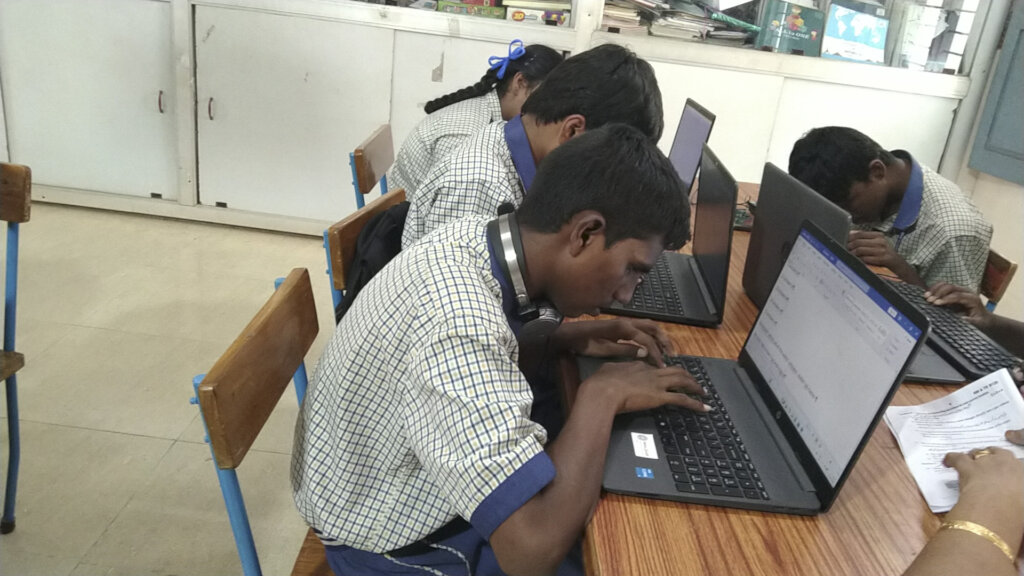
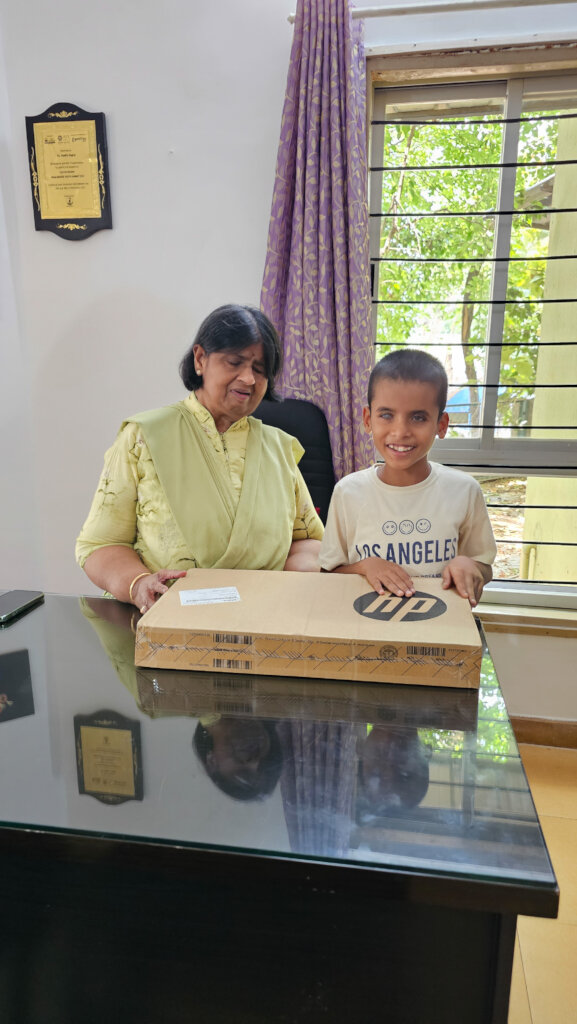
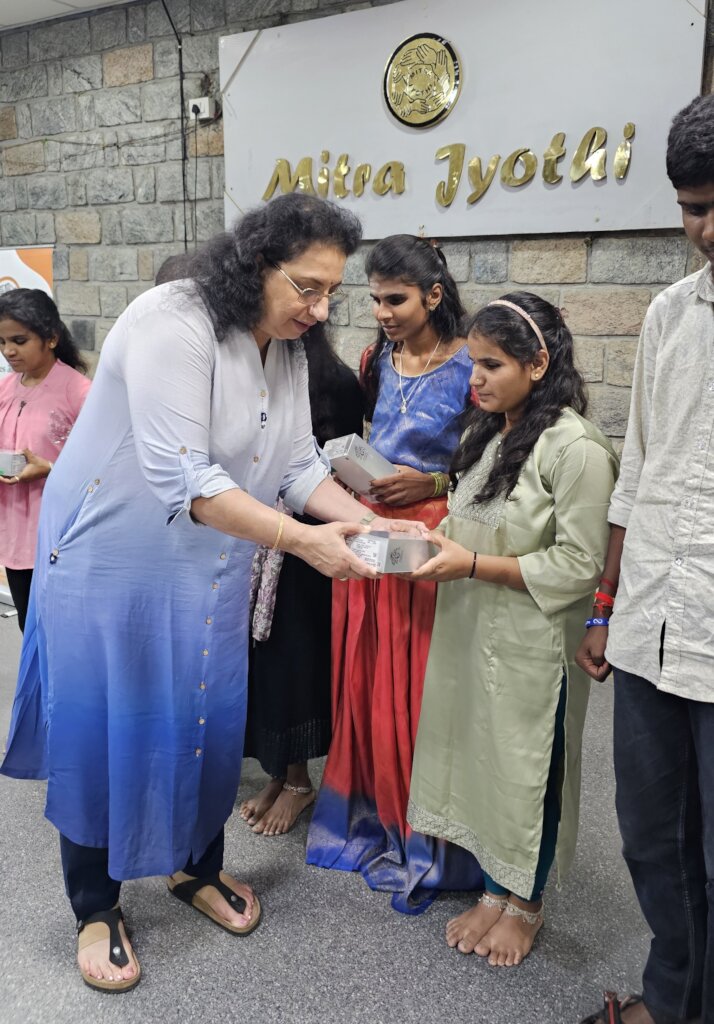
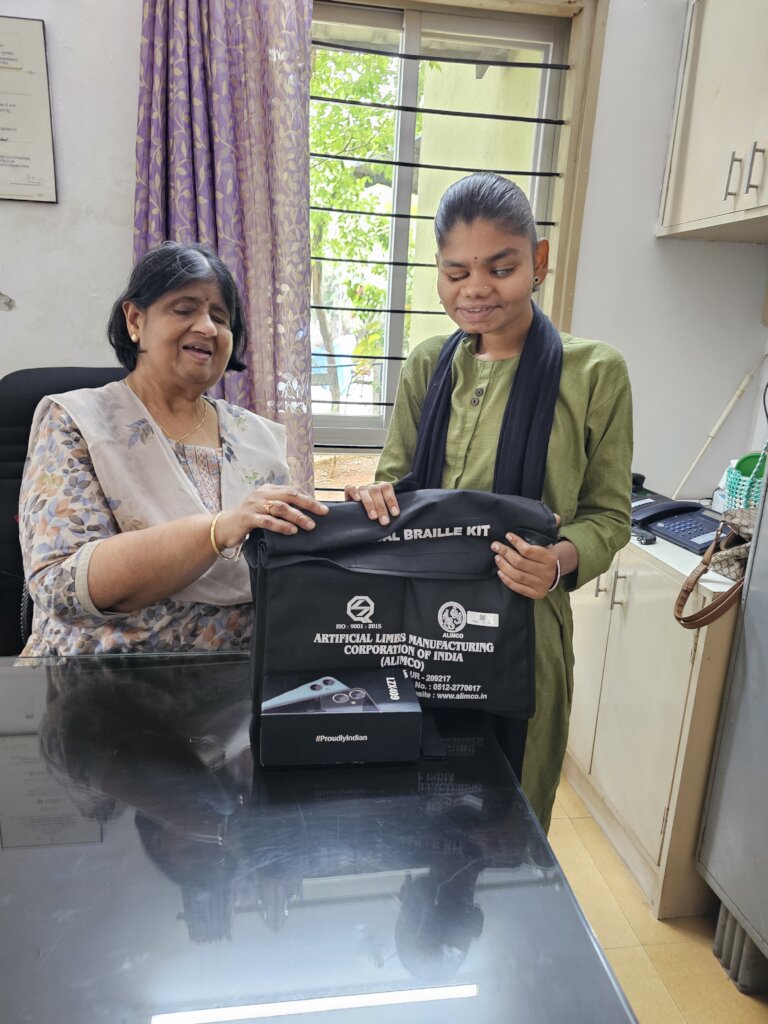
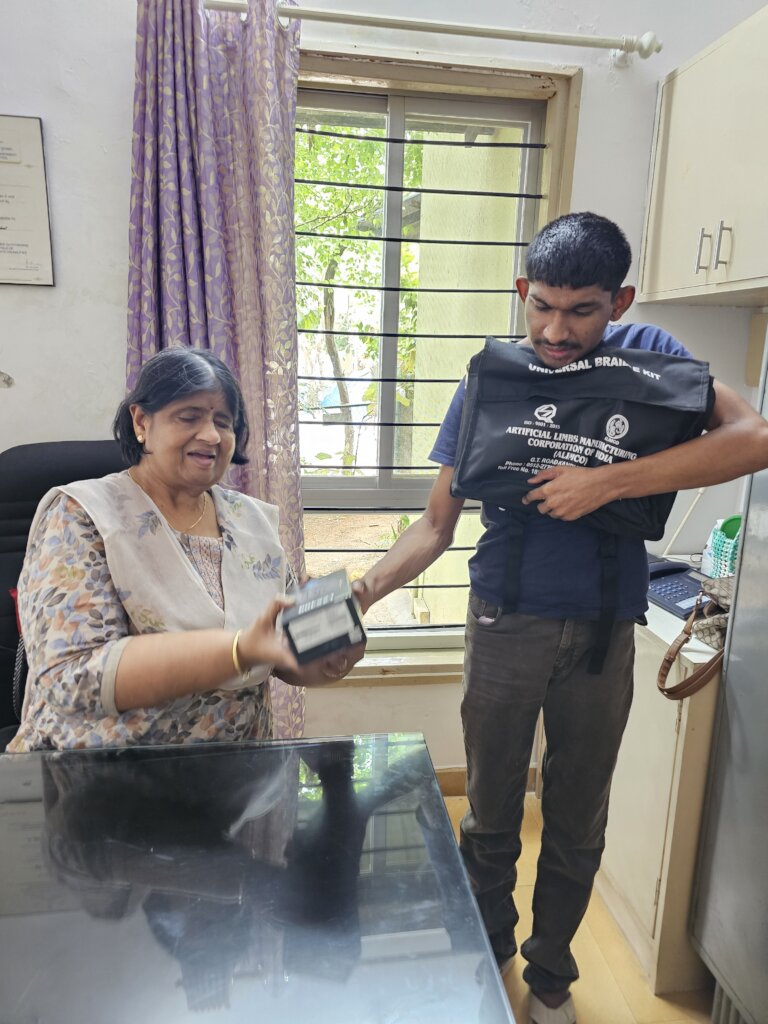
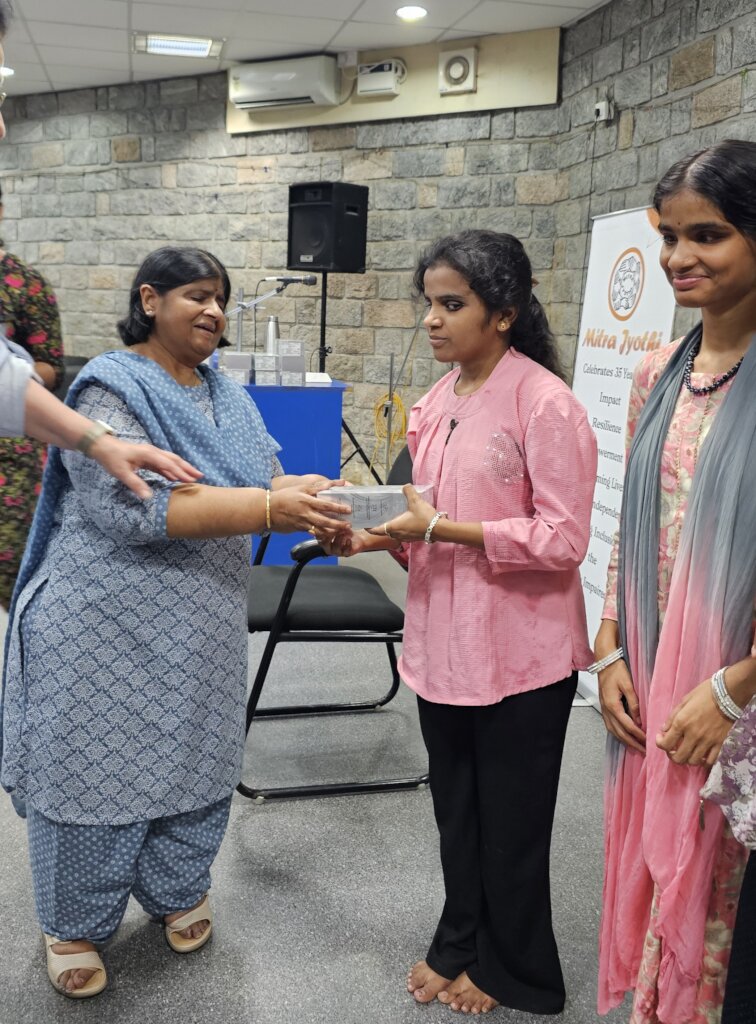
Recognising the critical role of technology in enabling educational inclusion, Mitra Jyothi procured 85 laptops from Elektrobit India Pvt. Ltd. These laptops are being provided to deserving and financially needy visually impaired students pursuing higher education and an attempt to introduce Digital Literacy at primary school level.
The initiative addresses one of the most significant barriers faced by visually impaired students: limited access to appropriate assistive technology and the resulting dependence on others for their academic needs.
Project Saksharta – Building Digital Literacy from School
Recognising that access to technology needs to begin much earlier than higher education, Mitra Jyothi has partnered with Project Saksharta, a transformative collaborative initiative spearheaded by Benetech and the Torchit Foundation (TF). Project Saksharta aims to address the deep-seated digital divide and educational gaps experienced by blind and visually impaired students across India.
The objective is not merely to provide a device, but to ensure that visually impaired students develop the skills and confidence to use technology effectively for learning and, eventually, financial independence.
Special Schools
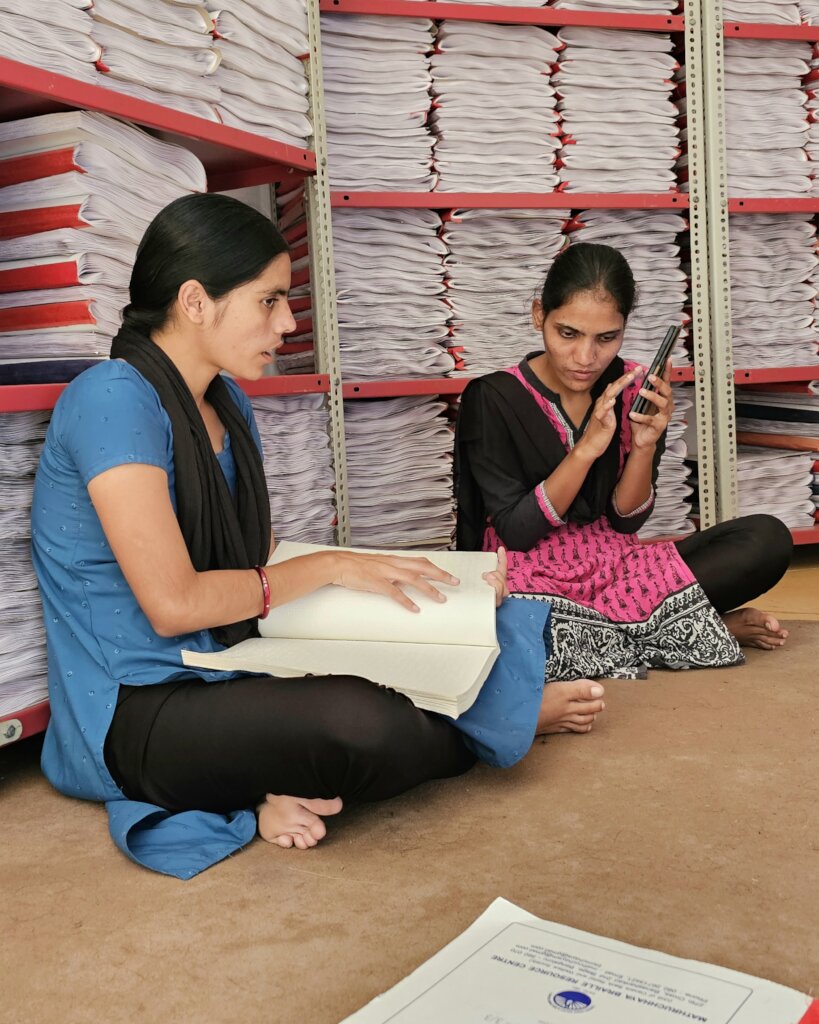
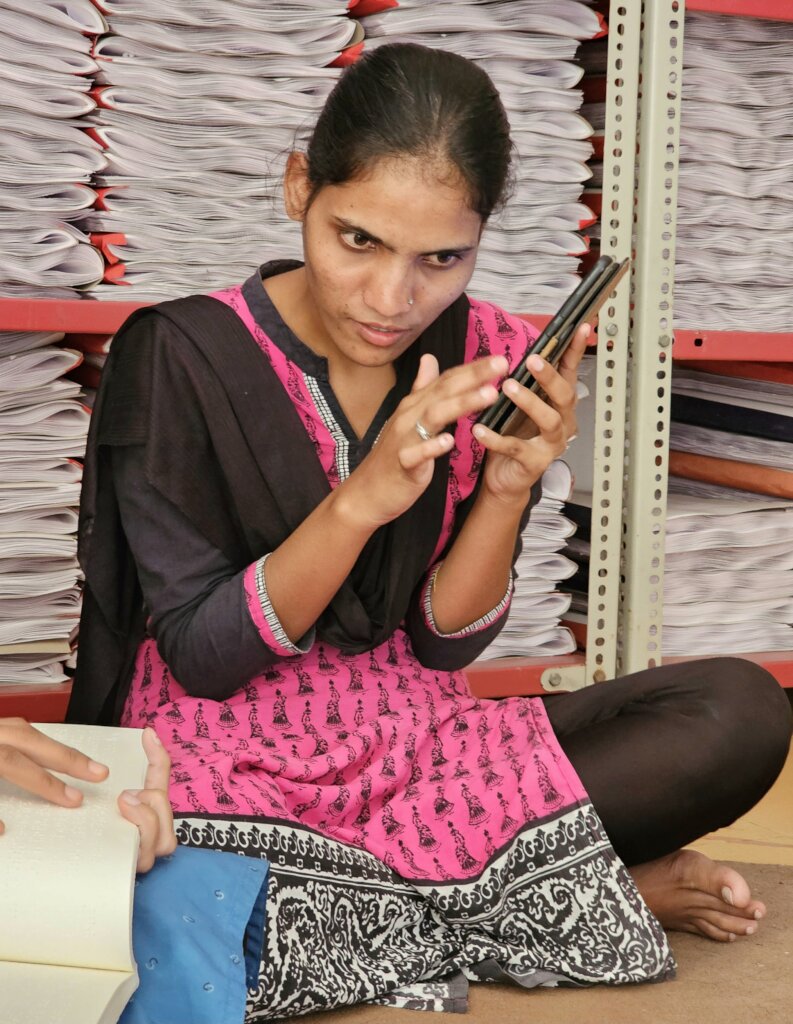
Special schools have expertise in supporting children with visual impairment, but they often continue to face limitations arising from outdated learning resources.
Mainstream and Inclusive Schools
For visually impaired children studying in mainstream schools, the barriers can be even more complex.
Teachers may not have training in Braille or in working with students who use assistive technology. As a result, a visually impaired student may not always be able to participate in classroom learning at the same pace as their sighted peers.
The Long-Term Impact of the Digital Divide
The lack of accessible educational resources has consequences far beyond the classroom.
Limited access to education → Limited digital and technical skills → Fewer higher education and employment opportunities → Underemployment or unemployment → Greater economic dependence
Breaking this cycle requires intervention at the earliest possible stage.
Digital literacy is therefore not merely an educational skill. It is an important pathway towards economic independence and social participation.
A Pathway to Transformation
Project Saksharta seeks to change this trajectory by introducing digital and multimodal literacy at the school level.
Instead of waiting until a student reaches higher education and then providing technology, the project aims to familiarise visually impaired students with digital tools much earlier.
This creates a developmental pathway in which students can progressively build:
Access → Digital Literacy → Educational Participation → Skill Development → Higher Education → Employment → Independence
The emphasis is on creating an ecosystem where technology becomes a natural and integral part of the student's education.
Progress and Reach
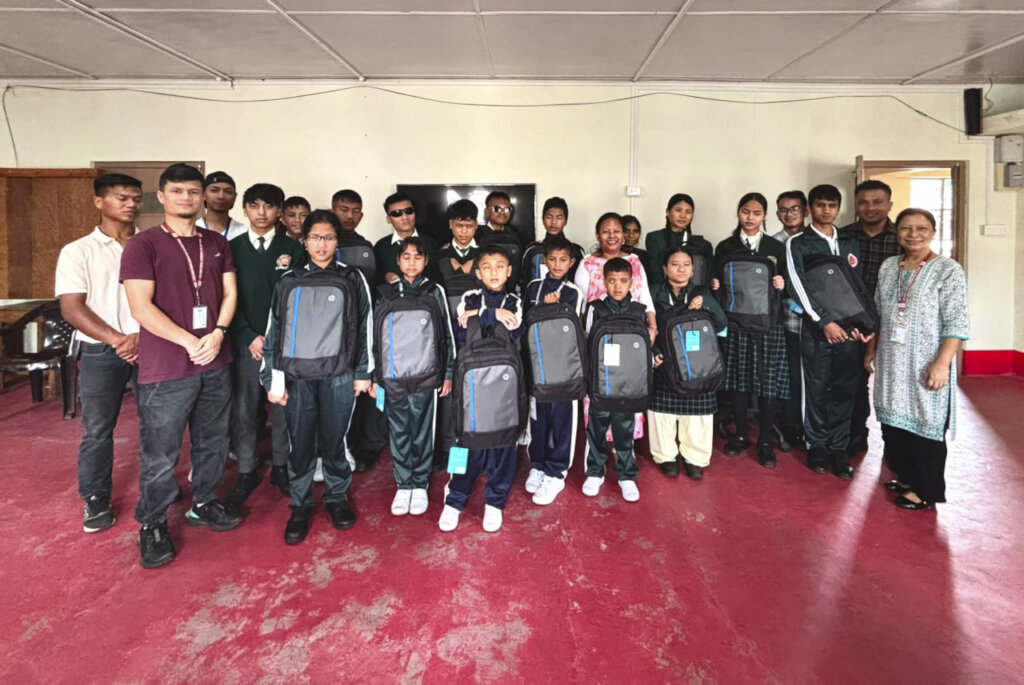
Through Project Saksharta, Mitra Jyothi has so far been able to support 5 schools and distribute 55 laptops.
The initiative has reached schools across different geographical regions, including:
The geographical spread is particularly important because access to assistive technology and digital learning opportunities can be significantly more limited outside major urban centres.
By taking technology and training to schools in different parts of the country, the initiative is helping ensure that geography does not determine a visually impaired child's access to digital education.
Looking Ahead
Mitra Jyothi believes that accessibility must begin early and must be sustained throughout the educational journey. Our work therefore seeks to address both ends of the spectrum:
At the school level:
Building digital literacy, providing assistive technology and creating greater access to digital learning through Project Saksharta.
At the higher education level:
Providing laptops to deserving visually impaired students so they can pursue their studies with greater independence and participate in examinations without the challenges associated with finding a suitable scribe.
Together, these interventions help create a continuum of support — from the first exposure to digital technology in school to independent learning and examination in higher education.
Technology as a Pathway to Inclusion
The procurement and distribution of assistive devices is an investment in much more than technology. It is an investment in a young person's education, confidence, independence and future.
Every laptop placed in the hands of a visually impaired student represents an opportunity to remove a barrier.
It means a student can access a book without waiting for someone to read it.
It means an assignment can be completed independently.
It means information can be accessed at the same time as peers.
It means a student can prepare for the future with greater confidence.
And for many higher education students, it means they can finally write their own examinations.
Through Mitra Jyothi's continued commitment to inclusive education, we are working towards a future where visual impairment does not have to mean dependence.
Our goal is simple: to ensure that every visually impaired student has the tools, skills and opportunity to learn independently, pursue their aspirations and build a life of dignity and economic independence.
From assistive devices to accessible education — from access to opportunity — this is inclusion in action.
Links:
By Asha Shridhar | Executive Director
By Asha Shridhar | Executive Director
Project reports on GlobalGiving are posted directly to globalgiving.org by Project Leaders as they are completed, generally every 3-4 months. To protect the integrity of these documents, GlobalGiving does not alter them; therefore you may find some language or formatting issues.
If you donate to this project or have donated to this project, you can receive an email when this project posts a report. You can also subscribe for reports without donating.



Support this important cause by creating a personalized fundraising page.
Start a Fundraiser