By BRAC | Communications
Early childhood is a critical time of life. 90% of a child’s brain develops by the age of five—but only when they grow up in safe, nurturing, and stimulating environments.
Without quality childcare, young children face delays in cognitive, social, and emotional development. In the long-term it creates difficulties in learning, managing emotions, and building healthy relationships.
Across East Africa, childcare remains out of reach for most families. Fewer than 1 in 10 children in Uganda aged 3–5 are enrolled in registered pre-primary schools. In Tanzania, 80% of children miss out from early learning. Formal childcare services are often too expensive, while informal options are inconsistent and sometimes unsafe. In low-income countries, childcare needs are widely regarded as a barrier to women’s employment.
A new solution: childcare as a microenterprise
BRAC is piloting a community-driven childcare model in Tanzania and Uganda, using a play-based approach. These childcare microenterprises are run by young women from the community.
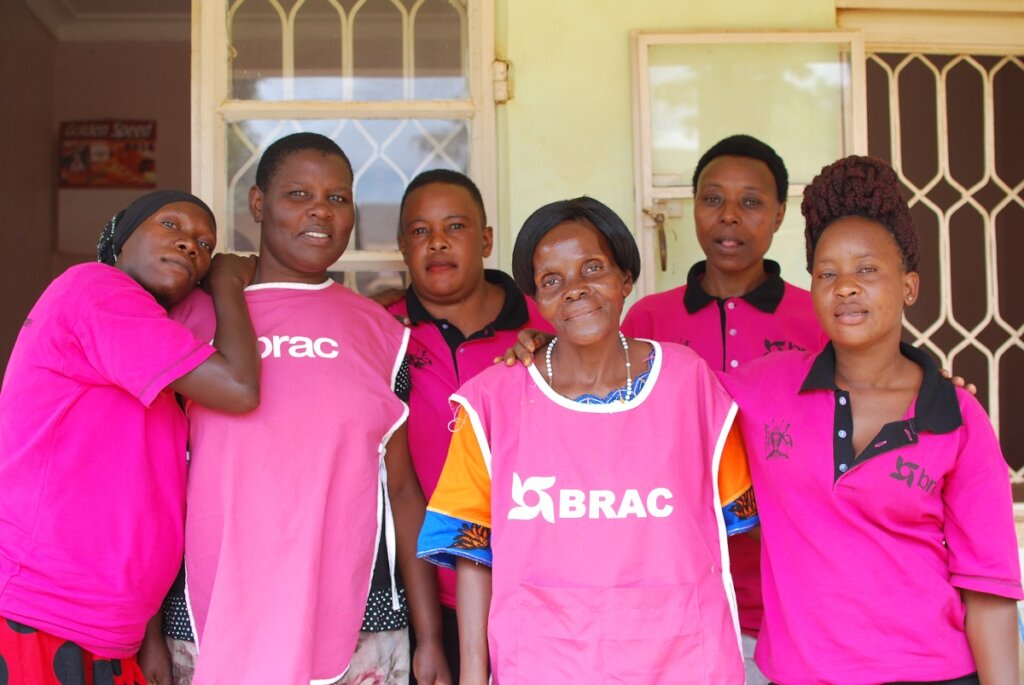
Childcare as a livelihood is being piloted in selected communities, with over 100 young women from BRAC’s youth clubs in the two countries.
These youth clubs are part of an ambitious program, with the bold commitment to equip 1.2 million adolescent girls and young women, with age-appropriate entrepreneurship and life-skills training.
Every week, young women gather in these clubs to learn tools to start and scale their own businesses. The childcare microenterprise was introduced as one of the livelihood pathways, serving a two-fold purpose: to create dignified livelihoods for young women while introducing affordable childcare to families.
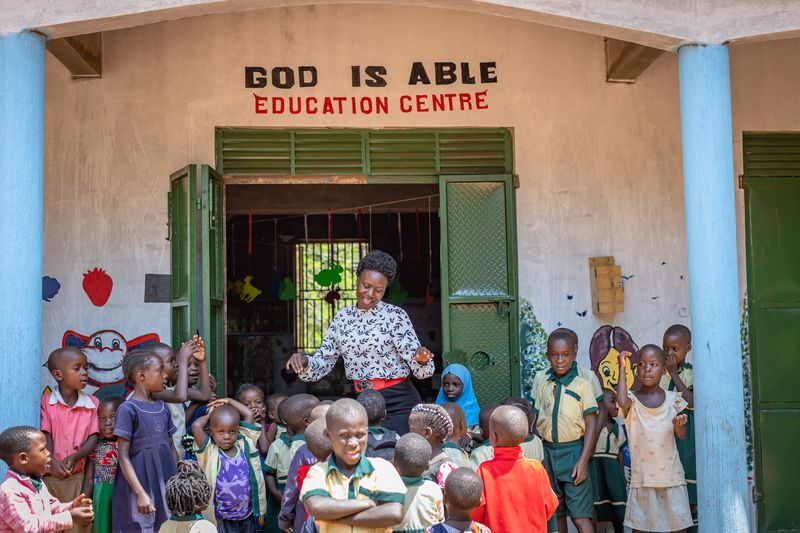
A childcare center in Uganda run by a trained play leader who graduated from a BRAC youth club. Photo: Twal Photography
How it works
Young women who select childcare as their preferred livelihood are trained as childcare microentrepreneurs, and undergo pedagogical training based on the Play Lab model, followed by business management training.
The aspiring entrepreneurs are then supported with setting up the childcare center with appropriate learning materials along with one year of rent for the space, paid directly to the landlord. The journey begins with BRAC staff providing close mentorship on managing the centers.
Currently more than 100 childcare microentrepreneurs are running their own centers, providing quality, low-cost, and affordable childcare. In Tanzania, where about 8 in every 10 girls and women aged 15 and above are either working or actively looking for work, this poses the opportunity to create a wider ripple of change in underserved communities.
The foundation: learning powered by the community
The childcare enterprise model builds on BRAC’s proven experience in community-powered Play Labs.
BRAC first brought its early childhood development model from Bangladesh to East Africa in 2016. Research from Bangladesh showed that BRAC’s play-based approach—when centered on the community—closed long-standing preparedness gaps between children from different socioeconomic backgrounds, and that these gains were sustainable and scalable.
In Uganda and Tanzania, the model was adapted to local contexts. The goal was the same —to give every child under five the best possible start in life. And it starts with play. Families and caregivers help decide where centers would be located, contribute labour and materials, and help select play leaders—young women trained to run the centers. Parents take turns supporting the centers, ensuring safety and belonging.

Children in a Play Lab in Tanzania. Photo: Sarker Protick
The impact was tangible. Children became more expressive, confident, and socially active.
“My youngest son, who has been going to the Play Lab, is now so expressive and speaks with clarity. A year ago he was shy and barely spoke to anyone”, shares a parent from Dar es Salaam, Tanzania.
The community-led success laid the groundwork for the childcare microenterprise model—proving that when families value early learning, they invest in it.
As we continue to pilot and perfect this microenterprise before we take it to scale, several insights have emerged:
Mariam is one of over 100 childcare microentrepreneurs leading this change in Tanzania and Uganda. In Nianjema village of Bagamoyo, in eastern Tanzania, she is building a new identity as an educator and an entrepreneur. Her Play Lab, which started with seven children, now welcomes over 80.
She is earning an income, employing women in her community, and giving hundreds of parents the opportunity to have affordable early learning for their children.
Links:
Project reports on GlobalGiving are posted directly to globalgiving.org by Project Leaders as they are completed, generally every 3-4 months. To protect the integrity of these documents, GlobalGiving does not alter them; therefore you may find some language or formatting issues.
If you donate to this project or have donated to this project, you can receive an email when this project posts a report. You can also subscribe for reports without donating.



Support this important cause by creating a personalized fundraising page.
Start a Fundraiser