By Stephen Perlman | Consultant
When Help the Afghan Children decided to introduce its peace education program to 3,000 students at 8 middle schools and high schools in the Paghman District of Afghanistan, fighting and other forms of aggressive behavior were rampant. During a one-month period prior to the launch of the new program, an astounding 2,848 (separate) incidences of fighting among boys as well as girls were observed, an average of about 142 per day.
Not surprising, our educational team also found that almost 90% of the teachers at these schools were routinely using counter-productive corporal punishment practices in the classroom (hitting, yelling and abusing the students as a way to make them pay attention and learn). Sadly, most all of these teachers had experienced corporal punishment themselves as students. Without knowing any better, they had grown up believing this was the acceptable way to motivate children.
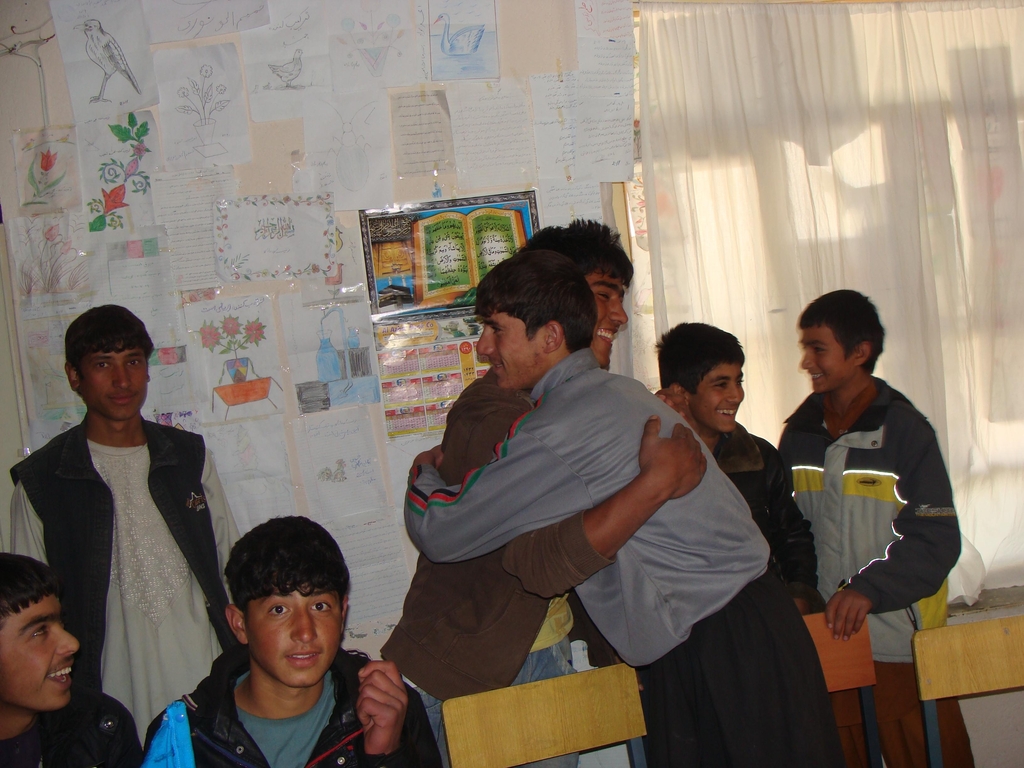
Change takes time, but by the end of the first school year, we began to see some positive signs. Corporal punishment was still a significant problem, but now, over 30% of the Paghman teachers were consistently role modeling positive behaviors in the classroom and no longer hitting their students. Through our continuous training, these teachers learned that establishing a safe environment for students to learn was a far better way to motivate them. Out on the school yards, Incidences of fighting and harassment were still high, but the monthly average had been reduced by over 32% from nine months earlier. While all students were attending peace education classes, HTAC had identified and begun training older students (and former bullies) who had embraced the values of peace and were no longer fighting and tormenting other children. Now, as student peer mediators, the older kids were establishing themselves as new role models for the others.
Our team was encouraged by these modest gains, but our goal was to fundamentally change attitudes and create a new culture where teachers and students would reject aggressive forms of behavior and embrace the principles of peace and cooperation. In year two, we began to see breakthroughs. Over 62% of all teachers had abandoned corporal punishment altogether. Meanwhile, fighting and bullying had been reduced by over 63%. and is dropping steadily. Through teacher peer pressue and continued coaching, we expect up to 90% of the school's 441 teachers to be role-modeling positive behaviors in the classroom. Out in the school yard, students are commonly using non-violent conflict resolution techniques (learned in class) to peacefully resolve their differences. Remarkably, many students who would fight one another have become close friends - such is the power of peace.
Project reports on GlobalGiving are posted directly to globalgiving.org by Project Leaders as they are completed, generally every 3-4 months. To protect the integrity of these documents, GlobalGiving does not alter them; therefore you may find some language or formatting issues.
If you donate to this project or have donated to this project, you can receive an email when this project posts a report. You can also subscribe for reports without donating.