By Jessica Blundell | Development Director
VIDA VERDE PROJECT REPORT, FALL 2025
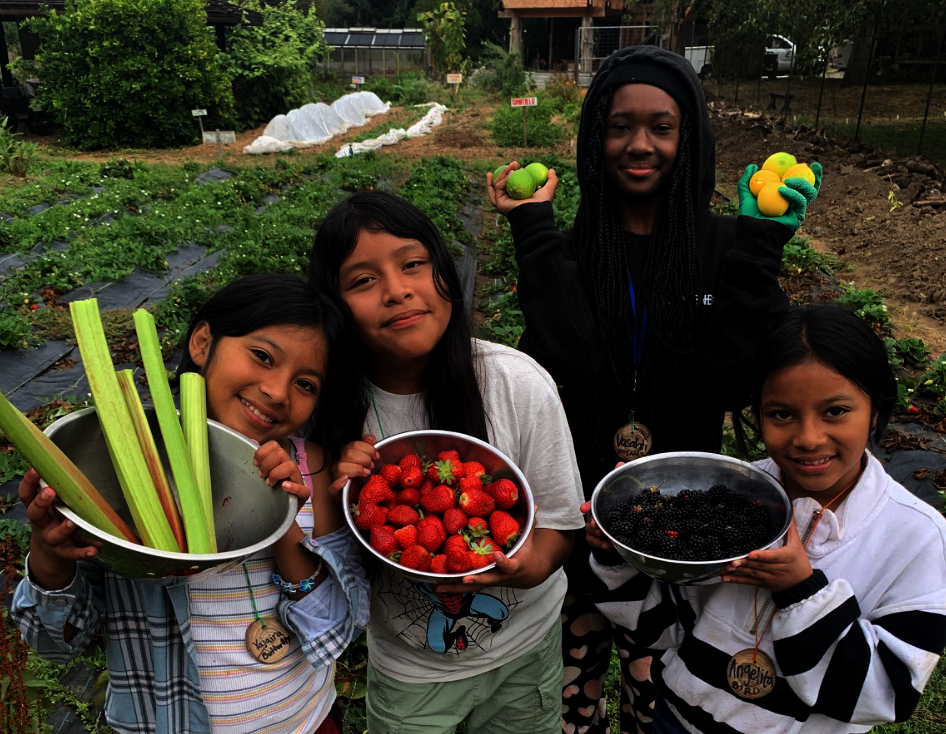
During the fall semester, Vida Verde hosted 13 classes of 4th, 5th, and 6th grade students from ten high-poverty schools in the San Francisco Bay Area. Each camping trip at Vida Verde is a three-day overnight, activity-packed experience that takes place at our 23-acre site and farm, as well as at nearby state parks and beaches. The class trip centers around five core components: (1) Nature Hike in the Redwoods, (2) Goat Milking and Cheese Making, (3) Tidepool, Beach and Marsh Exploration, (4) Night-time Hike and Trust Walk, and (5) Organic Farm Tour and Taste. The trip also includes cooking and cleaning up as a class, team-building games, exercise, a campfire, camping, and more.
To ensure that the students succeed, the trips are carefully structured with eye-opening, fun activities coupled with clear and attainable expectations, consistency, and opportunities to recognize and reflect upon successes. With this foundation in place, the program is a vehicle through which we achieve our overarching goal: to positively and powerfully impact our students’ academic performance, social and emotional learning, and connection to the outdoors.
IMPROVED ACADEMIC PERFORMANCE
For many of the students we serve, there is a need for improved academic performance. The persistent achievement gap, also known as the opportunity gap, refers to the disparity in academic performance between different groups of students. This gap is particularly pronounced between students from low-income students and those with higher incomes. In order to help address this gap, all VV lessons and activities are linked to the California Common Core Standards, as well as to the Next Generation Science Standards. Our lessons compliment and bring to life academic learning from the classroom. With a strong focus on teamwork, group process, and communication skills, Vida Verde also fosters collaboration and trust. The underlying ability to collaborate is beneficial for achieving academic goals of all kinds, and is particularly relevant to the collaborative meaning-making standards in the Common Core, and to the NextGen focus on collaboration as an important scientific practice and mindset.
SOCIAL-EMOTIONAL LEARNING
Social-emotional learning (SEL) is particularly crucial for low-income children as it equips them with essential skills to navigate academic, social, and emotional challenges, leading to improved well-being and overall life outcomes. SEL helps students build resilience, manage stress, and develop positive relationships, and is vital for low-income children who often face significant environmental stressors like poverty and violence. It helps them to navigate social situations, build positive relationships, and develop a sense of belonging. This in turn has a positive impact on mental health, focus and attention, self-regulation, and academic engagement. Whether it's kissing a banana slug or washing up after dinner, students at VV are given both tools and opportunities to navigate complex social situations, to build positive and trusting relationships, and to develop a sense of belonging in the natural world. They are pushed to try dozens of new things and are given achievable challenges, with increasing difficulty, throughout the trip. As a result, the social-emotional well-being of students improves quickly, with teachers and parents noting the long-term positive impacts of VV on self-confidence, collaboration, and persistence.
INCREASED ACCESS TO THE OUTDOORS
Children are spending less time in the natural world, and more time on screens. This is particularly true for children from high poverty neighborhoods where barriers to the outdoors include safety concerns, limited programming, and a lack of culturally and linguistically relevant pedagogy in existing programs. In both program staff hiring and curriculum development, VV works to engage the cultural/linguistic capital of students as a vehicle for learning about the environment. We introduce students to public parks/beaches, and teach them that these places are theirs to care for and to enjoy. As a result, students grow in their understanding of our shared physical environment and develop an important sense of belonging there.
It's been a beautifu fall here in San Gregorio, and as we wrap up the semester, put the garden to bed for the year, and preapre for winter break, it is a season of gratitude here on the farm. Thank you for supporting our mission to promote equity in the outdoors!
Links:
Project reports on GlobalGiving are posted directly to globalgiving.org by Project Leaders as they are completed, generally every 3-4 months. To protect the integrity of these documents, GlobalGiving does not alter them; therefore you may find some language or formatting issues.
If you donate to this project or have donated to this project, you can receive an email when this project posts a report. You can also subscribe for reports without donating.



Support this important cause by creating a personalized fundraising page.
Start a Fundraiser