By Keith Twitchell | President, Committee for a Better New Orleans
It is election season in New Orleans: on February 1, we will vote for mayor and six of the seven City Council seats (one incumbent did not draw an opponent). It has been exciting to see that civic engagement and reforming the city budget process to include meaningful community input have been high-visibility issues during the campaigns. Coalitions such as the strong Forward New Orleans group have made improving input into the budget process part of their platforms, which they ask candidates to sign on to; and questions about citizen participation and budget reform have been a constant at various candidate forums.
That said, not all candidates have embraced forceful positions on resident input. Thus the upcoming elections could result in a mayor and strong Council majority in favor; or a mayor opposed and a weak Council majority in favor. The plus side is that either way, we will still have majority Council support for this work, and we will come out of the campaign with greater visibility for the issues and stronger support in both neighborhoods and the business community.
Meanwhile, the work of the Citizen Participation Project goes on. One of our top priorities is building on the passage last year of the City Planning Neighborhood Participation Plan (NPP), which is basically the Early Notification System from our full Citizen Participation Plan (CPP) model. Currently, we are working on the following:
- Developing an objective evaluation tool for residents, neighborhood and businesses that have experienced the new NPP, to demonstrate how well it is working and make any recommendations for refinements.
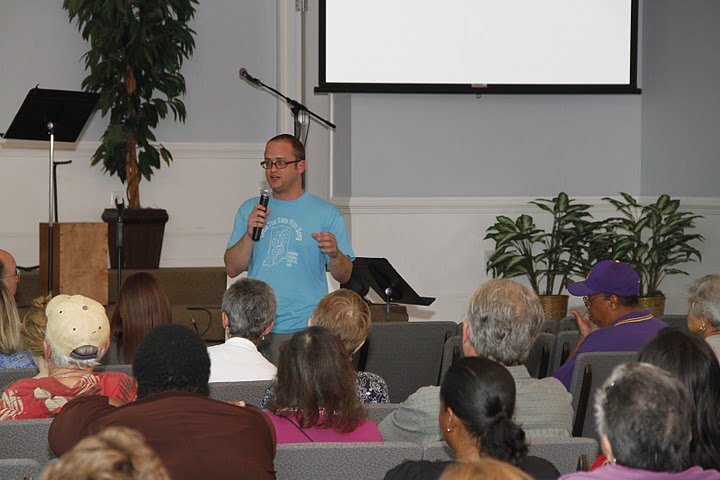
- Continuing to make presentations to neighborhood and business groups about the NPP, to make sure that all are well informed and able to derive the most benefit from the NPP.
- Monitoring the progress on the rewrite of the Comprehensive Zoning Ordinance, which contains the NPP legislation, to ensure that it is compatible with the NPP.
- Identifying additional city agencies and departments to which we can expand the NPP. Examples would be the Department of Public Works, the Sewerage and Water Board, and the Historic District Landmarks Commission.
We are also working to complete a Blight Resource Guide, which will be a tool for residents and neighborhoods to combat blight in their communities, beyond what city government is accomplishing. This project has taken longer than we had hoped, but a comprehensive draft has been prepared and we are in the review stage, with a target of a spring publication date.
Work also continues with our partner Puentes New Orleans in the Latino Community of Interest project. We have completed the second Latino Community Survey; more than 300 Latino residents answered questions mostly pertaining to health care and education, two top issues identified in the first Community Survey. We are analyzing the data right now, and should have the report published within the next two months. We appreciate the support and partnership with the New Orleans Department of Health in conducting this survey.
Work also continues on the Neighborhood Boundary Mapping project. The city recently released a map of what it described as neighborhood association boundaries, but because this also included merchant groups, community development corporations, main street organizations and many other groups, it is full of overlaps and is thus confusing and difficult to use. We are optimistic that after the elections, we can sit down with city officials and explore opportunities to collaborate on the neighborhood -- not neighborhood organization -- maps.
As always, the CPP work has many facets. CBNO staff participated in some campaign training in late 2013, and have organized the work more into a campaign structure, which we think will further enhance our capacity to move the project forward. We remain extremely grateful for the support from the Global Giving community; we wish everyone a happy, prosperous and civically engaged New Year!
Project reports on GlobalGiving are posted directly to globalgiving.org by Project Leaders as they are completed, generally every 3-4 months. To protect the integrity of these documents, GlobalGiving does not alter them; therefore you may find some language or formatting issues.
If you donate to this project or have donated to this project, you can receive an email when this project posts a report. You can also subscribe for reports without donating.