By Bernadette Martin | Corporate Engagement Manager
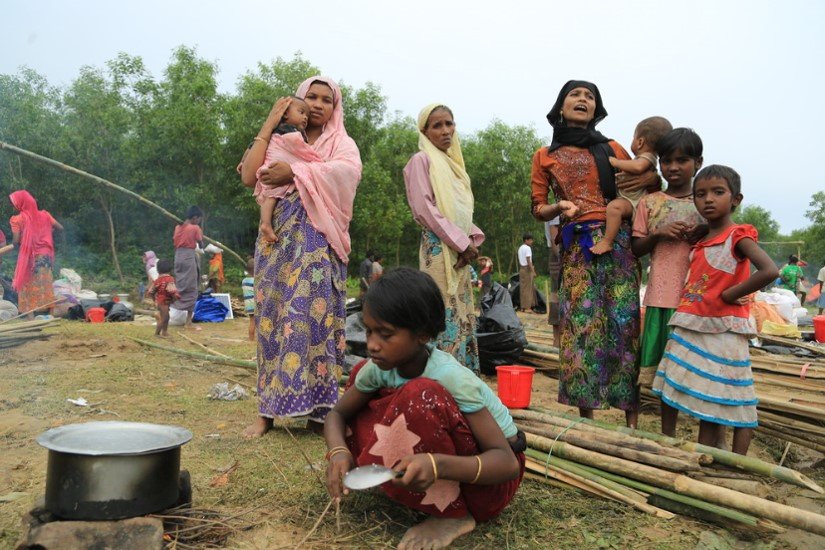
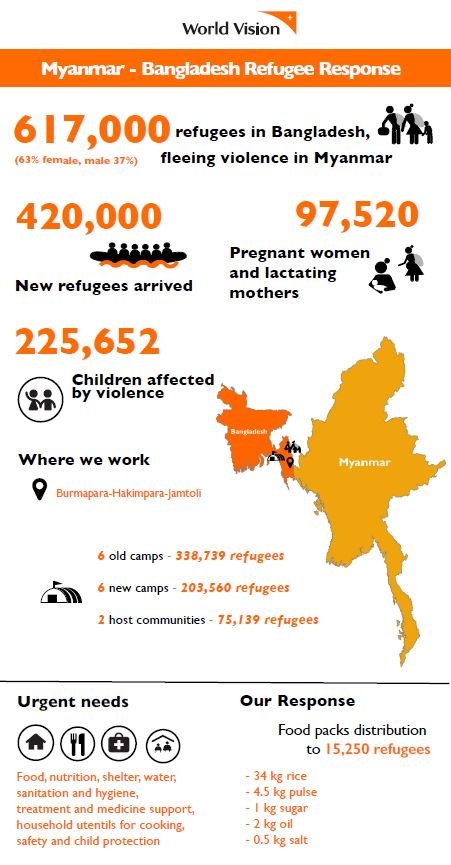
Refugees in Bangladesh, most who identify as Rohingya and most who are women and children under age 18, face rising protection risks. An estimated 624,000 new arrivals are reported as of 23 November, increasing the total refugee population in Cox’s Bazar to 836,487. The Kutupalong extension site, which the government is developing, is one of the world’s largest refugee settlements with an estimated 441,323 refugees (342,000 of whom are recent arrivals). The site population has multiplied by four times since 25 August.
More than half a million refugee children facing urgent physical and psychological needs require a massive scale up in emergency assistance including food, clean water, shelter, toilets, washing facilities, medical and protection services. Hundreds of thousands of them are vulnerable to fatal disease outbreaks due to crowded unsanitary camp conditions and the pending arrival of winter.
World Vision Response
The Government of Bangladesh, international aid agencies like World Vision and local partners are providing relief. A Bangladesh joint humanitarian appeal USD 434m is 34% funded. But the needs are massive and more is needed. The efforts must be scaled up and expanded to protect refugees and ensure their basic needs are met.
World Vision is working closely with the Government of Bangladesh and aid agencies to meet the needs of the refugees who have fled violence in Myanmar’s Rakhine State. Its six-month response aims to raise USD 5 million to meet urgent humanitarian needs through food assistance, child protection, health and nutrition, Water Hygiene and Sanitation (WASH) interventions, and shelter. World Vision has secured permission from the government to launch programming, and is seeking approval to scale up.
Following the 23 November release of a Bangladesh foreign ministry statement announcing an agreement with the Government of Myanmar to start repatriating refugees who had fled violence in Myanmar back home within two months, World Vision calls on both governments to respect the right of all refugees to return in a safe, voluntary and dignified manner in line with international humanitarian standards.
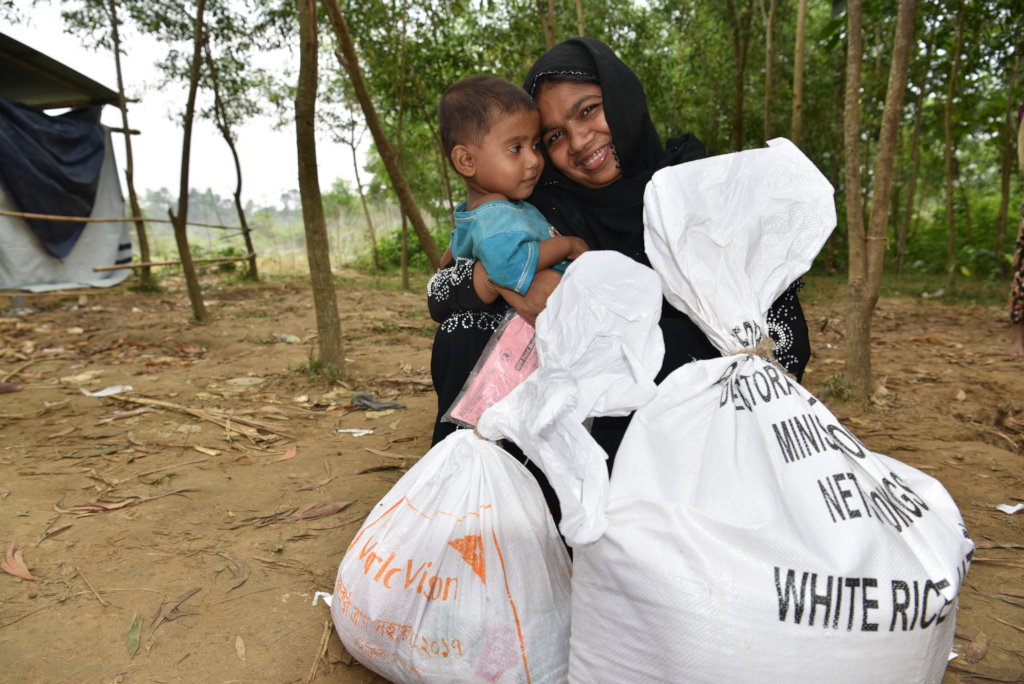
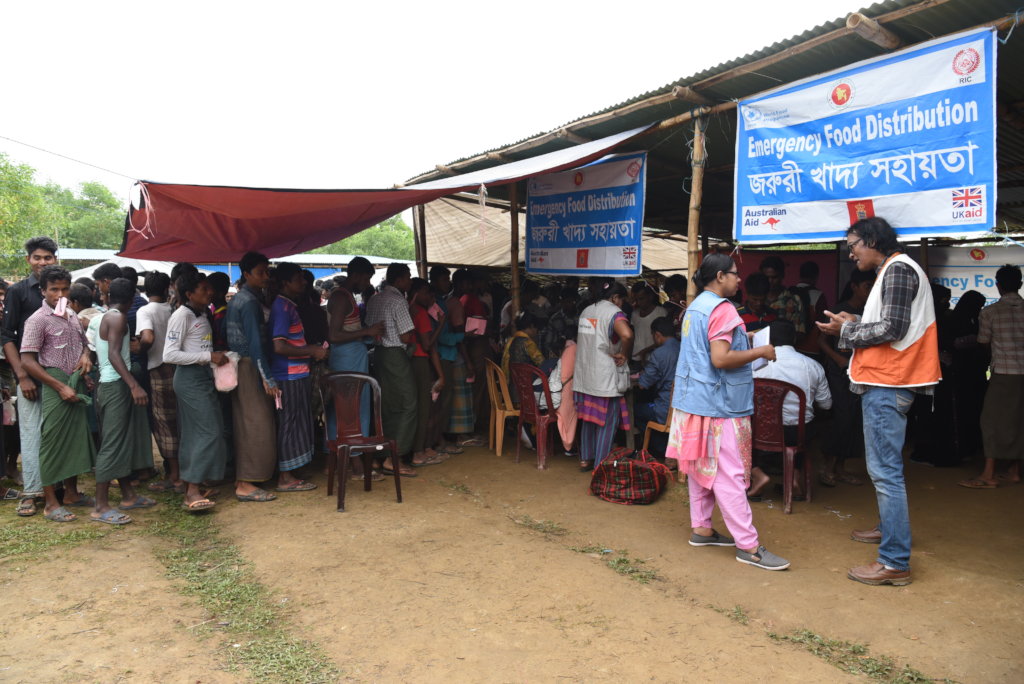
World Vision distributions so far (see the video link for more information):
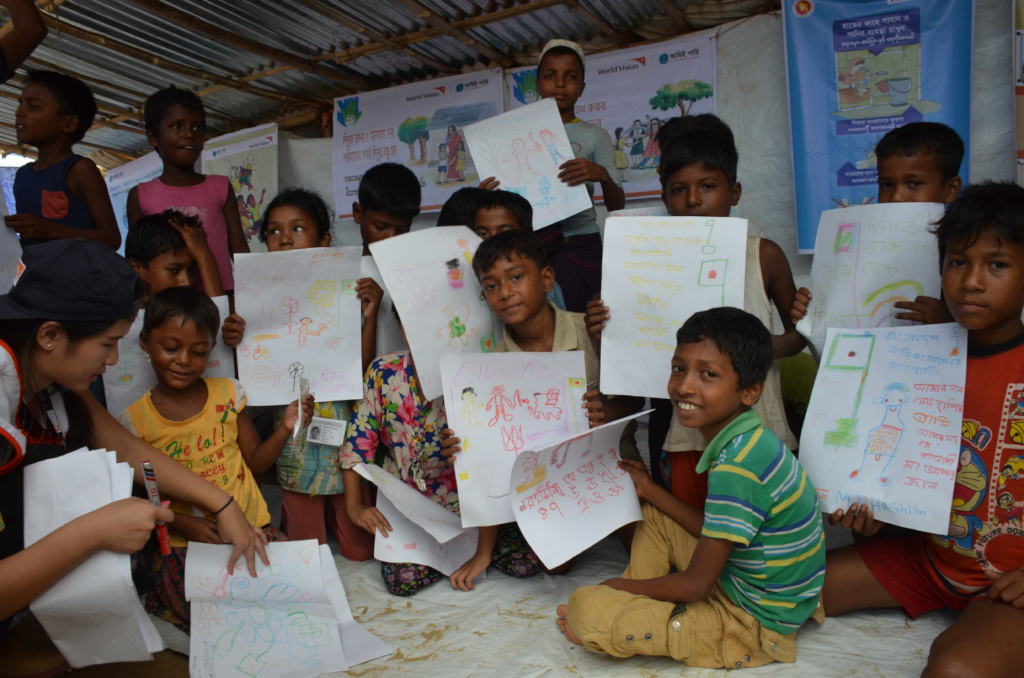
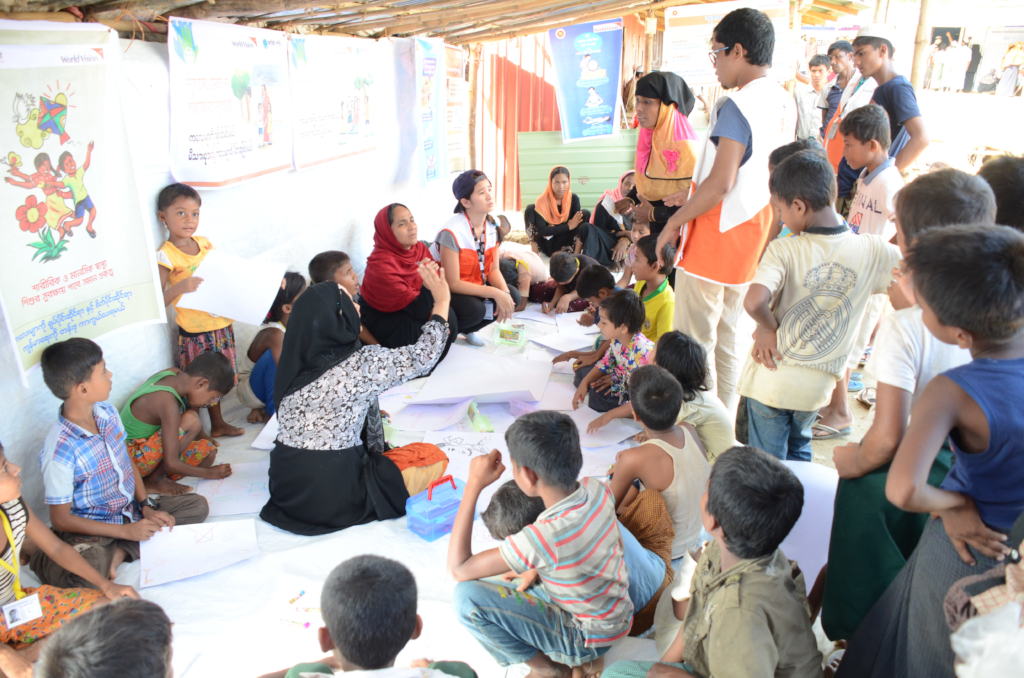
*World Vision has started setting up the Child Friendly Spaces (CFS) and targets to place 40 Child Friendly Spaces (CFS) at the refugee camps, targeting at least 4,000 children. The CFS aims to address the psychosocial needs of the children, who were distressed escaping from the violence in Myanmar. Local volunteers are facilitating the CFS through drawing, singing, and teaching children on basic hygiene and sanitation. We continue to collaborate with our partner agencies and the refugees themselves to ensure that child protection mechanisms are in placed in the camps. Protection of children is the heart of what we do. These refugees have suffered way too much. Being exploited or trafficked is the worst thing that can happen to them. In the photo below at mobile CFS at Balukhali on 3 November 2017, children are playing with the facilitator, drawing and coloring the pictures and enjoying the other children.
Links:
Project reports on GlobalGiving are posted directly to globalgiving.org by Project Leaders as they are completed, generally every 3-4 months. To protect the integrity of these documents, GlobalGiving does not alter them; therefore you may find some language or formatting issues.
If you donate to this project or have donated to this project, you can receive an email when this project posts a report. You can also subscribe for reports without donating.