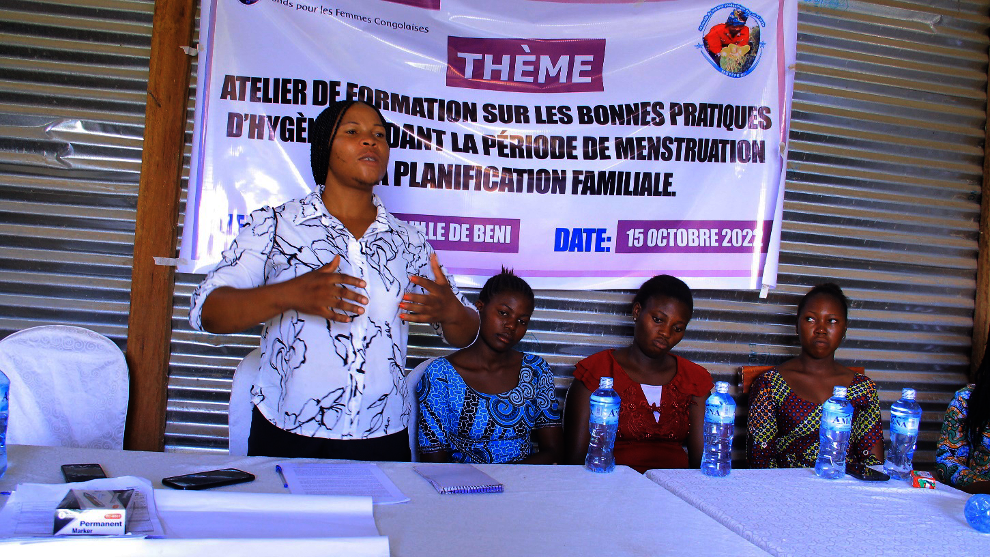
North Kivu faces armed conflict, population displacement, poverty, and limited access to health and education services. In many communities, adolescent girls and women lack: information on menstrual hygiene, appropriate sanitary products, safe drinking water and toilets, as well as a stigma-free environment. This situation leads to: school absenteeism among girls, infections linked to poor hygiene, shame and discrimination, and increased risks of social vulnerability.
Adolescent girls and women face many challenges related to menstrual health. Armed conflict, displacement, poverty, and a lack of basic services exacerbate their vulnerability. Many girls lack accurate information about menstruation and menstrual hygiene; appropriate and affordable sanitary pads; access to clean water, safe toilets, and private spaces; a supportive social environment free from shame and discrimination. Cultural taboos and a lack of education about menstruation often lead
In vulnerable areas of North Kivu, adolescent girls and women have limited access to information, menstrual hygiene products, and appropriate sanitation facilities. This situation, exacerbated by poverty, displacement, and cultural taboos, leads to school absenteeism, increased risk of infection, and the stigmatization of girls and women during their menstrual periods.
In the long term, the project will contribute to sustainable improvements in the health, dignity, and education of adolescent girls and women in North Kivu through increased knowledge of menstrual hygiene, the reduction of taboos, higher school attendance among girls, and strengthened community capacity in sexual and reproductive health.



Support this important cause by creating a personalized fundraising page.
Start a Fundraiser