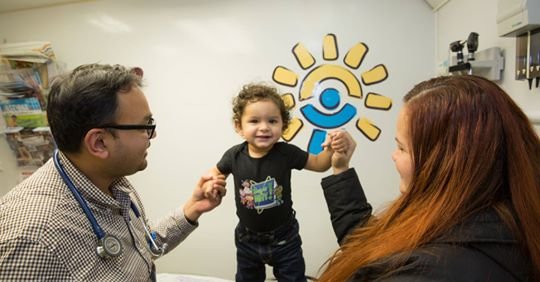
Our Medical Home model integrates intensive primary care, dental, and mental health services, all to ensure that a child's every medical need is addressed in a comprehensive, culturally sensitive, and coordinated manner. Our fleet of mobile medical clinics bring the clinic and care team to homeless shelters, schools, and community organizations so that families without access to public transportation or cars can provide their children the medical care they need. 95,000 indiv. annually in USA.
Children in poverty experience more health issues than children from higher economic backgrounds. Often lacking access to health care, they have higher rates of hospitalization and emergency room use. Timely access to pediatric care is essential for all children, but the consequences of failing to provide care for poor children can be devastating. Currently, over 20 million children lack consistent, quality health care.
We provide high quality health care -regardless of ability to pay-targeting the most vulnerable, medically underserved children, especially those with significant social determinants of health disadvantages, such as location, age, racial or ethnic background, and exposure to trauma. Our patient population of 95,000 in 16 states and DC includes homeless children, public housing residents, undocumented immigrants, transient migrant worker populations, and trafficked youth.
Poverty is the basis for poor health and wellbeing of America's most disadvantaged children. Addressing barriers to medical care that threaten and undermine the health and wellbeing of children may have a direct impact on a child's ability to succeed academically, enter the workforce and reach their full potential.
This project has provided additional documentation in a PDF file (projdoc.pdf).