By Charles Githu | Fundraising and Communication Assistant
Started 2018 April, got home from fetching water and realised she was bleeding. Normal menstrual flow but…it was too heavy for normal. She cleaned up and realized this was not the monthly flow as norm. She went to the nearest clinic.
“It must be the family planning method that you’re using.” Said the medical officer.
Since the flow was heavy, Norah got medication, which she faithfully adhered to, but four months later, in August, she did not experience any change. The flow seemed the same, or even heavier, and she now felt weak. She went back…they said it was the family planning injection that she had received years back. Something in her did not sit right with this response when in 2019, she decided to seek a second opinion in a more established public medical facility. She got the same response and a change of medication. She was now desperate. She went for a third opinion. Woe to her because she received the same diagnosis, yet her symptoms were not easing with the medication.
“You know, you cannot argue with the doctor, even when he prescribes the very same medication that almost a year later has not helped.” Norah says. But determined to get to the root of the problem, she sought a fourth opinion from the Kenya’s largest referral hospital - The Kenyatta National Hospital (KNH). She got medication but still sought a fifth opinion at Mbagathi Hospital. By then, she was at her wits end but determined not to give up.
“Please do exray or other tests. Something is not right with me!” Norah told the medical officer after she had stated her history. She knew from experience and from sharing with her close female friends that this was not normal menstrual behaviour.
The medical officer at Mbagathi Hospital sent her to the laboratory.
“There is something…some dirty, or mass that we found.” The medical officer explained when her ultrasound results came back. He prescribed some medications which she felt were still not helping and promptly went back to the chemist to find out whether they had issued the right medication. They assured her that all would be well with continued medication.
Months later, even with the adherence to her medication, Norah noticed that things were getting worse. Not only was the bleeding irregular, but by 2020, she noticed what she refers to as ‘weird fluid’ coming out of her, accompanied by a back pain.
She was back in hospital where eventually they admitted her for more tests. She was in hospital for three weeks, by which her bill was piling. Her son who used to walk daily from Imara Daima to Mbagathi Hospital, an average of 10kms, called her one day.
“Mom, I slept hungry, when do you come back?” Hearing this from her son made her anxious but also upset. “What is wrong with me? Why is no one telling me what is ailing me?” It was only then that they mentioned the word cancer. They referred her back to KNH but she was now struggling to fundraise for her medical care and did not go. Her husband, a casual worker at construction sites did not have a stable income to support the home front and medical care. Before the onset of her illness, Norah, just like her husband worked as a casual labourer, cleaning clothes and homes in the neighbourhood.
Her son, Abednego remained her confidant especially when one of her close friends made an insensitive comment when Norah shared that she had been diagnosed with cancer. Abednego advised her to seek help from non-governmental organizations (NGOs) instead of telling her friends who distressed her more with their reactions.
When she became bedridden, her family called neighbours and well-wishers, who raised some funds to get her back to Kenyatta National Hospital.
“I was fortunate to find a caring social worker who told me that I could get help from an organization called Faraja.” Norah says. By then she was tired of being referred to different hospitals. “How do I get there when I could barely raise the fare to get here?” Norah asked. “Mama, just try your best and get the fare. You will get help at Faraja.”
She eventually managed to get to Faraja, after praying that this would not be another goose chase. Norah made the application, without believing that much would come out of it. One week of waiting for results, she went back to check with Faraja Cancer Centre when her bleeding became serious. “You have been approved.” Norah says that she at first did not believe the news. “I could not get up from where I sat.” She had received so much bad news in the last two and half years that hearing this from Faraja felt surreal. “Are you sure?” The personnel at Faraja assured her that she would start her treatment immediately.
“I felt like I could fly! I had not been so happy in a long, long time!”
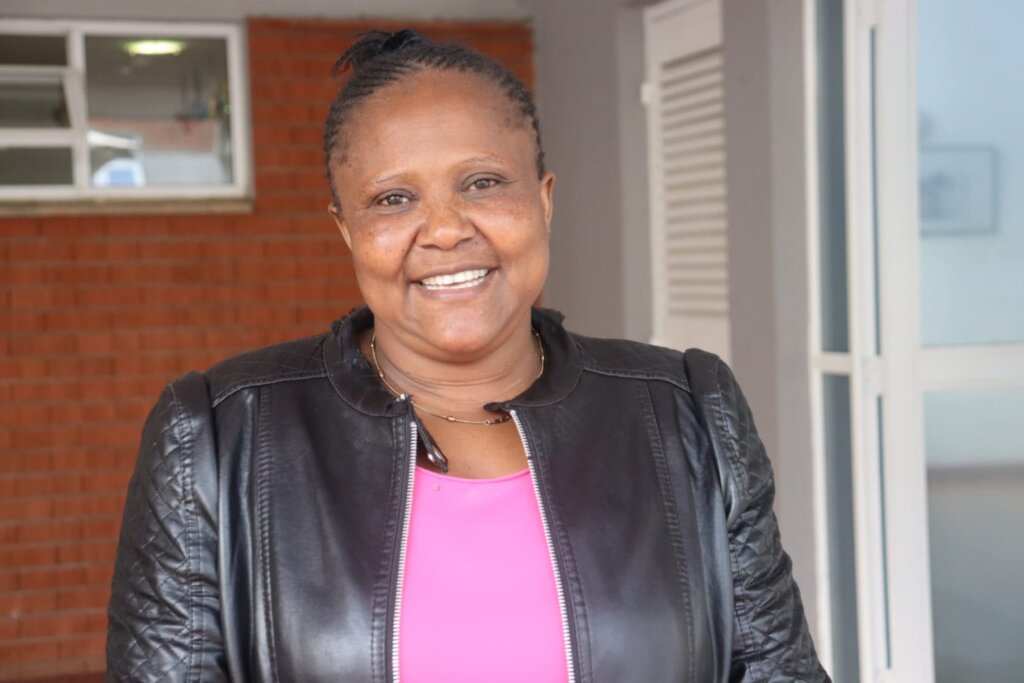
On the day of this interview, Norah had just completed her final cycle of radiotherapy. The bleeding and discharge was long gone. “I feel like a woman, a human.” When asked what she would tell another woman going through the ordeal that she had endured, Norah says, “Saying thank you to Faraja does not feel sufficient. But I would encourage another woman and send her here. I feel whole!”
Project reports on GlobalGiving are posted directly to globalgiving.org by Project Leaders as they are completed, generally every 3-4 months. To protect the integrity of these documents, GlobalGiving does not alter them; therefore you may find some language or formatting issues.
If you donate to this project or have donated to this project, you can receive an email when this project posts a report. You can also subscribe for reports without donating.