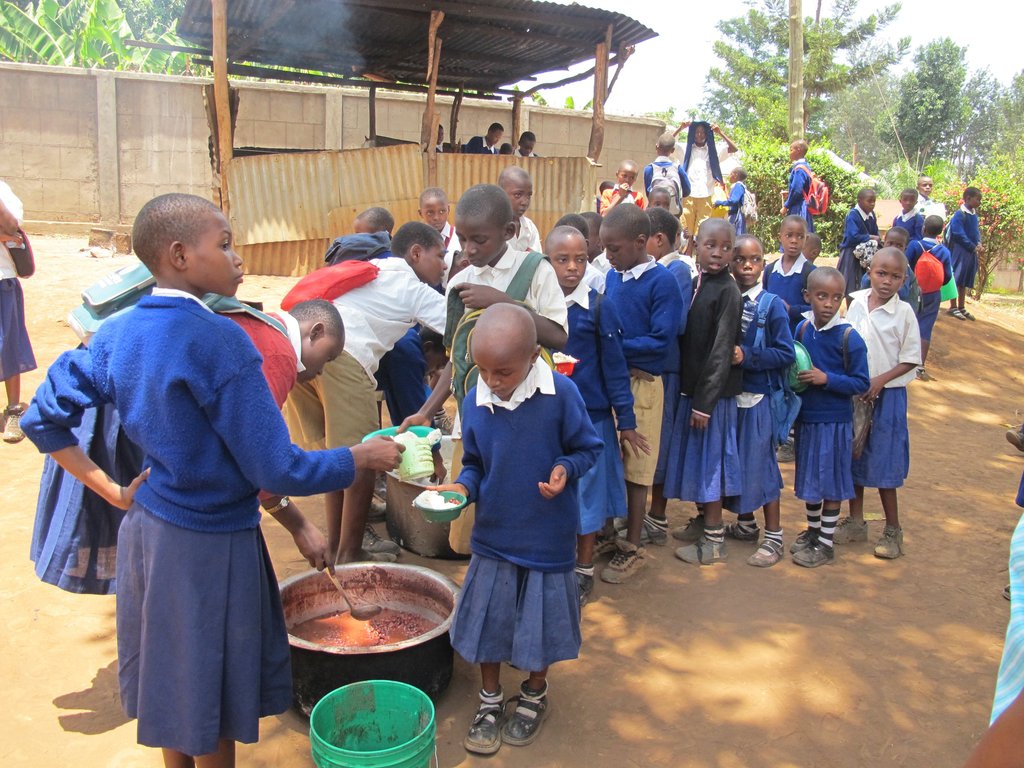
This project is to continue to provide daily lunch to students. For many of these students, this is the only meal they may have in a day. This one meal provides an incentive to parents to send their children to school. The outcome is increased attendance at school, better nutritional outcomes for the students, and improved attention during class.
Extreme poverty influences parents' decisions about sending their children to school. If the children don't attend school, they may be put to work. Attendance at a public primary school has costs, such as: a uniform; a small tuition fee; books and supplies. Many parents may not be able or willing to afford school. The lack of education continues the cycle of poverty as the uneducated children will not be able to find decent jobs and they, too, will remain in poverty.
The providing of lunch shifts the cost of feeding children from the parent to the school (and to Knock Foundation). That cost shifting makes it more economically feasible for the parent to absorb the cost of schooling. Consequently, more parents have their children attend school. The children eat at least one good meal every day. The children are able to be attentive and perform better in school.
Education helps to break the cycle of poverty. It increases opportunities and raises the level of future job possibilities. This is good for the individual, can also enhance the family unit, and in a macro sense, adds to the economic outcomes of the community.






